Complete Line or Core Machines Only? How to Decide

The real question isn’t automatic or manual. It’s how complete a line you buy right now. Do you run the whole thing end to end, from bottle feeding through case packing, or start with the core machines and let people cover the rest? Three things decide it: budget, floor space, and who handles integration.

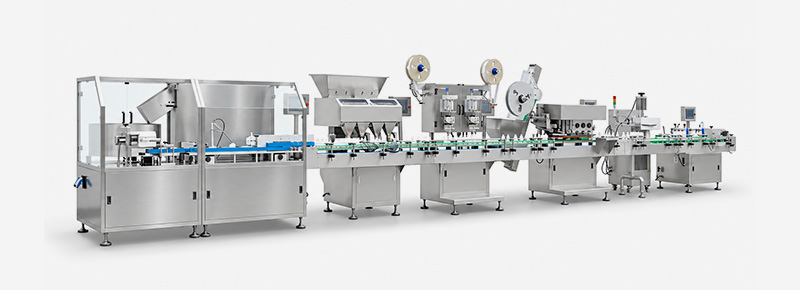
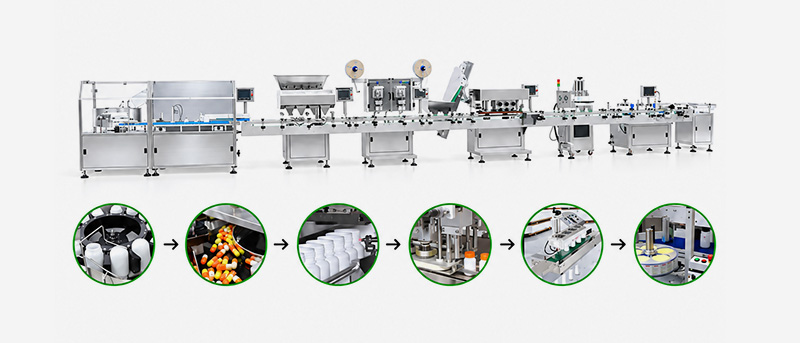
tablet counting line

AIPAK’s tablet counting line

1.What "semi-automatic" really means here

Let’s fix the vocabulary first, or the rest of this won’t land. In bottling, “semi-automatic” usually doesn’t mean a lower level of automation. It means an incomplete line — some stations have machines, some still have people. Three different things get called semi-automatic, and they aren’t the same thing at all.

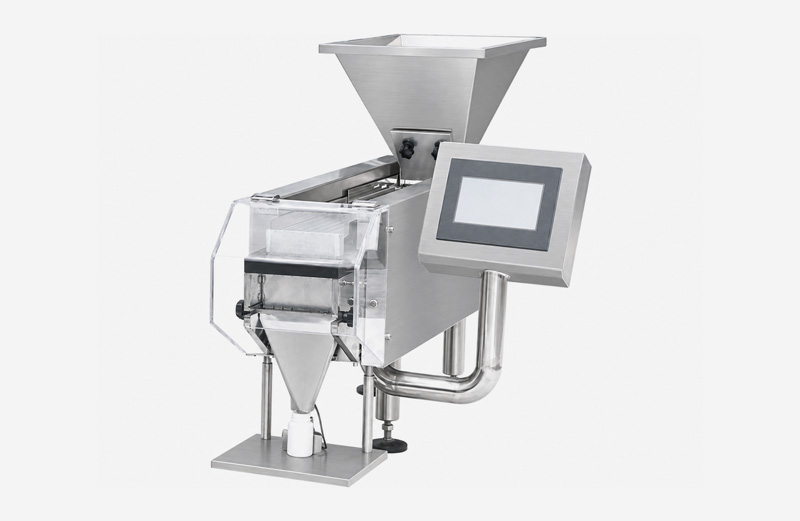
A benchtop machine

benchtop pill counter

AIPAK benchtop pill counter

A counter sitting on a table, everything else by hand. We covered this one in the buyer’s guide — it isn’t a line, and it doesn’t grow into one. Different road entirely. 

Not what this article is about. The other two are.

The core five, connected
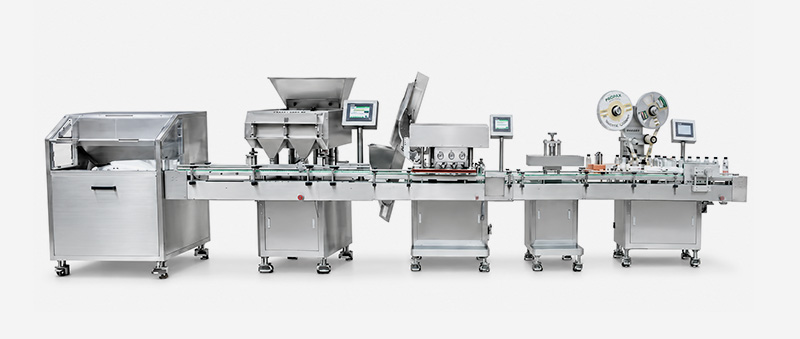
connected

Bottle feeding → counting → capping → induction sealing → labeling.

Those five connected make a line that genuinely runs. A bottle goes in at one end and comes out the other without anyone touching it. What’s missing are the optional stations — cleaning, desiccant, cotton, neck sleeving and shrink, cartoning and case packing. Those either don’t happen yet, or people do them.

When someone says “let me start with the core machines,” this is what they mean.

A complete line

Bottle feeding all the way through case packing, with the optional stations you actually need, all connected.

So what you’re deciding is where to stop on a completeness scale. You’re not picking between automatic and manual.

The core five and a complete line: where are the gaps?

A · The core five
Connected core; optional stations wait or use people
Bottle feeding
Counting
Capping
Induction sealing
Labeling
Desiccant / cotton By hand
Cartoning / case packing By hand
Neck sleeving + shrink Channel-dependent; reserve its position
Checkweigh reject No second check if omitted
B · Complete line
Core and required optional stations connected
Bottle feeding
Counting
Capping
Induction sealing
Labeling
Desiccant / cotton Automated when required
Cartoning / case packing Automated when required
Neck sleeving + shrink Include when required; right after labeling
Checkweigh reject Include the check when required

Both choices have a connected, automatic core. Compare how many optional stations you need, and who commissions the whole line as one system.

The core five form the same backbone. Required optional stations and their connections determine how complete the line is.

2.Option A: the core five, people fill the gaps

Starting with the core five is a real choice, not a compromise. Feeding, counting, capping, sealing and labeling connected together take an empty bottle through to a labeled finished bottle with nobody touching it in between. What you save is the cost and the floor space of the optional stations. What you pay is more hands on the line.

What this line does

sealing and labeling

Empty bottle in, labeled finished bottle out, fully automatic. That’s a real production line.

What’s missing

Depending on your product and your channel, these either wait or get done by hand:

  • Desiccant and cotton — inserted by hand
  • Cartoning and case packing — packed by hand
  • Checkweigh reject — no second check on fill count
  • Neck sleeving + shrink tunnel — if your channels don’t require tamper evidence, skip it for now but leave the space. If they do, don’t put this pair off. Its position is fixed, right after labeling, and adding it later means changing the line

What each machine does and when you need it is in the machine-by-machine article.

Who this fits

The budget isn’t there yet. You want core capacity running now and the rest when volume justifies it. Reasonable.

Your building won’t hold a complete line. More common than you’d think. There’s a section on this below.

Volume is still modest, or orders are lumpy. When your season swings hard, people are more flexible than machines. In a slow month you move people to other work. A cartoner just sits there.

The cost, stated plainly

Your output gets capped by hands. It doesn’t matter how fast the first five machines run. However many cartons a person packs in an hour is how many bottles you ship that day. That’s the real ceiling on this kind of line.

Quality drifts. Hand-inserted desiccant and hand-packed cartons aren’t the same at 8 a.m. and at 4 p.m.

More people on the line. Section 4 does that math.

This isn’t the worse choice. It’s the right choice under specific constraints. We build and ship both.
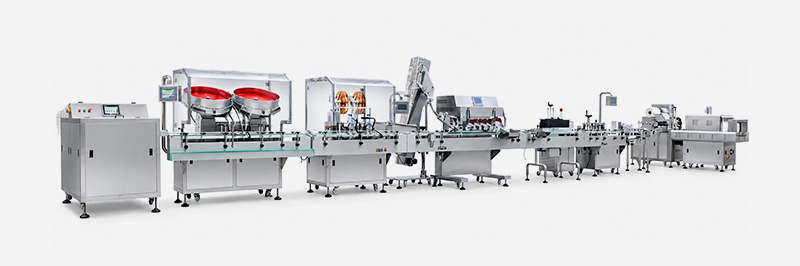
3.Option B: a complete line, connected end to end

complete line

A complete line runs from bottle feeding through case packing, all connected. One station stops and the rest respond. The value isn’t only that it’s more automatic — it’s that somebody tuned a dozen machines into one system for you, and when something goes wrong there’s one company to call.

What this line does

Empty bottles

Empty bottles in, cased product out. Nobody touches anything in between.

Who this fits

Steady volume, scaling up. If your order book supports continuous production, hand stations are holding you back.

The floor space is there. A complete line is longer. That’s a hard constraint.

Nobody on staff handles equipment integration, and you’d rather it stayed that way. If you don’t have an engineer for this, having one company tune the line and hand you something that runs beats assembling it yourself.

What you get

capped by hands

Output isn’t capped by hands. The line runs at machine pace, not at how someone’s shift is going.

Batch consistency. Every bottle’s desiccant, every carton’s fold, to one standard.

Scaling up doesn’t mean scaling headcount. This is the one people underestimate — fewer hand stations means the same output takes fewer people.

The biggest thing a complete line buys you is the part you can’t see: who tuned those machines into one system, and who picks up the phone when it stops. Section 5.

The two options at a glance
Compare Start with the core five Buy a complete line
Output endpoint A labeled finished bottle Cartoning and case packing as required
Optional stations Wait or use people; specify sleeving to suit the channel Required stations included and connected
People's role Cover missing stations, plus loading and monitoring Load materials, monitor, check, and handle faults
Floor space Less space; reserve room for future additions Longer line; check inline, L-shaped, or U-shaped layouts
Adding later Settle controls/protocol, height, speed headroom, and sleeving position Commission the required configuration together now

4.The hidden cost of an incomplete line

hidden cost of an incomplete line

The core five look cheaper, but the gap costs you money every single day. Hand stations need people, people need paying, and your output is capped by how fast hands move. The math isn’t hard — just run it on your own numbers, not on somebody’s average.

Start with headcount

Our lines run with two to three people, never more than three.

Where you land in that range depends on how long the line is and how complete it is. All the optional stations in place and you’re at the low end. Desiccant and cartoning still done by hand and you’re at the high end.

That’s roughly one person between the ends of the range. Doesn’t sound like much. It’s a fully loaded cost you pay every year.

How to run the math

We’re not going to hand you US wage figures — that isn’t ours to invent, and your HR team has the real ones. Here’s the framework. Put your own numbers in.

Step one. How many people do the hand stations take right now?
Step two. What does one packaging worker cost you per year, fully loaded? Not just wages — benefits, workers' comp, supervision, all of it.
Step three. Multiply. That's what the gap costs you annually.
Step four. Take the price difference to add those stations and divide by the annual saving. The number of years you get is your payback.

Don’t run this on an average hourly rate. States vary too much. Your actual loaded cost is the only number that means anything here.

Labor cost and payback: use your own numbers

First: annual cost of the hand stations
Current headcount at hand stations
×
Fully loaded annual cost per worker
= Annual labor cost at hand stations
Then: payback for adding the stations
Additional cost to add the stations
÷
Actual annual cost saving
= Payback in years

Use your own HR figures and station data. A complete line still needs people; total labor cost is not automatically the amount saved.

Annual labor cost and annual savings are different numbers. Payback uses the additional station cost divided by actual annual savings.

There’s a second cost, and it matters more

Your output is capped by the slowest pair of hands.

It doesn’t matter how fast those first five machines run. However many cartons your packer does in an hour is how many bottles ship that day. When peak season arrives and you want more out the door, the only thing you can add is people, and people have a limit.

Then add rework. Hand stations make more mistakes than machines do, mistakes get reworked, and rework costs money too.

slowest pair of hands


What if the math doesn’t work?

Then don’t buy it.

If the payback comes out at a lot of years, your volume doesn’t support a complete line yet. That’s useful information, not bad news — it tells you to put the money somewhere else this year.

Honestly: a complete line still needs people

Buying a complete line doesn’t empty the room. Loading materials, watching the line, checking output, handling faults — all still people.

The difference is what those people are doing. On a complete line they’re watching machines. On an incomplete one they’re standing in for machines. Those two jobs have very different ceilings.

5.Who's responsible when it's all connected?

Line commissioning sounds like a vague word. It means something specific: getting every machine’s speed matched to the ones around it, and getting them to signal each other. That’s the most practical difference between a delivered line and a pile of machines, and it decides who you call when the line stops.

What’s actually being tuned

Start at the unscrambler, work through the counter, desiccant inserter, capper, sealer and labeler, all the way to the end — every machine’s speed has to match the machines on either side of it.

For that to work, the machines have to talk to each other. The one upstream slows down, the one downstream needs to know. The downstream one backs up, the upstream one has to stop.

This isn’t running a cable. It’s the control logic for the whole line. Accumulation buffer, line PLC, reject linkage — the last section of the machine-by-machine article goes through those.

Line commissioning: bottle flow and status signals

Downstream backs up → upstream stops
Upstream machine

Receives downstream status and adjusts feeding

Downstream machine

Receives upstream status and coordinates its pace

Upstream slows → downstream receives the signal and responds

The center arrow shows bottle flow. The two bands show machine-status signals.

The diagram shows machine coordination. Speed matching, status signals, and fault response are commissioned as one system.

Why we’d suggest one company does it

Signals between machines from different builders are hard to do.

Protocols not matching is one part. The more practical part: another company’s machines aren’t theirs to open up for you. Nobody owes you an interface, and nobody owes you their time tuning someone else’s line. You want a signal, they’d rather not, and that’s where it sits.

Machines from one company signal each other natively. Commissioning is an internal job.

This isn’t “please buy everything from us.” It’s how hard the work actually is. Don’t take our word for it — ask any company that builds complete lines how they handle signals to someone else’s machines.

When something goes wrong

Complete line: one call, to our factory. We commissioned it. It’s on us.

A line assembled from several suppliers: bottles jam between two machines, and A says it’s B’s signal while B says it’s A’s timing. You’re in the middle.

Every machine may be fine on its own. Nobody is responsible for whether they run together.

6.The floor space reality

Plenty of buyers don’t skip the complete line because they don’t want one. Their building won’t hold it. A complete line is longer than the core five, and this constraint is harder than budget — you can raise money, you can’t move a wall. Measure your room before you order, not after the crates land.

How long is a line, really

There’s no conversion factor. It depends which machines, which models, what output.

Here’s a working reference, though: inline, plan on at least 10 meters.
working reference

The more complete the line, the longer it gets.

If it doesn’t fit

Change the layout. It doesn’t have to be a straight run. L-shaped and U-shaped both work, and folding the line into the space you have is usually the first thing to try.

Start with the core five. Smaller footprint. Get running, add the rest when the space allows.

Don’t estimate it yourself

We don’t publish “X bottles per minute equals Y square feet” factors, because no such factor exists.

Send us your room — length, width, height, and where the doors and columns are — and we’ll lay out your line and check the space for free. How to measure and plan the room is its own article.

Room too tight? Compare three layout forms
Inline

Check the usable straight run first.

L-shaped

Turn the line into another part of the room.

U-shaped

Fold the line back; check turns and access.

Bottle entry Bottle exit Rectangles indicate stations; the pale blue line indicates the conveyor path.

Not to scale; compares layout forms only. The 10-meter inline reference does not replace a project layout. Final dimensions and access depend on equipment and the room.

Check whether the line can turn within the room before choosing to start with the core five. These concepts provide no footprint factor.

7.Can you start with core machines and complete the line later?

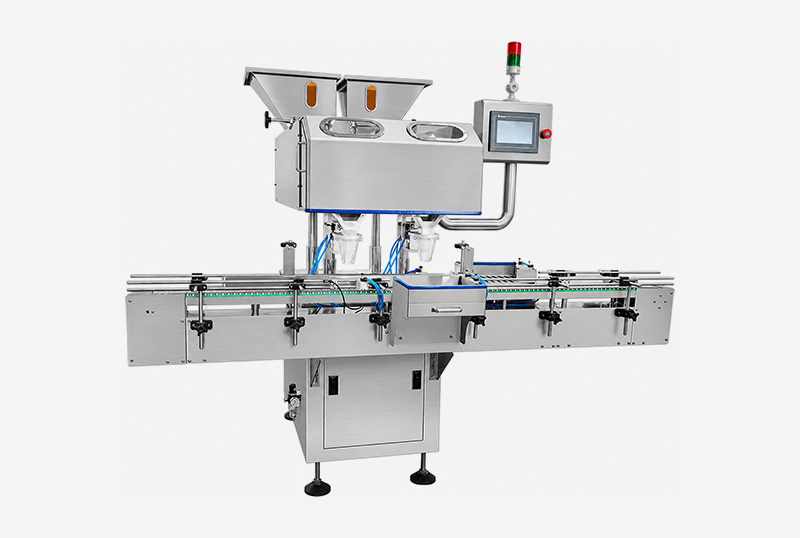
counting machine

AIPAK’s counting machine

Yes, and plenty of brands take this route. Whether it goes smoothly depends on whether you left the door open when you bought the core five. Leave it open and adding machines later means slotting them in. Leave it shut and adding machines later means laying out a new line.

This part is settled: an automatic line with manual stations can take machines later and become a complete line. That’s the real difference between this and a benchtop — a benchtop doesn’t grow.

Say it out loud when you buy the core

Tell your supplier the line will be completed later.

That one sentence is worth a lot. He’ll spec your controls and interfaces around that plan, instead of around selling you five machines.

Four things to settle now or you can’t add later
Controls and communication protocol.

The big one. Machines you add later have to talk to what's already there. Protocols that don't match mean the new machine bolts on and never joins the line.

Conveyor height.

Consistent across the whole line. If it isn't, later machines won't meet it and you're rebuilding frames.

Speed headroom.

Leave room on the first five, or adding downstream machines turns your front end into the bottleneck.

The sleeving pair's position.

Sleeving and shrink go in a fixed spot: right after labeling, before cartoning. If you'll want them eventually, leave that stretch open now.

One honest note

Adding another builder’s machine later will probably run into signal trouble.

We’re not telling you not to. Communication between different builders is genuinely hard. If you want that flexibility, get the interface standards in writing up front rather than finding out when you try to add something.

Starting with the core is nothing to apologize for. Just leave the door open.

8. How to decide

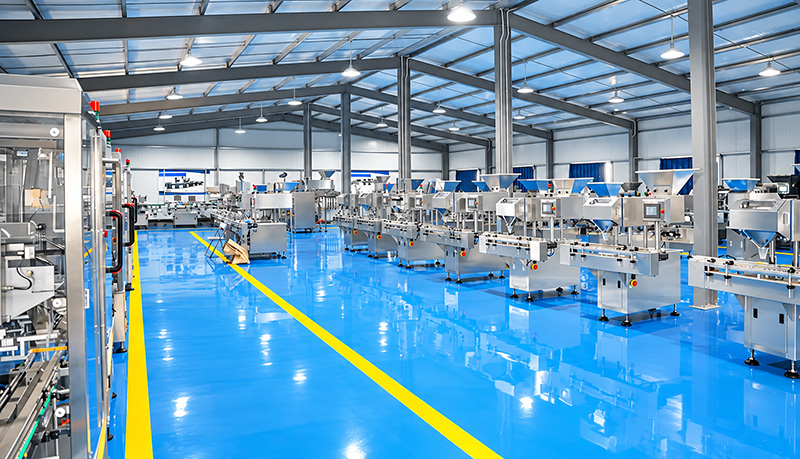
complete line in a factory

AIPAK’s complete line in a factory

Don’t agonize over this. Answer five questions honestly and the answer is usually obvious. The first three are the constraints behind the whole decision — budget, floor space, integration. The last two are about your volume and your labor math.

1. My budget — core capacity now, or the whole thing at once?
2. Can my building take 10 meters inline?

If not, does L-shaped or U-shaped work? If neither → start with the core five.

3. Does anyone on staff handle equipment integration?

No → having one company commission a complete line is a lot less work.

4. Is my volume steady, and is it climbing?

Steady and climbing → the complete-line math is easier to justify.

5. Have I ever run the cost of the hand stations?

If not, run it. Section 4 has the framework.

Where that lands

Budget and space both there, and you’d rather not manage it yourself → complete line.

Held back by budget or by space → start with the core five, and leave the door open: controls and protocol, conveyor height, speed headroom, and the sleeving pair’s position. Settle those four at the start.

Send us your floor dimensions and your target output and we’ll tell you which one fits — including telling you that you don’t need a complete line yet.

Frequently asked questions

Can I run a line with just the core machines?

Yes. Feeding, counting, capping, sealing and labeling connected together make a line that runs — empty bottle in, labeled finished bottle out, nobody touching it in between.

What’s missing are the optional stations: desiccant, cotton, neck sleeving and shrink, cartoning and case packing. Those get done by hand for now.

How many people does it take to run it?

Two to three, never more than three.

Where you land in that range depends on how long the line is and how complete it is. More hand stations, plan on the high end. All the optional stations in place, the low end.

Does buying a complete line lock me into one supplier?

The machines on that line come from one company, and that’s true. But it isn’t a contractual lock — it’s a technical reality. Machines have to signal each other, that’s hard when protocols don’t match, and when something breaks two suppliers tend to point at each other.

When you build a second line later, you’re free to buy it anywhere. It’s a separate line and this one doesn’t constrain it.

Can I mix machines from different brands?

Physically they connect. The signals are the problem.

Every machine may be perfectly good on its own. But matching their speeds and getting them to signal each other takes each builder opening up an interface, and nobody owes you that. When it’s time to commission, this tends to stall on protocols rather than on mechanics.

If you go this way, somebody has to own the integration, and you need every builder’s communication protocol in writing before you buy.

Who do I call when something goes wrong?

Complete line: one call, to our factory. We commissioned it.

A line assembled from several suppliers: something goes wrong between two machines and each supplier has a reason it’s the other one. You’re in the middle sorting it out.

Can I start with core machines and connect the full line later?

Yes, and this part is settled — an automatic line with manual stations takes machines later and becomes a complete line.

But four things get locked in now: controls and communication protocol, conveyor height, speed headroom, and the sleeving pair’s position. Tell your supplier up front that the line will be completed later. Door open, you slot machines in. Door shut, you lay out a new line.

How much floor space does a complete line need?

No fixed factor. Inline, plan on at least 10 meters, and the more complete the line the longer it runs.

If it doesn’t fit, L-shaped or U-shaped layouts fold the line into the space you have. Send us your room dimensions and where the doors and columns are, and we’ll lay it out for free.

Do your machines meet US electrical certification requirements?

Yes. Our machines are certified and use certified electrical components. Because the exact scope depends on the model and electrical configuration you select, our factory confirms it in writing before production.

LET’S PLAN YOUR LINE
Send us your floor dimensions and target output
Send us your floor dimensions and target output — we’ll tell you honestly whether to start with core machines or go for a complete line.

Prefer to talk it through? +1 (213) 526-8644

Table of Contents
Three constraints first

Budget, floor space, and line integration. Then use your output and real labor costs to decide how complete the line should be.

Scroll to Top