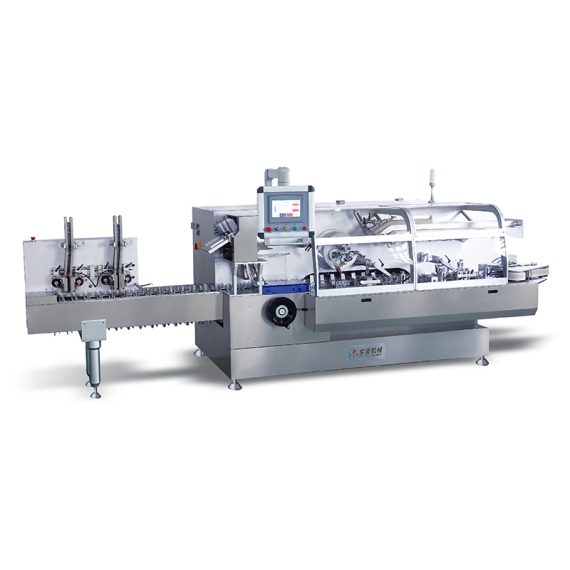
The Ultimate Cartoning Machine Guide: Optimizing High-Speed Carton Opening and Synchronized Leaflet Feeding for Secondary Packaging Lines
If a secondary packaging line suffers from erratic carton opening alignment or mismatched leaflet insertion speeds, the paper blanks will twist and cause immediate machine jams, leading to broken products and severe line downtime.
To eliminate these costly cartoning defects, pharmaceutical and nutraceutical manufacturers must upgrade to continuous horizontal cartoning machines equipped with rotary vacuum suction arrays and synchronized push-feeder linkages to secure perfect product insertion.
This technical buying guide provides clear engineering solutions, vital timing calibration parameters, and paper-board handling tips that have been fully proven and validated in busy, cGMP-compliant automated packaging facilities.
1.What Are the Primary Classifications of Industrial Secondary Packaging Equipment?
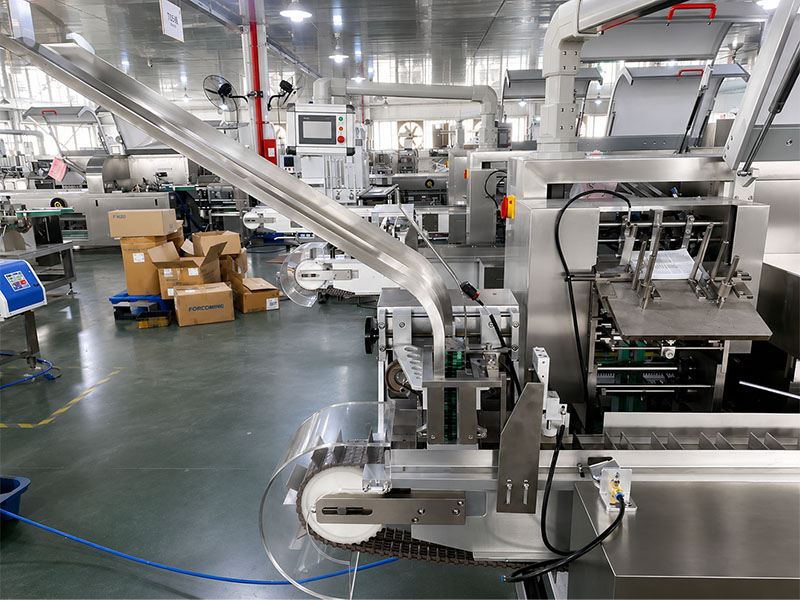
At the industrial level, cartoning machines are a significant gateway provide end-of-line case to secondary packaging. Servo-driven synchronization systems capable of carton formation and placement of the products (99.5% accuracy) with reduced deviation. AIPAK’s cartoning machine design, modern features, and easy integration ensure work cGMP compliance for pharmaceutical packaging.
Primary Machinery Classifications
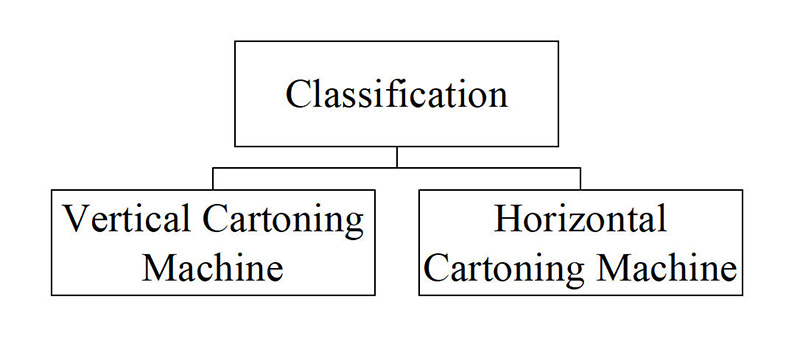
The primary classifications of cartoning machines are described in the section below.
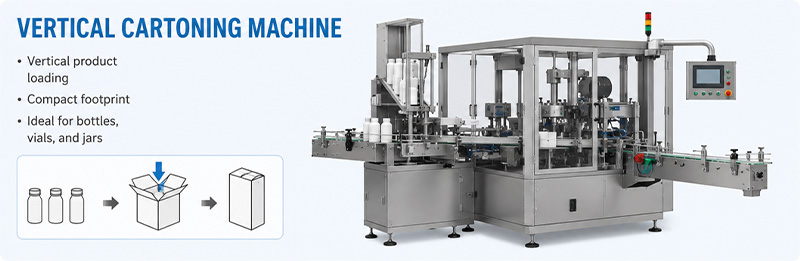
The vertical cartoning system, where the product is inserted into the carton from the top or the vertical position of the carton opening. Therefore, the system drops the product from the upward to the downward position and allows the items to be placed directly using the gravitational force. This layout is actually best suited when your product is rigid or stable in nature, such as bottles, jars, etc.
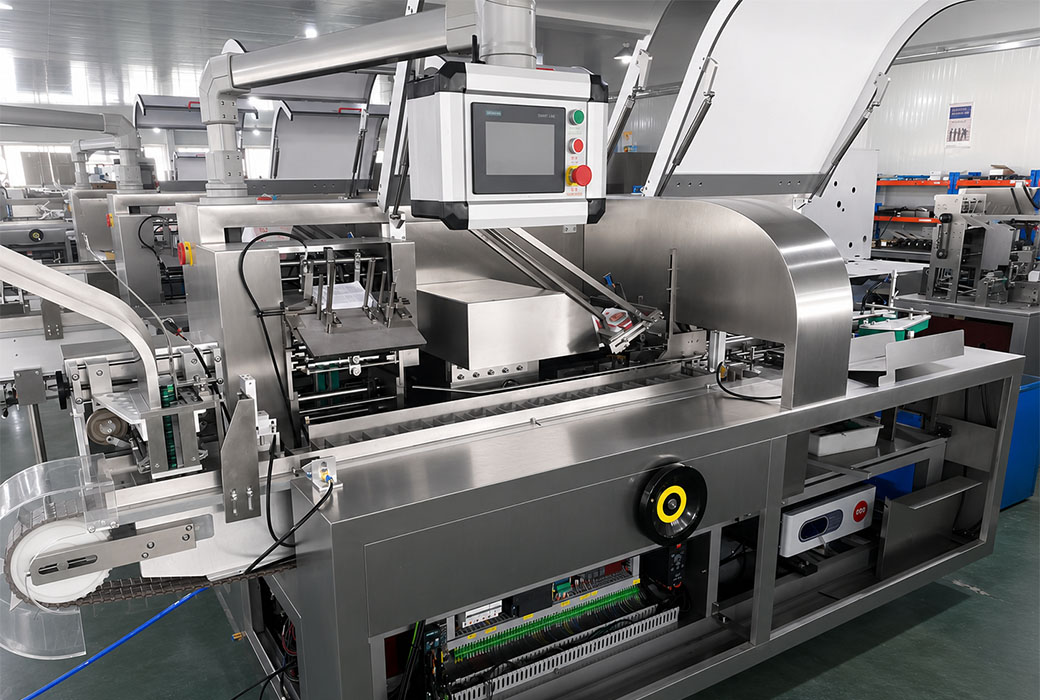
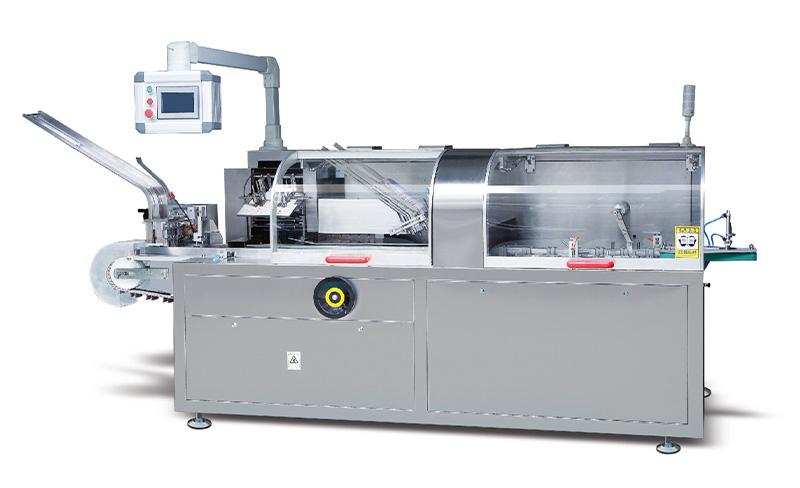
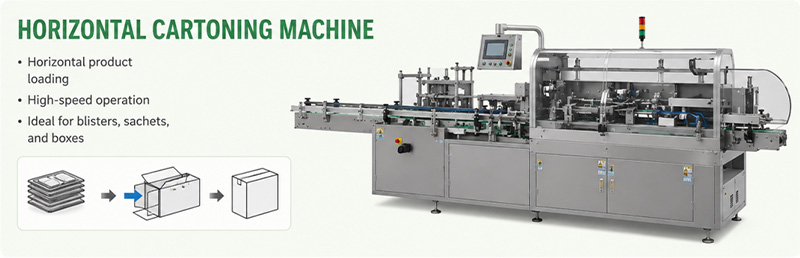
A horizontal cartoning system, as its name suggests, works on a horizontal layout. The product is inserted into the carton using pushers or feeders. This is widely used as an industrial standard layout for products such as blister packaging, pharmaceutical tubes, and various sachets. It provides great control and accuracy for multi-packs, also due to continuous motion, and gives high production.
2.How Do Mechanical Cam Linkages Coordinate Carton Pre-Breaking and Smooth Product Insertion?
When looking for insight into how a cartoning machine works, its precise answer is its high synchronization. The cam linkage’s strong coordination with carton pre-break and smooth product insertion collectively helps in the prevention of carton tearing and product jamming.
The principle of how do cartoning machine work is described in:
Mechanical Synchronization of Cam Linkage
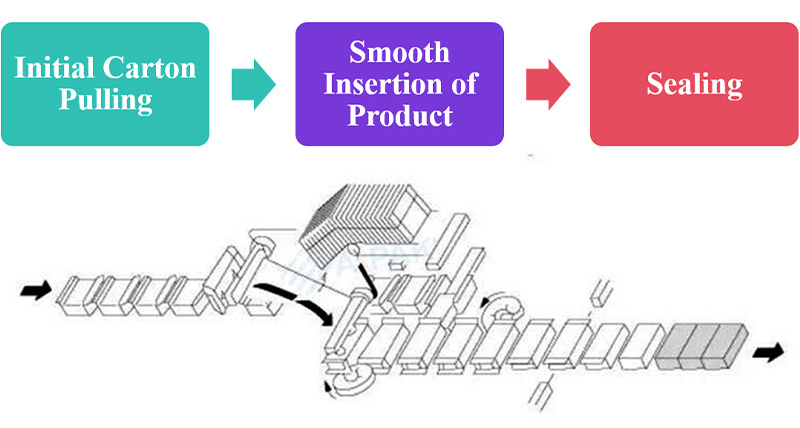
The mechanical cam linkage is used to maintain consistent operational flow without delay. From carton picking till final sealing, all steps go in a sequence. AIPAK’s cartoning machine follows with three basic steps for synchronization of cam linkage.
First, the central rotational drive operates all controlling keys such as pre-breaking, product feeding and transportation of the cartons. Secondly, the cam is utilized to dictate the defined ‘speed and acceleration of the machine’. Thirdly, the associated parts, such as rollers and the central surface, keep the machine and levers aligned.
Carton Pre- Breaking & Product Insertion
The carton pre-breaking and smooth product insertion by cartoning machines are initiated with the following steps:
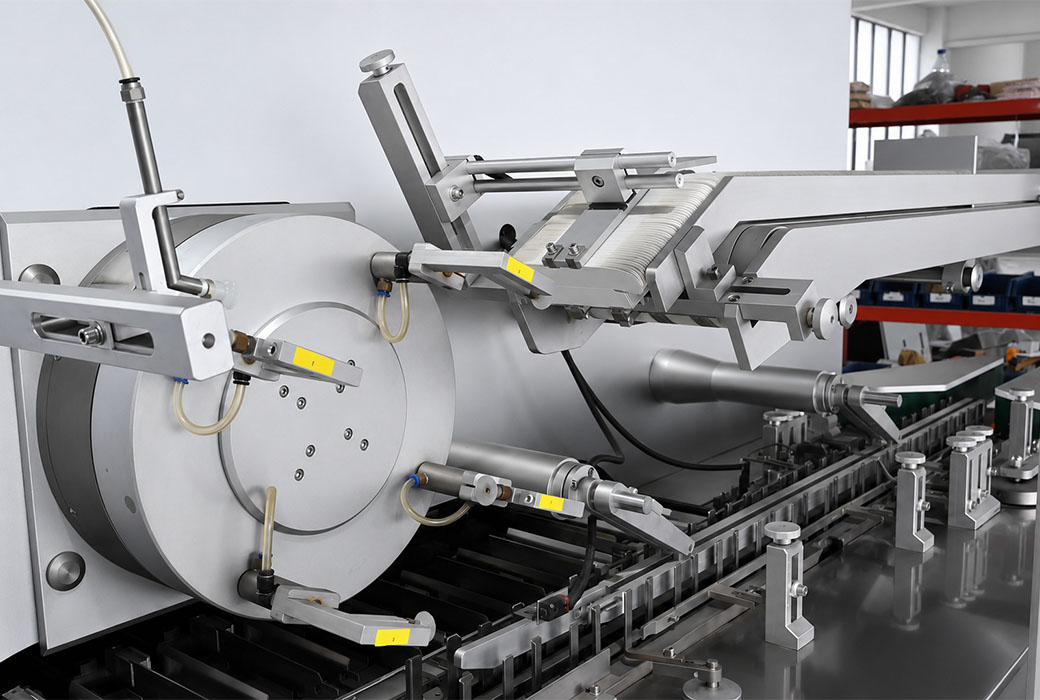
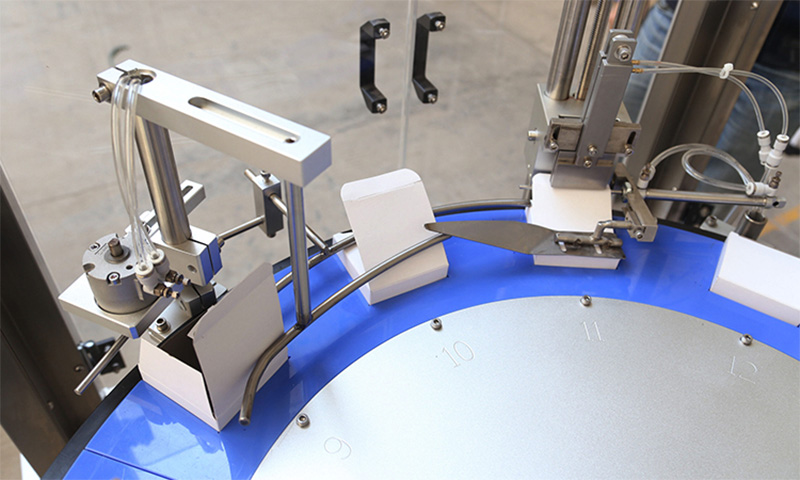
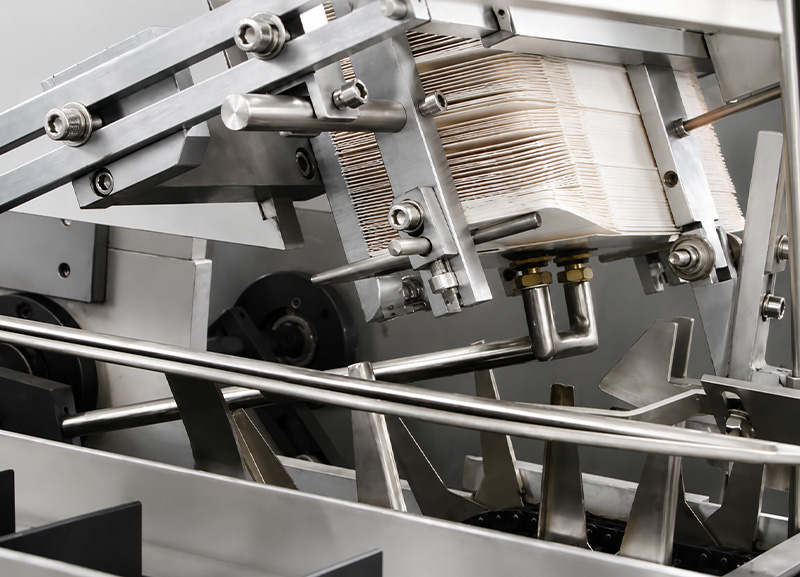
The vacuum arm pulls the flat carton blank from the magazine. The cam pushes the carton at a 90-degree angle to pre-break the creases.
Smooth Insertion of Product
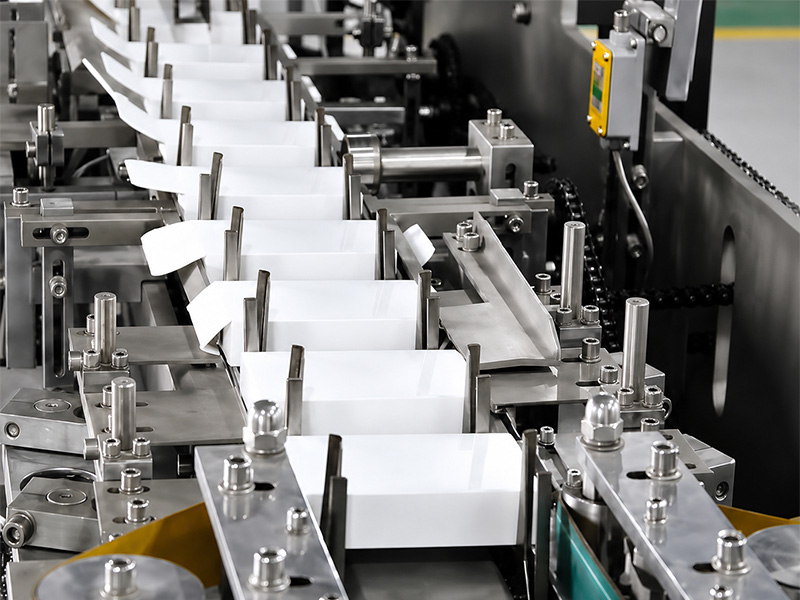
Conveyors allow products to travel towards the carton. The carton and pusher move together. The guides help with the upkeep of the product and carton at the centre. Thus, the product is positioned inside the carton effectively.
Sealing
The cam linkage helps in the prevention of the product slipping back. This is a continuous process without tearing chances. An immediate tucking-in process occurs to seal the carton. The completion of these steps is observed at 120 cartons per minute.
3.What Engineering Fixes Solve Leaflet Folding Inaccuracies and Insertion Bottlenecks?
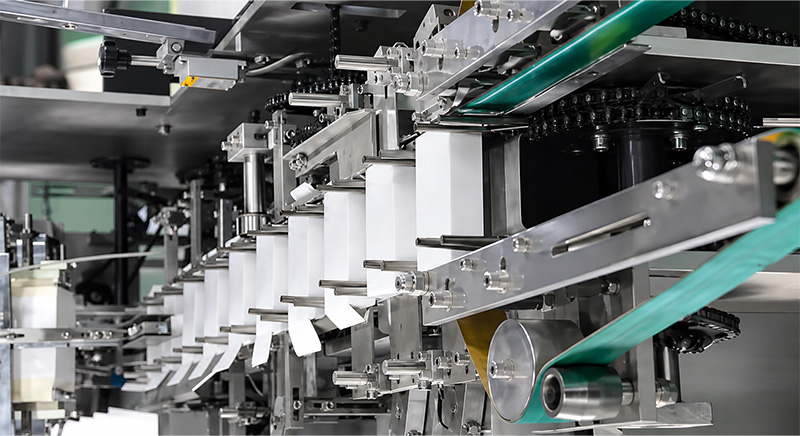
In clean rooms, the operational environment is highly stable and controlled. The common problems related to leaflet folding inaccuracies and insertion bottlenecks impact the working environment. For instance, the GUK folder is used in pharmaceutical packaging lines to insert into cartons along with medications.
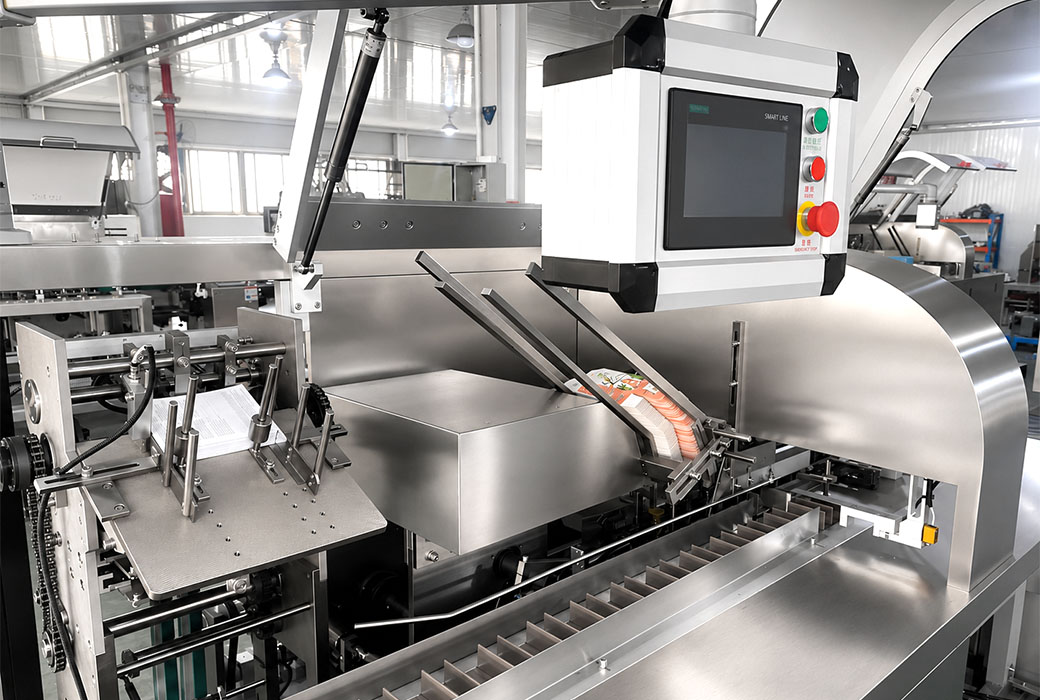
Therefore, multiple systems, such as roller and buckle plates, are meant to keep thin paper sheets accurate and folded. However, in some cases, it bunches up and jams the main pushrod. AIPAK’s modern machine ensures thin leaflets are accurately positioned and maintained with help of vacuum suction-based leaflet insertion system without jamming. Our machines are ideal for pharmaceutical packaging for fast operation.
Our engineering team fixed this problem with the installation of servo-driven leaflet feeding rollers in machine. It helps in introducing as well as adjustment of paper based on thickness. Along with this, the drive is responsible for ensuring the paper insertion is pushed and placed underneath the product, such as a blister pack. Thus, high-quality cartoning is attained without catching or jamming on paper flaps.
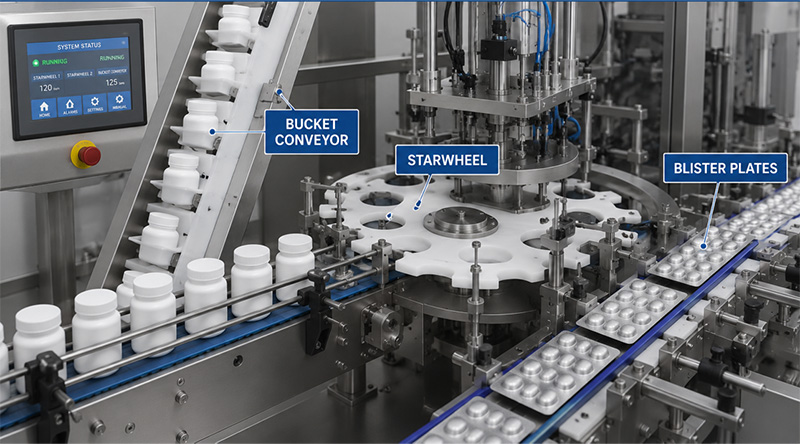
4.How Do Smart Interfaced Starwheels and Bucket Conveyors Smoothly Feed Blister Plates and Pill Bottles?
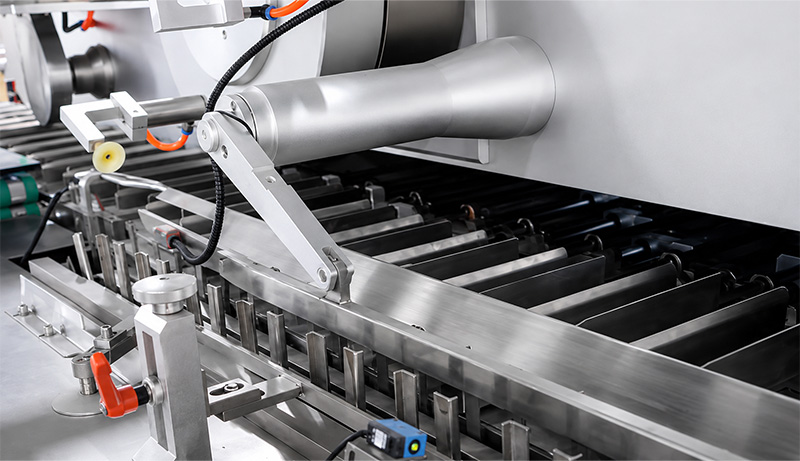
In a cartoning machine, a smart-interfaced starwheel, which is a rotary indexing, helps in positioning the carton and bucket conveyors together upstream of the cartoning process. Both of these advanced components operate with electronic gearing and mechanical handoffs to manage the packaging of products like blister packs or bottle counting lines.
Mechanical Interaction of Dynamic Friction Belts & Items
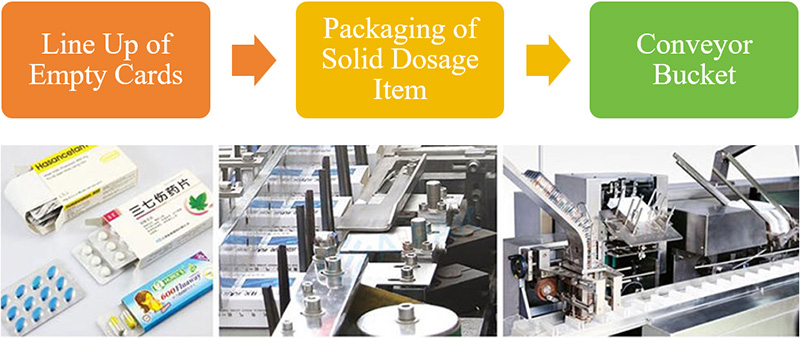
To understand the mechanical interaction of a servo-driven starwheel and bucket conveyor, please look at the steps:
Line Up of Empty Cards
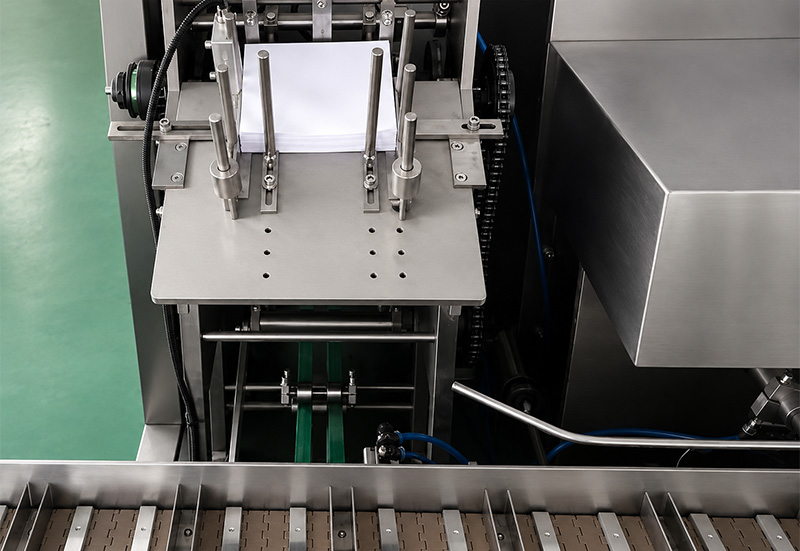
The conveyor path and starwheel work in parallel in the lining up of items and empty cartons.
Packaging of Solid Dosage Item
The movement of pill bottles or blister plates is positioned in the laying-down direction so they can slide into the boxes without damage or manual touch. Our servo driven efficient machine ensure super seamless packaging free from misfeeding of products.
Conveyor Bucket
From product orientation to packaging, the movement of the bucket, which is a slot made on the cartoner conveyor, helps in the stable movement of the item inside the box.
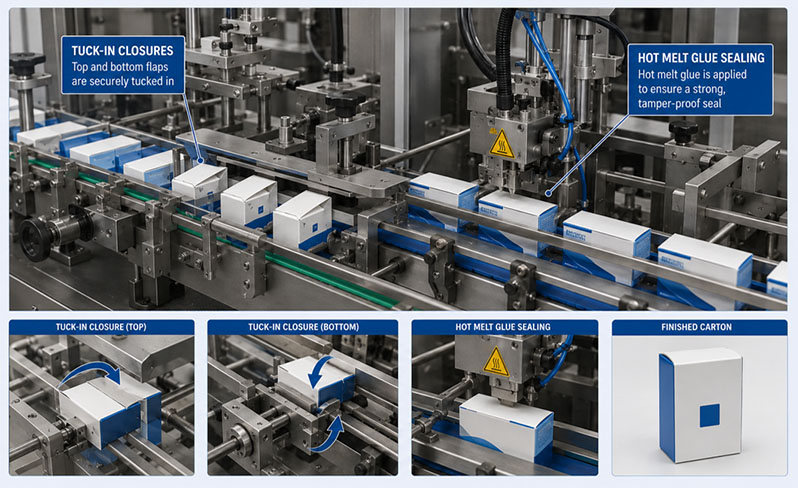
5.What Are the Practical Cost-Benefit Trade-Offs Between Tuck-In Closures and Hot Melt Glue Sealing?
Both tuck-in closures and hot-melt glue sealing offer balanced product sealing security to their customers. However, to understand the real-time or practical cost-benefit trade-off between them, we have compared these two premium sealing methods.
Method Properties | Tuck-In Closures | Hot Melt Glue |
Consumable Material Cost | The consumable material cost is very low. You don’t need to use liquid adhesive or tape. | It has a moderate cost. You will require continuous adhesive, nozzles, & electricity expenditure. |
Changeover Part Complexity | This is simple and fast. The changeover parts mostly rely on guide rails and Plows. | It has a high changeover complexity where you require Nordson gun adjustment with pattern programming, and heating. |
Dust Resistance | It has poor dust resistance. | As compared to tuck-in closures, hot melt glue has excellent dust resistance. |
Anti-Counterfeiting Security | It offers low anti-counterfeiting security as it can be easily opened and re-closed without any evidence. | It has high anti-tapering security. The fibre-tear bond prevents covert opening of the seal. |
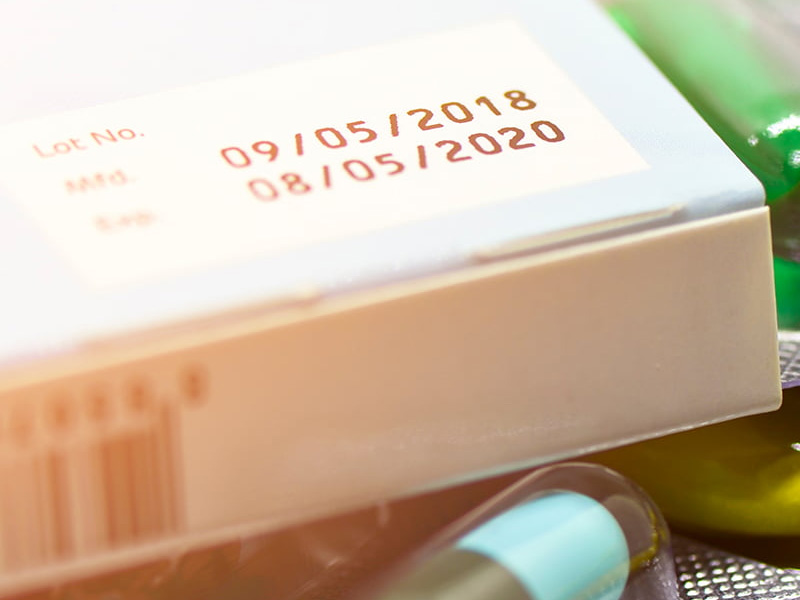
6.How Do Inkjet Printing and Embossing Systems Apply Readable Batch Dates on Carton Flaps?
Inkjet printing and embossing systems are used to print readable batch dates on the packaging carton flaps. This is a digital system which, upon receiving the command codes, prints in fractions of a second without delay. Thermal inkjet printing or laser printing array works by dropping micro-fine ink droplets, allowing printing of content. It vaporises quickly and prints characters on the paper.
The mechanical embossing system utilises steel dies to mark by pressing the description character over the paper board. Consequently, in the case of an inkjet printer, in humid or hot conditions, the chances of print erasing or smudging are high.
The mechanical embossing does not have smudging or erasing problems. In GMP regulations, mechanical embossing is preferred as it gives permanent, secure and tamper-evident print into the work stream. This directly eliminates ink migration, smudging, and fading over time. From our expertise, we suggest that embossing supports a consistent and effective printing process, strict compliance with cGMP principles and workflow.
7.How Do Fixed Digital Scale Indicators Speed Up Format Changeovers for Different Box Sizes?
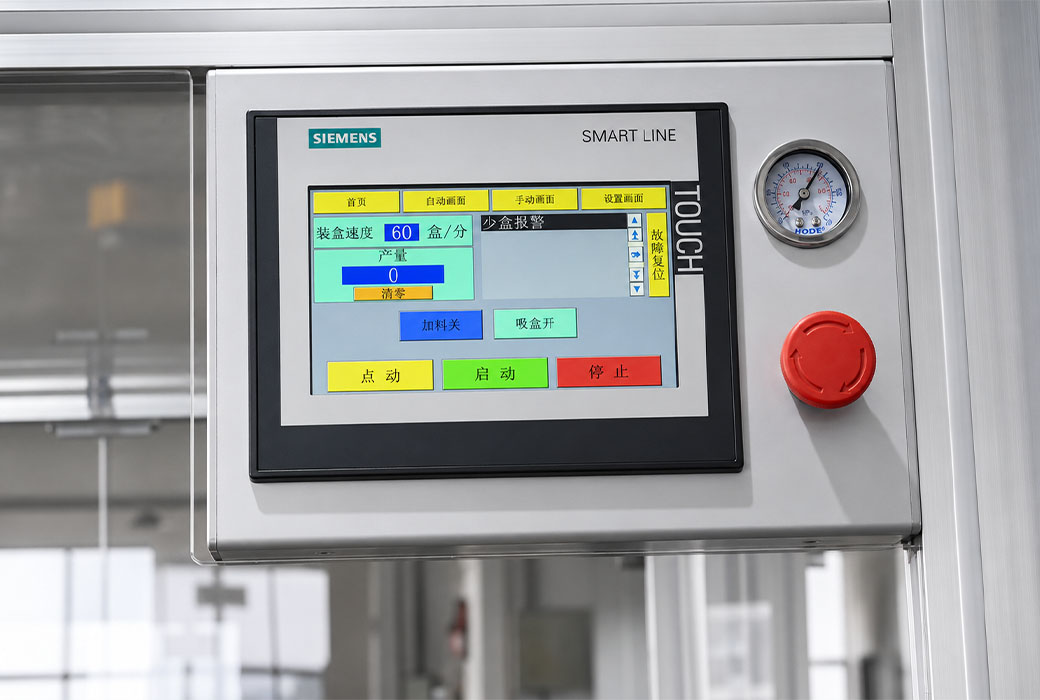
The fixed digital scale indicator is the digital display system demonstrating real-time machine adjustment for different box sizes. With the help of advanced machines with toolless options, the modular changeover design allows quick release of handles, guide rails, and shafts.
However, there are high chances of downtime in traditional measurement for format changeover. This includes external calipers, wrenches and other tools such as tapes. The fixed digital scale indicator operates with a central PLC in industrial setups. It notifies if the physical component position is not adjusted. Also, this is a toolless changeover setup, which lowers adjustment time from hours to a few minutes and the risk of errors to zero.
8.How Do Leaflet-Present Interlocks and Conveyor Air Rejections Stop Mispackaged Batches?
To run a flawless secondary packaging production flow, automated safety check sensors support the final line of the process.
The inline optical verification is responsible for detection. This is composed of three main sensors that are involved in mispacking, such as luminescence sensors, smart vision sensors and laser sensors.
The system checks conditions such as missing leaflets, an unprinted batch code, or an unglued flap. Thus, when a defect is identified, the electronic system triggers a downstream heavy-duty pneumatic flapper or air-jet system. This separates the defected product from production and rejects the faulty box from conveyor into a locked collection bin. Thus, photoelectric sensors guard the main production line running continuously.
Conclusion
Achieving high-efficiency secondary cartoning lines based on technical advancements. To guarantee high productivity, a cartoning machine manufacturer must verify that the system features mechanical cam pre-breaking, servo-controlled leaflet folding, and quick toolless format changeovers with digital counters. For international purchasing managers who are looking for premium manufacturing suppliers; must ensure these standards. Always prioritize these specific structural features that will protect high OEE and a strict cGMP audit. Are you ready to secure your packaging plan? Submit your carton dimensions and leaflet specifications; our team will contact you for a free production line layout audit. Contact AIPAK’s Team Now to start secondary packaging optimization.