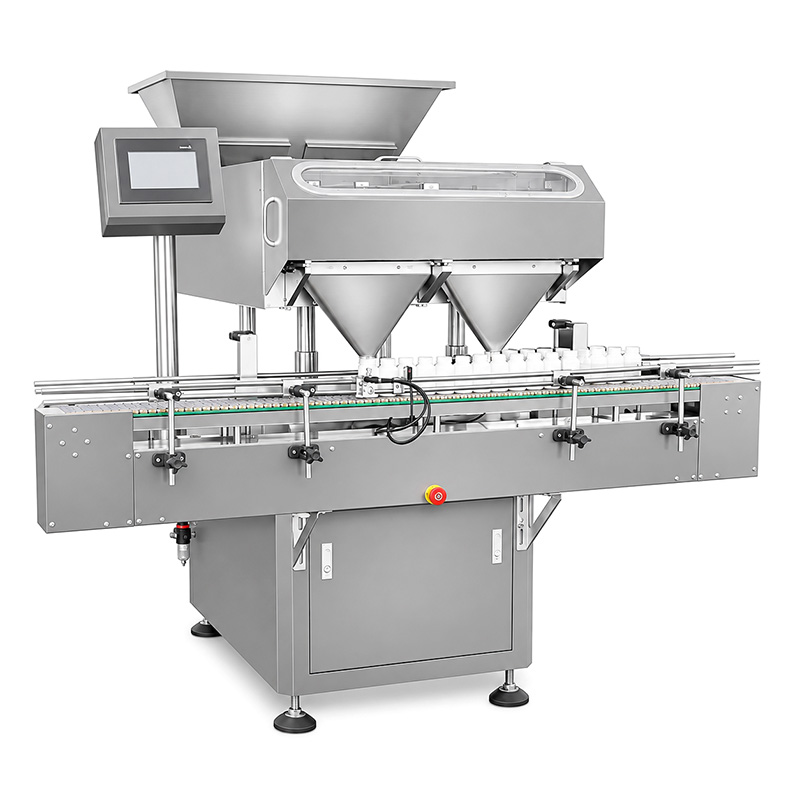
Tablet Counting Machine
Electronic Tablet and Capsule Counters, 8 to 48 Channels
Why Choose AIPAK Tablet Counting Machines?
Engineered for precision, built for uptime.
Counting accuracy ≥99.9%
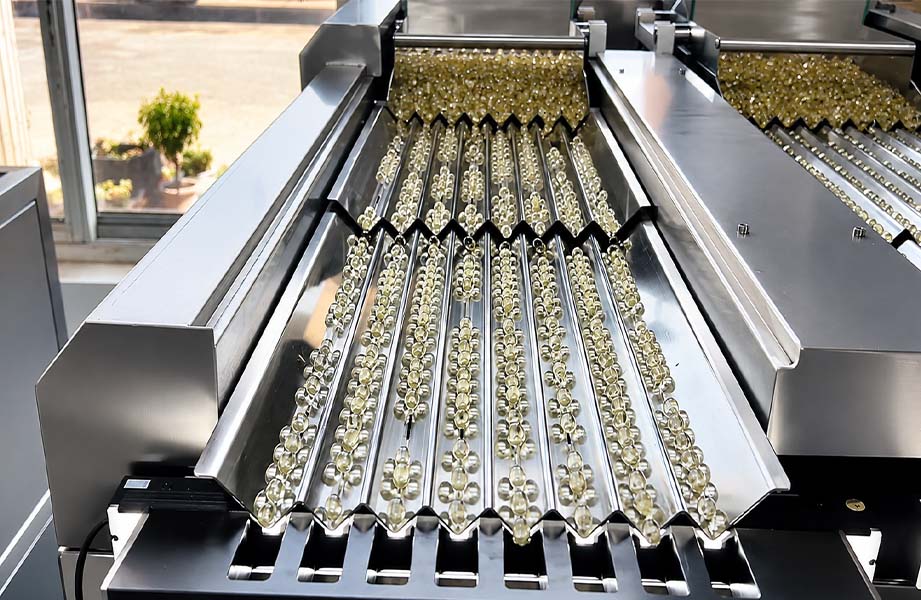
Every channel has its own processor, so each tablet, capsule or softgel is detected as it falls, and accuracy holds as speed goes up.
Tool-free stripdown
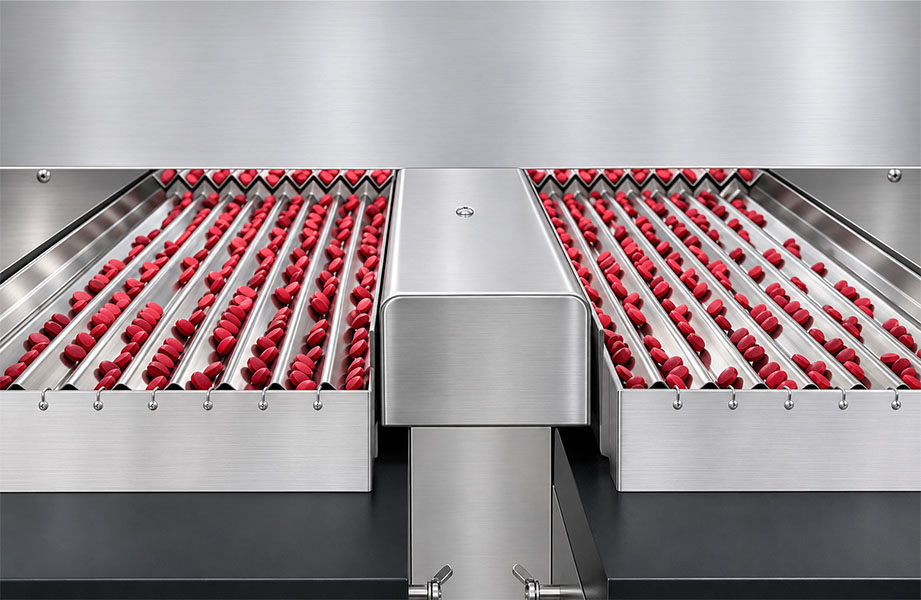
Every product-contact part, from the hopper to the discharge gates, comes off by hand without tools. A full strip-down and clean is part of your test run, so you’ll see how long it takes before you order.
Dust compensation and extraction
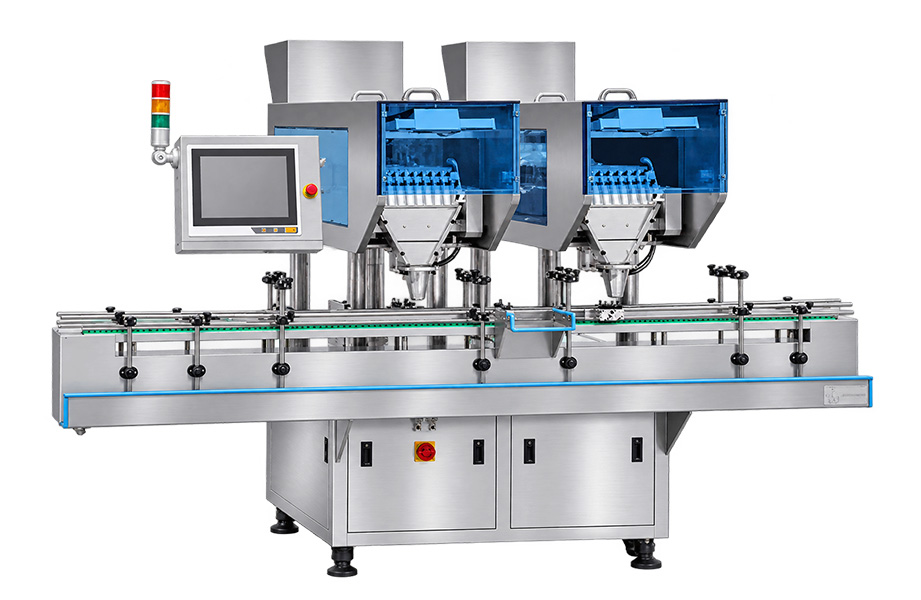
Dust is the enemy of counting. Our machines integrate a vacuum extraction at the hopper, track and counting head and dust compensation. This keeps your sensors clear, even with high-friction products.
Real-time flow compensation
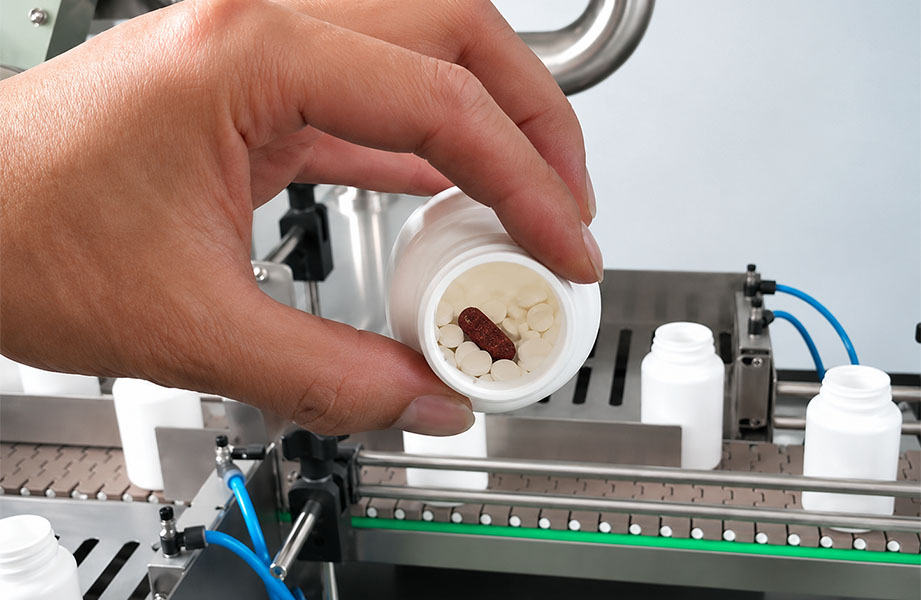
When a channel’s flow slows or bunches up, the machine adjusts the feed instead of stopping the line.
Recipe storage for every product you run
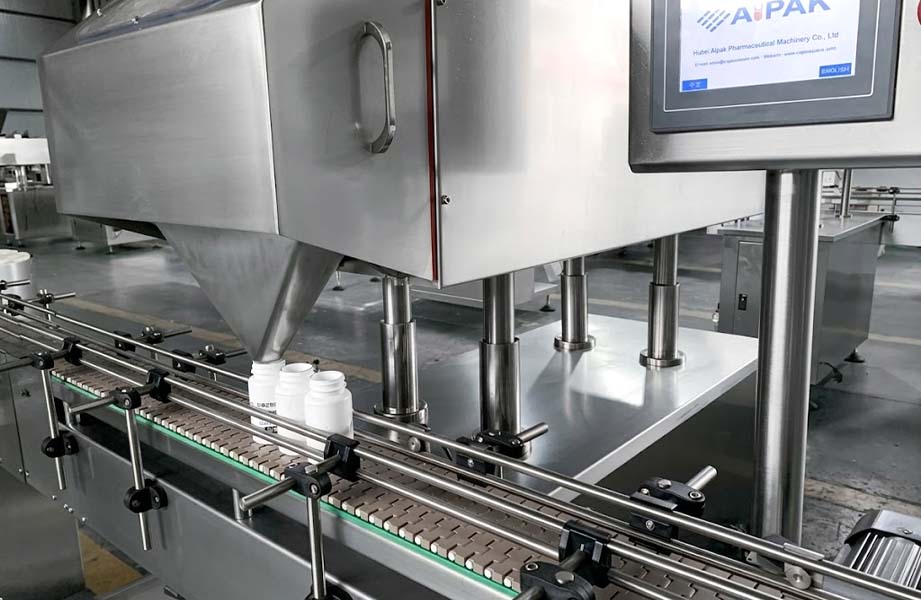
The touchscreen stores settings for each product — vibration frequency, bottle height, count per bottle. Switching from a 60-count multivitamin to a 120-count softgel is loading a saved recipe, not re-finding settings by trial. If you run a lot of SKUs, this is where your output actually comes from.
Built to run in a line
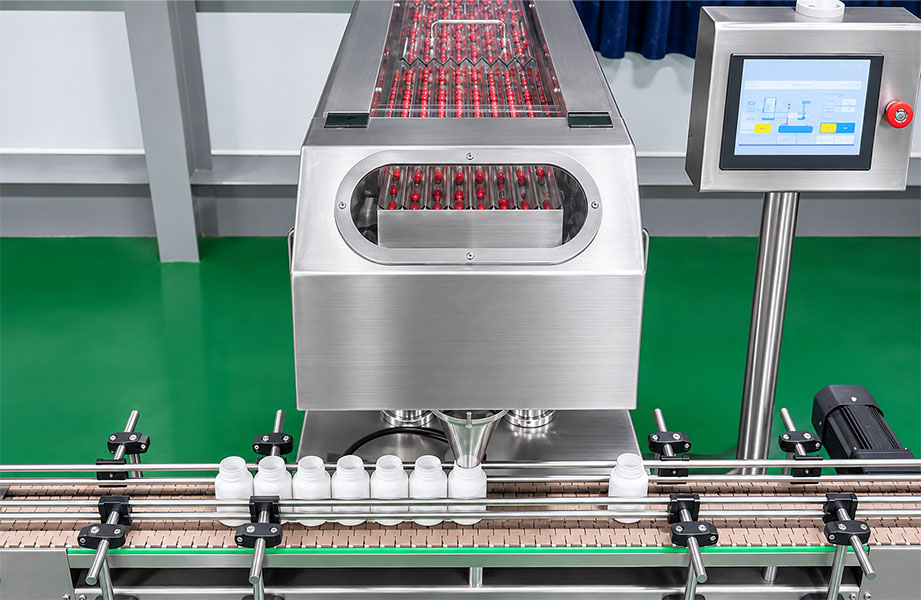
The counter runs on its own or as part of a line, with our bottle unscramblers, desiccant inserters, cappers and labelers. If you’re building a full line, see the tablet counting and bottling line.
What people count on these machines
Channel count sets your speed. What you’re counting sets everything else — how the product separates, how much dust reaches the sensors, and how gently it has to land in the bottle.
Eight Models, 8 to 48 Channels
Choose by throughput and by how much dust your product generates. Not sure? Send us your bottle and product dimensions and we will recommend the model.
Model comparison
Model | Channels | Speed (btl/min) | Footprint | Weight |
APC-B8 | 8 | 10–30 | 1050 × 700 mm | 150 kg |
APC-8 | 8 | 10–30 | 1360 × 1350 mm | 250–300 kg |
APC-12 | 12 | 20–40 | 1360 × 1350 mm | 320–380 kg |
APC-16 | 16 | 20–80 | 1360 × 1350 mm | 450–550 kg |
APC-16C | 16 | 40–100 | 1800 × 1450 mm | 580 kg |
APC-24 | 24 | 20–90 | 1760 × 1650 mm | 450–580 kg |
APC-32 | 32 | 40–120 | 2160 × 1650 mm | 550–620 kg |
APC-48 | 48 | 40–150 | 2160 × 1650 mm | 620–680 kg |
The 16C is the exception in this range. Vibrating feed lets sixteen channels run faster than twenty-four on a standard feed — so if your product is dusty, it may be both faster and cheaper than stepping up a channel count.
Talk to our experts to discover the right solution for your needs.
Documentation & Selection Support
Verify our quality standards and simplify your procurement process with our official documentation.
Product Portfolio
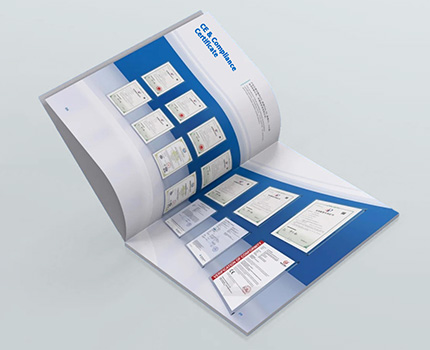
Quality Assurance
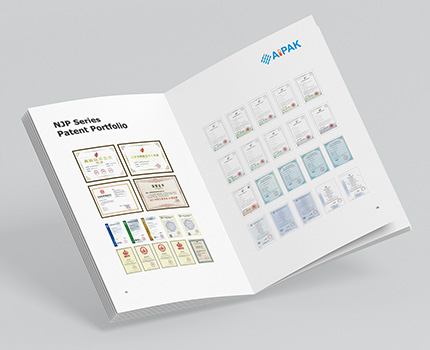
Technical Standards
Tablet Counting Machine Frequently Asked Questions
Each channel has its own infrared sensor and processor, and detects products from 3 to 25 mm. Bottle height and count per bottle are stored in the recipe for each product, and the gate only opens when a bottle is in position.
Yes. We’ve engineered an advanced multi-point dust extraction system. By integrating vacuum ports at the hopper, vibrating tracks, and the counting head, we remove airborne powder before it reaches the sensors. Additionally, our dual-dust compensation algorithm allows the machine to self-calibrate in real-time, maintaining high performance even in high-friction environments.
All contact parts, from the hopper to the discharge gates, come off by hand without tools. Switching products is loading a saved recipe and clearing the track. We time a full strip-down and clean during your test run, so you see it before you order.
Yes. It connects with our bottle unscramblers, desiccant inserters, cappers and labelers, and the machines signal each other so the line starts, slows and stops together.
Yes. Before the machine ships, we run a factory acceptance test with your product, and you can watch it on video or visit by appointment. Our engineer can install the machine in your plant and train your operators. This is a paid service, quoted in your proposal. After that, our engineers work through problems with your team on a video call, and our U.S. number, +1 (213) 526-8644, is answered 9 AM–7 PM China time, Monday to Friday.
Product-contact parts are 316L stainless steel; the frame is 304. Material certificates to EN 10204 3.1 are supplied on request. The machine is CE marked with a Declaration of Conformity.
It depends on channel count, your count per bottle, and whether you need it standalone or connected into a line. Send us your product and your bottles per hour and we’ll quote within 24 business hours. Most quotes include a free line layout drawing.
Start with your bottles per hour, then work backwards. Monthly bottles ÷ working days ÷ shift hours ÷ 60 gives you the rate you actually need. Divide by 0.8, because sustained output runs below rated output on every machine from every supplier. Then tell us whether your product is dusty — that decides whether you need the 16C rather than a higher channel count.
A kit of wear parts ships with your machine. Every part in the kit, and the lead time for anything outside it, is listed in your quote in writing.
Yes. Our machines are certified and use certified electrical components. Because the exact scope depends on the model and electrical configuration you select, our factory confirms it in writing before production.
The Ultimate Tablet Counting Machine Guide: Optimizing Electronic Sensor Accuracy and Toolless Changeover for Bottle Packaging Lines
If an industrial automated counting line suffers from severe heavy dust accumulation or poor product separation tracks, the electronic photoelectric eyes will experience blindness and trigger miscounts, leading to compliance risks and customer complaints over inaccurate bottle fills.
To prevent this, supplement and OTC bottlers need multi-channel electronic counters with dust compensation and parts that come off without tools. This guide covers how electronic counters work, how they handle dust and sticky products, and what to check before you buy.
Table of Contents
1.What Are the Primary Technological Methods Used to Separate and Quantify Solid Dosages?
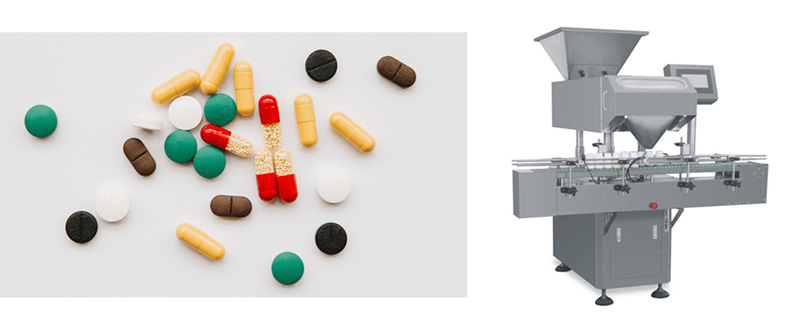
For pharmaceutical solid dosage formulations, process correctness is very important. The entire procedure is carried out under optimized procedures. When it comes to final packaging, the global buyers must know what is tablet counting machine. Commercially, AIPAK’s multi-lane tablet counting machines are the most practical equipment demanded in large industries. The automation and quick action allow mechanical separation in fractions of minutes. It’s multi-stage vibrating glass plates that allow tablets, capsules, or softgel formulations for counting and in real production line packaging.
The final product is extended over the plates, accompanied by vibration. This allows subtle movement without stacking up and interruptions. Each channel offers a single file stream with consistent flow. Therefore, you can benefit from the target goal with uniformity and sharp counting detection.
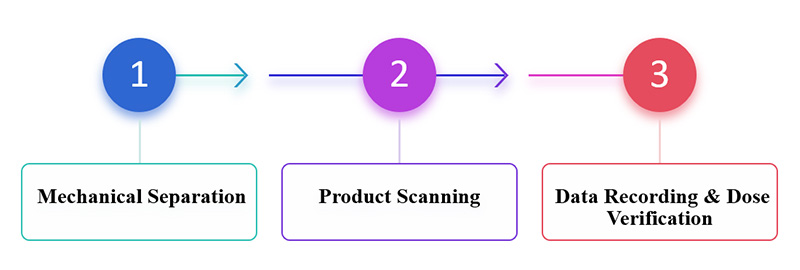
Step 1: Mechanical Separation
Once the tablets are introduced, they’re mechanically separated with the help of vibration. Each tablet individually travels in a single file lane into the stream.
Step 2: Product Scanning
The tablet counting machine features high-speed scanning windows. The stable motion of tablets ensures accurate optical detection. The detection occurs inside the scanning windows, which are also known as scanning zones. The laser or infrared light is emitted from scanners. The entire scanning takes place in milliseconds.
Step 3: Data Recording & Dose Verification
The physical data is converted to digital and displayed on a screen. Users can direct analysis and verify the dose record upon receiving the results. The machine is highly accurate, where one tablet passes through the system, generates one signal, and makes it count in the software.
Today, the modern scanning window of the tablet counting machine is a crucial part of pharmaceutical production. Because it offers you real-time verification. The sensors never touch the product, so nothing about the tablet changes as it’s counted.
2.How Do Advanced Photoelectric Sensor Arrays Prevent Counting Errors Caused by Active Powder Dust?
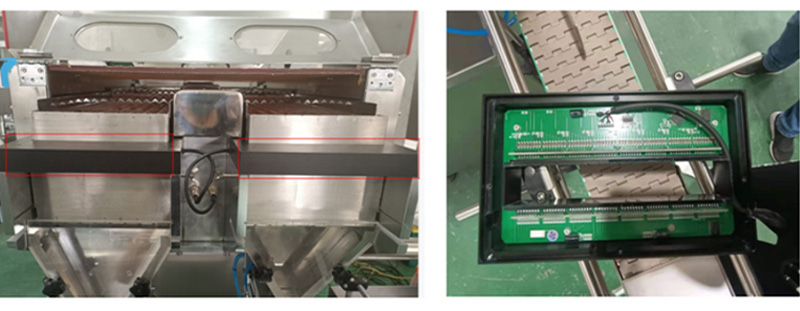
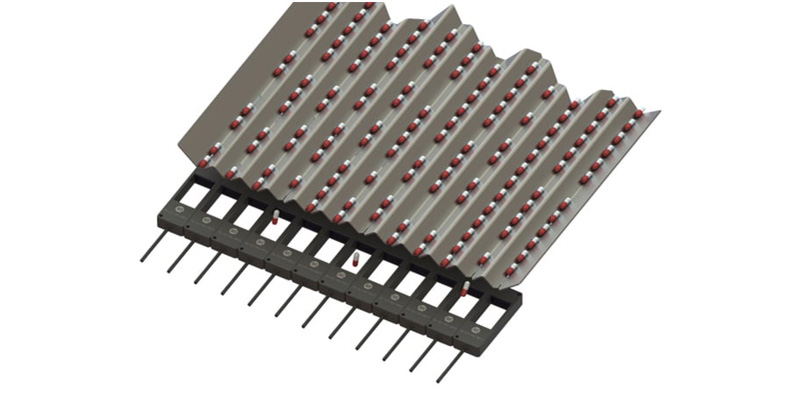
In real pharma operation plants, dust generation from active ingredients or chemicals, excipients can’t be stopped. Dust direct pile up on the delicate parts of the machine, such as sensor glass, detector light, etc., affecting the counting efficiency. Although you can manage them with the proper measures.
The modern tablet counting machines are designed in a way that helps tackle dust as much as possible. For example:
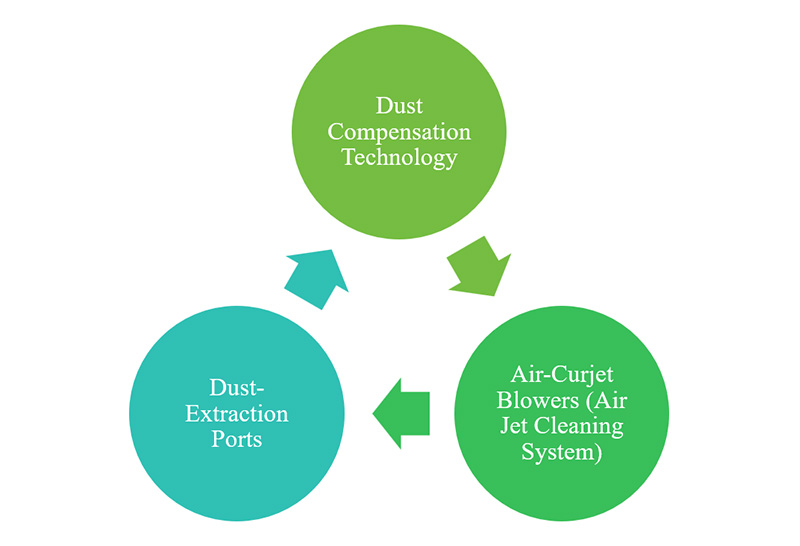
Dust Compensation Technology
In a tablet counting machine, dust compensation technology senses the presence of airborne powder over optical systems. Dust weakens the beam of infrared rays. Machines detect false signals and automatically adjust by filtering them and only showing the stable signals from tablets. Therefore, in pharmaceutical industries with dusty atmospheres, a stable workflow is possible.
Air Jet Cleaning System
These are cleaning systems that exert compressed air around the detection and scanning zones. Therefore, it prevents the settling of dust over optical windows. These air jet allow a clean and uninterrupted procedure without the need for manual cleaning.
Dust-Extraction Ports
These ports are integrated into the system, which has vacuum outlets that help in the elimination of dust. Unlike air jet, a negative pressure is applied to suck the powder or dust particles. In this way, it offers long-term system stability and cleanliness.
3.What Are the Performance Differences Between Slat Counters and Electronic Multi-Channel Matrix Counters?
In modern production industries, the tablet counting line is a mandatory setup to bring operations rapidly and accurately. The traditional mechanical slat counters and electronic multi-channel matrix counters are suitable options that are still popular in the pharma production world. What are the major performance differences between them are discussed below:
Slat Counters or Mechanical Pocket Counting Systems
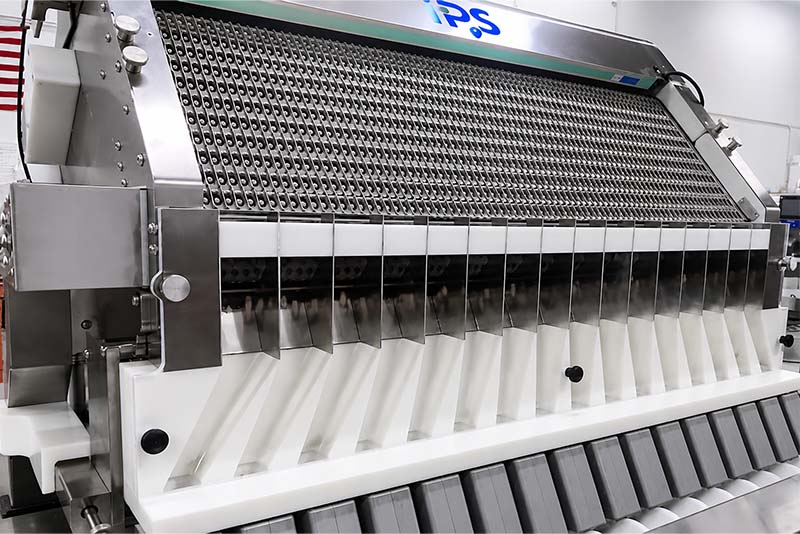
This is a fast tablet counting machine designed with fixed molded trays or pockets. The purpose of each pocket is to hold an individual tablet inside. Once tablets are trapped and held in each slat, it is considered counted. This is a cost-effective option with simple construction. However, changes in tablet sizes may require more changeover time and energy.
Electronic Multi-Channel Matrix Counters
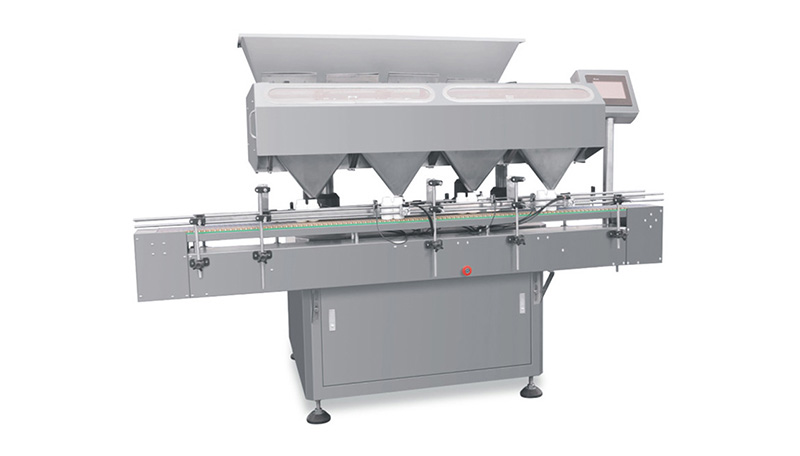
In comparison to slat counters, electronic multi-channel matrix counters are free and modern counting solutions. This machine is provided with sensor-operated multi-lane channels (such as 8-channel, 16-channel, or 32-channel systems).
It can easily deal with tablets or pills of any size or shape without any manual or mechanical adjustment. Moreover, data counting and interpretation are carried out via software in the machines that offer hassle-free throughput.
Performance Data Comparing Slat and Electronic Multi-Channel Counters
Metric | Slat Counters | Electronic Multi-Channel Counters |
Changeover speed | The machine requires a mechanical changeover, which is slow. | It has a fast changeover speed due to a software-based setup. |
Flexibility for unique shapes | It is not ideal for variable sizes and shapes of pills due to its fixed pocket design. | The machine is good with high flexibility as it handles multiple shapes/sizes. |
Maintenance / cleaning time | It has high cleaning and maintenance time. | It has low maintenance and cleaning time. |
Risk of tablet chipping | There are more chances of the tablet chipping. | The risk of tablet chipping is less. |
4.How Do Multi-Stage Vibrating Feed Plates Control Product Flow and Prevent Bottle Lane Jams?
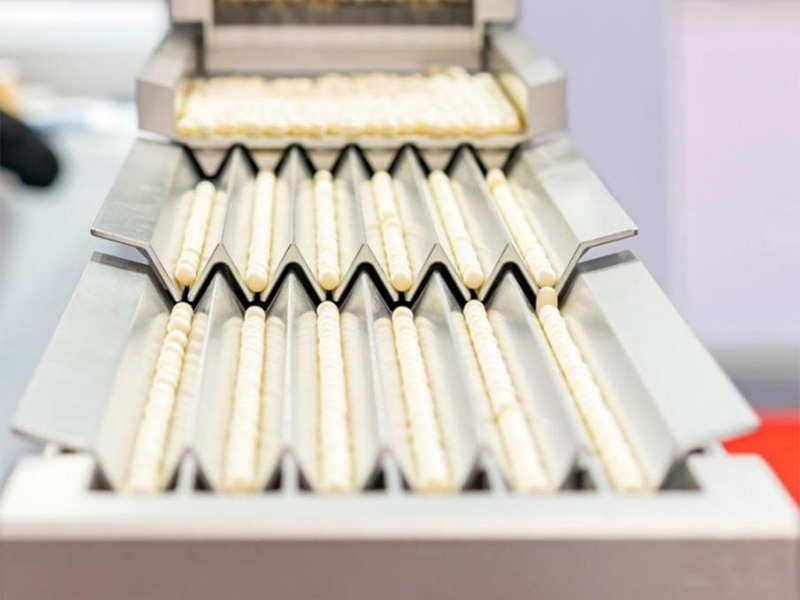
In multi-stage vibratory feed plates, the tablets move in a progressive cascade that prevents bottle jamming. The bulk products move down towards the channels under the force of gravity.
To reduce collisions and maintain alignment, a stable single-file stream of bulk tablets is guided to defined lanes that carry products in a directional flow.
The separation of tablets takes place with the provided vibration that lowers the chances of bridging and blockage. This feature helps in the prevention of common problems such as sticking of coated tablets with moisture.
An established pharmaceutical engineered physical gaps between individual tablets when they’re introduced to channels. Therefore, this physical gap ensures no overlapping in tablet counting or double counting from the scanning zone. This is ideal to keep a stable flow consistency and avoid counting errors.
5.What Engineering Solutions Stop Softgel Capsules and Coated Caplets from Sticking or Jamming During High-Speed Drops?
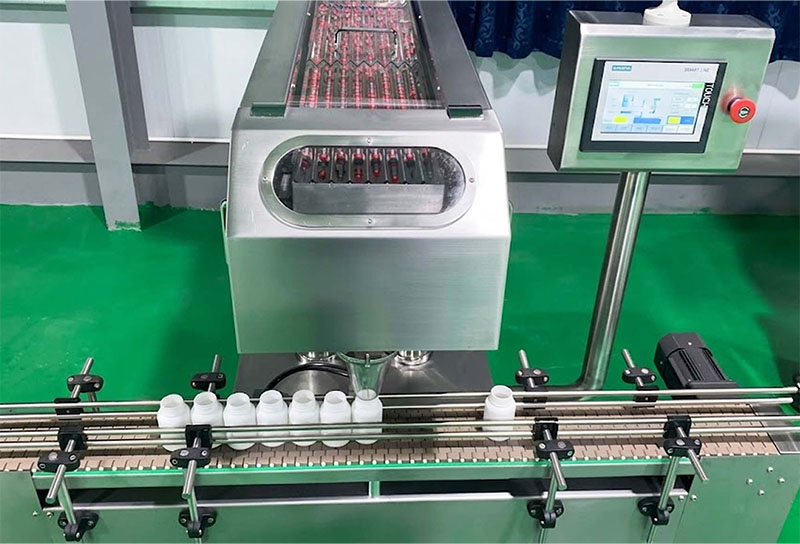
Sticky and oily formulations are always difficult to handle. Softgel capsules and coated organic caplets are best known for being highly challenging for a high-speed counting machine. This negatively impacts the counting efficiency of the machine with stickiness around the channels, clumpiness, and uneven spacing.
AIPAK’s stainless steel construction of machine materials has dealt with the progression of static build-up, or friction, during capsule counting. Side by side, advanced engineering has addressed this problem by adding a custom milled V-shaped drop design. This allows gravity-controlled movement, allowing vertical drop-down of capsules with lower chances of resistance.
The V shape directly involves the capsules with a reduced adhesion profile. Therefore, it lowers the chances of friction and charge building, thus no product congestion.
6.How Do High-Response Pneumatic Flaps Secure Precise Drop Timing and Eliminate Spillages?
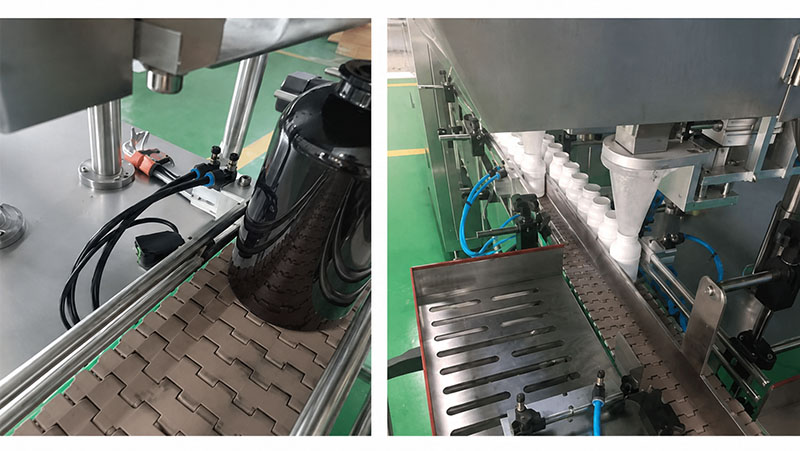
When the tablet is counted, it is finally discharged into a bottle supported with a high-response pneumatic flap control unit. They’re mainly adjusted and controlled from pneumatic cylinder bottle indexing sensors. Once the bottle reaches its position, it recognizes and triggers the flaps to open for a precise time. The tablets enter the bottleneck without overflow and misalignment.
Upon completion, the memory gates are closed, and the tablets are reserved. This avoids the spillage of pills when conveyors move. The same process is repeated when the next empty bottle batch is indexed to position. The flaps and the bottle indexing run in sync, so tablets aren’t spilled or crushed between bottles.
7.How Does a Toolless Modular Breakdown Design Reduce Cleanroom Cleaning Latency and Cross-Contamination?
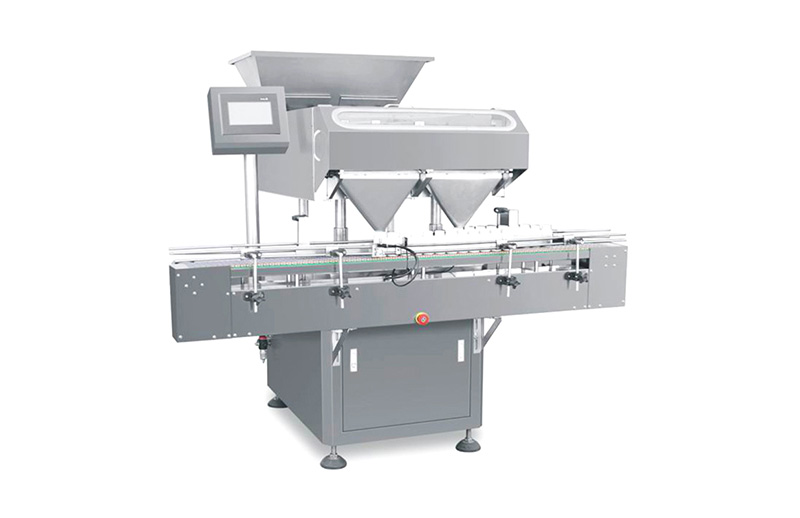
Cleaning and maintenance were difficult in the old times. The traditional methods for cleaning and maintaining the tablet counting machine involved the unbolting of hoppers, channels, etc.
Toolless modular breakdown design has significantly lowered interruption in cleanroom latency and aids in reducing cross-contamination.
Apart from time-consuming procedures, there are more chances of affecting the clean room SOPs. The leftovers and dust particles directly affect batches and the pharmaceutical environment.
That’s the reason AIPAK’ s advanced tablet counting machines are offered with modular parts. The machine components can be easily removed and adjusted without the need for hours and manual handling, thus preventing cross-contamination. The parts come off quickly and the surfaces are easy to clean.
8.How Do Conveyor Rejection Systems and Bottle Sensor Interlocks Secure Total Line Agility?
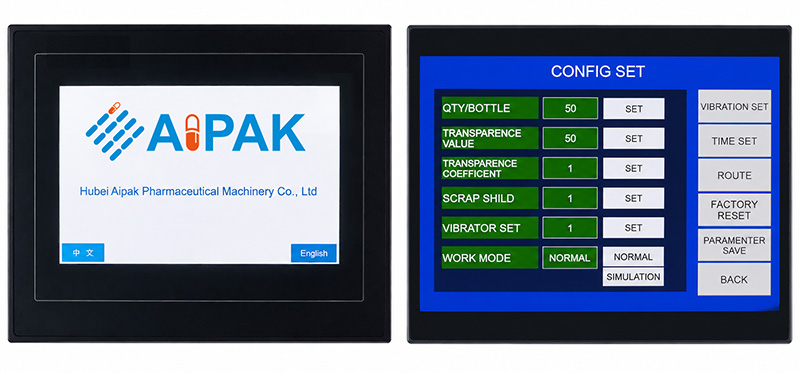
The conveyor rejection systems and bottle sensor interlocks secure total line agility by offering safety layers. In a production line, the tablet counting machine is integrated with other systems such as the bottle unscrambler machine, capping machine, labeling machine, etc.
The continuous and seamless flow of bottles is upstream from the conveyor, followed by strong synchronized sensor signals. For instance, any missing bottle or a faulty bottle is immediately detected because the system triggers the conveyor rejection gate.
Similarly, if the bottle is underfilled or overfilled, it is also detected and sent to the rejection zone. On the other side, the feeder hopper instantly stops working to prevent batch deviations and further movement of product to the packaging site.
Conclusion
A high-efficiency tablet counting line always featured three main keys: active dust- compensation sensors, a multi-stage cascading vibration plate, and modular toolless elements. Together, they keep counts accurate on a supplement or OTC bottling line. Send us your bottle and a sample of your product, and we’ll recommend a model and draw a line layout for your room, free.
Interested in a Tablet Counting Machine?