Automatic Strip Packing Machine
Soft Alu-Alu Heated-Roller Sealing for Tablets, Capsules and Effervescents
Effervescent tablets are large, brittle and start reacting the moment they meet moisture. That’s why they go into a rigid tube with a desiccant cap, and why they can’t be dropped down a counting channel like a vitamin. Our machines lay them flat, line them up in a single row, and push them into the tube on their side.
What Every Model in the Range Does?
When packaging highly sensitive solid-dose formulations, secondary packaging reliability and airtight barrier performance are non-negotiable. AIPAK’s premium portfolio of automatic strip packaging machines bridges the gap between massive factory OEE and compliant cGMP control. Here is the engineering blueprint behind why global pharmaceutical manufacturers and CDMOs trust our strip packing technologies:
Sealed Flat, Not Formed
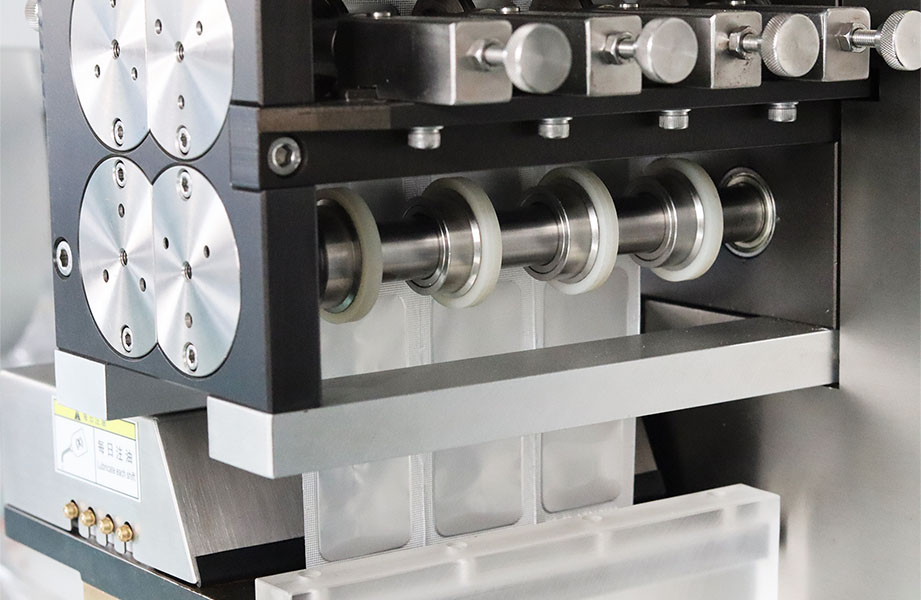
A blister machine heats plastic and stretches it into a pocket. This machine doesn’t form anything. The tablet sits between two soft aluminium foils and heated rollers press them together around it. The barrier is the full thickness of the foil on both faces.
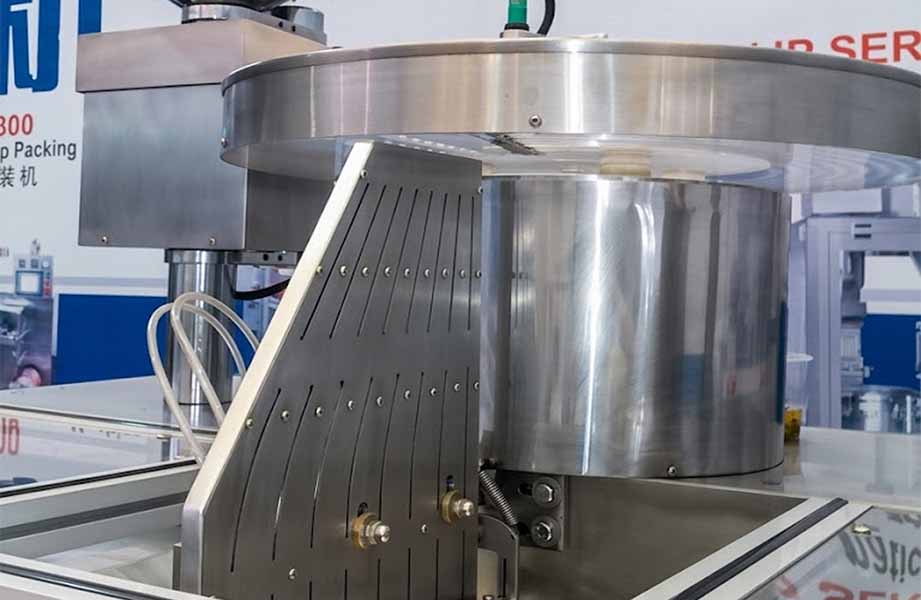
Vibratory Feeding with Broken-Tablet Screening
Tablets feed from a vibrating hopper, and broken pieces are screened out before they reach the rollers. A fragment sealed into the margin is what causes a leak, so this step matters more than it looks.
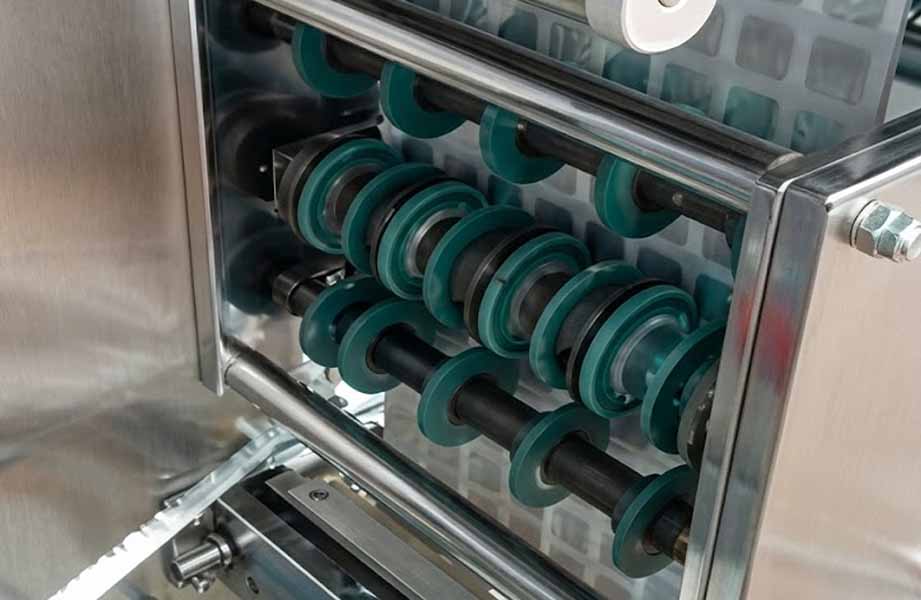
Two Heated Rollers, Two Controllers
Each sealing roller has its own heater and its own temperature controller. When you switch between Alu-Alu and plastic-plastic, you set each roller to suit the material rather than running both at one setting.
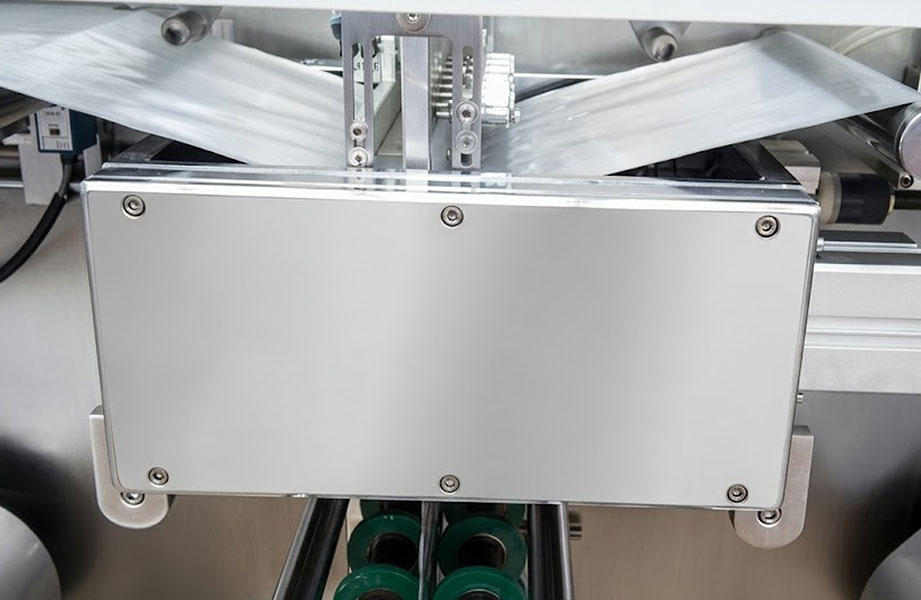
Dual-Stage Traction Guide & Precision Cuts
The longitudinal slitting and traction sequence is split across a specialized two-stage parallel guiding architecture. This forces the moving foil web to maintain complete flatness, eliminating high-speed curling and ensuring flawless edge shearing.
Automated Defective Sheet Segregation Compartment
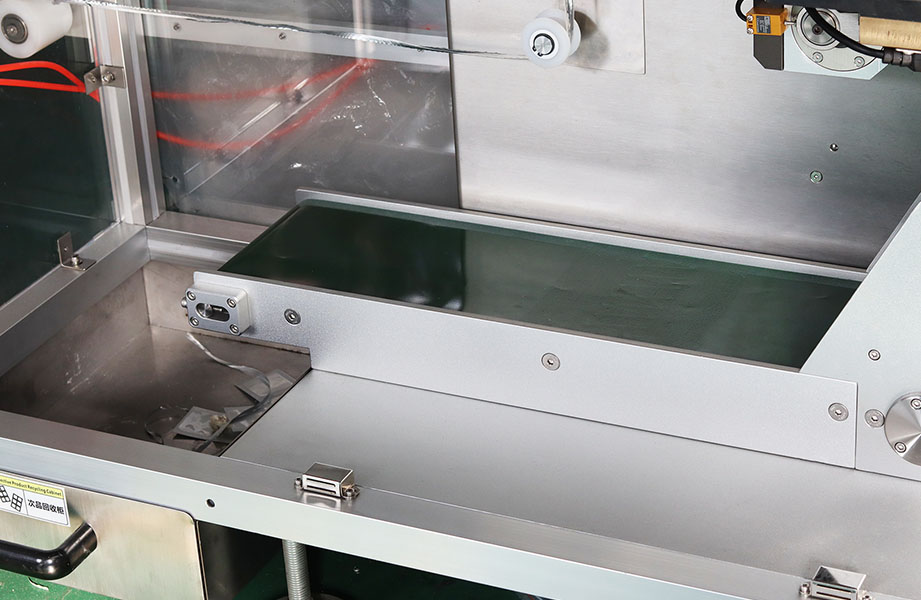
Any under-filled sheets or empty cell voids are actively captured and directed via an isolated reject sorting conveyor belt. Defective sheets bypass the primary output line and flow straight into an independent quarantine recovery cabinet, allowing operators to audit and sort rejects cleanly without slowing down the primary production line.
Tension Balancers & Pneumatic Air Shafts
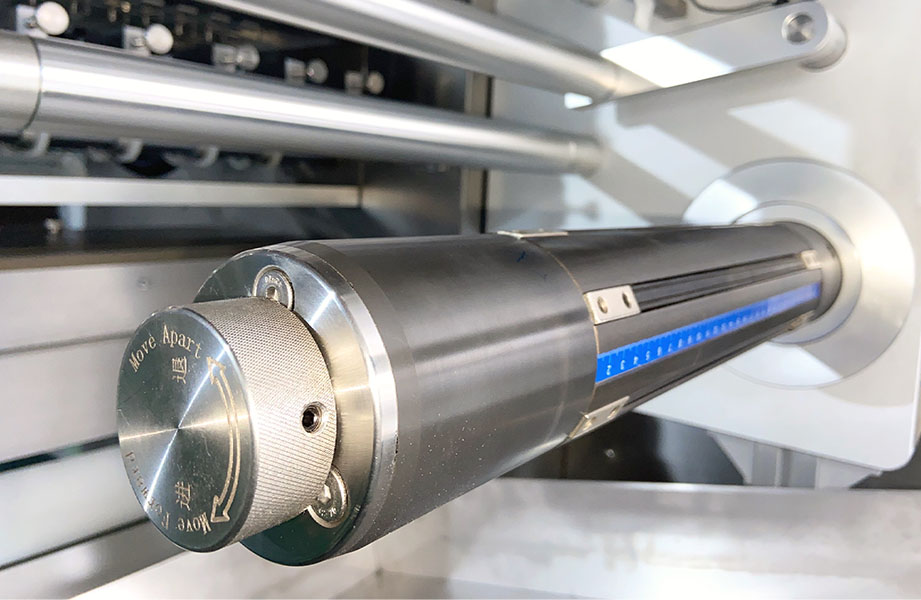
To maintain absolute tracking symmetry over large widths, the platform integrates two independent sets of tension balancing mechanisms that neutralize foil pull friction. The packaging webs are loaded via rapid pneumatic air-expanding shafts paired with heavy-duty limit rings, allowing operators to fix roll coordinates and balance front-to-back film paths instantly.
Strip or Blister? Then Which Width?
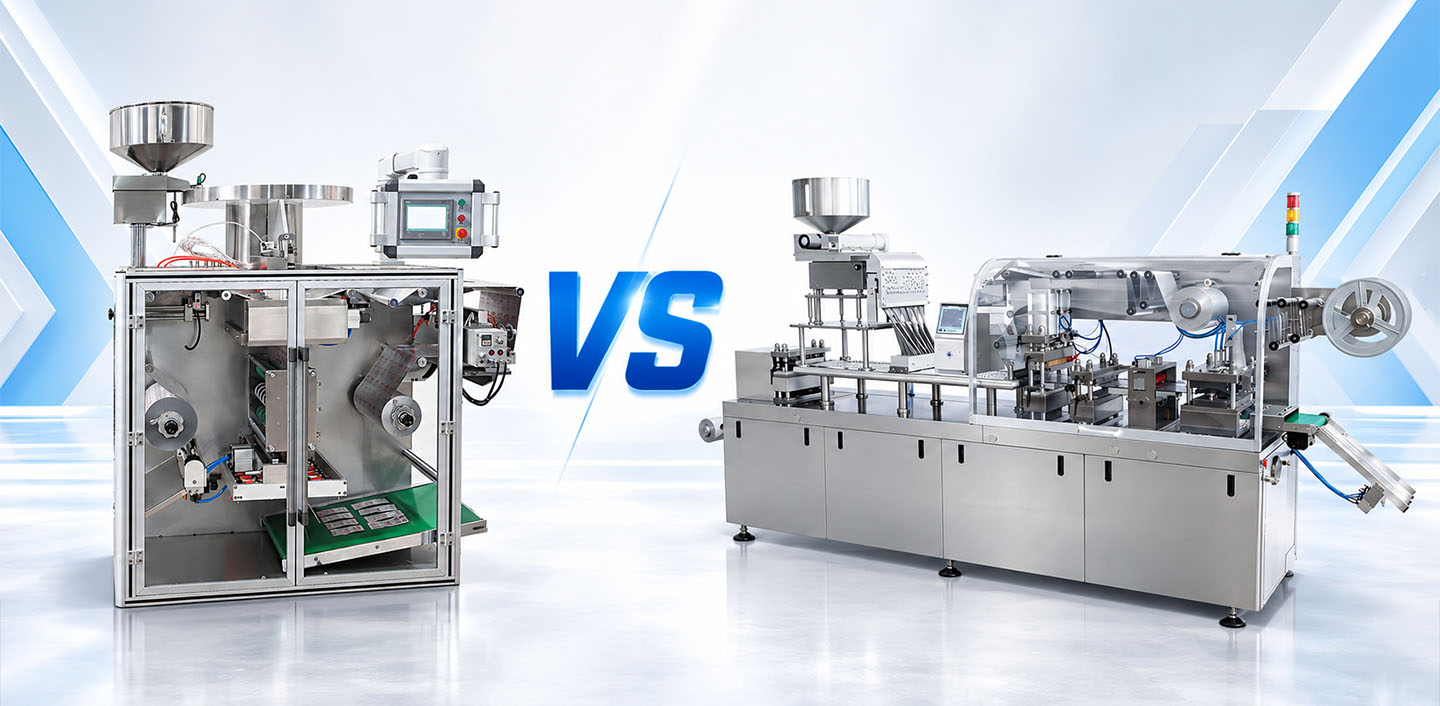
A clear PVC blister shows the product. A foil strip doesn’t. If shelf presence matters more than barrier, you want a blister machine, not this one.
Effervescent tablets, probiotics and light-sensitive vitamins are where a strip earns its place — foil on both faces, nothing stretched thin.
The SP220 cuts with an air cylinder, set by hand. The SP300 and SP400 cut with a servo, set on the touchscreen. The SP500 runs every station on a servo motion controller. If you change layout between SKUs, skip the SP220.
220, 300, 400 or 500 mm. More width means more lanes at the same drum speed — but only if your tablet and strip layout actually fill it. Send us both and we’ll tell you.
What These Machines Pack
Model comparison
Model | Film width | Drum speed | Cutting | Output | Heating |
APK-SP220 | 220 mm | 7–14 rpm | Air cylinder | 20,000 – 60,000 pcs/h | 1.5 kW × 2 |
APK-SP300 | 300 mm | 7–14 rpm | Servo | 20,000–80,000 pcs/h | 1.2 kW × 2 |
APK-SP400 | 400 mm | 7–14 rpm | Servo | 20,000–120,000 pcs/h | 1.5 kW × 2 |
APK-SP500 | 500 mm | 6–20 rpm | Full servo, motion controller | Depends on layout | 1.5 kW × 2 |
Output depends on your tablet size and how many lanes fit across the film. Tell us both and we’ll give you your number, not the headline one.
Product Range Overview
To achieve clarity at a glance for global procurement managers, the table below maps out the technical upgrade path across our industrial cartooning equipment and strip sealing portfolio:
Tablet size decides the roller dies; strip layout decides the width and the cutting. Post us a few samples and tell us the layout, and we’ll tell you which model fits — including when it’s the smaller one.
Documentation & Selection Support
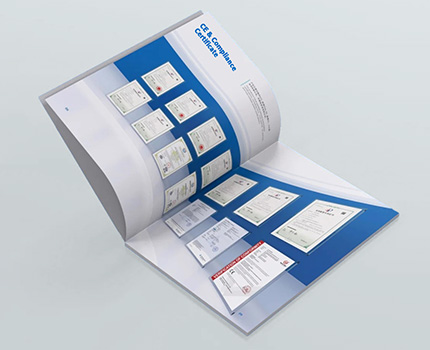
Verify our quality standards and simplify your procurement process with our official documentation.
Product Portfolio
Quality Assurance
Roller Pocket, Designed from Your Samples
FAQs Automatic Strip Packing Machine
A blister machine heats plastic and stretches it into a pocket, then seals foil over it. A strip machine forms nothing — two soft foils are heat-sealed around the tablet on rollers. Because nothing is stretched, both faces keep the full foil thickness. Blisters show the product and suit taller items; strips give a full light and moisture barrier and fold flat.
The SP220 cuts with an air cylinder: reliable, lower cost, and set by hand when you change layout. The SP300 and SP400 cut with a servo, so strip length and cutting stroke are set on the touchscreen. The SP500 puts every station on a servo motion controller. If you change strip layout between SKUs, start at the SP300.
Tablets feed from a vibrating hopper and pass a screen that separates broken pieces before they reach the rollers. A fragment caught in the seal margin is what causes a leak, so this is where most sealing problems are prevented.
Running a wide-web primary packaging setup with material widths reaching 400mm or 500mm introduces a severe aerodynamic and thermodynamic challenge. High-frequency cleanroom air exchange cycles apply continuous cooling friction across the exposed margins of the rotating sealing rollers. On poorly engineered equipment, this creates a severe “cold edge” phenomenon where the center of the roller functions at the target setpoint while the outermost margins suffer from significant temperature drops. This thermal drift results in uneven pressure bonding, leading to systematic leakage along the outer lanes of the finished aluminum strips.
AIPAK this vulnerability by deploying an advanced, multi-zone Precision Electronic Thermo-Regulation Network energized by heavy-duty, high-wattage heating modules (up to 380V/1.5kw x 2 structural ratings). Each individual heating element is governed by dedicated, closed-loop Delta digital temperature controllers that sample thermal feedback in real time via high-sensitivity embedded thermocouples. If a thermal drop is logged at the roller edges due to ambient cleanroom drafts, the control loop instantly commands localized micro-adjustments in power distribution. This ensures that across the entire 400mm or 500mm active sealing real estate, the heat signature remains completely uniform and stable within a tight tolerance band, ensuring on every single product lane.

An extra set of roller dies, feeder change parts, one-side or two-side eye-mark registration for printed foil, and a detection and reject system for missing tablets. Tell us which you need at the quotation stage.
Yes. The strip machine can be linked to a downstream cartoner so the two run at matched speeds — if the cartoner slows for a jam, the strip machine slows with it rather than piling strips at the transfer.
Send us your tablet and your strip layout
Tablet size decides the roller dies. Strip layout decides the width and the cutting. Send us both and we’ll tell you which model you need and what it will actually produce.
- Reply within one business day
- Roller pocket designed from your samples
- Your product specs stay with us