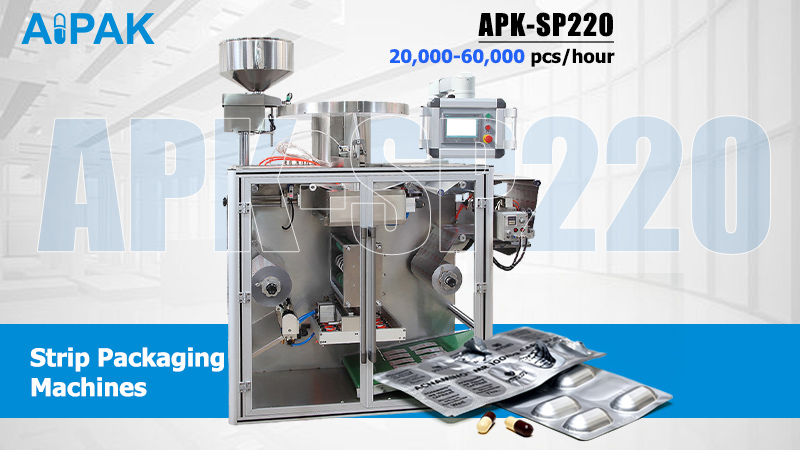
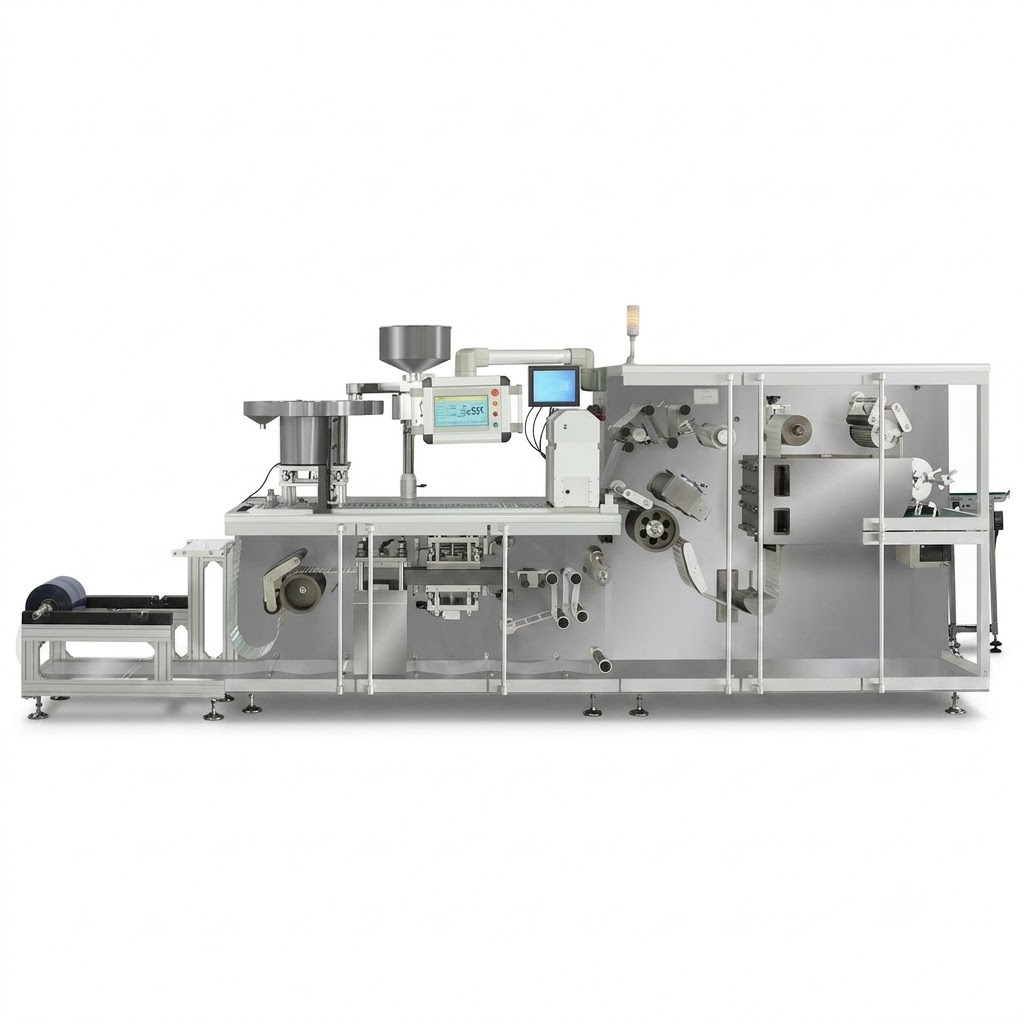
APK-SP220 Strip Packing Machine — 220 mm Film, Air-Cylinder Cutting

Soft Alu-Alu heated-roller sealing for a single strip layout​

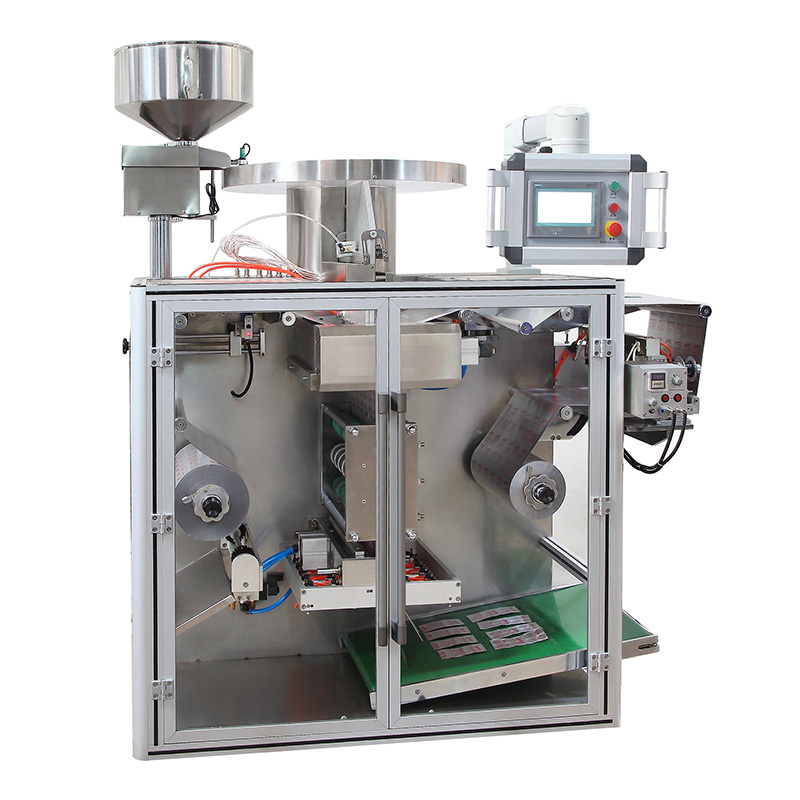
The simplest machine in the range. Same heated-roller sealing and vibratory feeding as the SP300, on a 220 mm film, with an air cylinder driving the cutter instead of a servo. If you run one strip layout and rarely change it, this does the job for less.

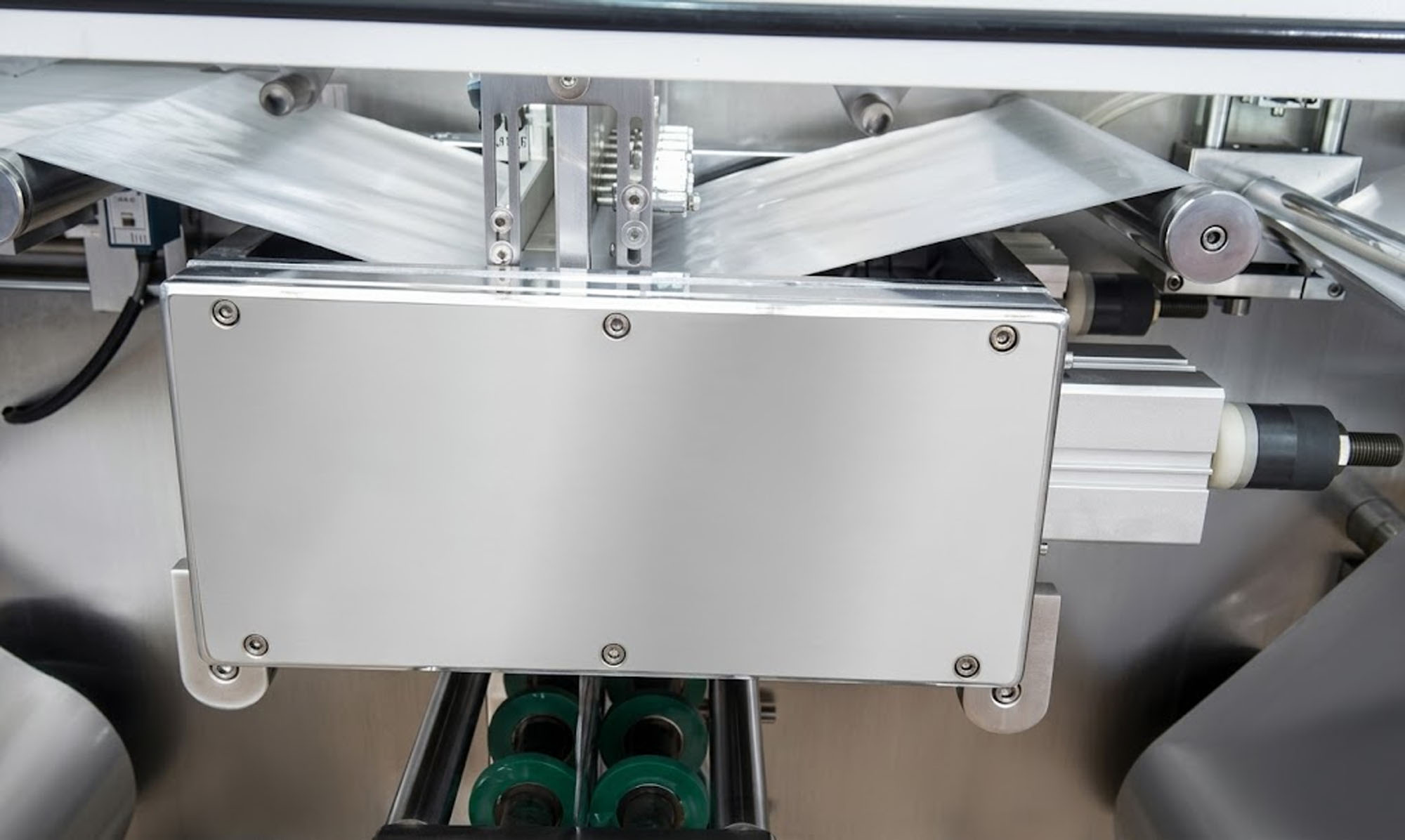
1. Sealing Mechanism: Vertical roller-type double foil heat sealing (No thermal forming required).

2. Material Versatility: Optimized for Alu/Alu (Al-plastic combined film) and Plastic/Plastic films.

3. Cutting Drive: Precision pneumatic cylinder-controlled die cutting system.

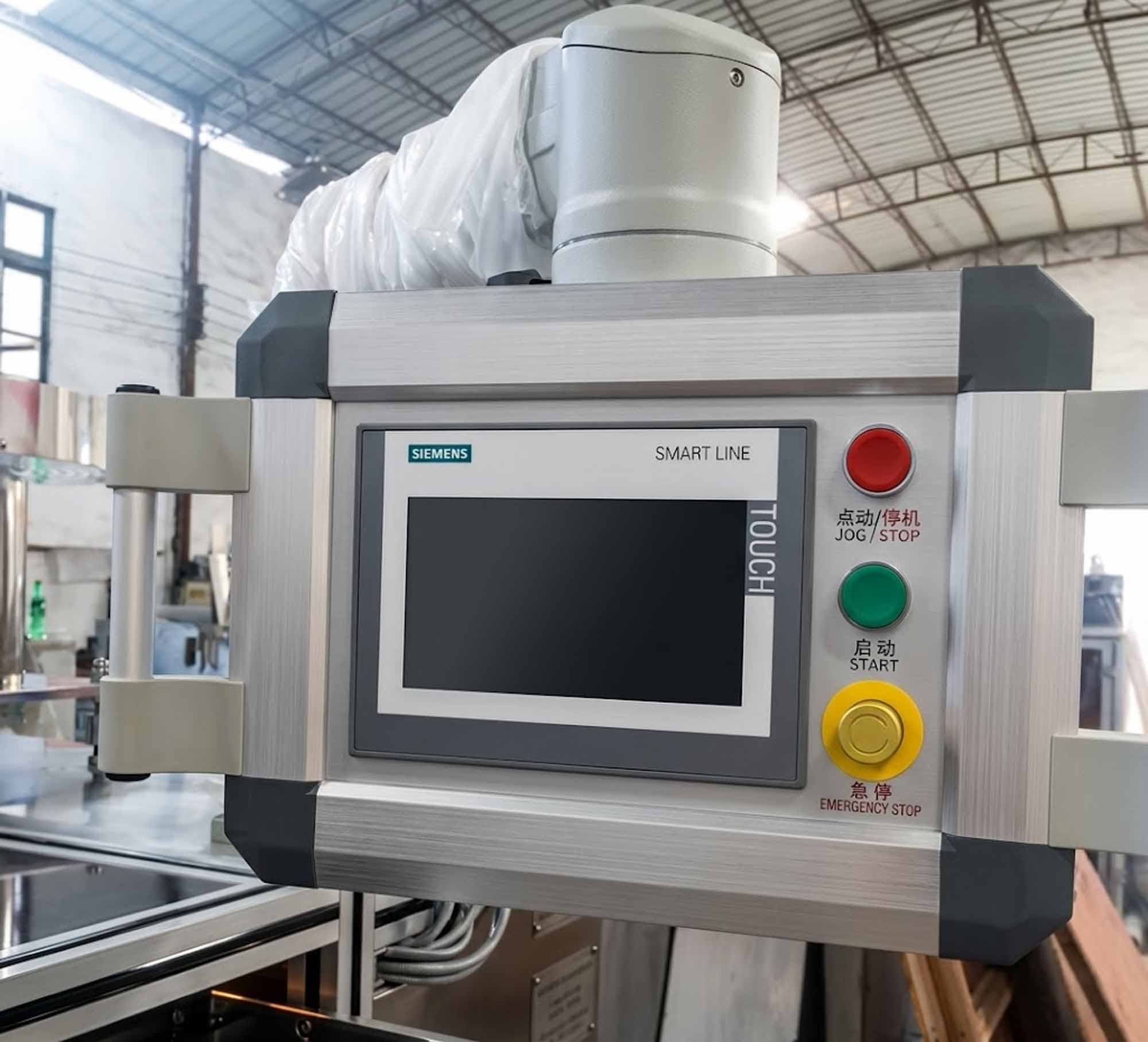
4. Automation Control: Integrated Siemens PLC and Siemens V20 drive.

Is this the right machine for you?

✓ Yes, if…

✕ Buy something else if…

Technical specification

Feature

Specification

Model

APK-SP220 (Standard Pneumatic Cut)

Drum Speed

7 – 14 rpm (Stepless regulation)

Production Capacity

20,000 – 60,000 pcs/hour

Maximum Foil Width

220 mm

Packing Material Specs

Alu/Alu: 0.08-0.10 x 220 mm | PVC: 0.05-0.10 x 220 mm

Reel Core Diameter

70 – 75 mm

Electro-Thermal Power

1.5 kW x 2

Main Motor Power

0.75 kW (Siemens PLC Linked)

Air Supply Pressure

0.5 – 0.6 Mpa

Air Consumption Flow

0.1 m³/min or greater

Overall Dimensions (LxWxH)

1600 x 850 x 2500 mm

Machine Structural Weight

900 kg

Model comparison

Model

Film width

Drum speed

Cutting

Output

Heating

APK-SP220

220 mm

7–14 rpm

Air cylinder

20,000–60,000 pcs/h

1.5 kW × 2

APK-SP300

300 mm

7–14 rpm

Servo

20,000–80,000 pcs/h

1.2 kW × 2

APK-SP400

400 mm

7–14 rpm

Servo

20,000–120,000 pcs/h

1.5 kW × 2

APK-SP500

500 mm

6–20 rpm

Full servo, motion controller

Depends on layout

1.5 kW × 2

The film width sets how many lanes fit across the rollers. The cutting drive sets how easily you change strip layout. Output depends on both — and on your tablet size — so tell us your tablet and your strip layout and we’ll give you your number, not the headline one.

Light-Proof Airtight Sealing

Unlike standard blister forming, the APK-SP220 cold-presses the product tightly between two hermetic foils. This ensures  protection against ambient light and moisture, significantly extending drug shelf life.

Dynamic Vibratory Material Feeding

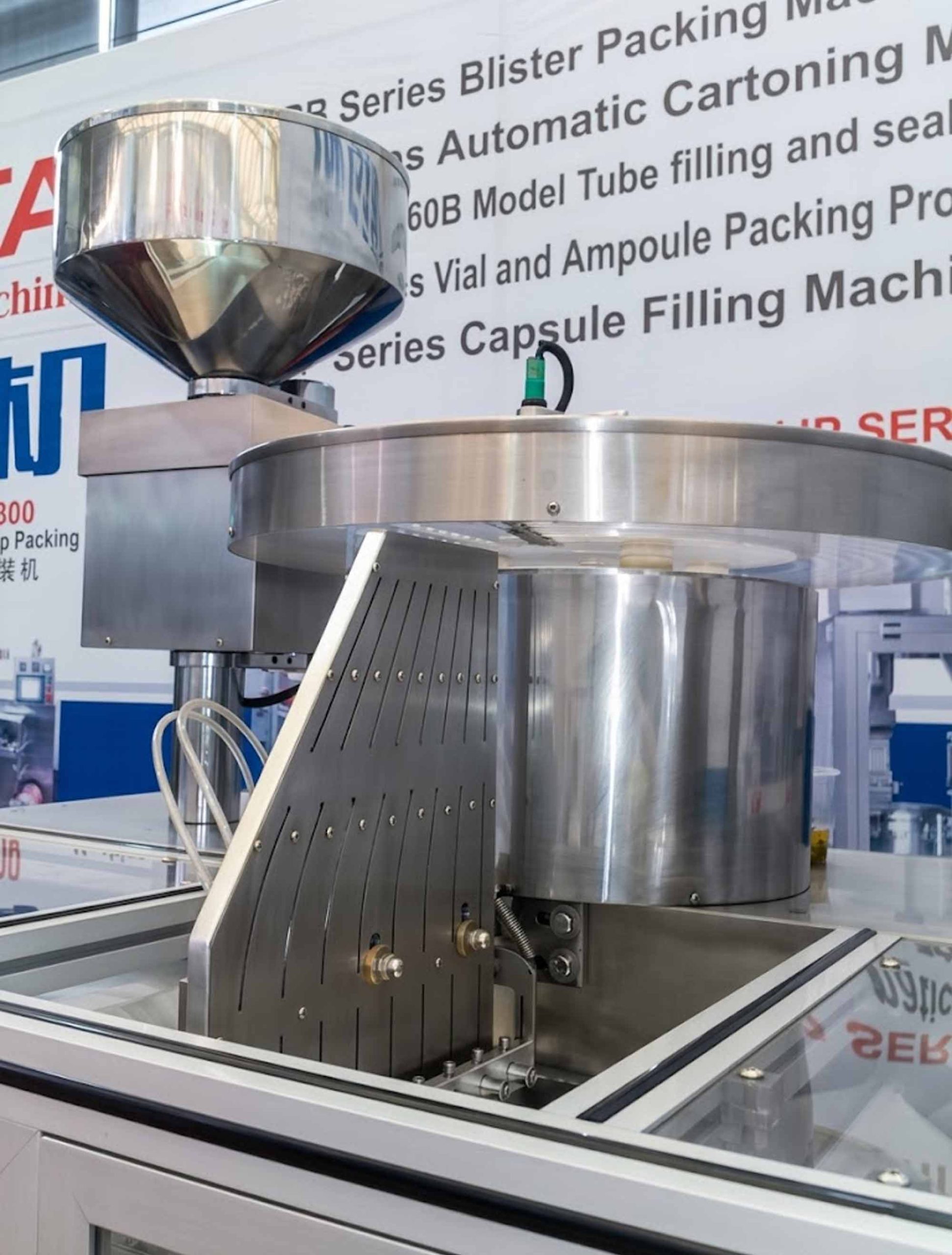
Equipped with an automatic vibrating hopper paired with a specialized tumbling brush feeder to ensure smooth, damage-free tablet sorting into the sealing rollers.

Integrated Fragment Filtering

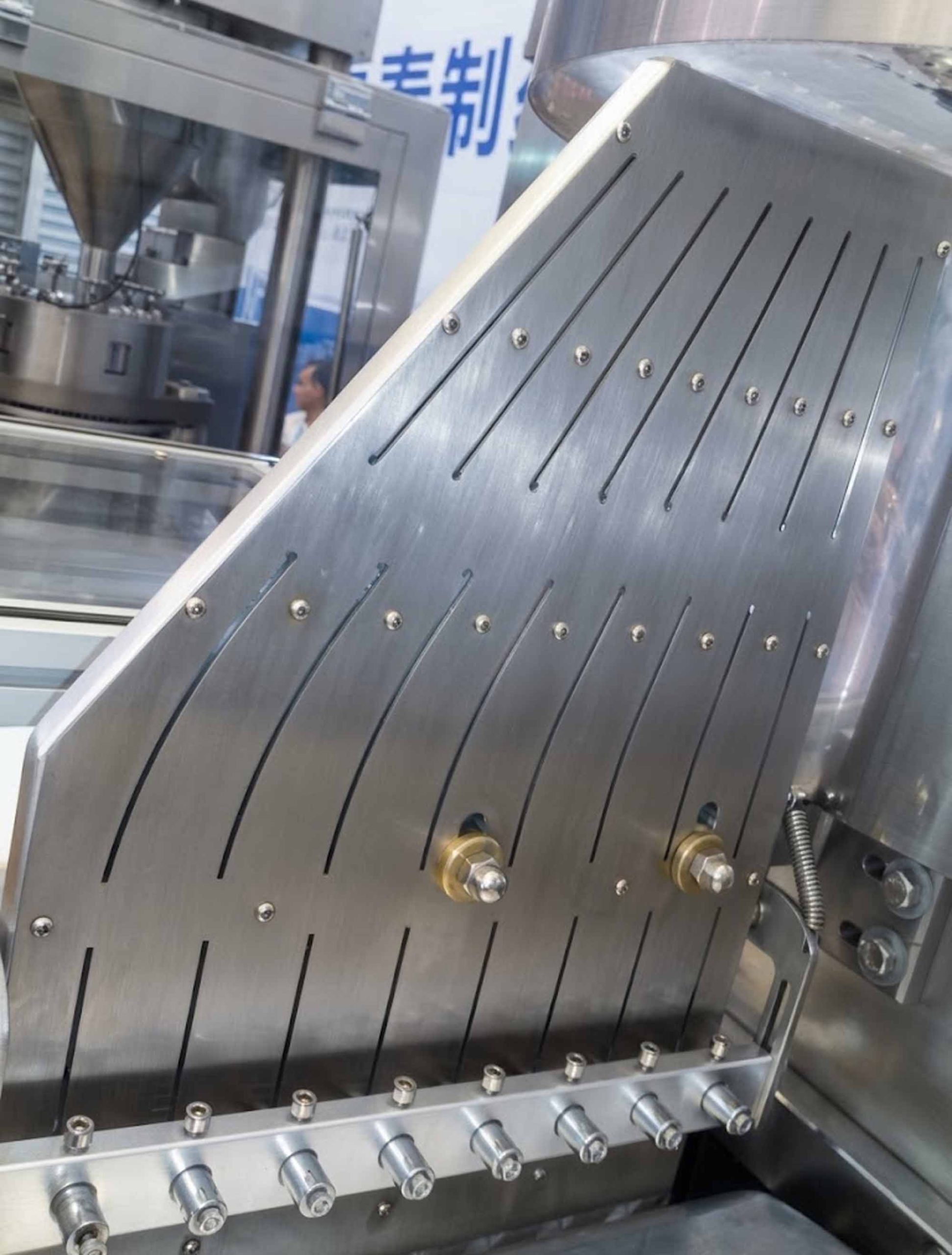
Features a built-in mechanical filtering mesh that separates broken tablet pieces and powder residue automatically before sealing, ensuring a  package interior.

Flexible Stroke Length Adjustments

Plant technicians can randomly program the traction cutting travel range and sealing speeds via the smart HMI, making multi-specification runs highly efficient.

Industry Applications

The APK-SP220 is highly sought after for specialized primary packaging contexts:

Effervescent tablets

The textbook case for Alu-Alu strips. An effervescent tablet starts reacting the moment it picks up moisture, and foil on both faces keeps it out.

Probiotic and moisture-sensitive capsules

Where the moisture barrier is the shelf life. Each capsule is sealed in its own pocket, so opening one doesn’t expose the rest.

Light-sensitive vitamins and botanicals

Foil on both faces blocks light completely — something a clear blister can’t do.

Lozenges and compressed candies

Flat strips that fit a pocket or a wallet, sealed without the tablet surface touching a forming die.

What changing over involves

Strip length is a screen setting. Tablet size is a roller change.

What changed

What you adjust

Roughly

Strip length or cut position

Cutting stroke on the touchscreen

15-30Minutes

New foil roll, same size

Change the reel

15-30Minutes

Tablet size or shape

Sealing roller dies and feeder parts

15-30Minutes

Alu-Alu → plastic-plastic

Foil and temperature settings

15-30Minutes

The pocket is cut into the heated sealing rollers, so a different tablet means a different roller set. An extra set of rollers and feeder change parts are both options you can order with the machine.

What to check before you buy

01

The roller dies, not the machine

The pocket is machined into the heated sealing rollers. Ask who designs it around your tablet, how long a new set takes, and what it costs — that's where a strip project succeeds or fails.

02

The manual

A clear English manual gets your operator running in a week instead of a month. Ask to see a sample page before you order.

03

Installation and training

Ask what's included and what costs extra. The answer varies more between suppliers than the machine price does.

Why buy from us?

One point of contact: You deal with us for the machine, the roller dies, the installation and the service call.

Roller dies designed around your tablet: Send us samples and we design the pocket and strip layout before you order.

Installation and training: We install it, commission it, and teach your operators.

Lead time: 1-3months. Confirmed in writing with your order.

APK-SP220 Strip Packing Machine FAQ

What is the primary difference between a strip packing machine and a standard blister packaging machine?

A standard blister machine uses heat to vacuum-form deep storage pockets out of rigid plastic sheets (like PVC) before sealing them to a flat backing foil. The APK-SP220 strip packing machine performs cold-press roller sealing. It draws two flexible webs of non-formed foil directly between heated roller dies, sealing the product completely flat within a tight perimeter cavity. This avoids stretching or thinning the material, providing far superior hermetic isolation against light, humidity, and oxygen leakage.

What cutting drive mechanism does the APK-SP220 deploy, and how does it compare to higher-tier models?

The base APK-SP220 uses a high-rigidity pneumatic cylinder-controlled cutting die to chop the continuous strip output into specific sheet layouts (e.g., 2×4 or 2×10). This is highly reliable and cost-effective for dedicated lines. Our premium upgraded models—such as the APK-SP300 and APK-SP400—replace this pneumatic cylinder cutting assembly with a dedicated electronic Delta AC servo motor drive system, which allows operators to alter cutting layouts instantly on the HMI without making physical tool adjustments.

Can the APK-SP220 handle different thickness grades of packaging materials?

Yes, the heated roller die configuration is highly accommodating. For standard aluminum-aluminum composite films (Alu/Alu), it is optimized for foil thicknesses ranging from 0.08 mm to 0.10 mm. If your application calls for plastic-plastic heat sealing layouts, it easily transitions to process medical-grade PVC or laminated clear films with a thickness range of 0.05 mm to 0.10 mm.

How does the machine handle powder accumulation or broken tablets during high-speed runs?

Processing fragile compressed tablets can generate debris. The APK-SP220 is equipped with an active vibrating material feeder and a broken piece filtering screen. Before the tablets drop into the main roller pocket matrices, the vibratory sift loops capture dust, broken halves, and fragments. This debris is filtered out into a collection zone, preventing trapped particles from contaminating the hot-seal seam and ensuring tight package sealing.

What optical and safety upgrades are available for the APK-SP220 platform?

The standard model comes with a Siemens smart controller and a secure PC/Plexiglas cover. To meet advanced regulatory or aesthetic standards, you can opt for:

An integrated one-side or both-sides photo-cursor eye marking system to align pre-printed text perfectly on the pack faces.

An intelligent automatic empty-pocket vision detection and pneumatic rejection system to purge defective sheets from the line.

A synchronized ribbon coding device or continuous industrial inkjet printer for crisp batch number engraving.

Is the APK-SP220 built to work in synchronized upstream/downstream packaging lines?

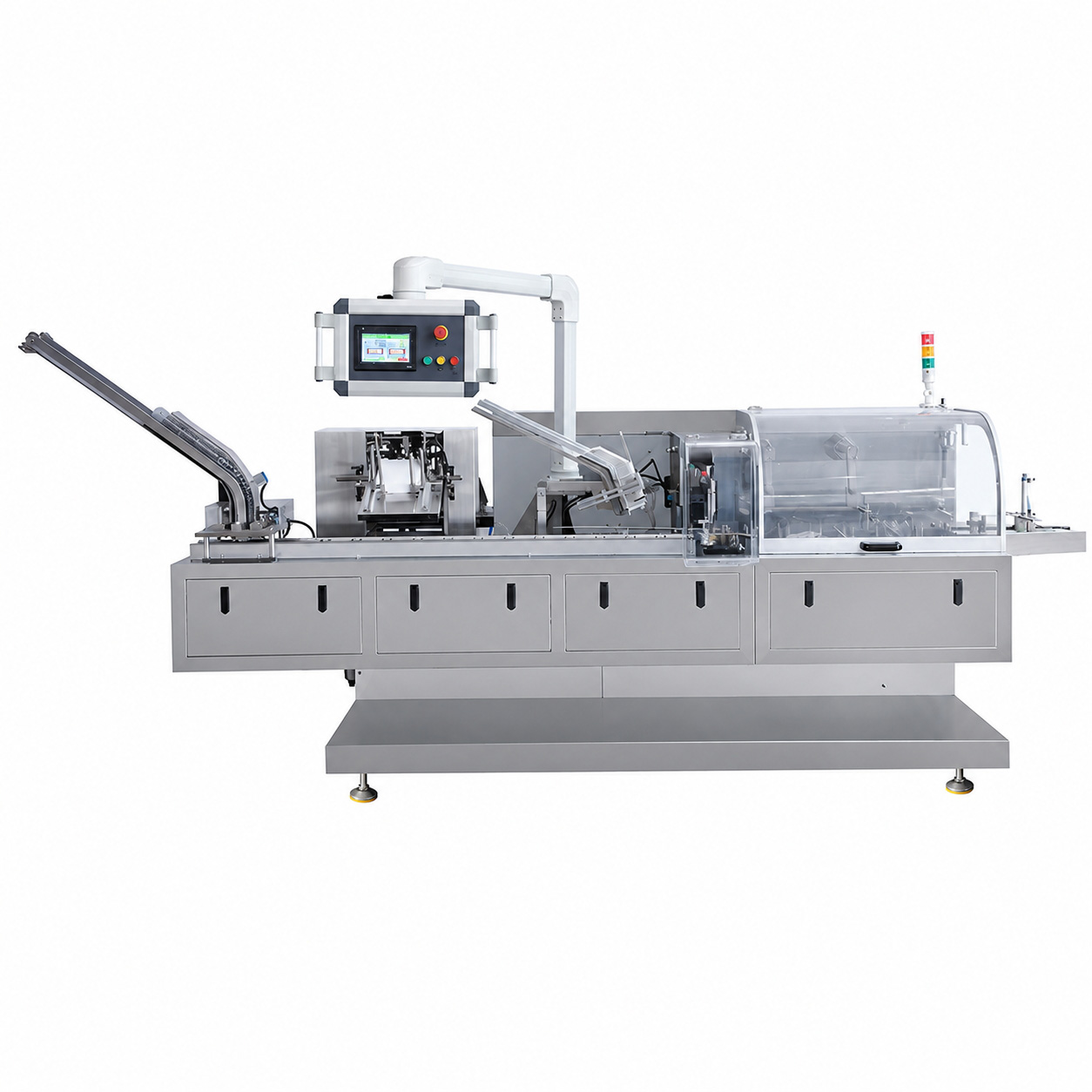
Absolutely. The APK-SP220 is driven via a Siemens industrial PLC framework communicating through a Delta frequency converter variable speed control loop. It provides native I/O dry-contact terminals and data sync capabilities. This allows you to hook up the outfeed conveyor directly with downstream secondary units—like our WZH-120 III Intermittent Cartoning Machine—to create a fully automated, continuous strip packing and cartoning line that matches speeds dynamically.

Customers Also Interested In...

Send us your tablet and your strip layout

Tablet size decides the roller dies. Strip layout — 2 × 4, 2 × 10, whatever your carton holds — decides the cutting and the lane count. Send us a few samples and tell us the layout, and we’ll tell you which width you need and what it will actually produce.

  • Reply within one business day
  • Roller pocket designed from your samples
  • Your product specs stay with us
Scroll to Top