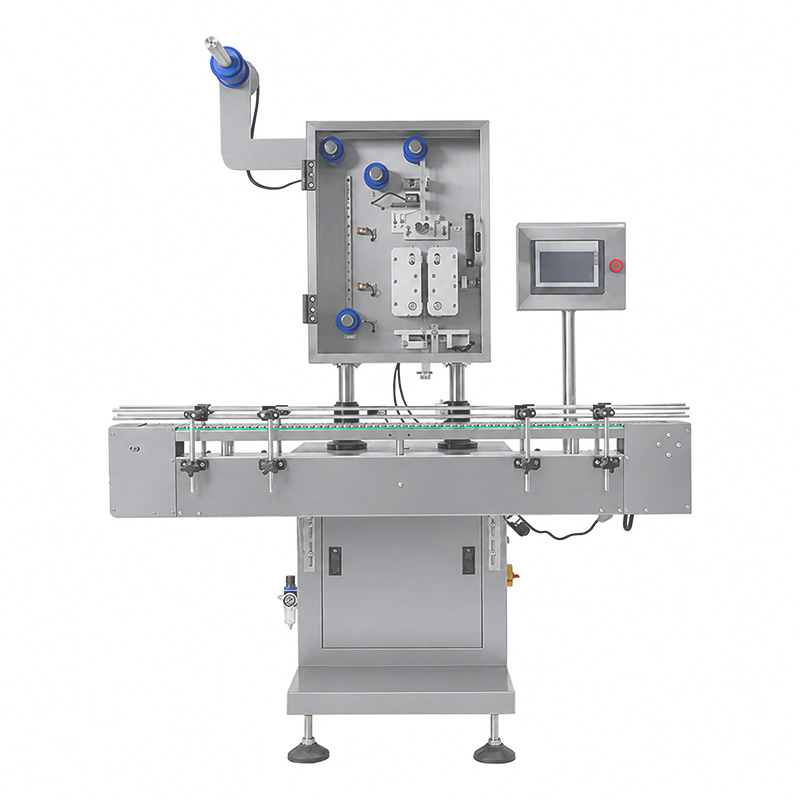
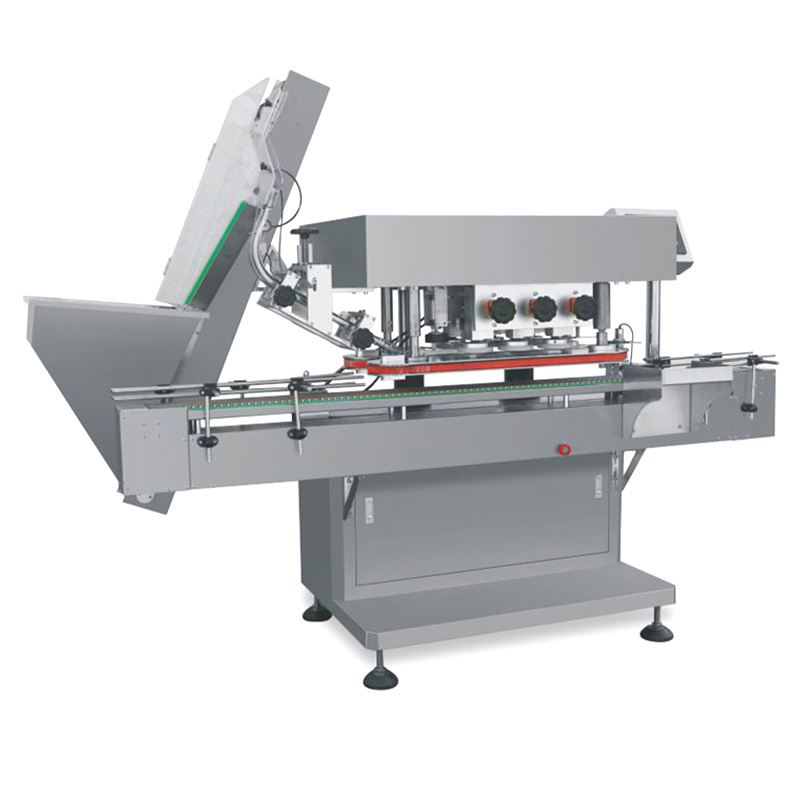
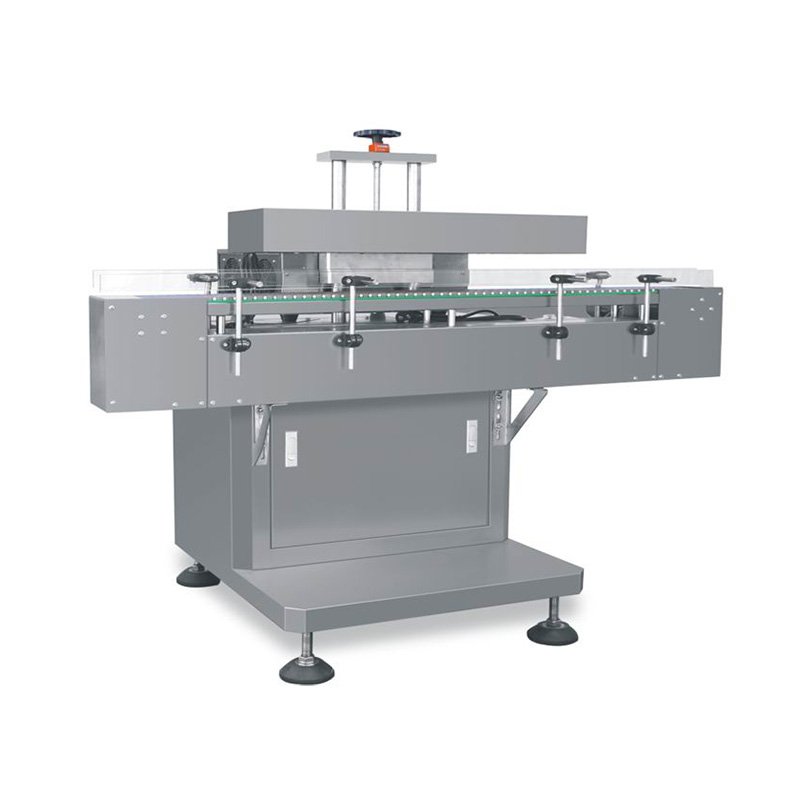
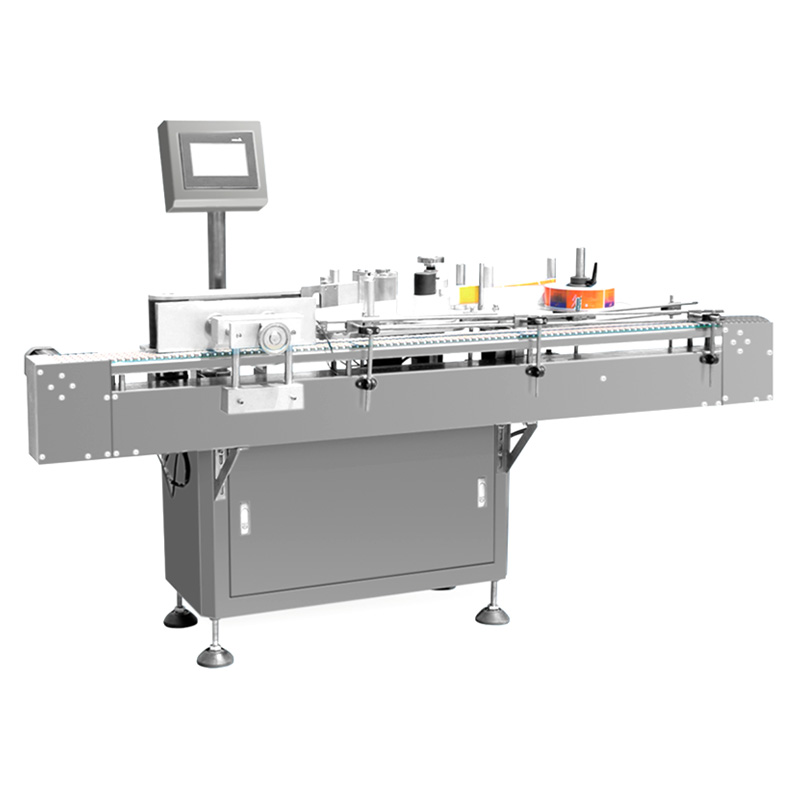
Induction Sealer
Continuous Foil Sealing for Tablet and Capsule Bottling Lines
“Two things decide the machine: how wide your bottle mouth is, and how long the line runs without stopping. Both point to the same question — how much heat the sealing head has to shed.”
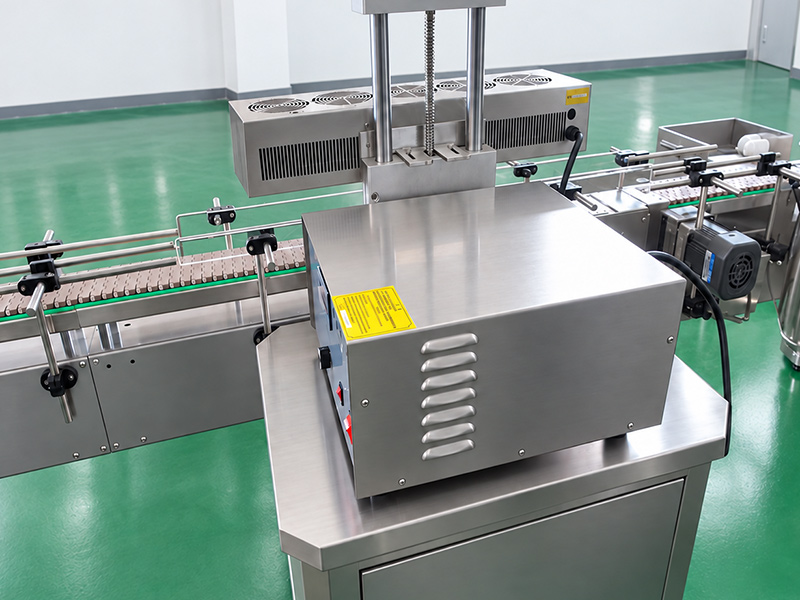
An induction sealer bonds the aluminium foil liner inside the cap to the rim of the bottle, forming a hermetic seal that has to be broken before the product can be reached. It is what makes a bottle tamper-evident, and it is what keeps the desiccant you inserted three stations earlier working on the product rather than on ambient air.
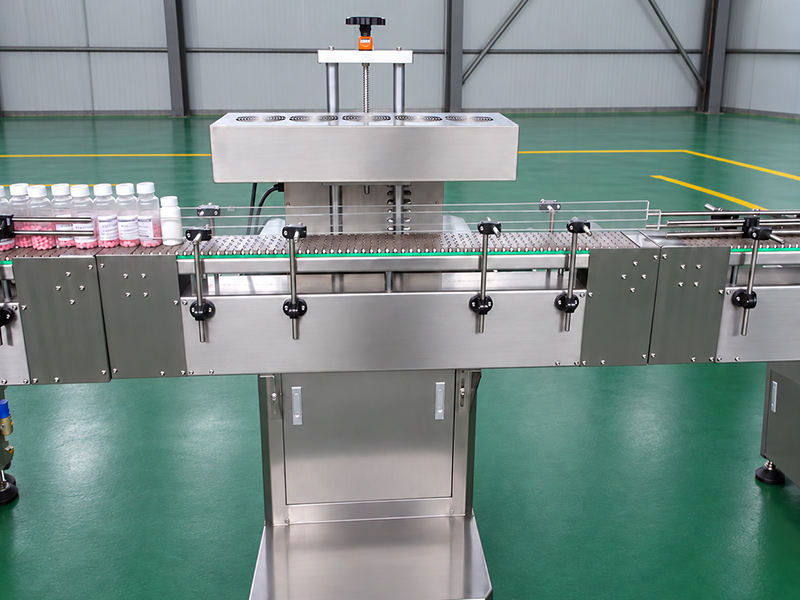
The machine does not add the foil. The liner arrives already inside the cap, and the sealer passes an electromagnetic field through it — the foil heats, the polymer coating beneath it melts, and the liner welds to the bottle rim. Nothing touches the bottle.
Which model you need comes down to heat. A wider bottle mouth needs more energy to seal, and a faster line gives the sealing head less time to cool between bottles. Both push the same limit, which is why our air-cooled model covers 15 to 50 mm at up to 120 bottles per minute, and the water-cooled model covers 15 to 150 mm at up to 200.
Why AIPAK Induction Sealers
Non-Contact Sealing
The field passes through the cap; nothing touches the bottle or the product. There is no mechanical pressure on the closure and no risk of contamination from a contact surface.
Matched to Mouth Diameter and Line Speed
Sealing power is specified against both, not against one. A machine sized for a 33 mm mouth at 60 bottles per minute will not hold its seal on a 100 mm mouth at 150 — and the failure is intermittent rather than obvious, which is the worst kind.
Continuous Duty
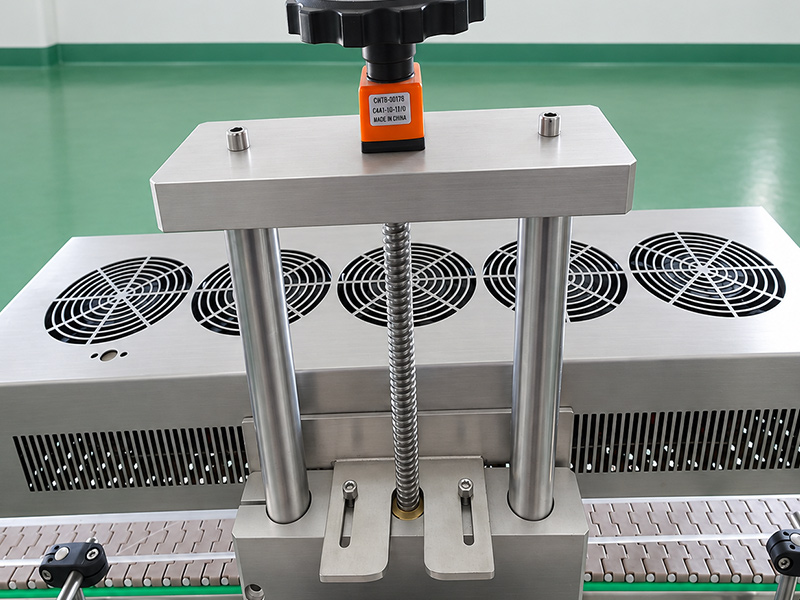
Water cooling exists for one reason: to let the sealing head run a full shift without derating. On a line that stops and starts, air cooling is enough. On one that runs continuously at speed, it is often not.
cGMP Construction
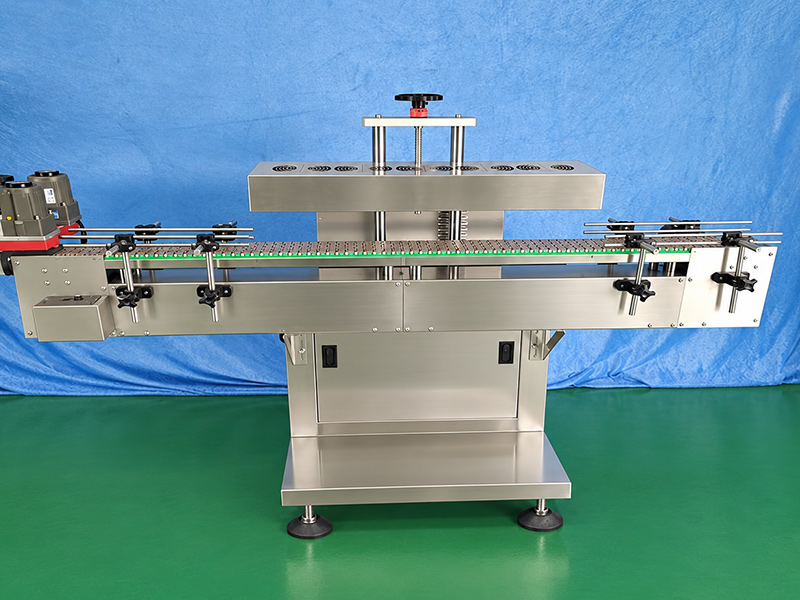
304 stainless steel frame and body, no dead corners, designed for washdown between products.Â
Start With Your Bottle Mouth
Not the bottle diameter — the rim the foil has to bond to. A 500 ml supplement bottle with a 45 mm neck seals like a 45 mm bottle, regardless of how wide the body is.
Up to 50 mm, the air-cooled APC-M1 covers it. Between 50 and 150 mm, you need the water-cooled APC-M2 — a wider seal area means more energy per bottle, and more energy means more heat to remove from the sealing head.
The APC-M1 covers 50 to 120 bottles per minute. The APC-M2 covers up to 200.
But raw speed is only half the question. A line that runs in short batches with breaks between them gives the sealing head time to recover; one that runs continuously across a full shift does not. If your line runs unattended or across multiple shifts, weigh the water-cooled model even if your speed falls within the air-cooled range.
It has to be. The sealer bonds a liner that is already there — it does not insert one. If your closures are supplied unlined, that is a purchasing decision to make before specifying the machine, and it affects your cap cost more than it affects your equipment cost.
Â
Model | Bottle mouth | Output | Cooling |
APC-M1 | Φ15 – 50 mm | 50 – 120 bottles/min | Air |
APC-M2 | Φ15 – 150 mm | Up to 200 bottles/min | Water |
Industrial Applications
Where the Sealer Sits on Your Line
SEVEN STATIONS, ONE LINE
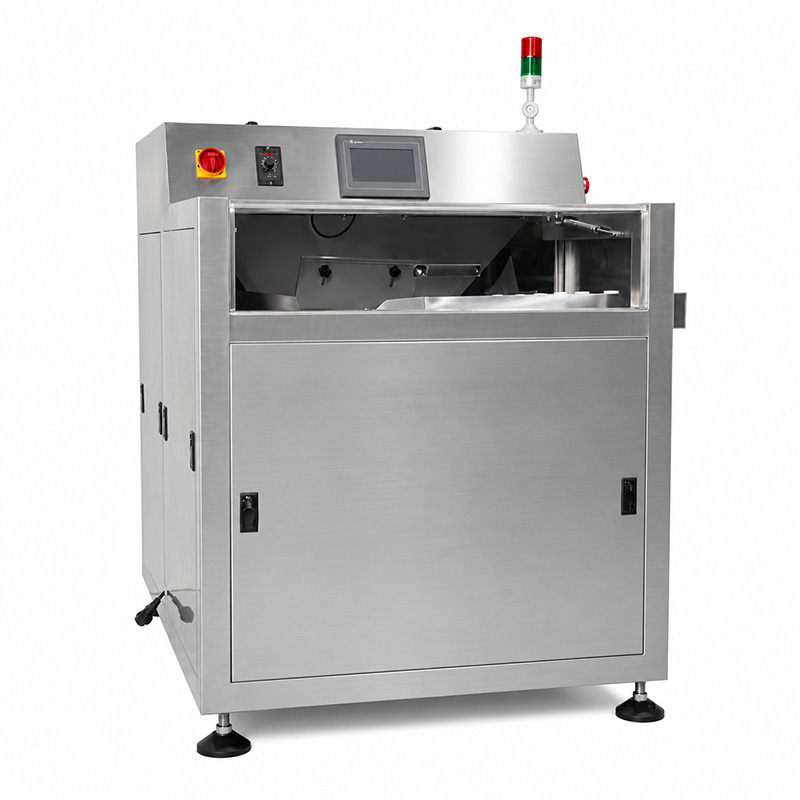
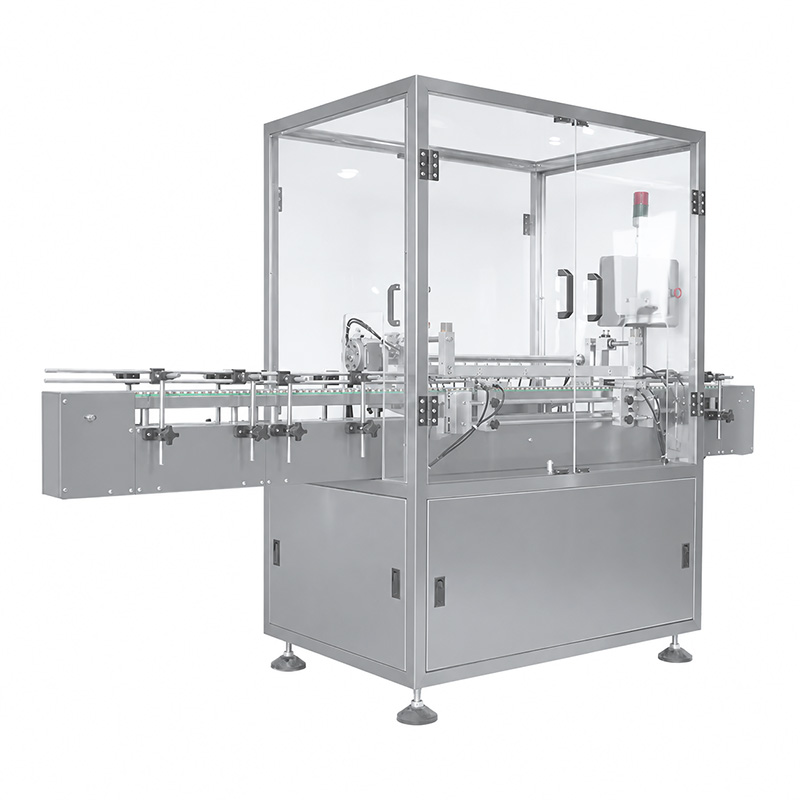
The sealer is station six — after the capper has fitted the closure, and before the labeller. That order cannot change: the foil liner sits inside the cap, so the cap has to be on before the seal can be made.
One consequence is worth understanding. The sealer cannot tell whether there is a liner in the cap — it energises the field either way, and a bottle with no liner passes through looking identical to a sealed one. This is why liner detection lives on the capper, one station upstream. It is the last point where the fault is still visible.
A mid-speed line runs 40 to 100 bottles per minute; a high-speed line runs 70 to 160. Both fit in under 30 m² with roughly three operators and a single compressed air supply.
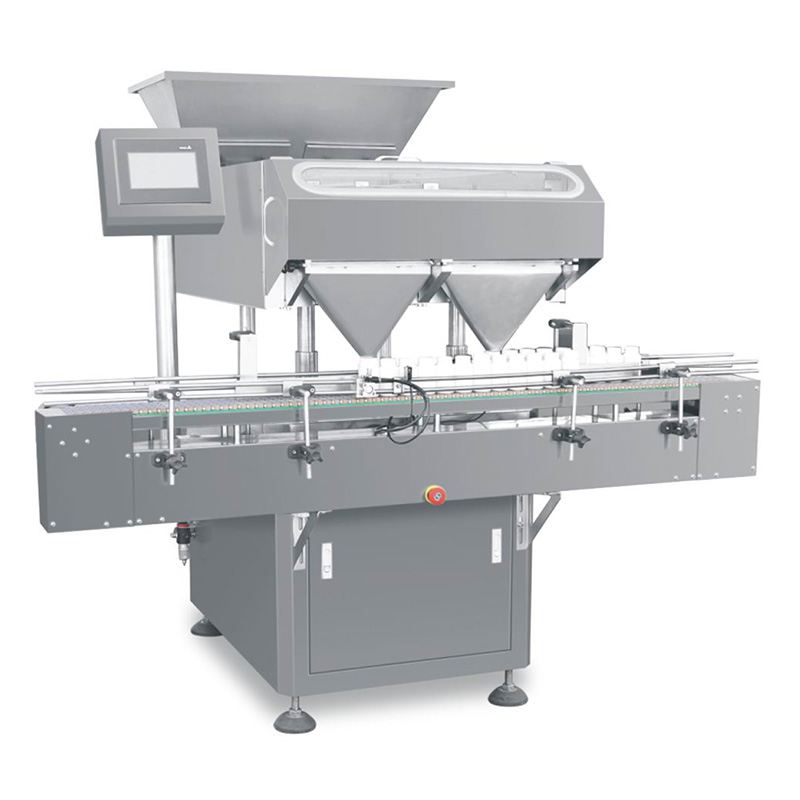
Desiccant or Cotton Inserter
Adds moisture control or fill material on top of the product.
FAQ
An electromagnetic field passes through the cap and induces a current in the aluminium foil liner. The foil heats, the polymer layer bonded to its underside melts, and the liner welds to the bottle rim. Nothing touches the bottle, and the cap itself is unaffected — which is why the seal can be made after the closure is already fitted.
Two questions decide it. Is your bottle mouth wider than 50 mm? If yes, water-cooled, because a wider seal area needs more energy and therefore sheds more heat. Does your line run continuously across a full shift? If yes, weigh water-cooled even within the air-cooled speed range — air cooling recovers between batches, and a line that never pauses does not give it the chance.
The liner comes inside the cap, supplied by your closure supplier. The sealer bonds a liner that is already there; it does not insert one. If your current caps are unlined, that is a purchasing change to make before specifying the machine.
No. Handheld units seal one bottle at a time by hand and suit laboratory and very small-batch work. These are continuous in-line machines that seal bottles as they pass on the conveyor, with no operator involvement.
Yes. Induction sealing works on any container the field can pass through, which includes both plastic and glass. What matters is the liner and the rim finish, not the bottle material.
It passes through unsealed and looks identical to a sealed bottle from the outside. This is why liner detection sits on the capping machine one station upstream rather than on the sealer — the capper is the last station where the fault is still visible.
Only the APC-M2. The APC-M1 is air-cooled, with no cooling circuit and nothing to plumb. Â
Bottle mouth diameter — the sealing rim, not the bottle body — target bottles per minute, whether the line runs continuously or in batches, and your cap and liner specification. A sample cap and bottle answer most of these at once.
Documentation & Selection Support
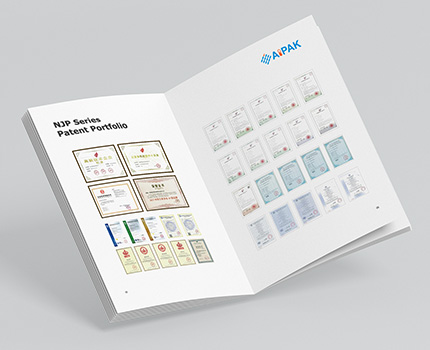
Product Portfolio
Quality Assurance
Line Speed Matching Guide
Tell Us Your Bottle Mouth Diameter
This is the one measurement that decides the machine, and it is the one most often given wrong — what matters is the diameter of the rim the foil bonds to, not the diameter of the bottle body. A 500 ml container with a 45 mm neck seals like a 45 mm bottle.
Send that measurement below with your target bottles per minute and whether your line runs continuously or in batches. If you are not sure, send a sample cap and bottle and we will measure them.