Home » APC-M1 Air-Cooled Induction Sealer
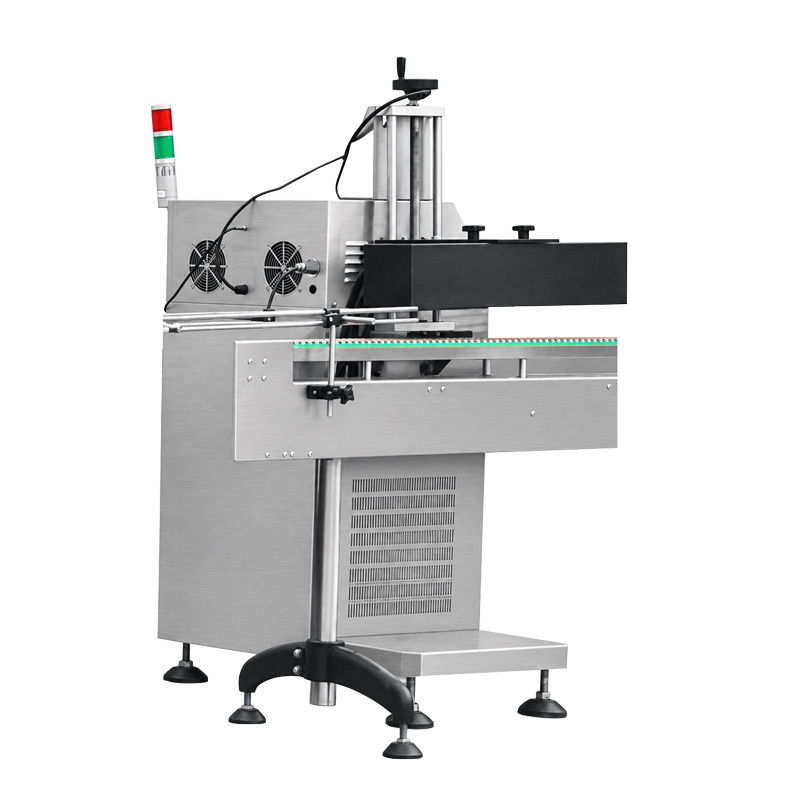
APC-M1 Air-Cooled Induction Sealer
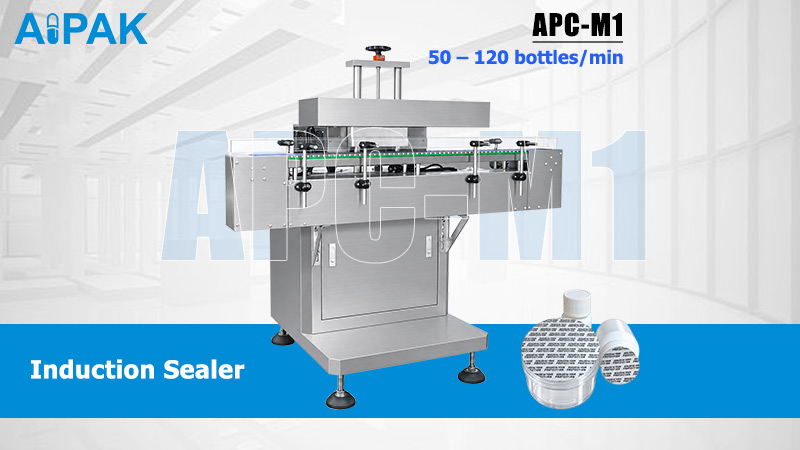
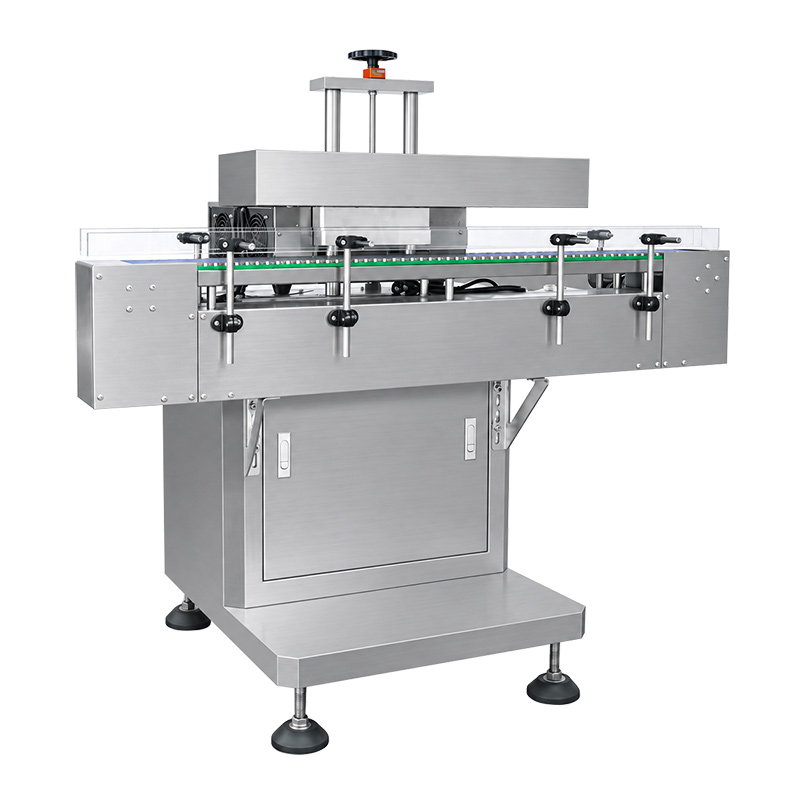
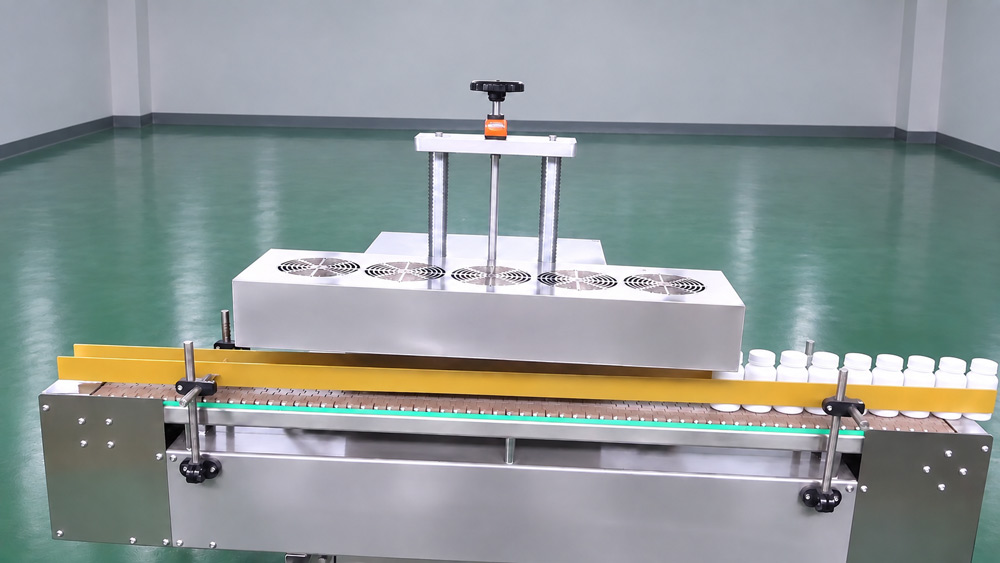
This induction sealer bonds a foil liner to the bottle land as bottles pass under the coil, at 50 to 120 bottles per minute. If you’re already capping and your bottles still go out without a tamper seal, this is the machine that closes that gap. It handles 15 to 50 mm bottle openings.
- 50 to 120 bottles per minute— matches a counting line running up to 120 bpm
15 to 50 mm bottle openings, round, oval, square or flat-square
- Air-cooled— no water supply to plumb, no chiller to maintain
Direct from our factory|Lead time confirmed in your quote|Installation and training available|Spare parts listed in your quote
Is this the right sealer for your line?
✓ This is a fit if…
- You're bottling supplements in HDPE or PET — tablets, capsules, softgels, gummies, powders
- Your line runs up to 120 bottles per minute
- Your bottle openings are 15 to 50 mm
- Your bottles are round, oval, square or flat-square — all four work on the same machine
- You're already capping and just need the sealing step added
- You want a tamper-evident seal for retail or Amazon
✕ Look elsewhere if…
- Your line runs faster than 120 bottles per minute → you need the water-cooled version. Air cooling limits how long the coil can run at full output
- Your bottle openings are wider than 50 mm → the water-cooled model covers 15 to 150 mm
- You're running two or three shifts back to back → air cooling suits single-shift running. Continuous duty is what water cooling is for
- You're doing a few hundred bottles a day → a handheld sealer costs a fraction of this. Ask us where the crossover sits for your volume
- Your liners have no foil layer → induction can't heat what isn't there. Send us your liner spec and we'll check before you order
- Your bottle land has flashing or molding marks → the seal fails at the land, not at the sealer. Send us a bottle and we'll tell you
Technical specification
Parameter | Value | What this means for you |
Sealing speed | 50 – 120 bottles / min | Match this to your capper, not your counter |
Bottle opening diameter | 15 – 50 mm | Your bottle neck has to fall inside this |
Bottle shapes | Round, oval, square, flat-square | One machine covers all four |
Cooling | Multi-channel air cooling | No water supply or chiller needed |
Power adjustment | Automatic, by foil size | You set the product, the machine sets the power |
Overload protection | Stops and alerts on under- or over-power | You find out at the machine, not at QC |
Power | 3.0 kW, 60 Hz | Built to your U.S. supply. We confirm the voltage with your quote |
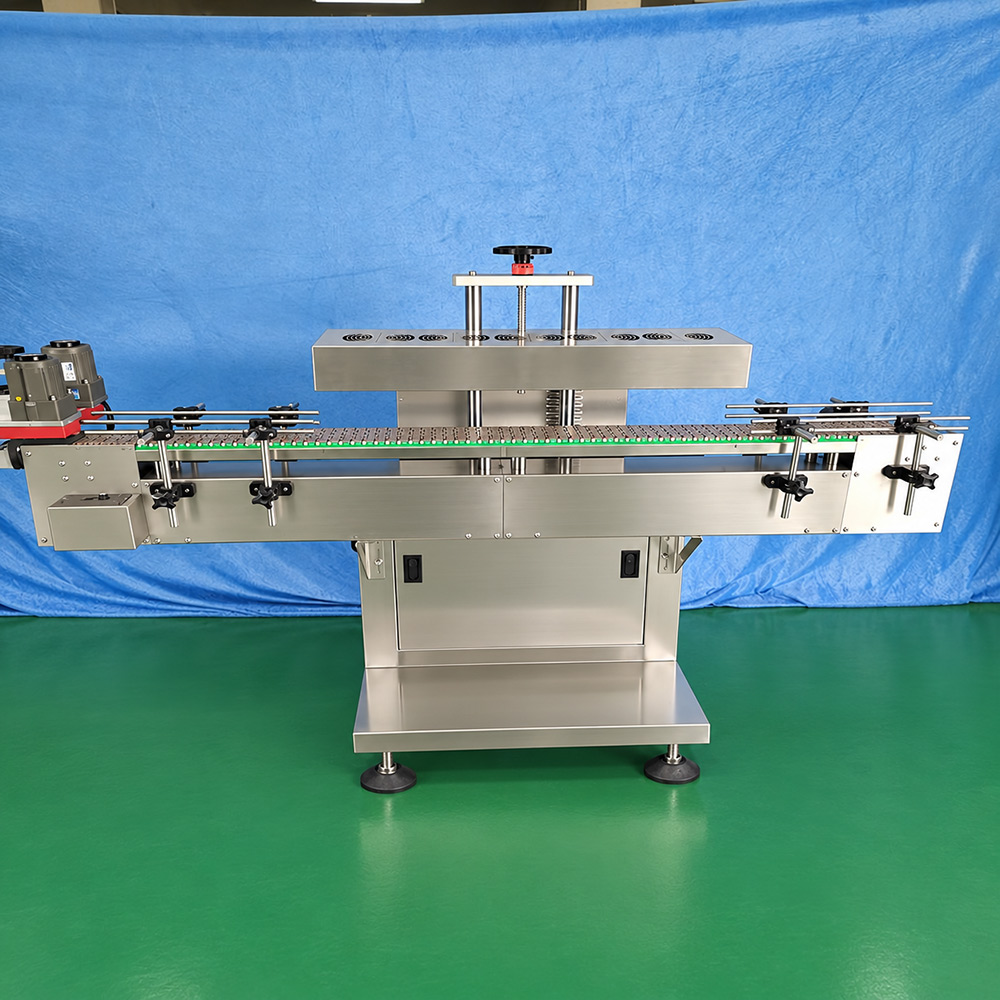
Machine dimensions | 1350 × 900 × 1300 mm | Add clearance at the front for head height adjustment |
Machine weight | 220 kg | — |
Conveyor speed | Up to 10 m/min | Adjustable to match the line ahead |
Foil liner thickness | 0.2 – 1.2 mm | Send us your liner spec |
Model comparison
Model | Speed | Bottle opening | Cooling | Best for… |
|
APC-M1 | 50–120 btl/min | 15–50 mm | Air | Brands running one shift, up to 120 bpm, standard supplement bottles | You are here |
APC-M2 | Up to 200 btl/min | 15–150 mm | Water | Two or three-shift operations, wide-mouth jars, high-speed lines |
Both machines seal the same way. What changes is how long the coil can run flat out, and how wide a bottle opening it covers.
How the seal is made
The coil generates a magnetic field that heats the foil layer inside your cap liner. The polymer coating on the foil melts and bonds to the bottle land. The cap stays cool, and so does the product underneath — nothing in the bottle gets heated.
Automatic power adjustment
Sealing power adjusts to the foil size automatically. You don’t calculate a wattage for each SKU — set the product, and the machine matches the coil output to what it sees.
If power runs too low or overloads, the machine stops and tells you. You find out at the machine rather than three pallets later at QC.
Multi-channel air cooling
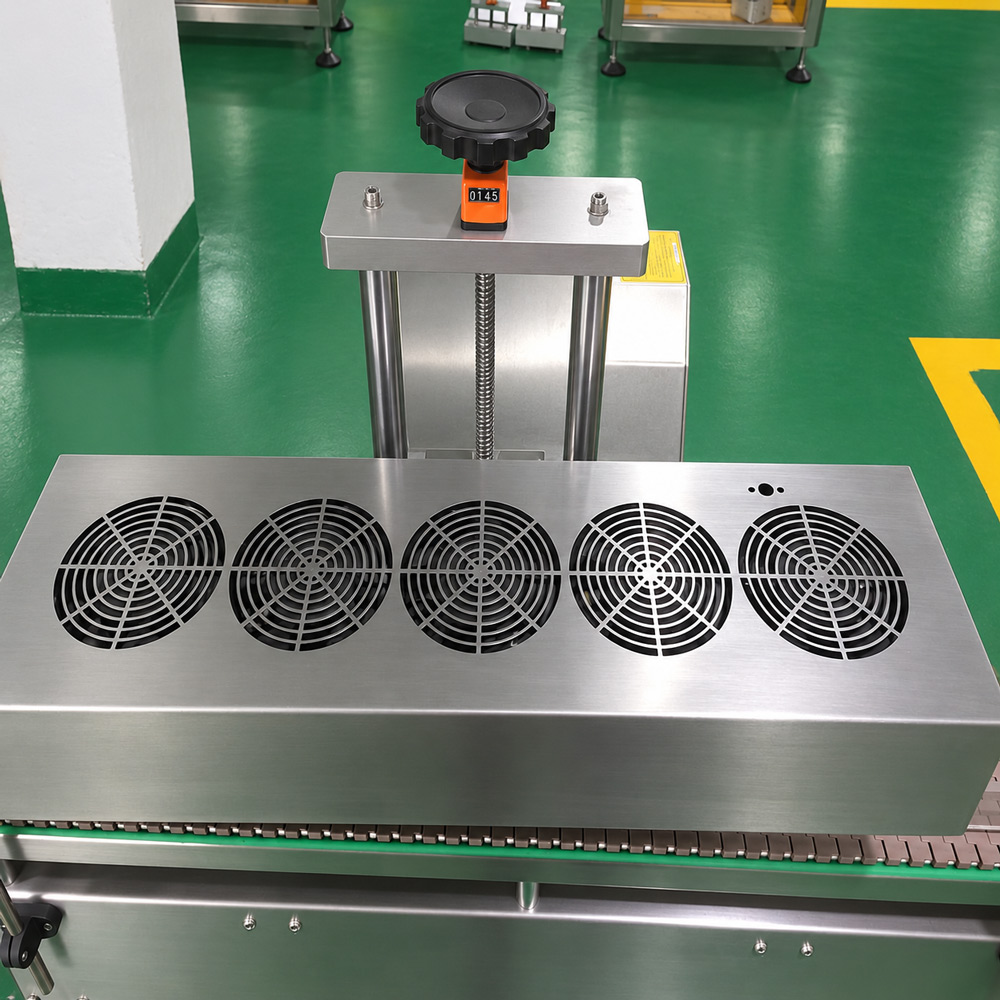
Multiple air channels carry heat away from the induction components. That keeps coil output stable through a shift and extends the life of the electronics.
Air cooling means no water line to plumb and no chiller to maintain. For single-shift running it’s the simpler choice. If you’re running continuously, look at the water-cooled model instead.
Ideal Applications & Industries
Tablet and capsule bottles
Standard 60, 90 and 120-count bottles with a pre-inserted foil liner. The most common setup on this machine.
Gummy bottles
Gummy bottles usually have a wider opening — check yours against the 15 to 50 mm range. Gummies also hold moisture, so the seal is doing real work here, not just providing tamper evidence.
Powder containers
Powder sitting on the bottle land stops the seal bonding. If you’re filling powder, the land has to be clean when the cap goes on. That’s a filling problem, but it shows up here.
What changing over involves
What you changed | What gets adjusted | Roughly how long |
Same bottle, different cap color | Nothing | 0 |
Different bottle height | Head height | 15–30 minutes |
Different cap diameter | Head height, possibly the guide rails | 15–30 minutes |
Different liner material or thickness | Power setting, then a seal test | 15–30 minutes |
Fewer format parts than most machines on your line. A capper has chucks, a labeler has change parts. This has head height and power. That’s most of it.
Liner changes need a test run. A thicker foil or a different polymer coating seals at a different power setting. Seal a few and check them before you run a batch.
Write down what worked. Keep the power setting and head height for each SKU on a sheet by the machine. It saves re-finding them every changeover.
Three things to check before you buy any induction sealer
The seal has to hold, batch after batch
A seal that looks right isn't the same as a seal that passes a peel test. Ask any supplier how they verify it, and ask to see the settings for a liner like yours. We seal your bottles with your caps and liners at factory acceptance testing before the machine ships.
The manual
Your operator sets head height and power. They need to know what to do when a seal fails — and it will fail sometimes, usually because of the cap or the bottle, not the machine. Ask to see the English manual before you order.
Installation and training
Getting the sealer running takes ten minutes. Getting it to seal reliably across all your SKUs takes someone who's done it before. Our engineers install it, dial it in on your products, and show your operators how to read a failed seal.
Why buy from us
One Point of Contact
One project engineer handles your machine from proposal to commissioning, so you’re not chasing five suppliers for one answer.
We Run Your Bottle, Cap and Liner Before You Order
Send us a bottle, a cap and a liner. We seal them on the machine and send you photos. You decide whether to talk quotes after that.
A U.S. Number, Answered by Us
+1 (213) 526-8644, answered by our engineers 9 AM–7 PM China time, Monday to Friday. That’s evening and overnight in the U.S., so leave a message or send a WhatsApp anytime and we’ll pick it up first thing.
Spare Parts and Lead Time, in Writing
A kit of wear parts ships with your machine. Every part in the kit, and the lead time for anything outside it, is listed in your quote in writing.
FAQ
It depends on your line speed and bottle opening size, and whether air or water cooling fits your shift pattern. Send us your bottle, cap and target rate and we’ll reply within one business day. Most quotes include a layout showing where it fits.
Probably, if your liner has a foil layer. Liners without foil won’t seal by induction at all. Send us a bottle, a cap and a liner — we’ll seal one and send you a photo before you order.
Most failed seals aren’t the sealer. The usual causes are a liner that isn’t seated flat, flashing or molding marks on the bottle land, product dust on the land, or cap torque that’s too low. Check those before you adjust the machine.
Air cooling suits single-shift running up to 120 bottles per minute, with bottle openings from 15 to 50 mm. It needs no water supply. Water cooling runs up to 200 bottles per minute, covers openings up to 150 mm, and holds output through continuous shifts.
Yes. We build to your U.S. supply at 60 Hz and confirm the voltage with your quote.
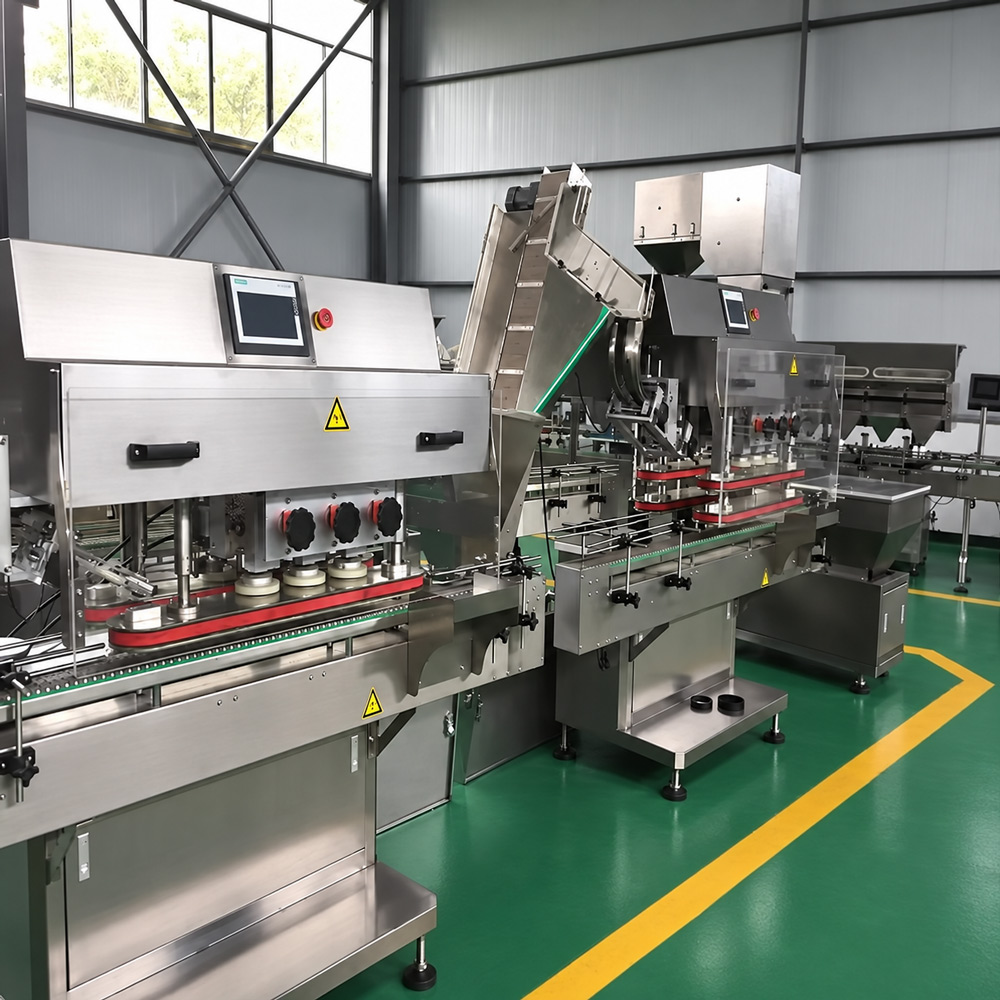
Yes. It goes between your capper and your labeler on its own conveyor. Tell us your existing conveyor height and belt width and we’ll match it.
Yes. Our machines are certified and use certified electrical components. Because the exact scope depends on the model and electrical configuration you select, our factory confirms it in writing before production.
The machine is 1350 × 900 × 1300 mm. Add clearance at the front for head height adjustment.
A kit of wear parts ships with your machine. Every part in the kit, and the lead time for anything outside it, is listed in your quote in writing.
Customers Also Interested In...
Send us a bottle, a cap and a liner
We’ll seal one on our own machine and send you a photo before you commit to anything. If your liner won’t seal by induction, we’ll tell you that instead of selling you a machine that can’t do the job.
Send your line layout and we’ll show you where the sealer fits and how much conveyor length you need.