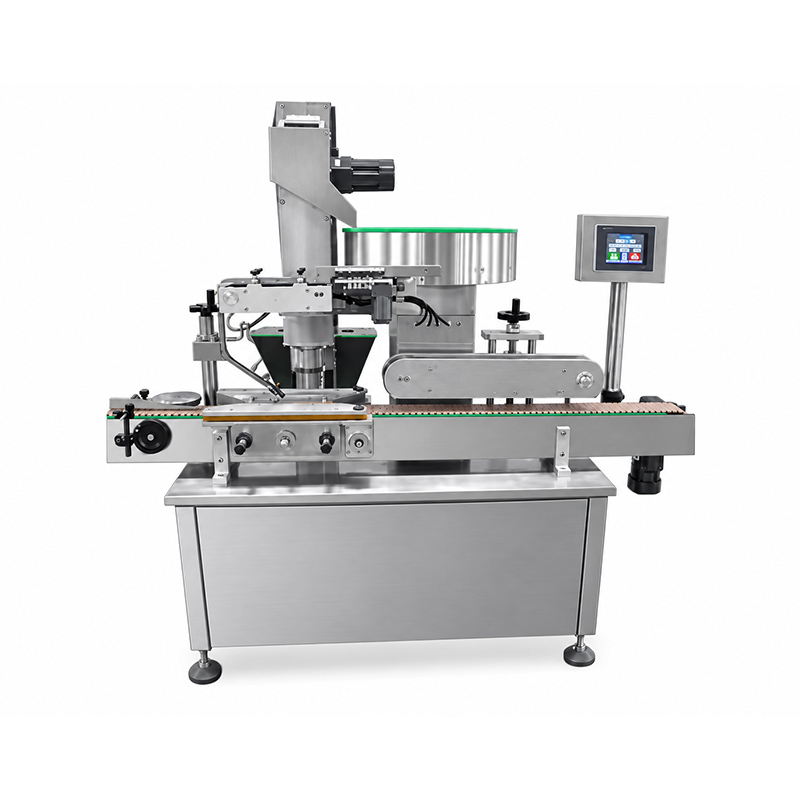
APC-D902 Screw Capper

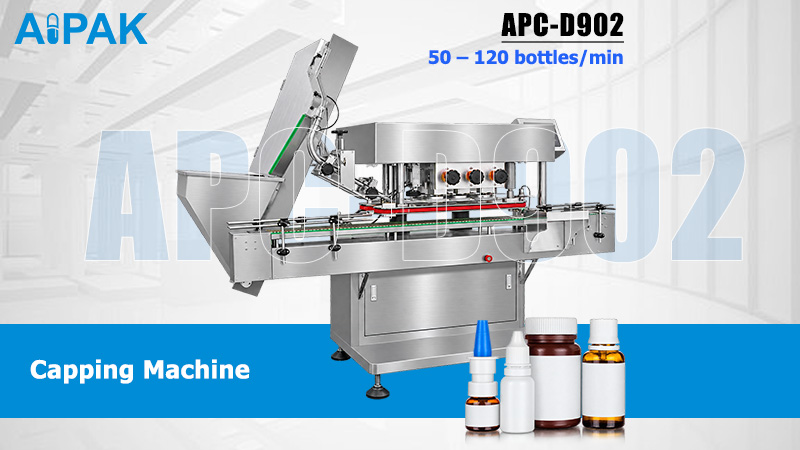
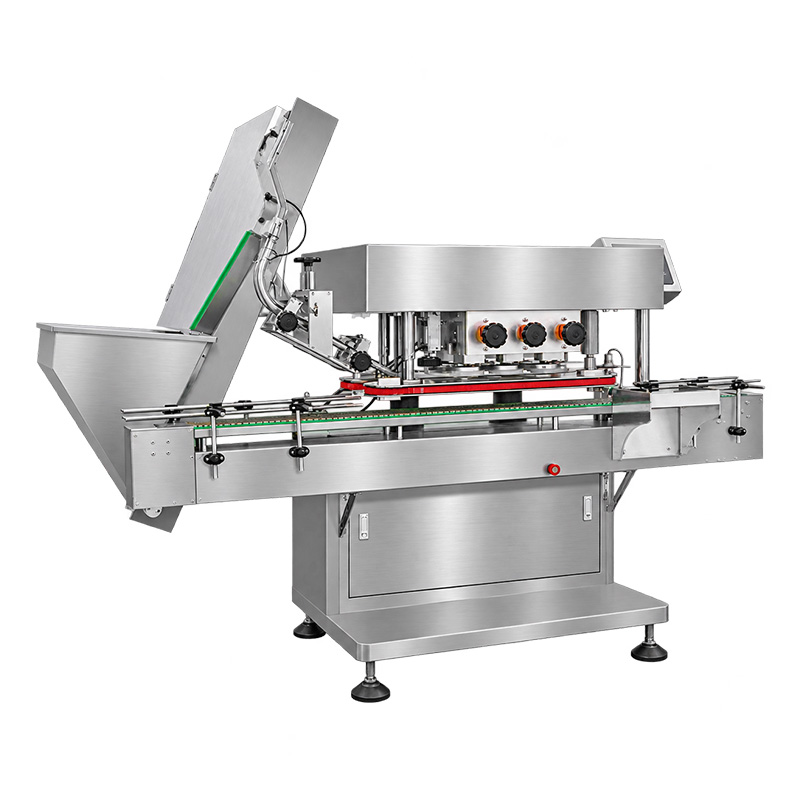
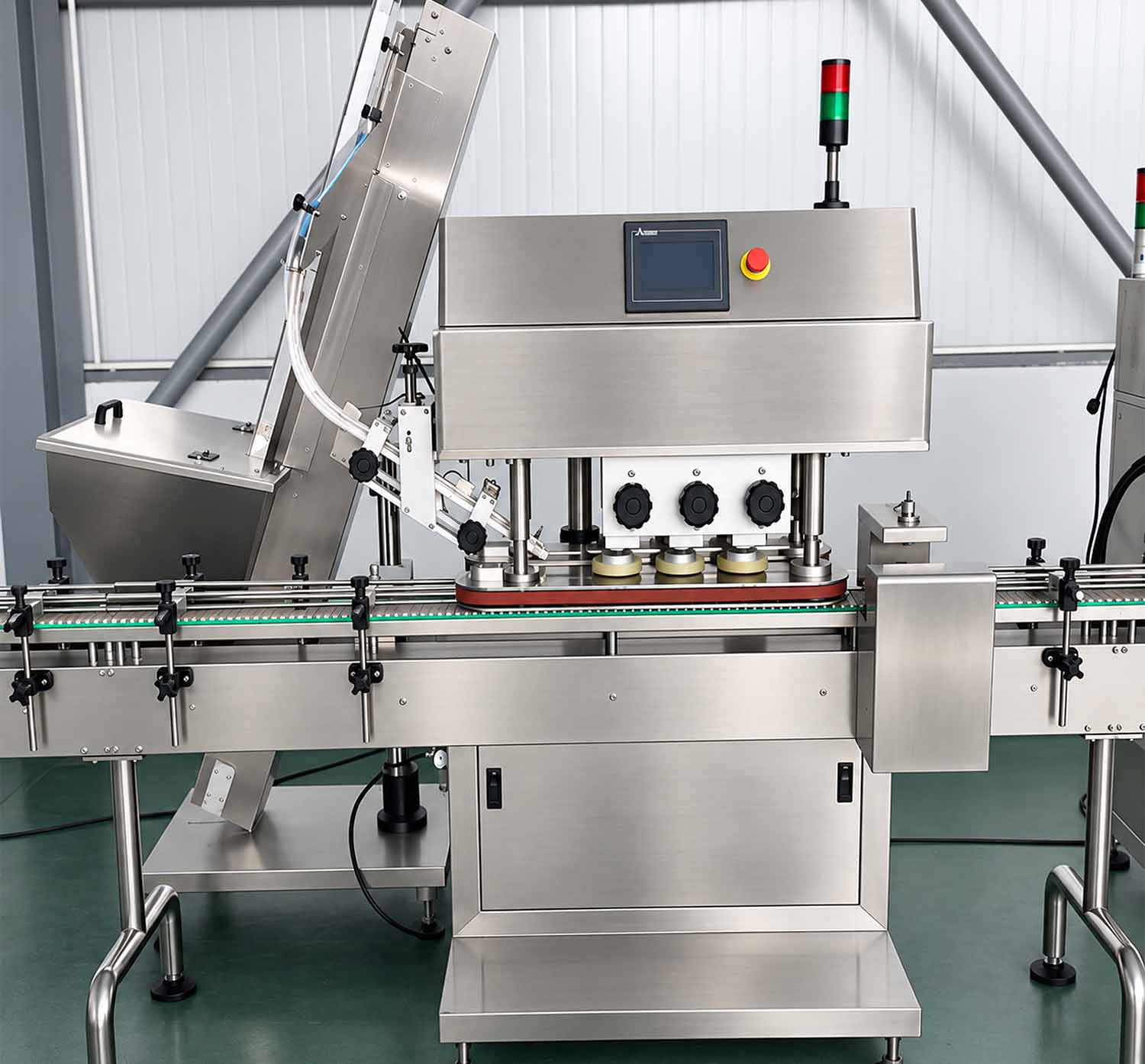
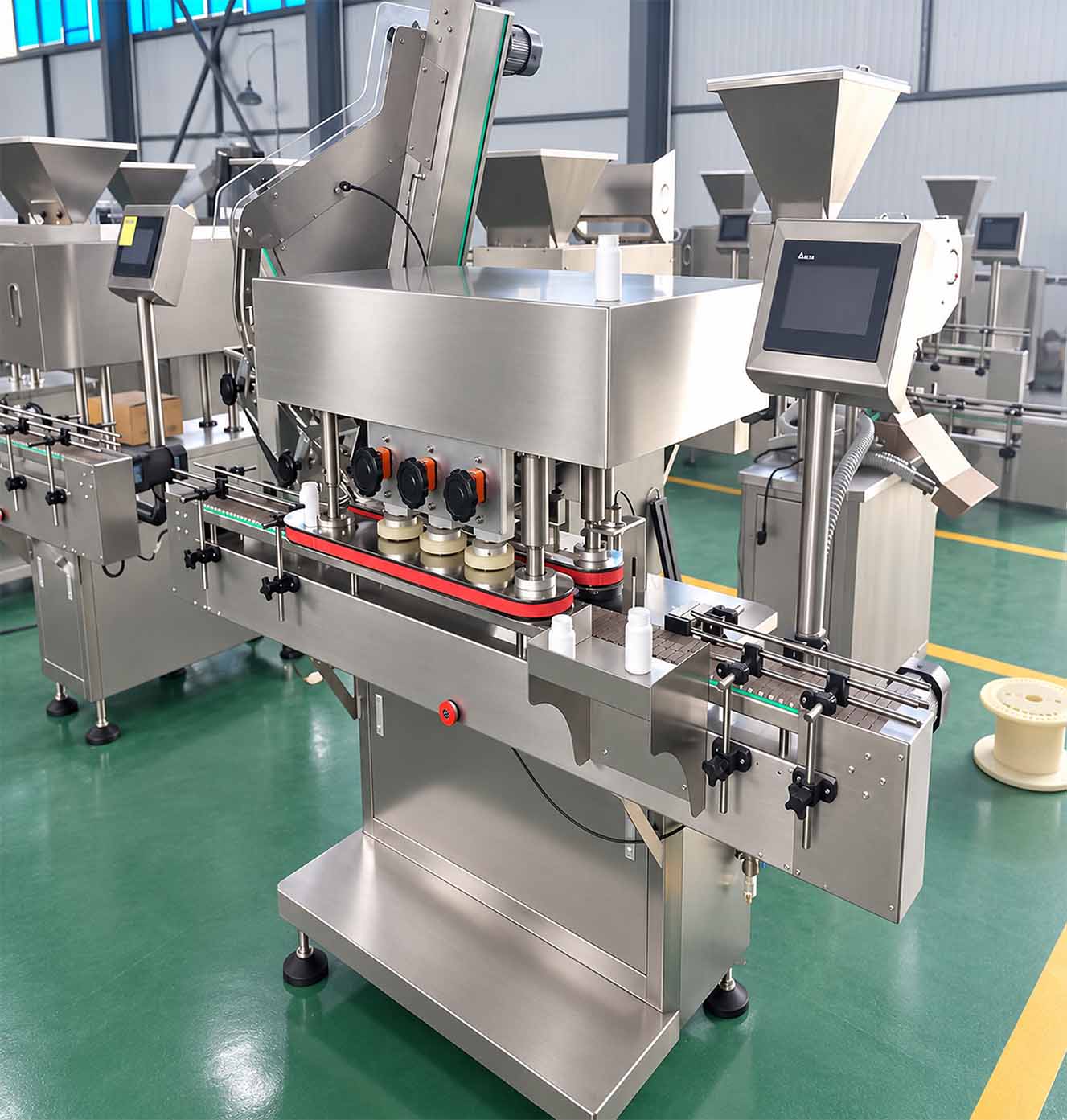
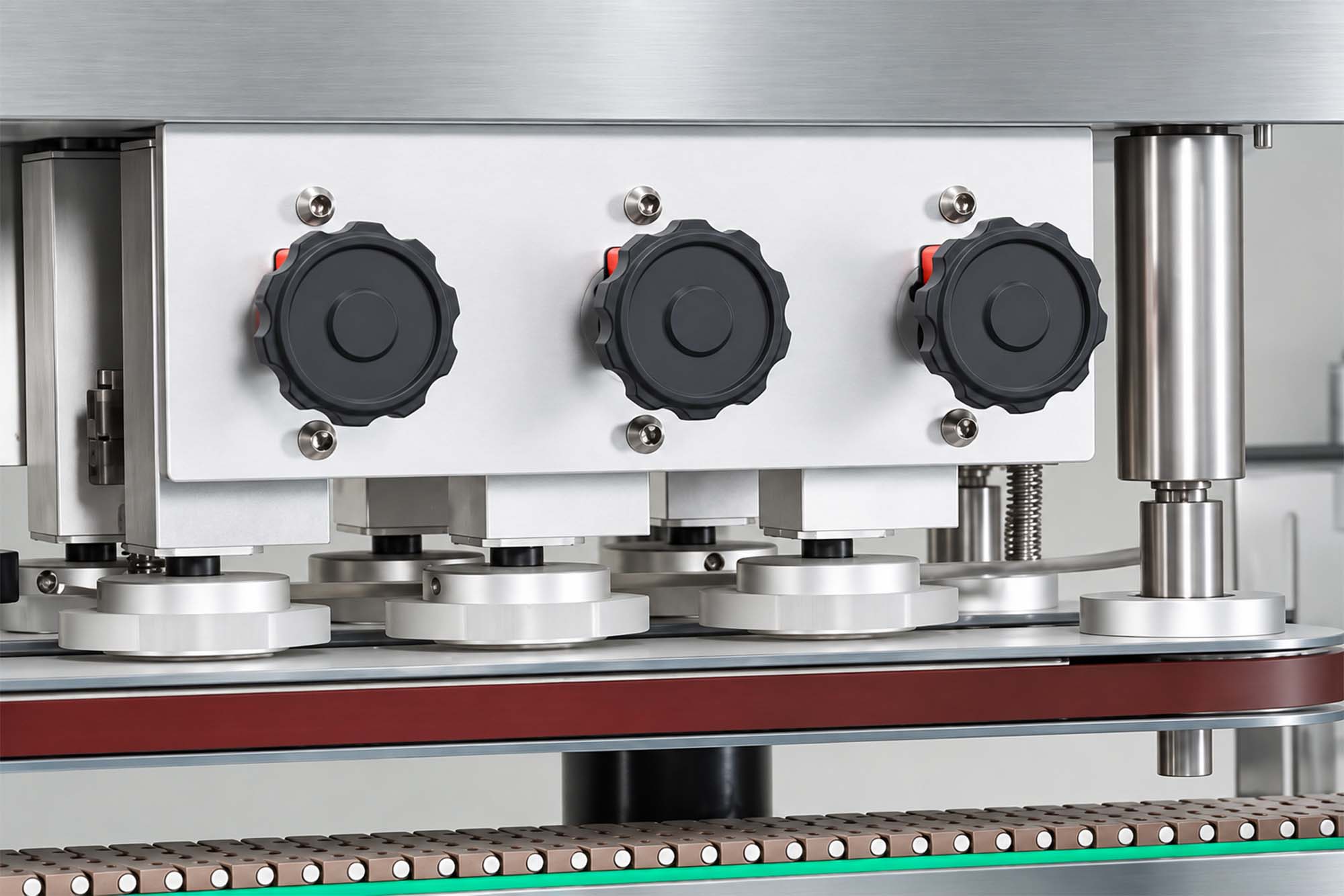
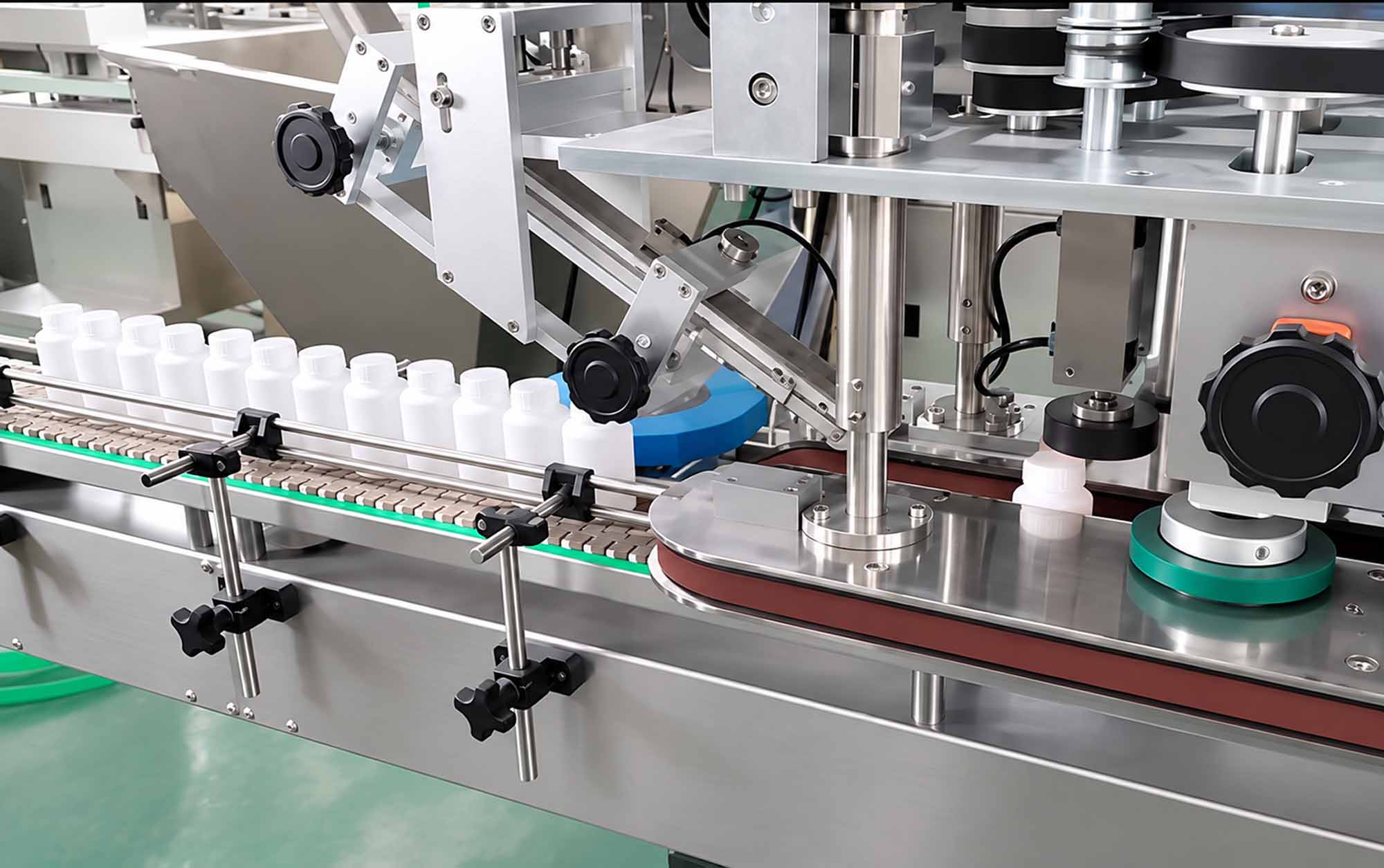
The APC-D902 screws caps onto bottles at 50 to 120 per minute, using three pairs of friction wheels rather than a fixed chuck. Torque is adjustable, so you can set it tight enough to hold a foil seal and loose enough that your customer can open the bottle.

  • 50 to 120 bottles per minute— matches a counting line running up to 120 bpm
  • Adjustable torque— three pairs of friction wheels, no chuck to change per cap size
  • Rejects crooked caps, reversed caps and bottles with no foil linerbefore they reach the sealer

Direct from our factory | Lead time confirmed in your quote | Installation and training available | Spare parts listed in your quote

Is the APC-D902 the right capper for you?

✓ This is a fit if…

✕ Look elsewhere if…

Technical specification

Parameter

Value

What this means for you

Capping speed

50 – 120 bottles / min

Match this to your counter, and check your sealer keeps up

Cap types

Standard, tamper-band, double-layer, flip-top plastic caps

Screw caps only — press-on caps need the D904

Capping method

Three pairs of friction wheels

No chuck to swap between cap diameters

Torque

Adjustable (Customizable via friction wheels / PLC control)

The single most important setting on this machine

Bottle size range

Φ30 – Φ100 mm

Your bottle has to fall inside this

Cap diameter range

Φ20 – Φ50 mm


Detection

No bottle / no cap / crooked cap / reversed cap / missing foil liner

Bad bottles are rejected here, not at the sealer

Power

1.8 kW, 60 Hz

Built to your U.S. supply. We confirm the voltage with your quote

Compressed air

0.6 MPa, 0.3 m³/h

Small demand — most existing compressors cover it

Machine dimensions

2550 × 1050 × 1900 mm

One of our two longest cappers, with the D903 — check your line length

Machine weight

650 kg


At 2550 mm this is a long station. Allow conveyor run-in so bottles are travelling straight and evenly spaced before they reach the cap chute.

Model comparison

Model

Speed

Method

Best for…


APC-D901

30–80 btl/min

Press and screw

Shaped, flat or oval containers that are hard to hold

View →

APC-D902

50–120 btl/min

Screw, friction wheels

Standard round bottles at line speed

You are here

APC-D903

60–180 btl/min

Screw, high speed

High-speed lines above 120 bottles per minute

View →

APC-D904

40–120 btl/min

Press only

Caps that push on rather than screw on

View →

The choice is decided by your closure, not by your line speed. A press-on cap on a screw capper and a screw cap on a press capper both come out damaged.

Friction wheel capping, adjustable torque

Three pairs of friction wheels grip the cap and turn it down onto the thread. Tightness adjusts without changing parts, and because the wheels grip rather than clamp, the cap surface isn’t marked.

Torque matters more here than most buyers expect. Too loose and the foil liner won’t press against the bottle land, so the induction seal fails downstream. Too tight and your customer struggles to open the bottle. It’s one setting, and it decides two problems.

Stepped cap elevator

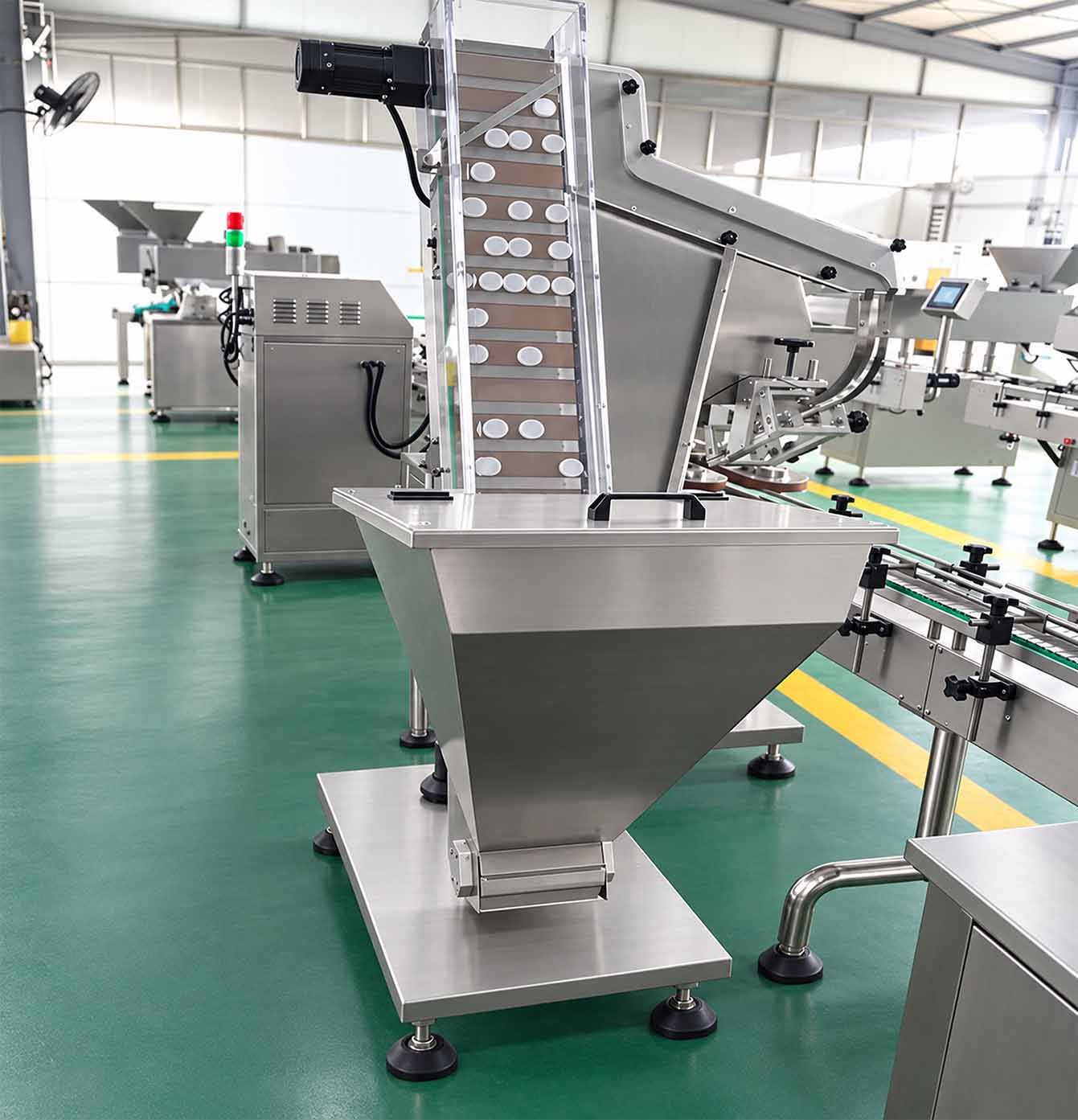
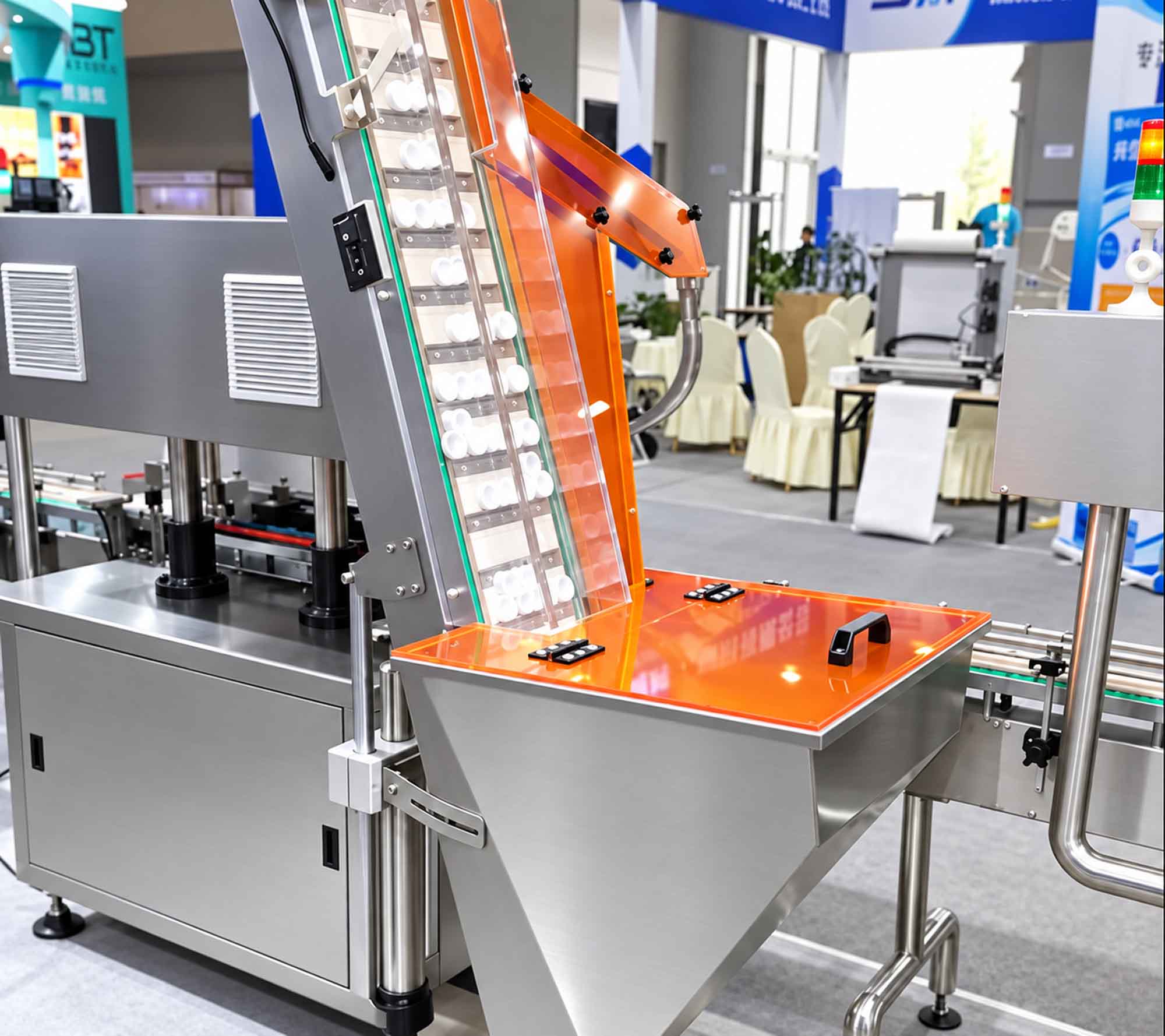
Caps are lifted by a stepped elevator rather than a vibratory bowl. It runs quieter, and cap delivery stays steady rather than surging.

Caps that arrive facing the wrong way drop back into the hopper instead of being fed to the bottle. That’s what keeps a wrong-way cap from becoming a jam.

What gets rejected here

The machine stops if there’s no bottle or no cap. It rejects a bottle if the cap went on crooked, if the cap went on upside down, or if the bottle has no foil liner in the cap.

That last one is worth reading twice. A bottle with no liner will pass through your induction sealer without sealing, look fine, and reach your customer unsealed. Catching it here — before the seal step — is the difference between a rejected bottle and a complaint.

Ideal Applications & Industries

Supplement bottles with tamper-band caps

The tamper band has to break cleanly when the customer opens it, which depends on how far the cap is turned down. Torque set once, checked at the start of a run, holds for the shift.

Bottles going through induction sealing

The cap holds the foil liner against the bottle land while the coil heats it. Under-torqued caps and liners with no foil are two of the most common causes of failed seals. This machine catches both.

Powder tubs with double-layer caps

A double-layer cap has an inner plug that has to seat before the outer shell turns down. Torque set for a single-wall cap leaves the inner layer loose, and the leak shows up after shipping, not at the line.

What changing over involves

What you changed

What gets adjusted

Roughly how long

Same bottle, different cap color

Nothing

0

Different cap diameter

Friction wheel spacing, cap chute

15–30 minutes

Different bottle height

Capping head height, conveyor guides

15–30 minutes

Different cap type (standard to flip-top)

Cap elevator setup, torque setting

15–30 minutes

No chuck kit to buy per cap size. Friction wheels adjust across a range rather than being replaced. If you run several cap diameters, that’s the difference between a settings change and a parts order.

Re-check torque after every changeover. It’s the one setting that isn’t obvious from looking at the bottle. Cap a few, check them, then run.

Write the torque setting down for each SKU. Together with cap type and bottle height, that’s your changeover sheet. A repeat job takes a fraction of the first setup.

Three things to check before you buy any capping machine

01

Torque, and whether it holds

Ask any supplier what torque range their machine covers and how it's verified. Then ask what happens to that setting over a full shift. We run your bottles with your caps at factory acceptance testing and give you the torque readings, not just a demo.

02

The manual

Your operator sets torque, wheel spacing and head height. They need to know what an under-torqued cap looks like before it reaches the sealer. Ask to see the English manual with the settings procedure in it.

03

Installation and training

The machine runs out of the crate. Getting torque right across all your cap types takes someone who's done it before. Our engineers install it, dial in each of your caps, and show your operators how to spot a bad cap.

Why Choose AIPAK?

One Point of Contact

One project engineer handles your machine from proposal to commissioning, so you’re not chasing five suppliers for one answer.

We Run Your Bottle and Cap Before You Order

Send us your bottles and caps. We cap them on the machine and send you the video and the readings. You decide whether to talk quotes after that.

A U.S. Number, Answered by Us

+1 (213) 526-8644, answered by our engineers 9 AM–7 PM China time, Monday to Friday. That’s evening and overnight in the U.S., so leave a message or send a WhatsApp anytime and we’ll pick it up first thing.

Spare Parts and Lead Time, in Writing

A kit of wear parts ships with your machine. Every part in the kit, and the lead time for anything outside it, is listed in your quote in writing.

Deep Dive FAQ

How much does a capping machine cost?

It depends on your bottle and cap sizes, your line speed, and whether you need the press-on or screw-on configuration. Send us a bottle and a cap and we’ll reply within one business day. Most quotes include a layout showing where it fits.

What torque does it apply, and can I set it?

Torque is adjustable across the range through the friction wheel setting. We set it for each of your cap types during installation, and your operator can adjust it from there.

Why do my caps go on crooked?

Usually the bottle isn’t held squarely when the cap comes down, or the cap chute is set for a different diameter. Both are adjustments. This machine also rejects crooked caps rather than passing them on, so you find out at the machine.

What's the difference between a screw capper and a press capper?

The closure decides. A screw cap is turned down onto a thread; a press-on cap is pushed on. Using the wrong machine damages the cap either way. Send us your cap and we’ll tell you which you need.

Can it detect bottles with no foil liner?

Yes. It rejects them before they reach the sealer. Without that check, an unlined bottle passes through induction sealing, comes out looking normal, and reaches your customer with no seal.

Does it work on US 60Hz power?

Yes. We build to your U.S. supply at 60 Hz and confirm the voltage with your quote.

Can I add this to a line I already have?

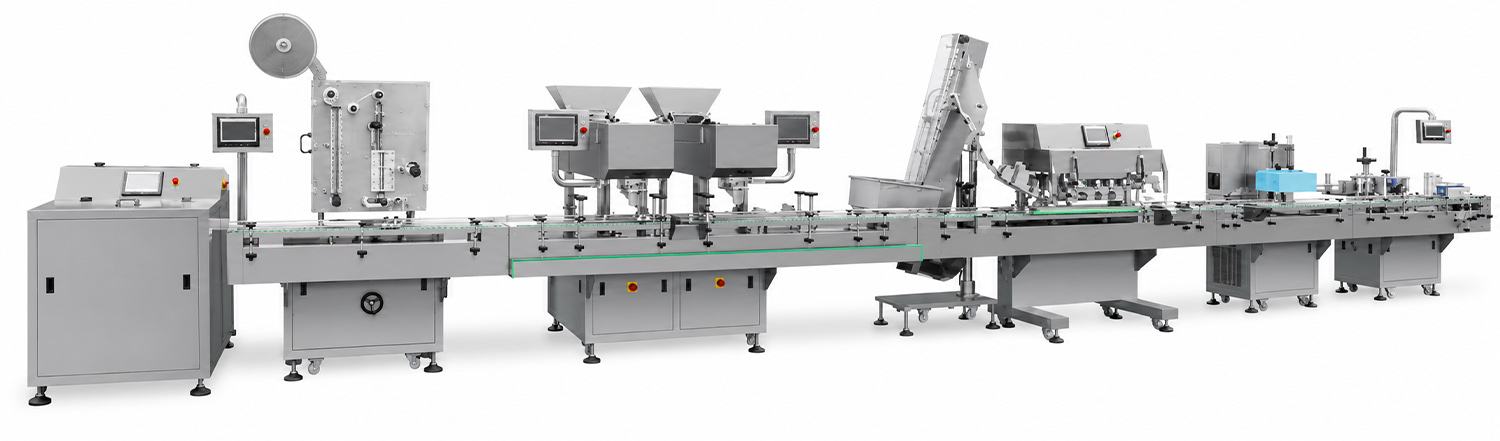
Yes. It goes after your counting and desiccant stations, and before the induction sealer. Tell us your existing conveyor height and belt width and we’ll match it.

Do your machines meet US electrical certification requirements?

Yes. Our machines are certified and use certified electrical components. Because the exact scope depends on the model and electrical configuration you select, our factory confirms it in writing before production.

How do spare parts work?

A kit of wear parts ships with your machine. Every part in the kit, and the lead time for anything outside it, is listed in your quote in writing.

Customers Also Interested In...

Send us a bottle and a cap

We’ll cap it on our own machine and send you the torque readings. If your closure needs the press-on machine instead, we’ll tell you that rather than selling you this one.

Send your line layout and we’ll show you where the capper fits and how much conveyor length you need either side.

Scroll to Top