Home » APC-D904 Press Capper
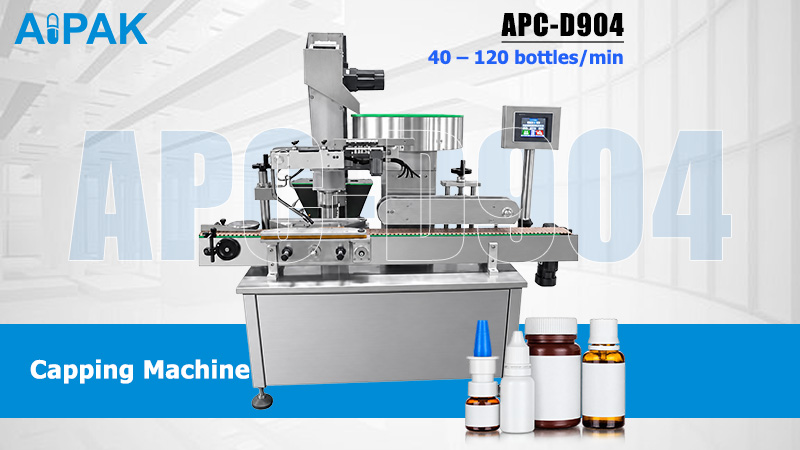
APC-D904 Press Capper
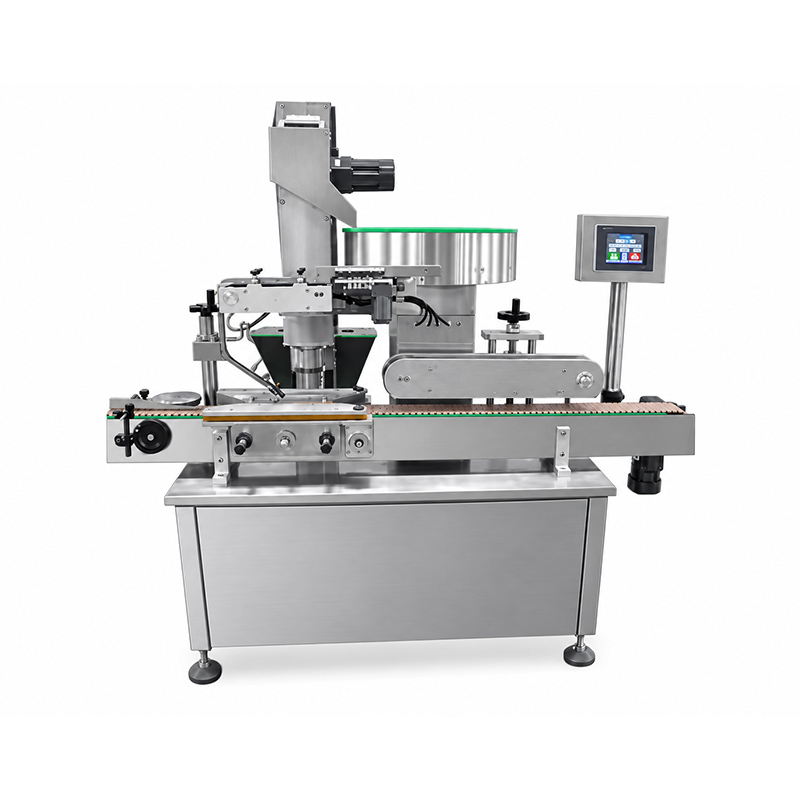
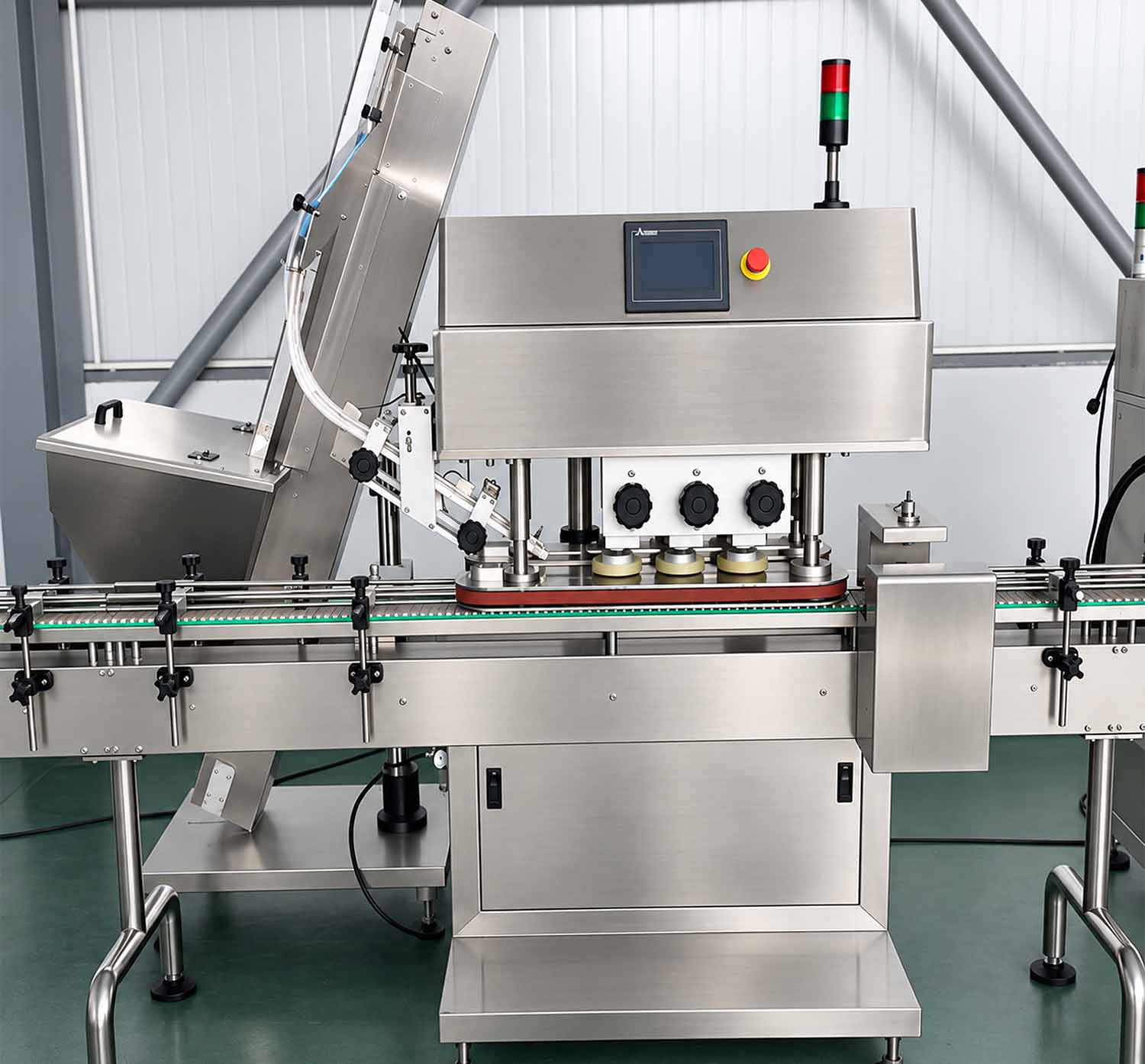
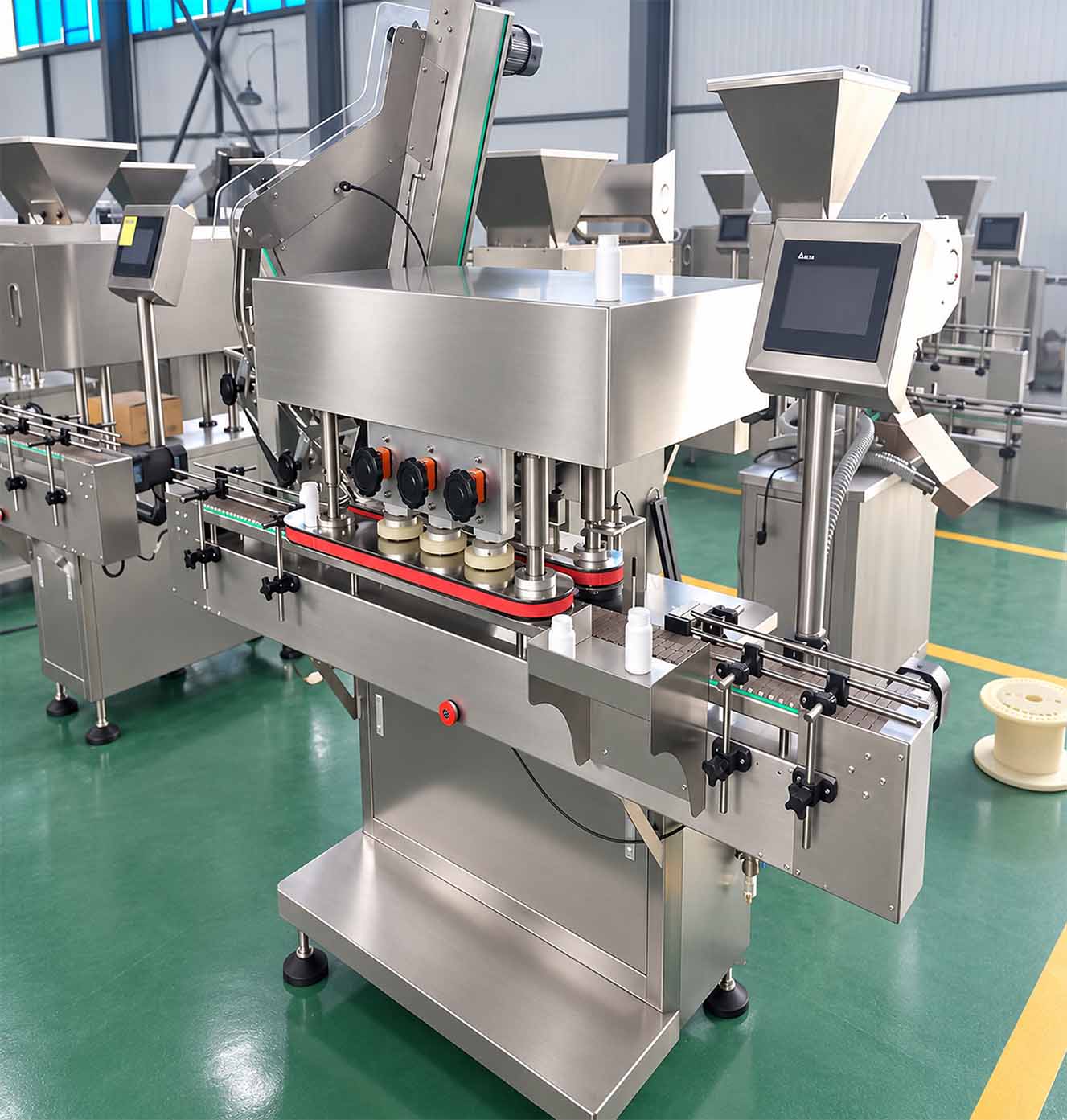
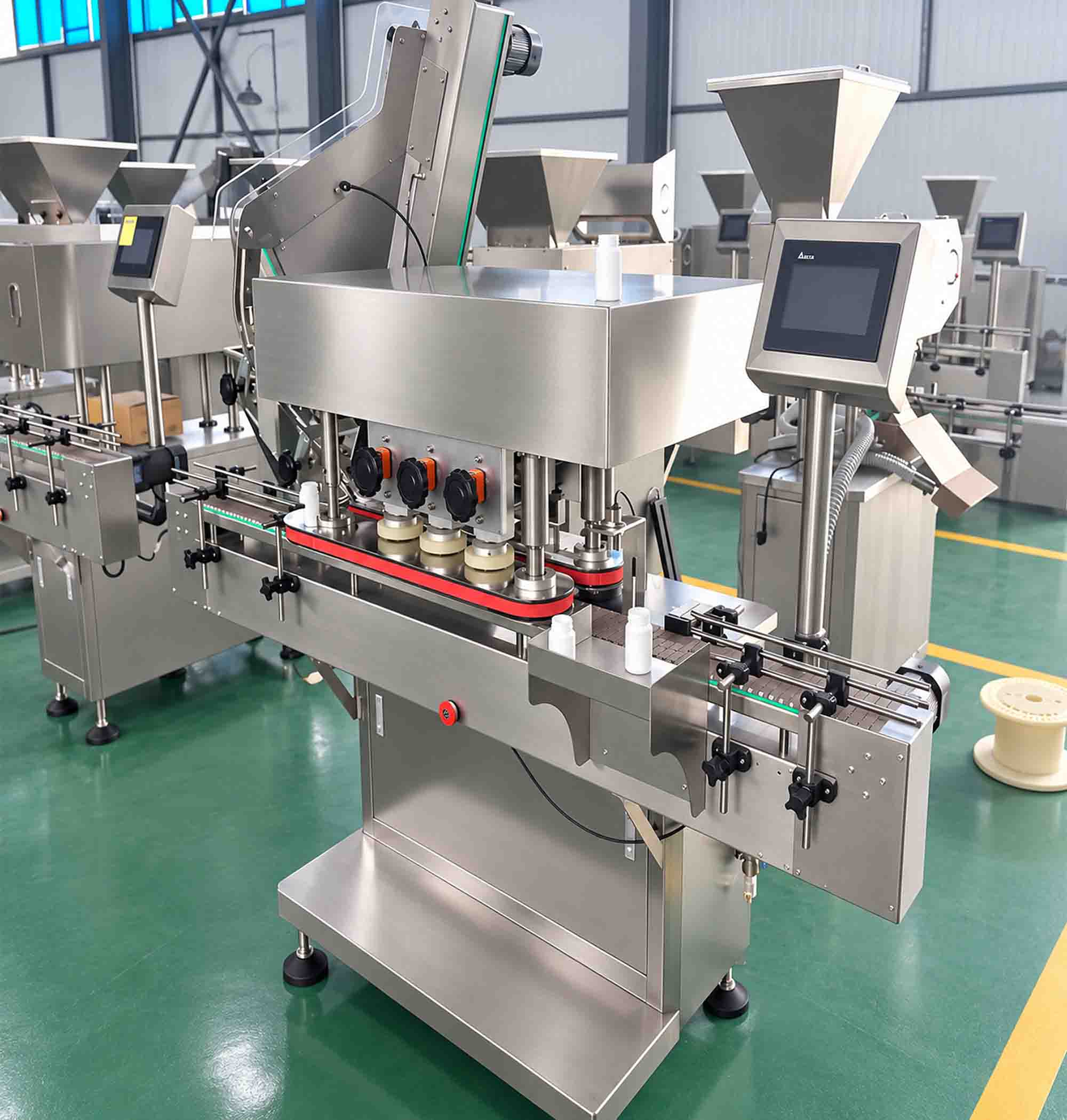
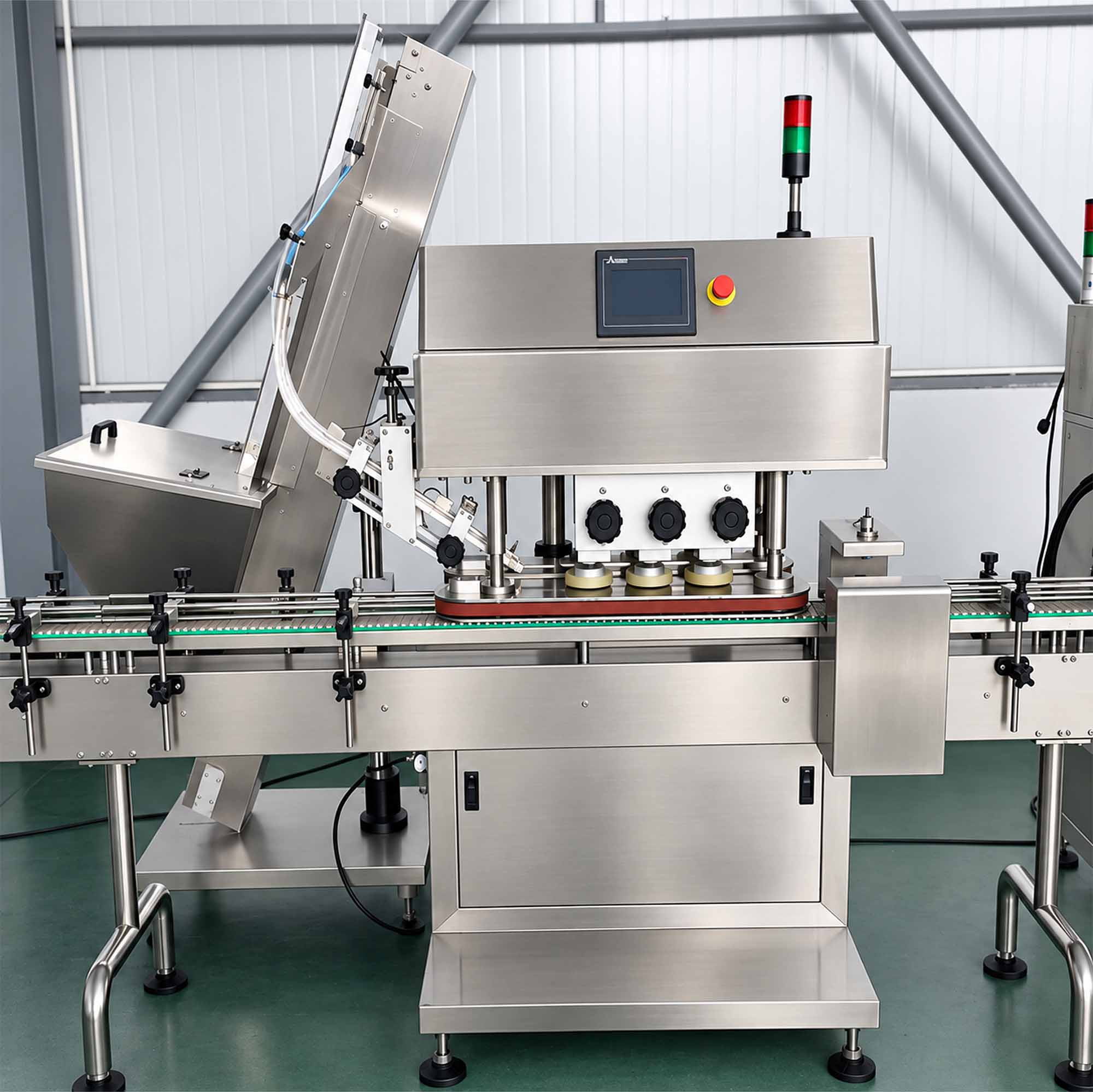
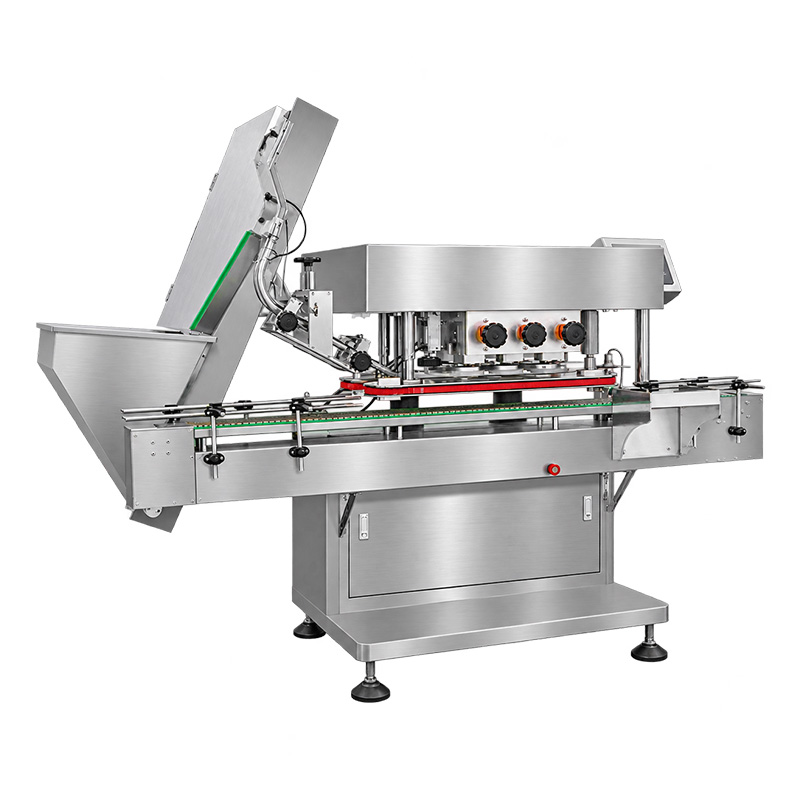
The APC-D904 pushes caps onto bottles at 40 to 120 per minute. No thread, no turning — the cap seats straight down and stays. If your closure snaps on rather than screwing on, this is the machine, and it takes up less floor than any other capper we build.
- 40 to 120 bottles per minute— press-on closures only
- Smallest footprint of our cappers— 1850 mm long, 700 mm shorter than the screw capper
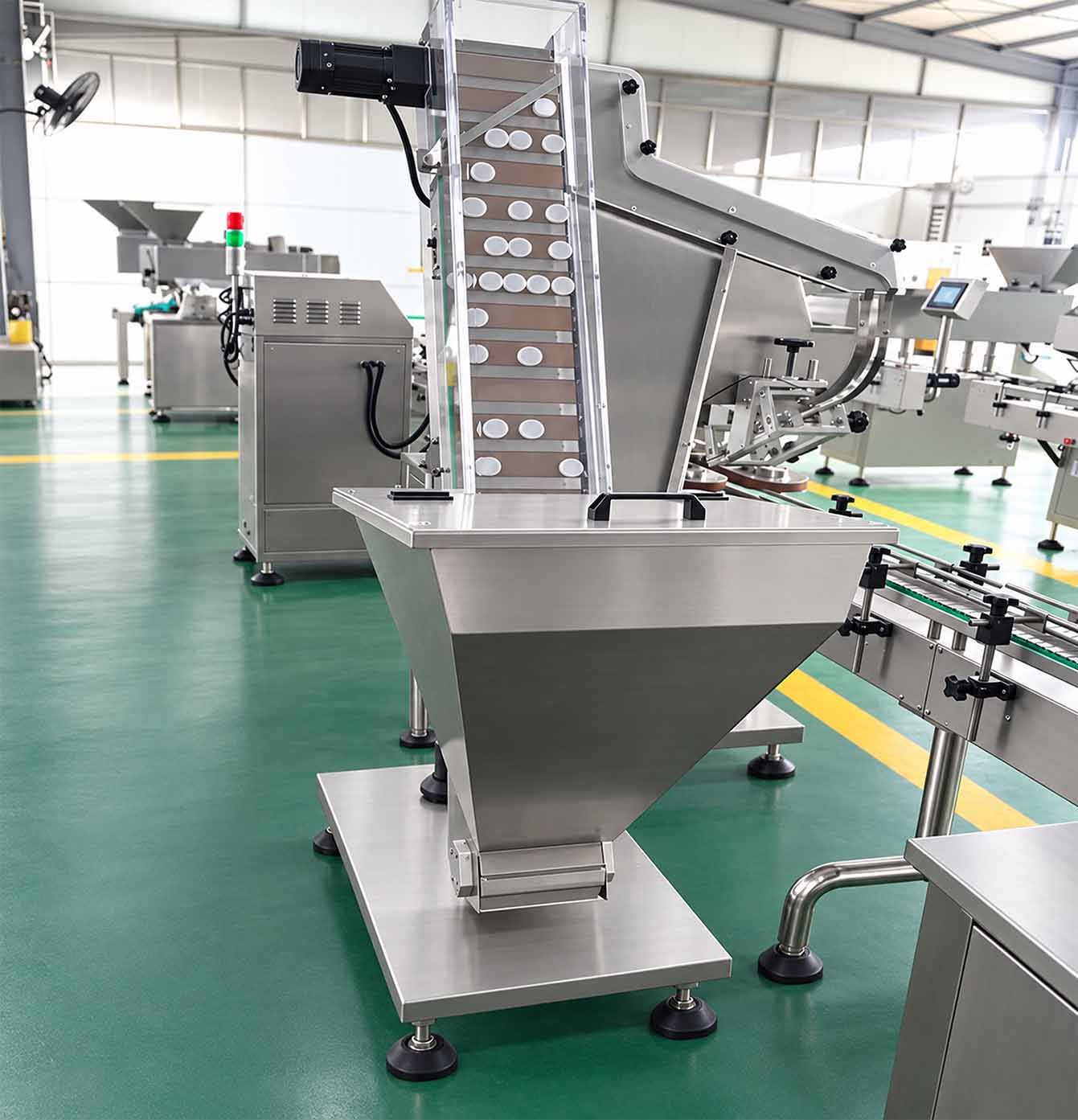
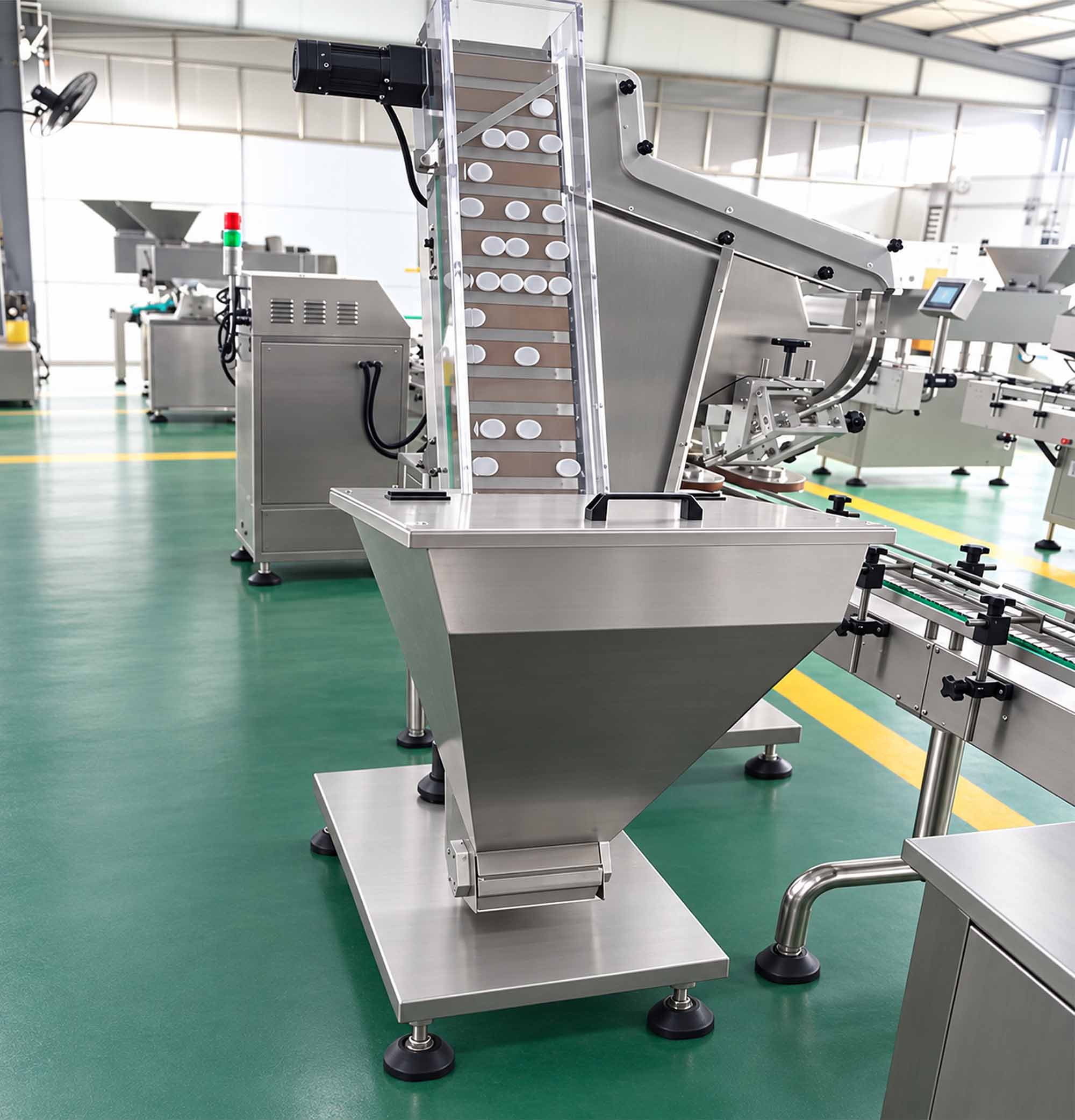
- Stepped cap elevator— wrong-way caps drop back into the hopper instead of jamming
Direct from our factory | Lead time confirmed in your quote | Installation and training available | Spare parts listed in your quote
Is the APC-D904 the right capper for you?
✓ This is a fit if…
- Your caps press on — snap-fit, flip-top or double-layer closures with no thread
- Your line runs up to 120 bottles per minute
- Floor space is tight — this is the shortest capper we build
- You run several cap sizes and want pressure adjustable rather than parts swapped
✕ Look elsewhere if…
- Your caps screw on → the APC-D902 is the screw capper. Pressing a screw cap cross-threads it and it won't reseal
- Your closure needs pressing and then turning → the APC-D901 does both in one station
- Your bottles are shaped or flat → the APC-D901 was built for containers that are hard to hold
- Your line runs faster than 120 bottles per minute → tell us your rate and we'll quote what keeps up
- You need crooked-cap or missing-liner rejection → that detection is on the APC-D902
Technical specification
Parameter | Value | What this means for you |
Capping speed | 40 – 120 bottles / min | Match this to your counter, and check your sealer keeps up |
Capping method | Press-on | No thread engagement — the cap seats straight down |
Cap types | Tamper-band, flip-top, double-layer plastic caps | Press-fit closures only |
Pressure | Adjustable | Enough to seat the cap and hold a foil liner, not enough to crack it |
Bottle size range | Φ30 – Φ100 mm |
|
Cap diameter range | Φ20 – Φ50 mm |
|
Detection | No bottle / no cap, with self-diagnosis | Stops on a missing bottle or cap. Does not reject a badly applied cap |
Power | 1.5 kW, 60 Hz | Built to your U.S. supply. We confirm the voltage with your quote |
Compressed air | 0.6 MPa, 0.3 m³/h | Small demand — most existing compressors cover it |
Machine dimensions | 1850 × 800 × 1360 mm | 700 mm shorter than our screw capper |
Machine weight | 580 kg |
Model comparison
Model | Speed | Method | Best for… |
|
APC-D901 | 30–80 btl/min | Press and screw | Shaped, flat or oval containers that are hard to hold | |
APC-D902 | 50–120 btl/min | Screw, friction wheels | Standard round bottles at line speed | |
APC-D903 | 60–180 btl/min | Screw, high speed | High-speed lines above 120 bottles per minute | |
APC-D904 | 40–120 btl/min | Press only | Caps that push on rather than screw on | You are here |
Press-on capping, adjustable pressure
The head pushes the cap straight down onto the neck. Pressure adjusts across a range rather than being fixed, which matters more than it sounds: too little and the cap doesn’t seat, too much and thin-walled caps crack or deform.
If you’re induction sealing afterwards, pressure also decides whether the foil liner sits flat against the bottle land. An under-seated cap is one of the more common causes of a failed seal.
Stepped cap elevator
Caps are lifted by a stepped elevator rather than a vibratory bowl. It runs quieter and cap delivery stays steady rather than surging.
Caps that arrive facing the wrong way drop back into the hopper instead of being fed to the bottle. On a press machine that matters — a reversed cap under a press head jams the station rather than just going on badly.
The shortest capper we build
At 1850 mm the D904 is 700 mm shorter than our screw capper and 300 mm shorter than the press-screw model. On a line where every station is competing for length, that difference is real. It weighs 580 kg.
Ideal Applications & Industries
Gummy jars with snap-fit lids
Wide-mouth jars often use a press-fit lid rather than a thread. Pressure has to seat the lid fully around the whole rim, not just at the front — an uneven press shows up as a failed seal at the next station.
Flip-top closures
Flip-tops press on and stay. They’re common on powder tubs and liquid supplements, and they don’t tolerate being turned — which is exactly why a screw capper is the wrong machine here.
Wide-mouth scoop jars
Protein and greens powders use a wide snap-on lid that has to seat evenly around the whole rim. Press unevenly and one side lifts — you see it as a failed seal at the next station, not as a capping fault.
What changing over involves
What you changed | What gets adjusted | Roughly how long |
Same bottle, different cap color | Nothing | 0 |
Different cap diameter | Cap chute and press head | 15–30 minutes |
Different bottle height | Head height, conveyor guides | 15–30 minutes |
Different cap material or wall thickness | Pressure setting, then a test run | 15–30 minutes |
Pressure is the setting to re-check. A thinner-walled cap needs less pressure than a thick one. Press a few, check them for cracking and for seating, then run.
No thread means no cross-threading. That’s the advantage of a press closure — but it also means an under-pressed cap looks identical to a properly seated one from above. Check from the side.
Write the pressure setting down for each SKU. Together with cap type and bottle height, that’s your changeover sheet.
Three things to check before you buy any capping machine
Whether the cap seats fully, every bottle
An under-seated cap looks fine from above and fails at the sealer. Ask any supplier how they verify seating, not just how fast the machine runs. We run your bottles with your caps at factory acceptance testing before the machine ships.
The manual
Your operator sets pressure and head height. They need to know what an under-pressed cap looks like from the side. Ask to see the English manual with the settings procedure in it.
Installation and training
The machine runs out of the crate. Getting pressure right across all your cap types takes someone who's done it before. Our engineers install it, dial in each of your caps, and train your operators.
Why Choose AIPAK?
One Point of Contact
One project engineer handles your machine from proposal to commissioning, so you’re not chasing five suppliers for one answer.
We Run Your Bottle and Cap Before You Order
Send us your bottles and caps. We cap them on the machine and send you the video and the readings. You decide whether to talk quotes after that.
A U.S. Number, Answered by Us
+1 (213) 526-8644, answered by our engineers 9 AM–7 PM China time, Monday to Friday. That’s evening and overnight in the U.S., so leave a message or send a WhatsApp anytime and we’ll pick it up first thing.
Spare Parts and Lead Time, in Writing
A kit of wear parts ships with your machine. Every part in the kit, and the lead time for anything outside it, is listed in your quote in writing.
Deep Dive FAQ
It depends on your bottle and cap sizes and your line speed. Send us a bottle and a cap and we’ll reply within one business day. Most quotes include a layout showing where it fits.
Look inside it. A thread means it screws. A smooth inner wall with a lip or bead means it presses. If you’re unsure, send us one — we’ll tell you within a day and it saves buying the wrong machine.
No. Pressing a screw cap forces it past the thread instead of engaging it. The cap goes on, looks closed, and won’t reseal properly once opened. Use the APC-D902 for screw closures.
Usually pressure set for a thicker cap than the one you’re running. Thin-walled caps need less. Reduce pressure, press a few, and check the rim before you run a batch.
No. This machine stops for a missing bottle or a missing cap. Crooked-cap, reversed-cap and missing-liner rejection is on the APC-D902.
1850 × 800 × 1360 mm — the shortest capper we build. Add conveyor run-in either side. Send us your layout and we’ll show you where it fits for free.
Yes. We build to your U.S. supply at 60 Hz and confirm the voltage with your quote.
Yes. Our machines are certified and use certified electrical components. Because the exact scope depends on the model and electrical configuration you select, our factory confirms it in writing before production.
A kit of wear parts ships with your machine. Every part in the kit, and the lead time for anything outside it, is listed in your quote in writing.
Customers Also Interested In...
Send us a bottle and a cap
We’ll press it on and send you photos of the seated cap, from the side. If your closure needs a screw capper instead, we’ll tell you that rather than selling you this one.
Send your line layout and we’ll show you where the capper fits and how much conveyor length you need either side.