
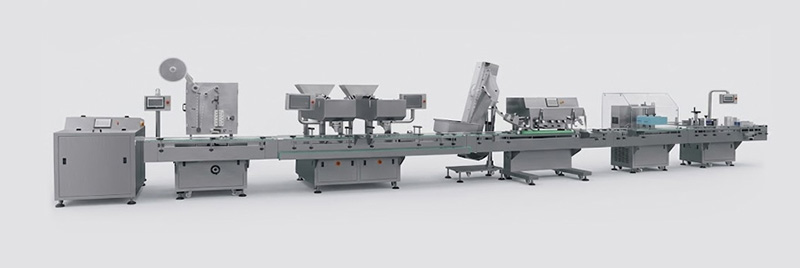
AIPAK’s complete supplement bottling line
You’re not picking a machine. You’re making three decisions: how fast, how automated, and how you buy. Settle those three and the model list narrows itself down. Start with the model list instead, and you’ll spend weeks in spec sheets without getting any closer to a decision.
How fast. Work out how many bottles you need per day, then back into bottles per minute.
How automated. Automatic costs more and saves labor. Semi-automatic costs less and eats labor. The word “semi-automatic” also means two different things, which we’ll get to.
How you buy. One full line at once, or the core machines now and the rest later.
It’s like planning a kitchen remodel. First you settle how many people you’re cooking for. Then whether you’re doing the work or hiring it out. Then whether you want one contractor or five. Once those are answered, picking materials is the easy part.
A full line is a string of stations that follow the bottle:
unscrambler → counter → capper → induction sealer → labeler → cartoner → case packer.
You probably don’t need every one of them. The useful question is which of those steps your people are still doing by hand.
Bottle unscrambler — takes loose empty bottles and feeds them onto the line in a single file, necks up. Without it, that’s two or three people standing there all shift.
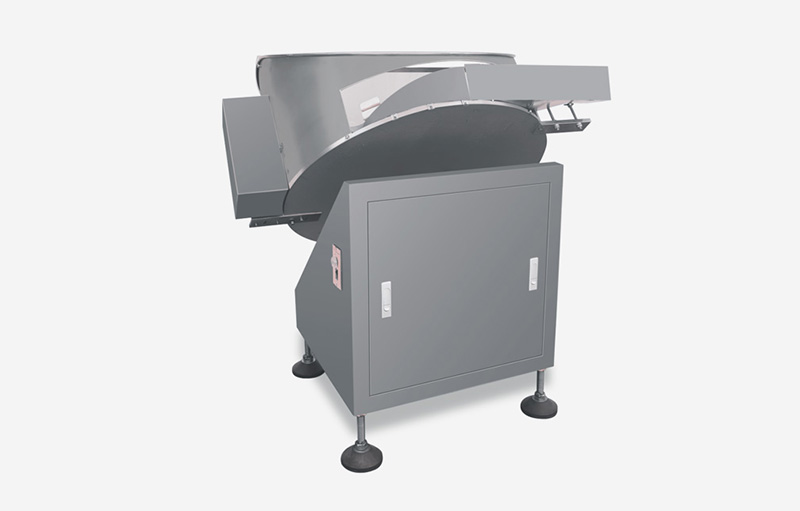
AIPAK’s bottle unscrambler
Tablet counter — the heart of the line. It fills by count, not by weight.
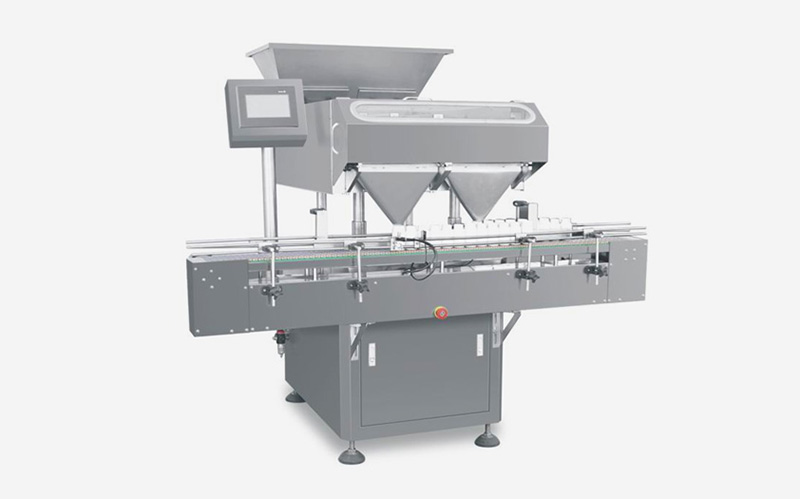
AIPAK’s tablet counter
Capper — puts caps on at consistent torque. Hand-tightened caps run loose and tight, and that’s where most leak and seal problems start.
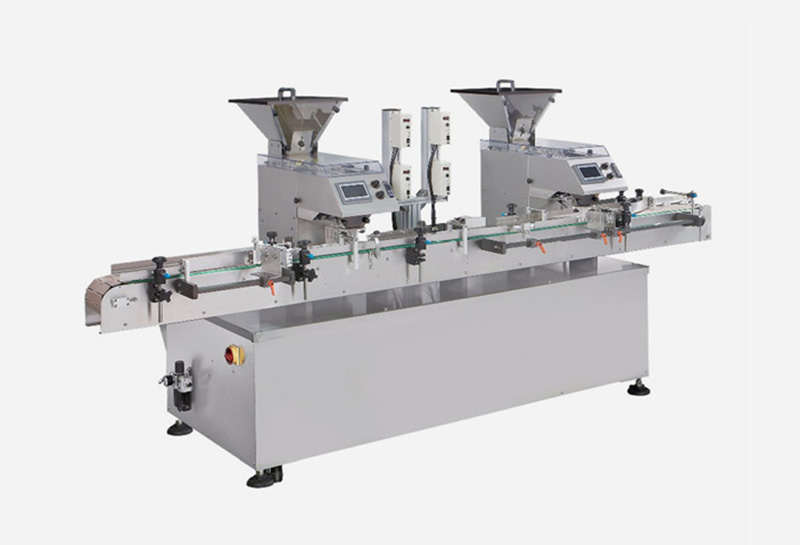
AIPAK’s capper
Induction sealer — seals foil across the bottle mouth for leak protection and tamper evidence.
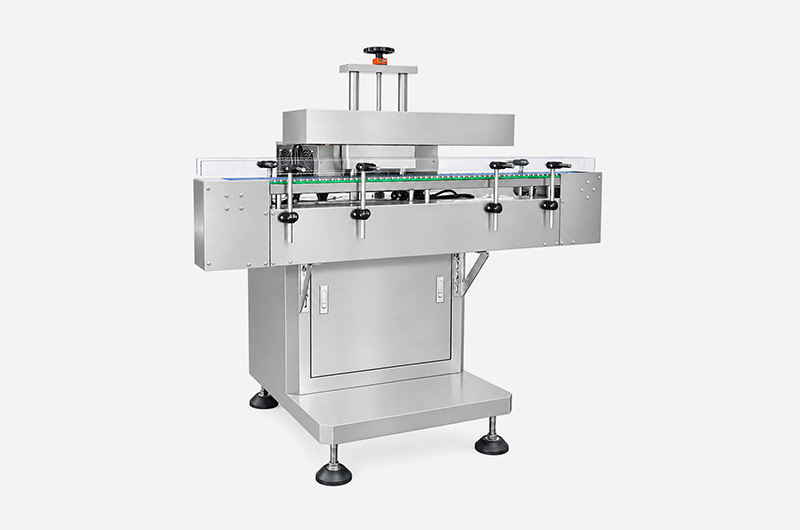
AIPAK’s induction sealer
Labeler — puts labels on square, in the same place every time.
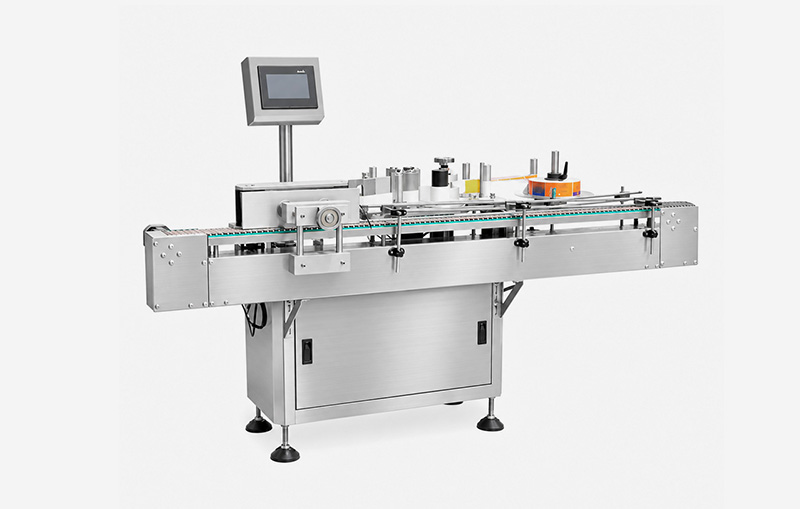
AIPAK’s labeler
Cartoner — if your product ships in a carton with an insert.
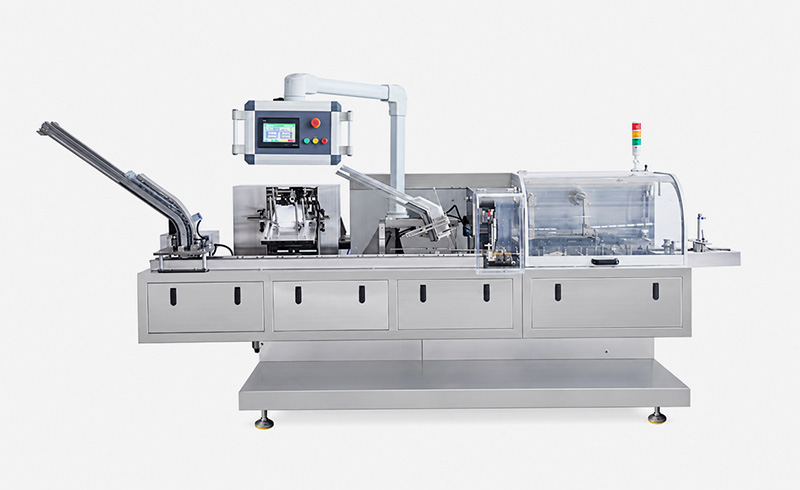
AIPAK’s cartoner
Case packer — packs the shipper and gets you ready to palletize.
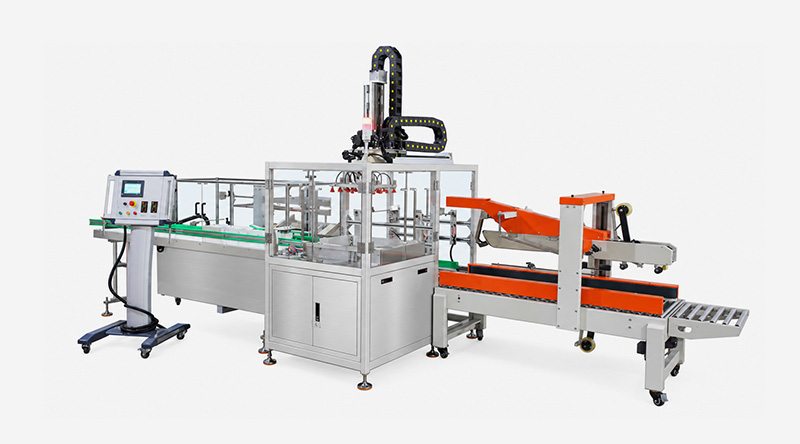
AIPAK’s case packer
Two more are optional: a desiccant inserter and a cotton inserter, both sitting between counting and capping. Whether you need them depends on your product. Plenty of products don’t.
For how to spec each machine, we wrote that up separately.
Work out how many bottles a day you need, then back into bottles per minute. Don’t shop off the top speed in a brochure. That number comes from ideal conditions. What you take home at the end of a shift is a different number, and that’s the one you’re buying.
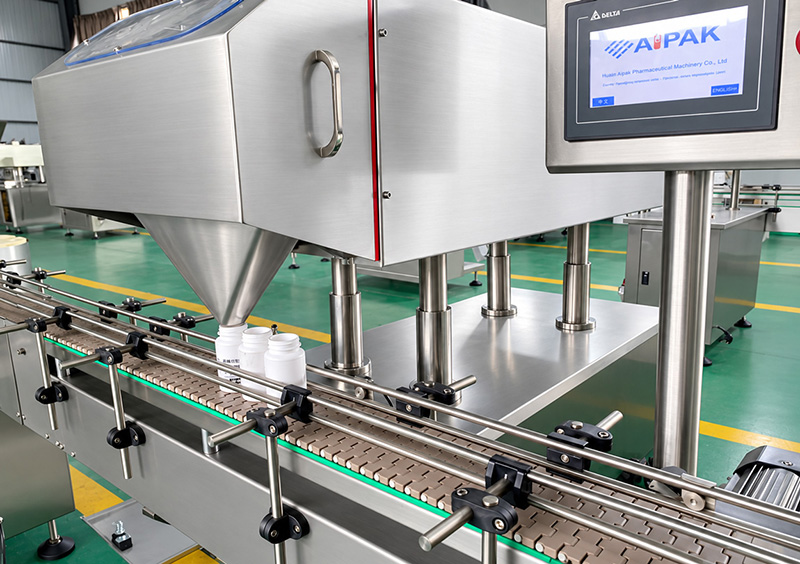
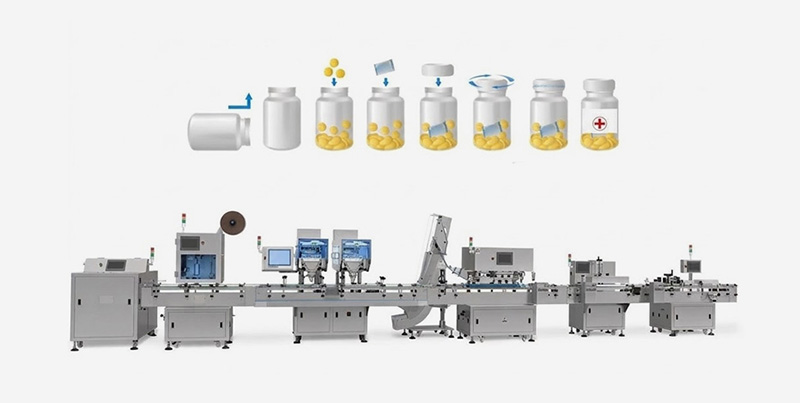
Process of bottle filling
Here’s the math:
Say you need 400,000 bottles a month, you run 22 days, and you get 8 productive hours a day. That works out to about 38 bottles per minute.
That’s usually lower than people expect. A lot of buyers walk in asking about high-speed lines and find out after the math that they don’t need one.
First question to ask about any speed number: at what count per bottle?

This is the thing that gets glossed over most often.
The same machine filling 30 count and filling 120 count gives you very different bottles per minute. More count per bottle means more dwell time per bottle, so the rate drops. Dosage form matters too — odd-shaped tablets, softgels and gummies don’t move through the channels the same way.
So whenever you see a speed figure, the first question is: at what count per bottle?
Every speed figure we publish is at 50 count per bottle, tablets or capsules. On that basis:
If your fill count isn’t 50, send us the actual count and dosage form and we’ll rerun the numbers against your product.
The trap: speed alone won’t get you there

Different SKUs
This is where growing brands get burned.
It’s like buying a car for its top speed. Yours does 150. You still sit in traffic every morning and you’re still late.
If you run two or three SKUs and rarely change bottle format, speed is your main constraint and buying up the tiers makes sense. If you run a dozen SKUs and change over two or three times a day, changeover time will decide your daily output more than top speed does.
Changeover deserves its own conversation, and we’ll give it one.
Two different things get called semi-automatic: a benchtop machine, and an automatic line where a few stations are still run by hand. They sound like the same thing. They’re two different roads, and only one of them goes anywhere. Sort this out before you order, not after.
Benchtop semi-automatic
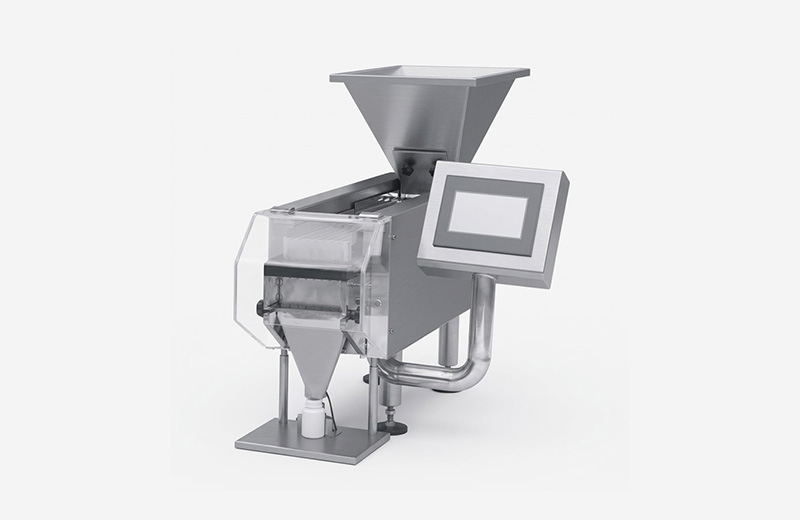
A counter on a table. You load bottles, cap and label by hand. It’s cheap, it’s small, and when your volume is low it does the job.
One thing you need to know going in: a benchtop semi-automatic does not upgrade into an automatic line.
It isn’t the first block of a line. It’s a separate road. When your volume grows, you’ll be buying a line — not adding to what you have.
That’s not an argument against buying one. At low volume it’s the right call and you shouldn’t spend more than you have to. Just buy it knowing what it is.
An automatic line with manual stations
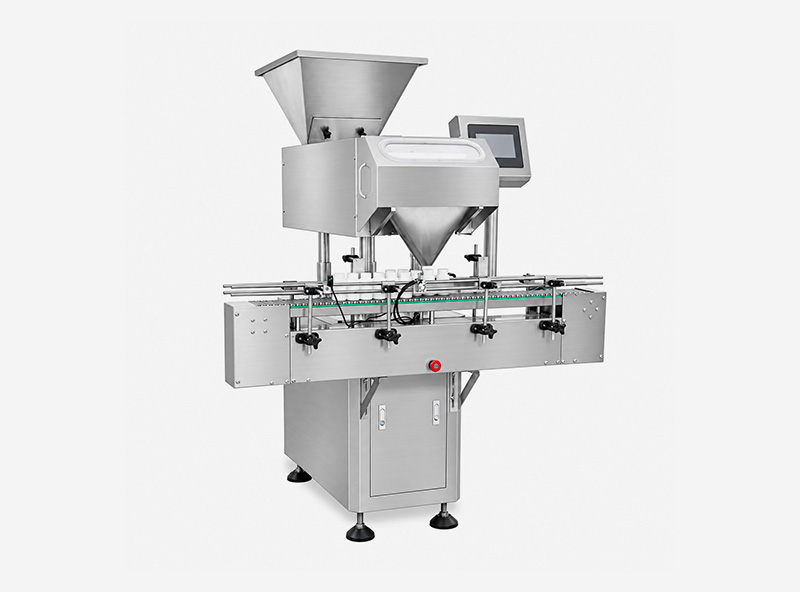
Different situation. The conveyor, the frame and the timing are already in place, and a few stations run on labor for now. You can add machines to this one later. That path is open.
If you want room to grow, this is the road you take.
The rough call
Volume is still small, few SKUs, you just need to get running — a benchtop is enough, and don’t spend past it.
Volume is up, hiring is getting harder, labor cost is running away from you — go to a line and skip the middle step.
In the US that math moves faster than it does elsewhere. Labor is expensive, so the headcount you take off the line pays back against the machine faster.
Straight talk, though: buying full automation before the volume is there means you’ve paid for a machine that spends most of its time waiting on you. How to run that calculation is its own article.
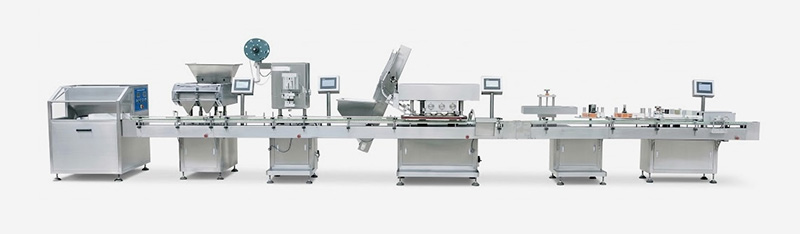
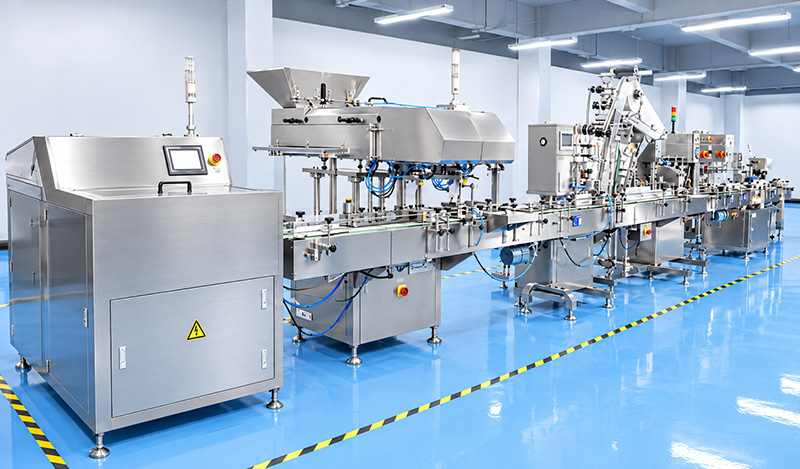
AIPAK’s full production line and a core machine
Two ways to buy: the whole line at once, or the core machines now and the rest later from wherever. The difference isn’t how much you’re buying. It’s who’s responsible for making the machines work together, and who you call when they don’t.
Buy the line and the interfaces, timing and conveyor heights get sorted once, in our factory, before anything ships. Something goes wrong, you make one call.
Piece it together and the per-machine price looks better. The integration work lands on you. Who matches the interfaces? Who tunes the timing? When bottles jam between two machines from two suppliers, whose problem is that?
We build and ship both ways. Which one fits depends on where your line is now and how your budget is phased.
Put the spec sheet down for a minute. Three things decide whether a tablet counting line is good to live with: whether the count is right, whether your operators can read the manual, and whether someone stays until the line is actually running. Everything else on the sheet matters less than these.
Accuracy.
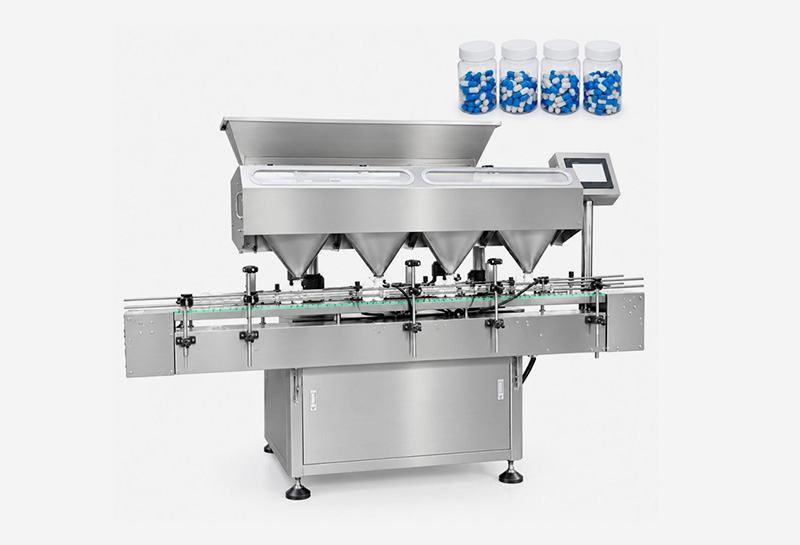
The label says 60 count, so the bottle holds 60. You sell by count, so this is the whole thing. Short counts are complaints. Overfills are money out the door.
Documentation.
A clear English operating manual. Your operators don’t read Chinese. A vague manual means slow ramp-up and mistakes that were avoidable.
Installation and commissioning.
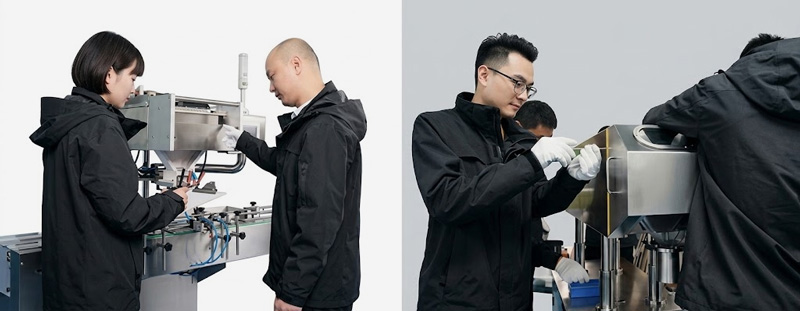
The machines land, and someone has to install them, dial them in, and train your people. Skip that step and everything upstream of it was wasted money.
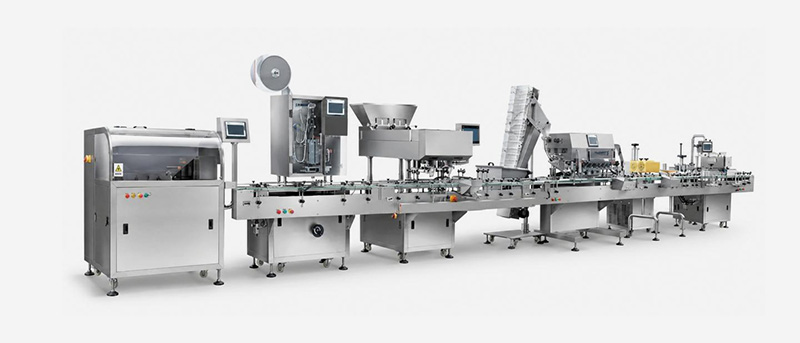
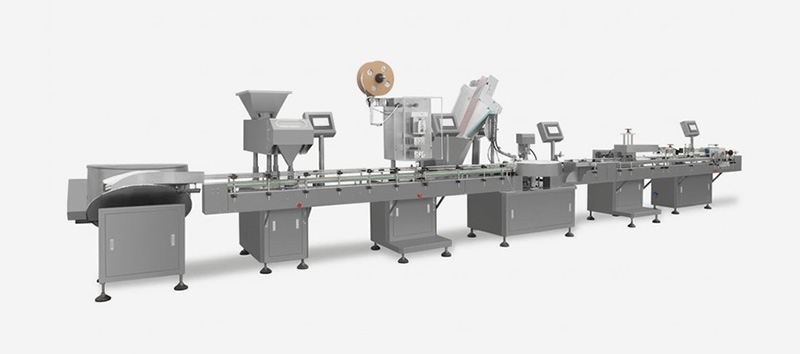
AIPAK’s different production line configurations
We don’t publish prices, and here’s the honest reason: a line price means nothing without the configuration. Two quotes both labeled “bottling line” can be five machines or nine. Anyone who gives you a number before asking what’s on your line is giving you a number you can’t use.
Here’s what actually moves it:
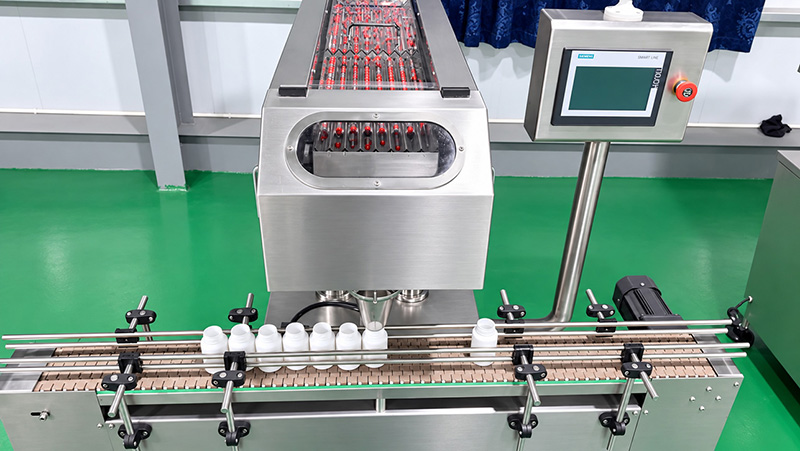
Process of counting and filling
Speed tier.Higher tier, higher price. That one’s direct.
Level of automation. Benchtop, automatic line, full automatic line — three different price levels.
How many stations. Desiccant inserter, cotton inserter, shrink sleeve labeler, cartoner. Every machine you add is money, and this is usually where two quotes actually differ.
How hard your product is to run. Gummies are sticky. Softgels bruise. Both need channel and nozzle changes that a plain tablet doesn’t, and that shows up in the price.

Different types of products
How many bottle formats. One bottle is one price. Round and square across several sizes is another.

Various types of bottles
Budget past the machine
Freight, installation and site work all belong in the number you take to your CFO.
So does service after the line is running, and that one gets missed. Our engineers’ daily allowance runs $150–200 per day. Before you compare our quote against a European supplier’s, ask them for their engineer day rate in writing. It’s usually several times that. Over the life of the line, that gap gets large.
Floor space is the other one people leave until too late. Whether it fits, how it lays out, where the doors and columns land — worth settling before you order.
Print this and ask every supplier the exact same questions. You’re not looking for the best-sounding answer. You’re looking for the question that makes someone go vague, because that’s where your problem shows up later.
- At what count per bottle is your speed rated? A speed figure without a count behind it doesn’t tell you much.
- Can you deliver the whole line? Or am I integrating it myself?
- Have you run my product before? Specifically — my dosage form dimensions and my bottle. Not “yes, we can handle that.”
- How does commissioning work? Who comes, how long do they stay, is it in the quote?
- How far does training go? When you leave, can my people run a changeover without you?
- How do spare parts work and how fast do they arrive? Ask about standard parts and custom parts separately.
- Is your lead time to shipment or to production? Those are months apart.
- When something breaks, how fast do I hear back, and from whom? A salesperson relaying messages, or an engineer?
Here’s how we answer those.
We build the full line in our factory under one quality process, and you deal with one person. When the machines land, our engineers install, commission and train your team before they leave.
On parts: standard machines run on common parts we keep in stock at our factory, and those typically reach you within a week. Custom machines have custom parts, so it depends which one — we’ll give you a straight date rather than a vague one.
And when you reach out, you hear back within 24 hours.
