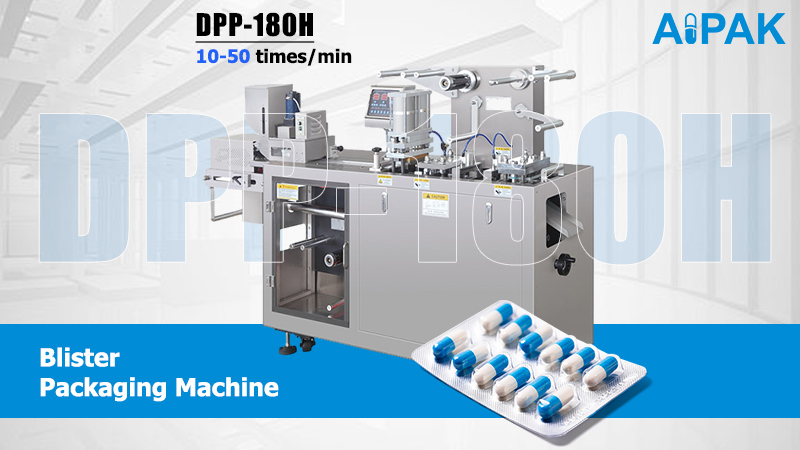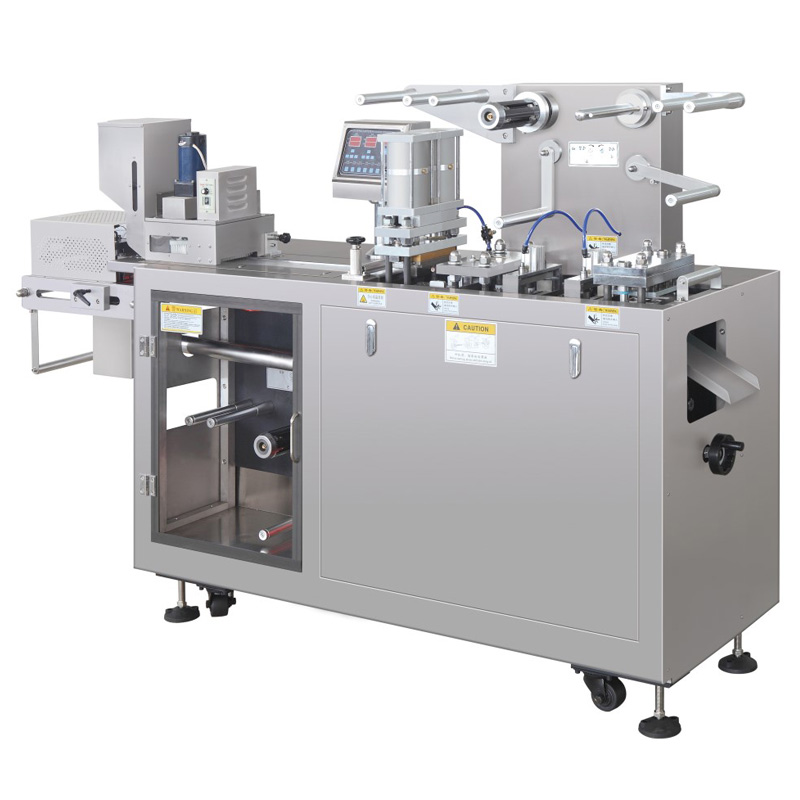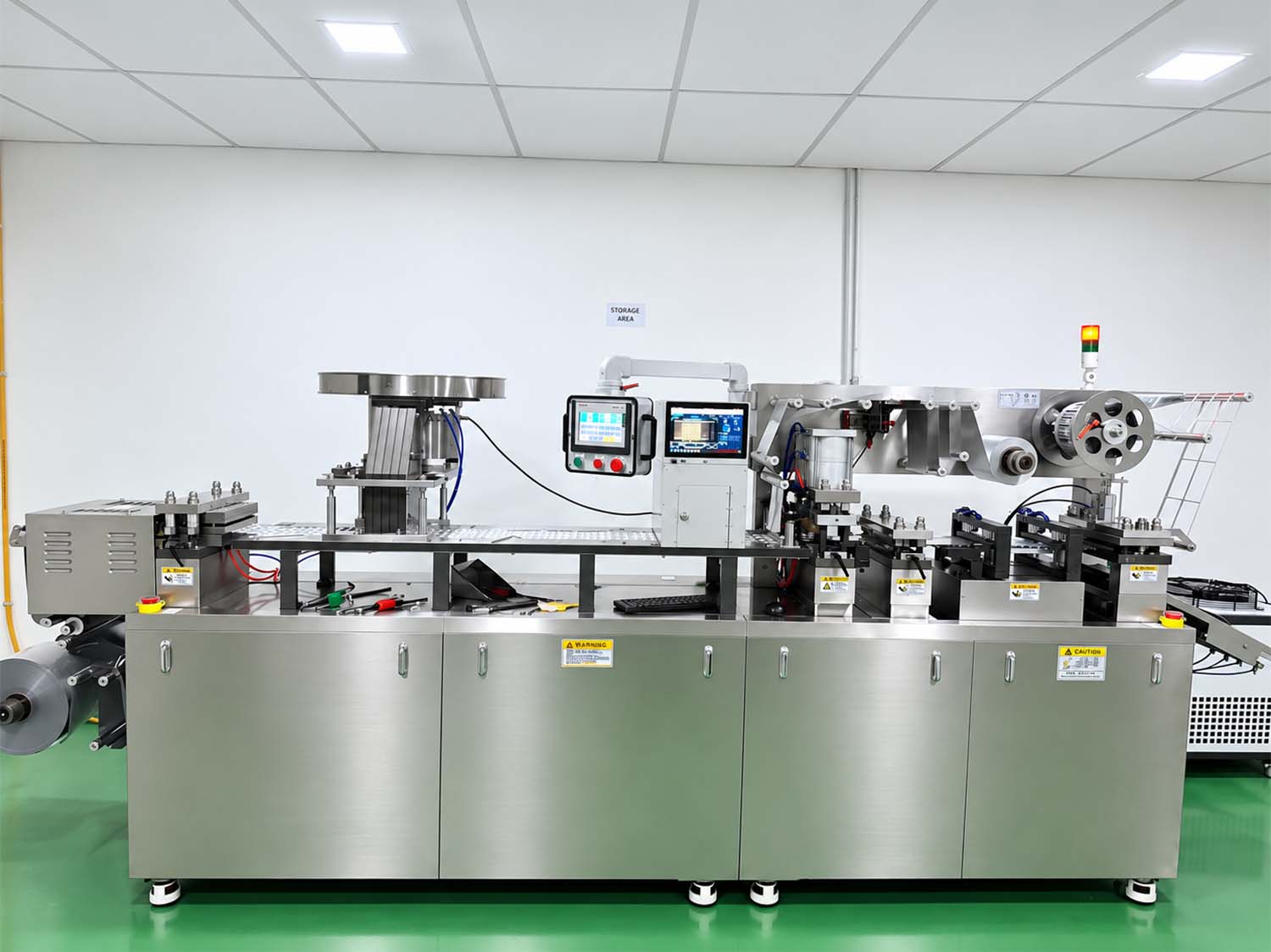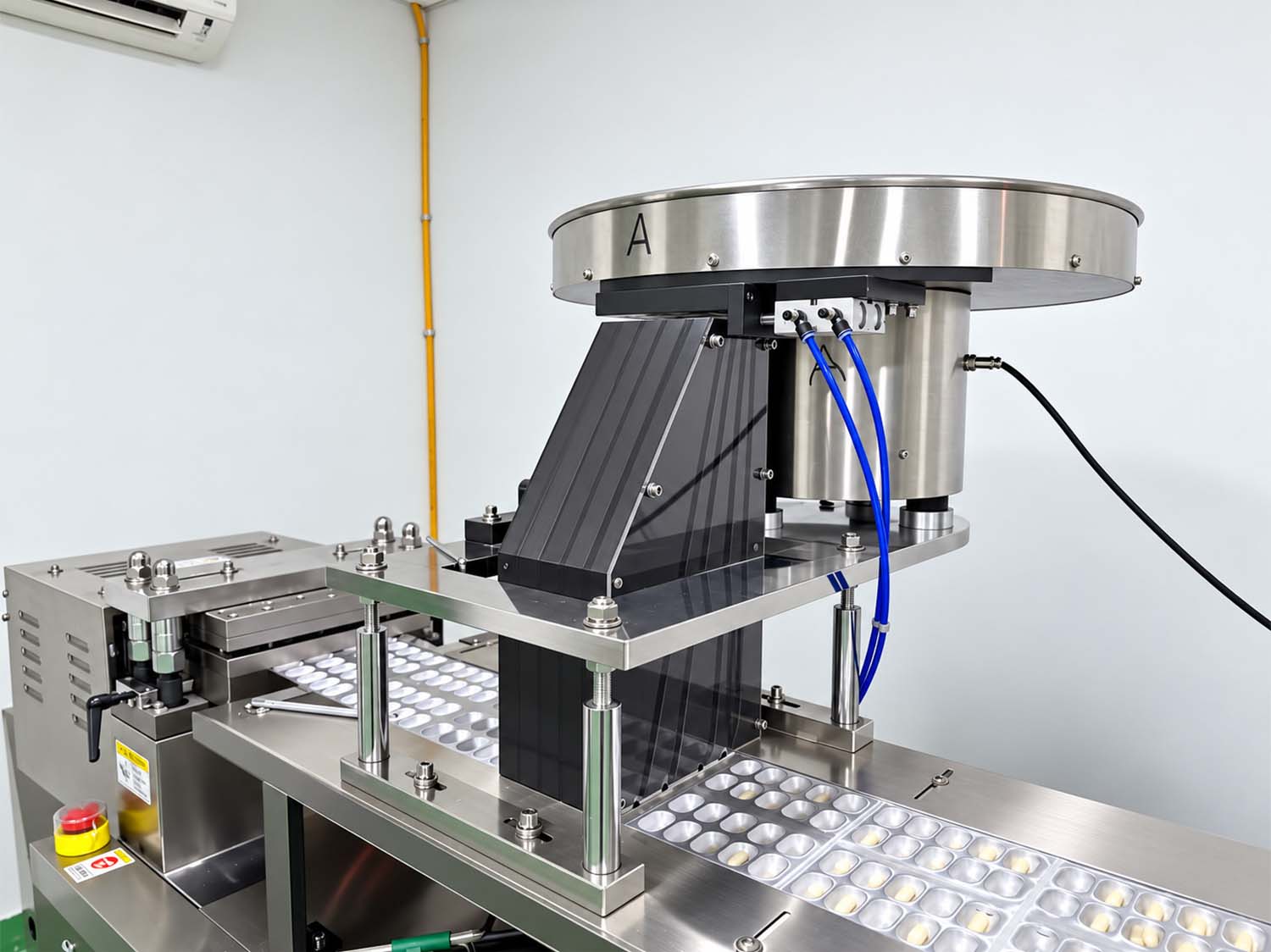
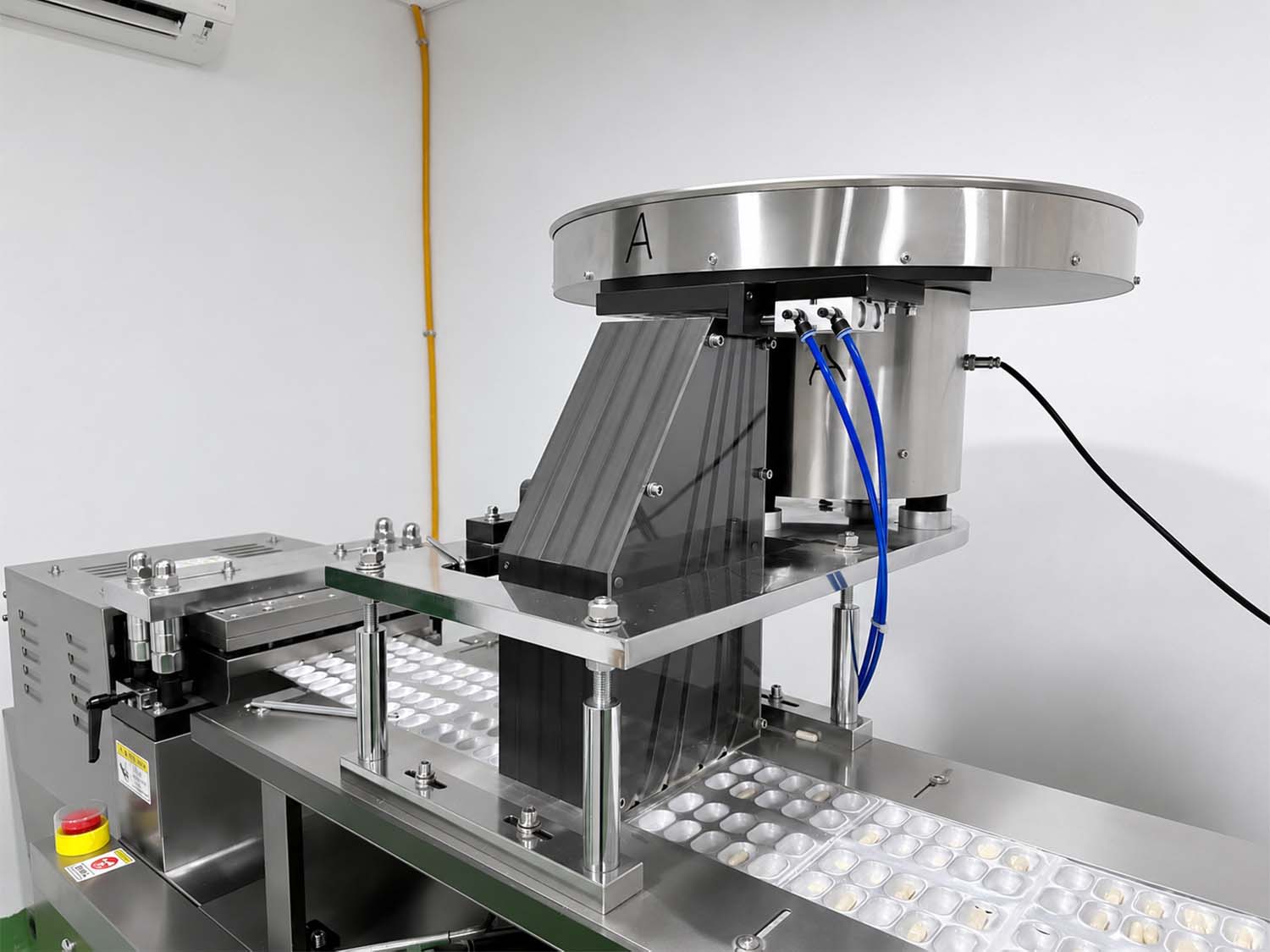
DPP-180H High-Speed Flat-Plate Blister Packaging Machine

180 × 150 mm forming area, servo traction, 4,800 to 9,600 plates an hour

Your 150 mm machine is at the top of its range and foil waste is where the money goes. The DPP-180H uses a servo motor for film traction rather than mechanical linkage — advance accuracy within 0.01 mm, which lets the gap between plates come down to the technical minimum. 180 mm width, three or four plates a punch, up to 9,600 plates an hour.

1.Punch frequency: 10 to 50 times a minute

2.Servo traction:  advance accuracy within 0.01 mm, the only DPP model with it

3.Output: 4,800 to 9,600 plates an hour

4.Forming area:180 × 150 mm, three to four plates a punch

5.Stroke range:40 to 160 mm

Is this the right machine for you?

✓ Yes, if…

✕ Buy something else if…

Technical specification

Feature

DPP-180H

What does it mean to you?

Punch frequency

10–50 times/min

The fastest in our flat-plate range

Output

4,800–9,600 plates/hour

Roughly double the DPP-150E

Forming area & depth

180 × 150 mm, ≤15 mm

It can be customized to 25 mm

Stroke range

40–160 mm

—

Traction

Servo motor, 0.01 mm accuracy

What reduces the gap between plates and your foil waste

Air pressure

0.4–0.6 MPa

—

Air consumption

≥0.5 m³/min

Higher than the 150E — check your compressor

Main motor

3.0 kW

—

Total power

380/220 V, 50/60 Hz, 8.5 kW

Three-phase

Material width (PVC/PTP)

Up to 190 mm

—

Dimensions

3,200 × 750 × 1,700 mm

600 mm longer than the 150E

Weight

1,200 kg

—

Model comparison

Model

Type

Punch freq.

Output

Forming area

Power

DPP-80

Flat plate

10-33 times/min

1980 plates/hour

80 mm

  2.4Kw

DPP-120H

Flat plate

10-35 times/min

2,400 – 4,200 plates/hour

120 mm

 4.5Kw

DPP-150E

Flat plate

10-40  times/min

3,600 – 7,200 plates/hour

150 mm

 6.5 Kw

DPP-180H

Flat plate

10 – 50 times/min

4,800 – 9,600  plates/hour

180 mm

8.5 Kw

DPP-260H1

Flat plate

10–50/min

6,000–12,000/h

260×180 mm

9.5 kW

DPP-260H2

Flat plate, servo

10-50 times/min

6,000 – 12,000 plates/hour

260 mm

9.5Kw

DPH-260H

Rotary

40 – 140 cuts/min (Alu/Plastic) |40 – 80  cuts/min(Alu/Alu)

6,000 – 18,000 plates/hour

260 mm

9.5Kw

DPH-380H

Rotary

Up to 600 cuts/min

Up to 45,000 plates/hour

380 mm

15 Kw

Flat plate and rotary are two different machines, not two speeds of one. Flat plate stretches the film against a mould with positive air pressure and a mechanical punch. Rotary forms and seals on a drum with line contact. The difference shows up in material waste, changeover time and what the machine costs you per plate — see the comparison below.

Precision Packaging Heating

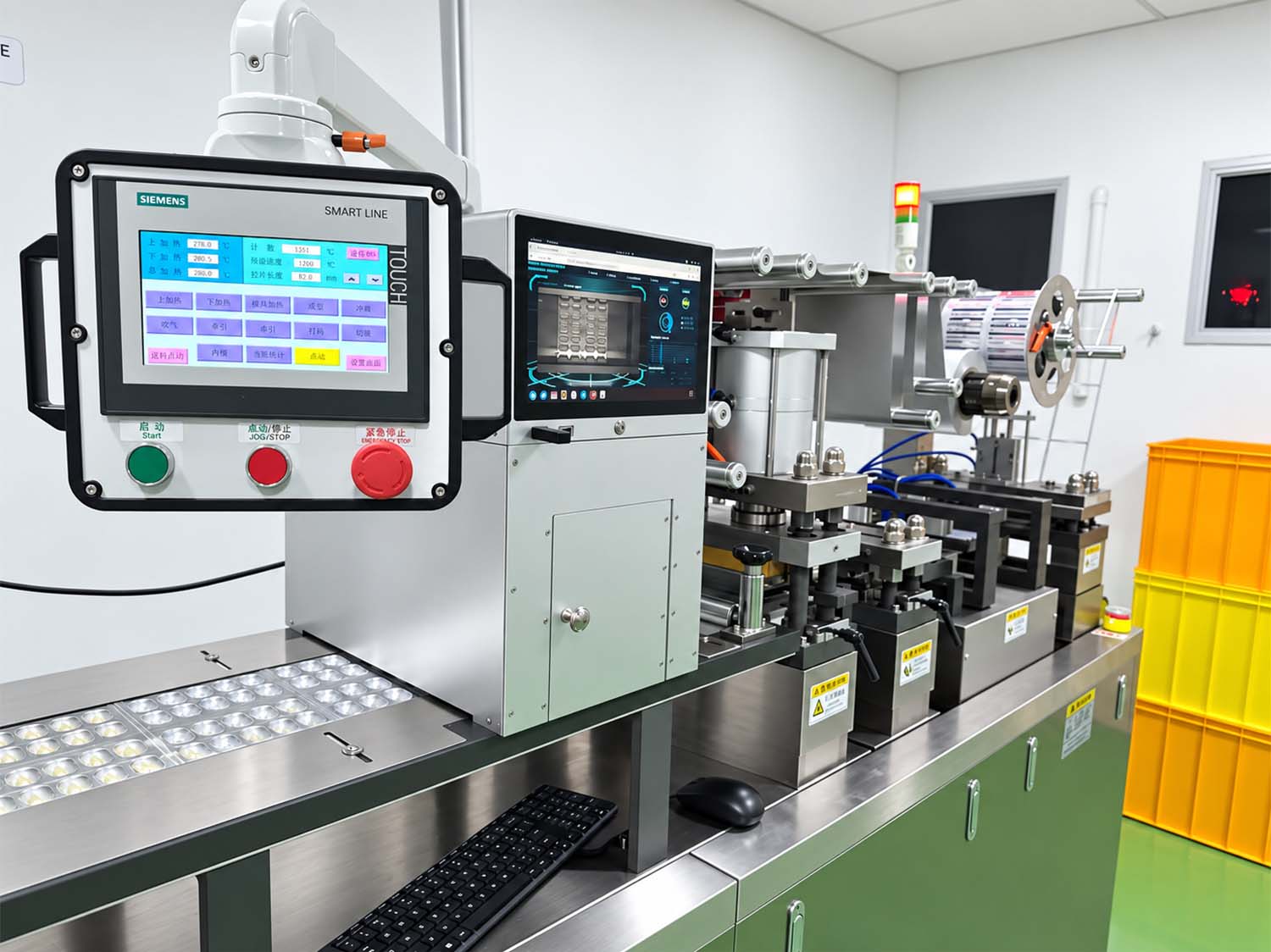
High-performance infrared heaters provide rapid, uniform softening of the PVC film, ensuring consistent pocket wall thickness even at high punch frequencies.

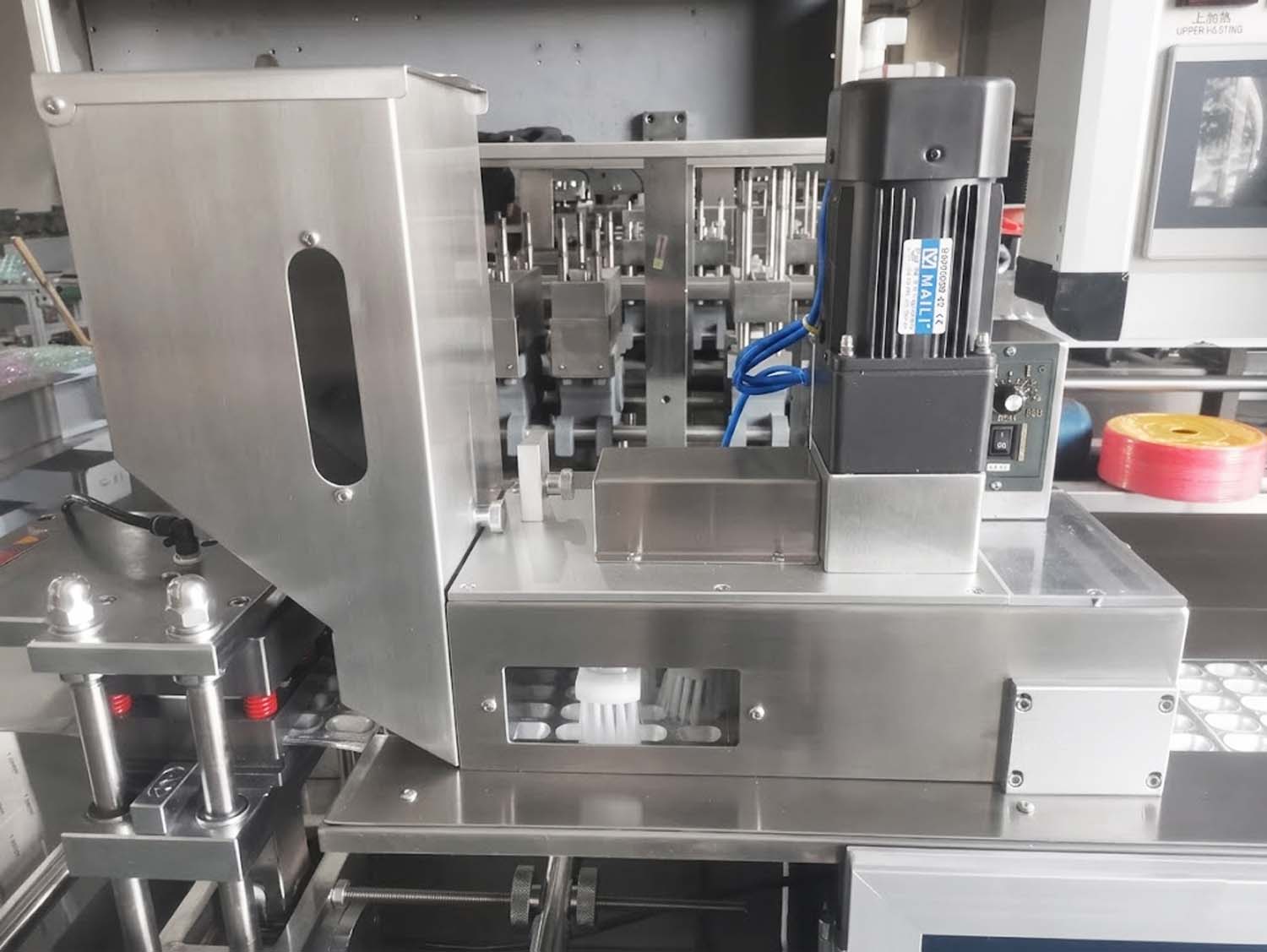
Intelligent Automatic Feeder

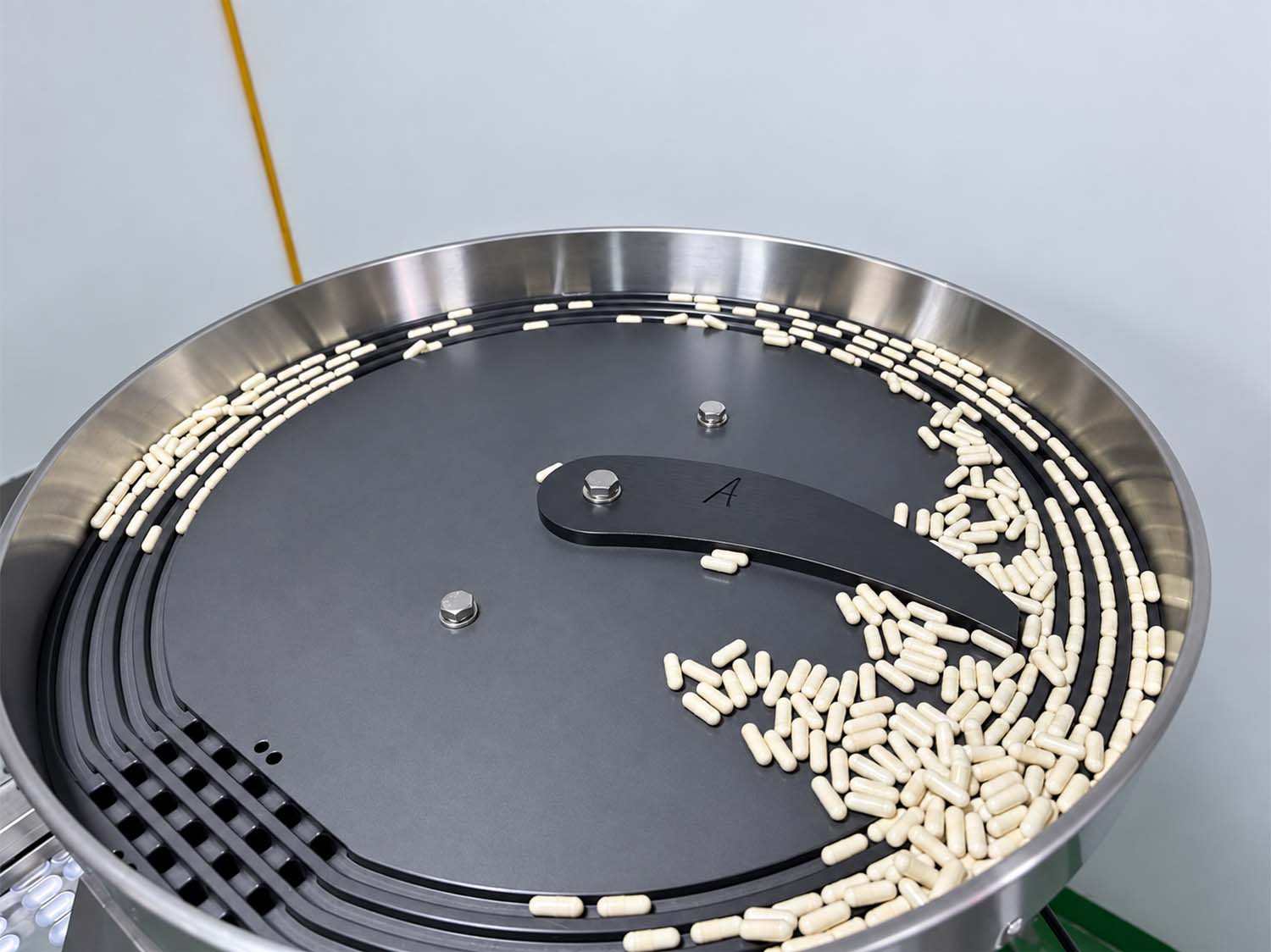
A high-speed universal feeding system that can be integrated with brush-style or planetary feeders to handle tablets, capsules, and softgels at maximum velocity.

Film-to-Plate Registration

Advanced synchronization logic perfectly aligns the molded PVC with the aluminum foil, eliminating any risk of misalignment in high-density plates.

High-Integrity Heat Seal

The heavy-duty sealing station uses controlled pneumatic pressure and precision temperature zones to create a consistent bond across the full 180 mm width.

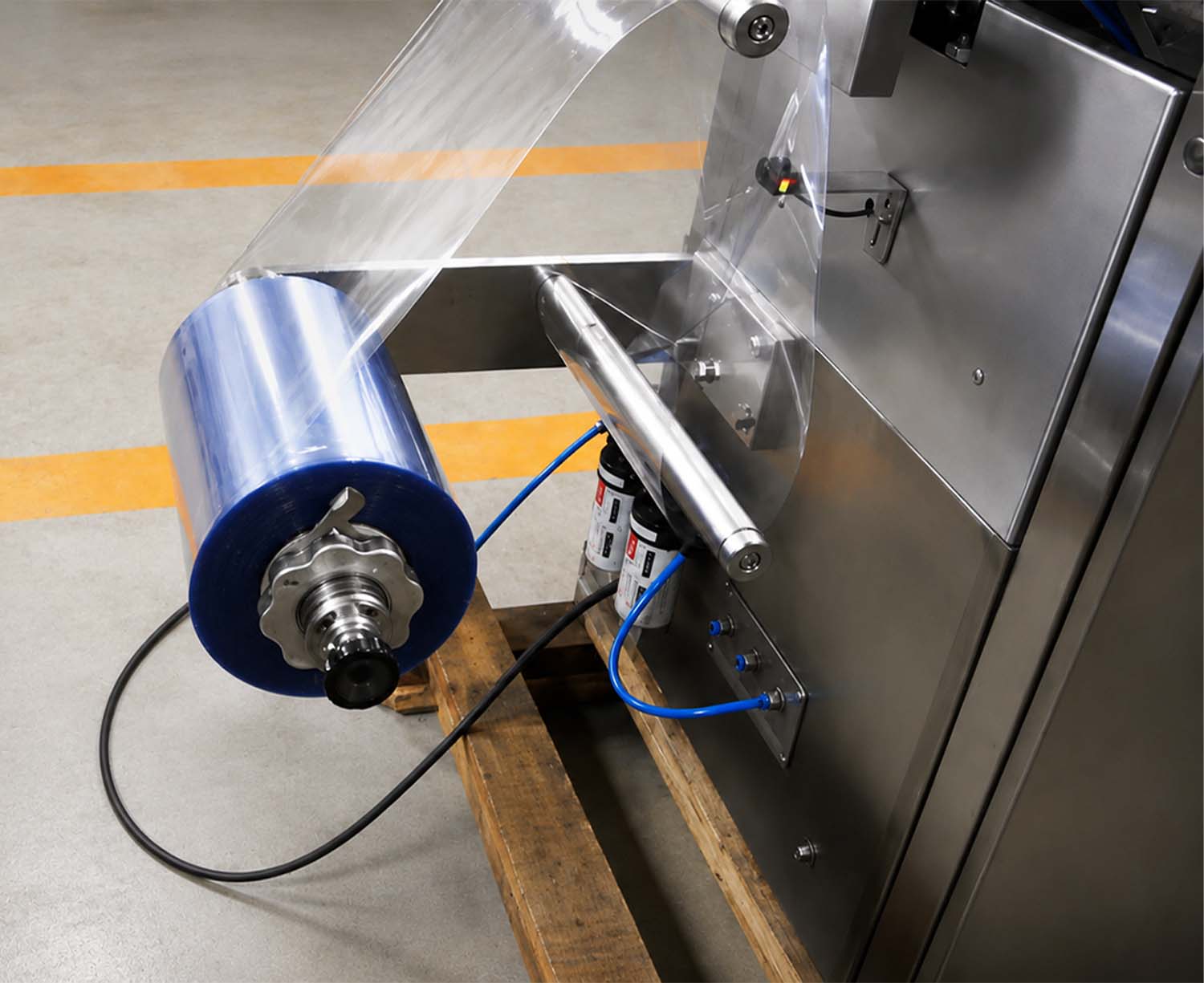
Advanced Film Deliver Device

Features a high-torque linkage deliver structure with multi-stage tensile control, keeping the foil perfectly taut and wrinkle-free throughout the entire process.

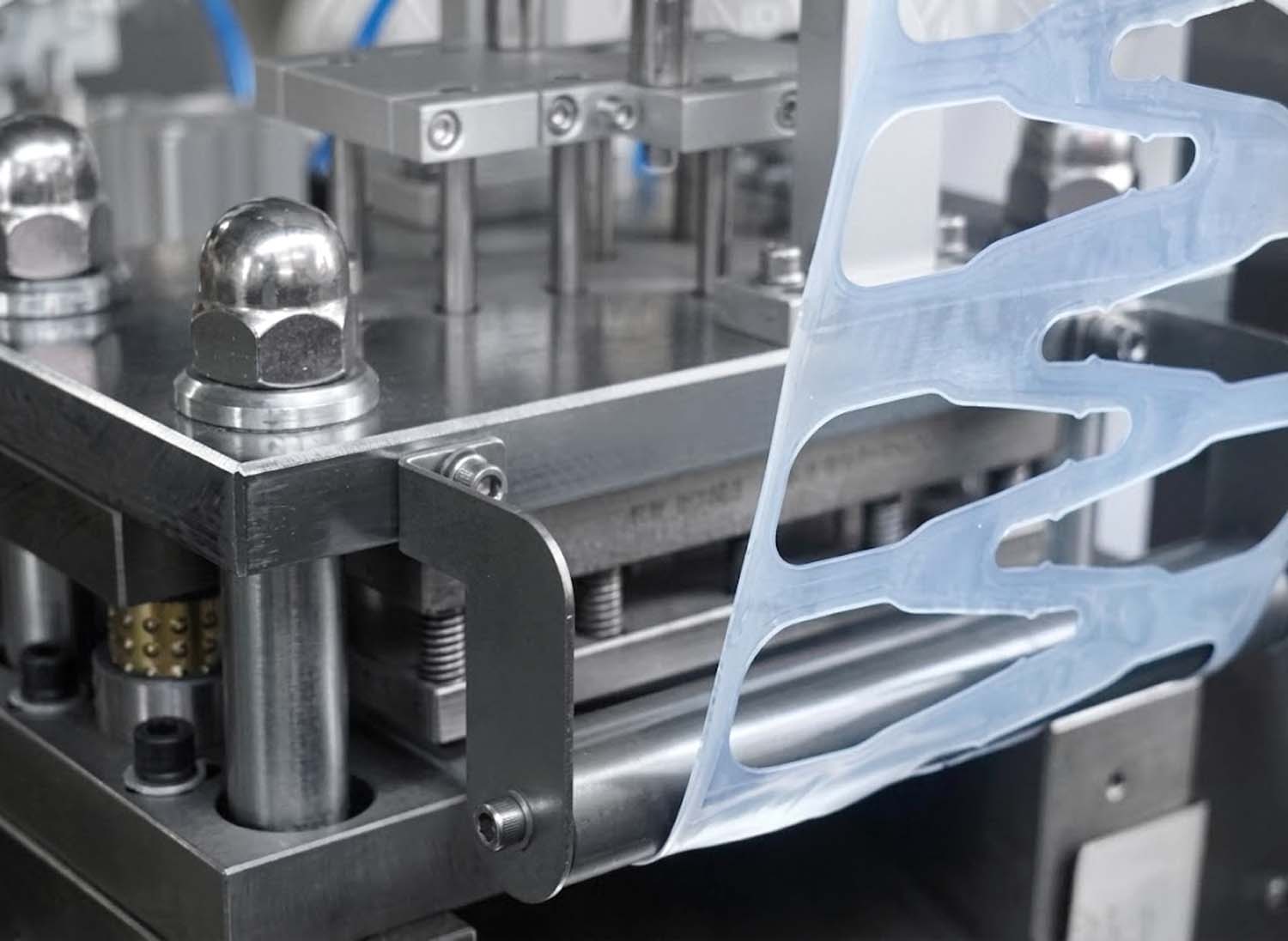
Precision Punching Cutter

Industrial-grade cutters perform ultra-clean slicing of the large-format sealed boards into customized sizes with clean edges without burr.

.

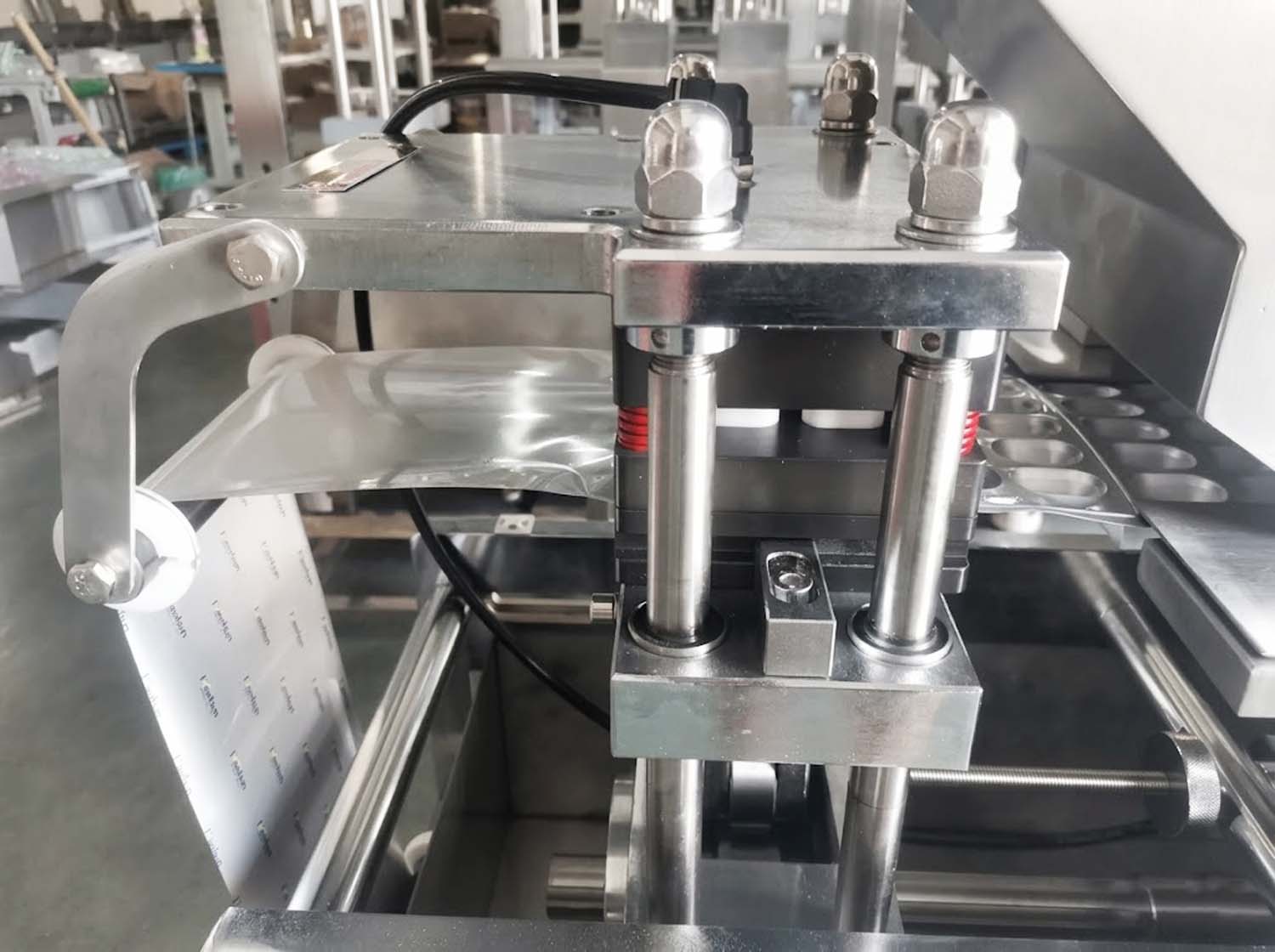
Servo Traction

Film advance is driven by a servo motor rather than a mechanical linkage. Mechanical traction accumulates positional error over a long shift, and that error turns into wasted foil at the plate gap. Servo holds advance to within 0.01 mm, which is what lets the gap come down to the technical minimum rather than to whatever the linkage drifts to by hour six.

Industry Applications

Multi-row retail blisters

Three or four plates a punch across a 180 mm width. A 10-count plate that fits four across costs less per unit than the same plate fitted two across on a narrower machine.

High-volume single SKU

One product running continuously, where the machine is the line. At 9,600 plates an hour this is the fastest flat-plate we build.

Foil-cost-sensitive production

Cold-formed Alu-Alu costs several times what Alu-PVC does. Servo traction is what makes the plate gap small enough for that difference to matter.

Large surgical kits on dialysis paper

A 190 mm material width takes multi-component kits that narrower machines cannot lay out.

What changing over involves

A format set is four stations, not one part.

What changed

What you adjust

Roughly

Same format, new batch

Nothing

—

Plate layout or pocket size changes

All four moulds — forming, sealing, embossing, cutting

15-30mins

Alu-PVC → Alu-Alu

Moulds, and the feeder — if you specified the Alu-PVC universal feeder, it cannot be converted

Not a changeover

Tablets → paste or liquid

Moulds and a different feeder entirely

Not a changeover

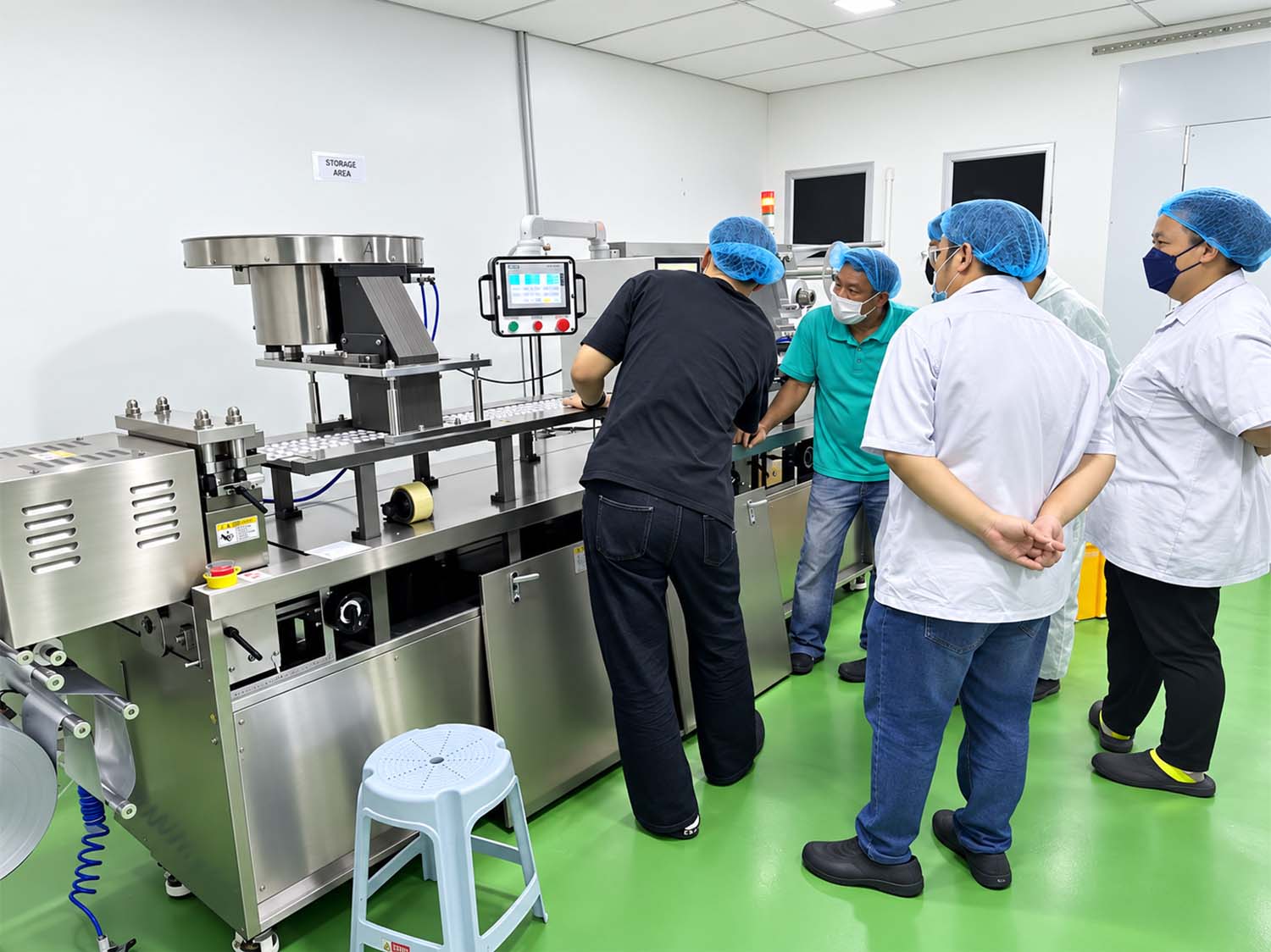
All four stations sit on a rack mandrel with a ruler. You turn the handle and read the scale rather than aligning by eye — which is what keeps a format change to minutes rather than a morning.

What to check before you buy

01

The tooling, not the machine

A format set covers four synchronised stations. Ask any supplier who designs the pocket layout, how long a new format takes to make, and what it costs. That's where a blister project succeeds or fails.

02

The feeder, before you order

An Alu-PVC universal feeder cannot run cold-formed Alu-Alu, and it cannot be converted afterwards. Ask which feeder you're being quoted and what it locks you out of.

03

Installation and training

Ask what's included and what costs extra. The answer varies more between suppliers than the machine price does.

Why Choose AIPAK?

Tooling Is the Machine
On a blister line, the tooling is where the machine is won or lost. A single format set covers four synchronised stations — forming, sealing, embossing and cutting — and they have to work as one. Send us your tablet or capsule samples and we design the pocket layout around your product, not the other way round.
Material and Feeder Matching
Alu-PVC, cold-formed Alu-Alu, tropical blister and medical dialysis paper each behave differently, and so does every feeder type. A universal Alu-PVC feeder cannot run cold-formed Alu-Alu — if you may move into Alu-Alu later, that decision has to be made before the machine ships, not after. We ask about your material and dosage form first, then specify the feeder.
Support & Factory-Direct
You buy from the factory, not through a trading company — which means custom modifications are a conversation with our engineers rather than a request passed down a chain. Remote diagnostics, spare parts and operator training come from the same team that built your machine.

DPP-180H Blister Packaging Machine FAQ

How does the DPP-180H maintain sealing consistency at its maximum speed of 50 cuts/min?

Unlike entry-level machines, the 180H features an extra-long thermal sealing station and an upgraded pneumatic pressure system. This ensures that even at high speeds, each blister plate receives the exact “dwell time” and pressure required for a pharmaceutical-grade seal. Additionally, the independent PID temperature modules respond in milliseconds to maintain a constant heat environment, preventing any cold-spots or over-heating.

How does the Servo-Driven Traction system improve material ROI?

Mechanical traction accumulates positional error over a long shift, and that error turns into wasted foil. The 180H uses a high-precision servo motor for material traction, holding advance accuracy to within 0.01 mm. This allows us to reduce the “gap” between plates to the absolute technical minimum, ensuring you get the maximum number of blister packs out of every roll of foil.

We use complex ALU/ALU cold-forming materials. Can this machine handle them without micro-cracking?
Absolutely. Cold-forming Aluminum requires a slower, more deliberate “deep-draw” process. The 180H’s control system allows the operator to fine-tune the forming speed and pressure curve specifically for ALU/ALU. Our specialized mold surface treatment further reduces friction, ensuring the foil is stretched uniformly without creating invisible micro-cracks that could compromise the product’s shelf life.
What cooling measures are integrated to protect heat-sensitive medications?

The 180H is equipped with a Dual-Circuit Water Cooling System. The cooling plates are strategically positioned around the sealing and embossing stations to intercept heat transfer. This ensures that the product pockets remain at an ambient temperature, protecting the chemical stability of heat-sensitive active ingredients like probiotics or certain antibiotics.

Which model should I be looking at?
If you need under 7,000 plates an hour, the DPP-150E costs less and takes less floor. If you’re above 9,600, look at the DPP-260 series or the rotary DPH range. This machine sits in between — and the reason to choose it over the 150E is usually foil cost rather than speed.

Customers Also Interested In...

Get a Custom Technical Proposal & Quote in "12 Hours"

Tell us what your foil costs you.

At this output, the gap between plates is where the money is. A 1 mm difference across 9,600 plates an hour adds up faster than most buyers expect — and it’s the reason servo traction exists on this model and not on the 150E.

Send us your plate layout and your current material spec. We’ll tell you what the gap comes down to, and whether the difference pays for the machine.

Scroll to Top