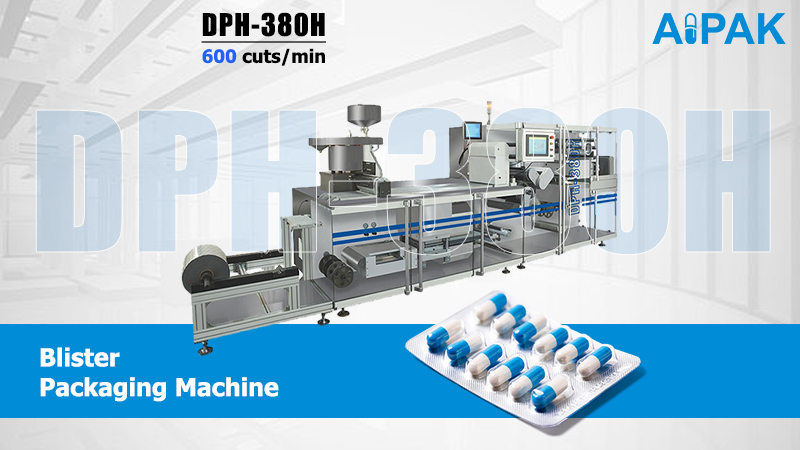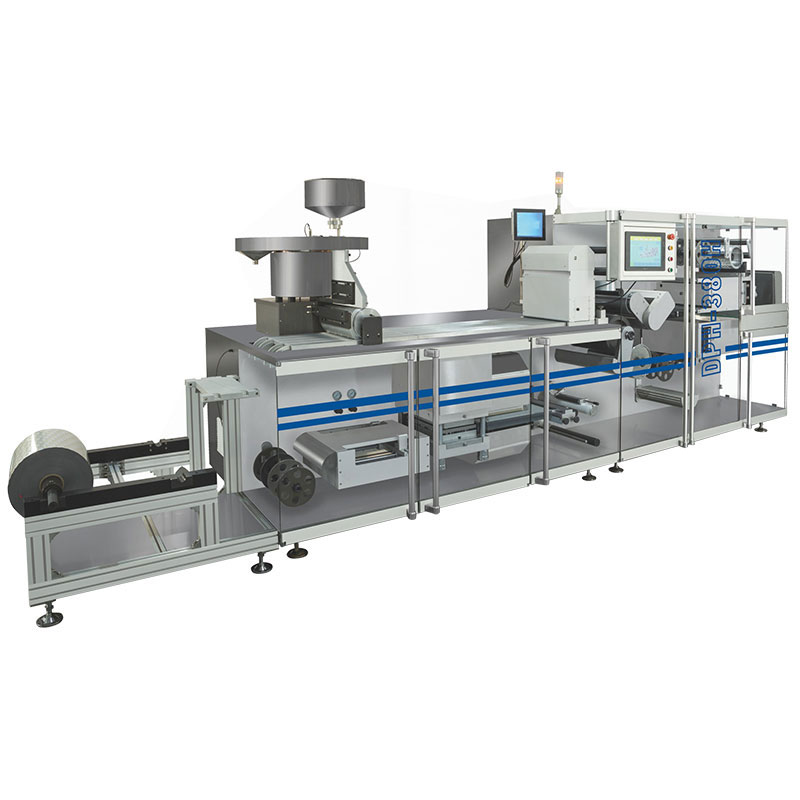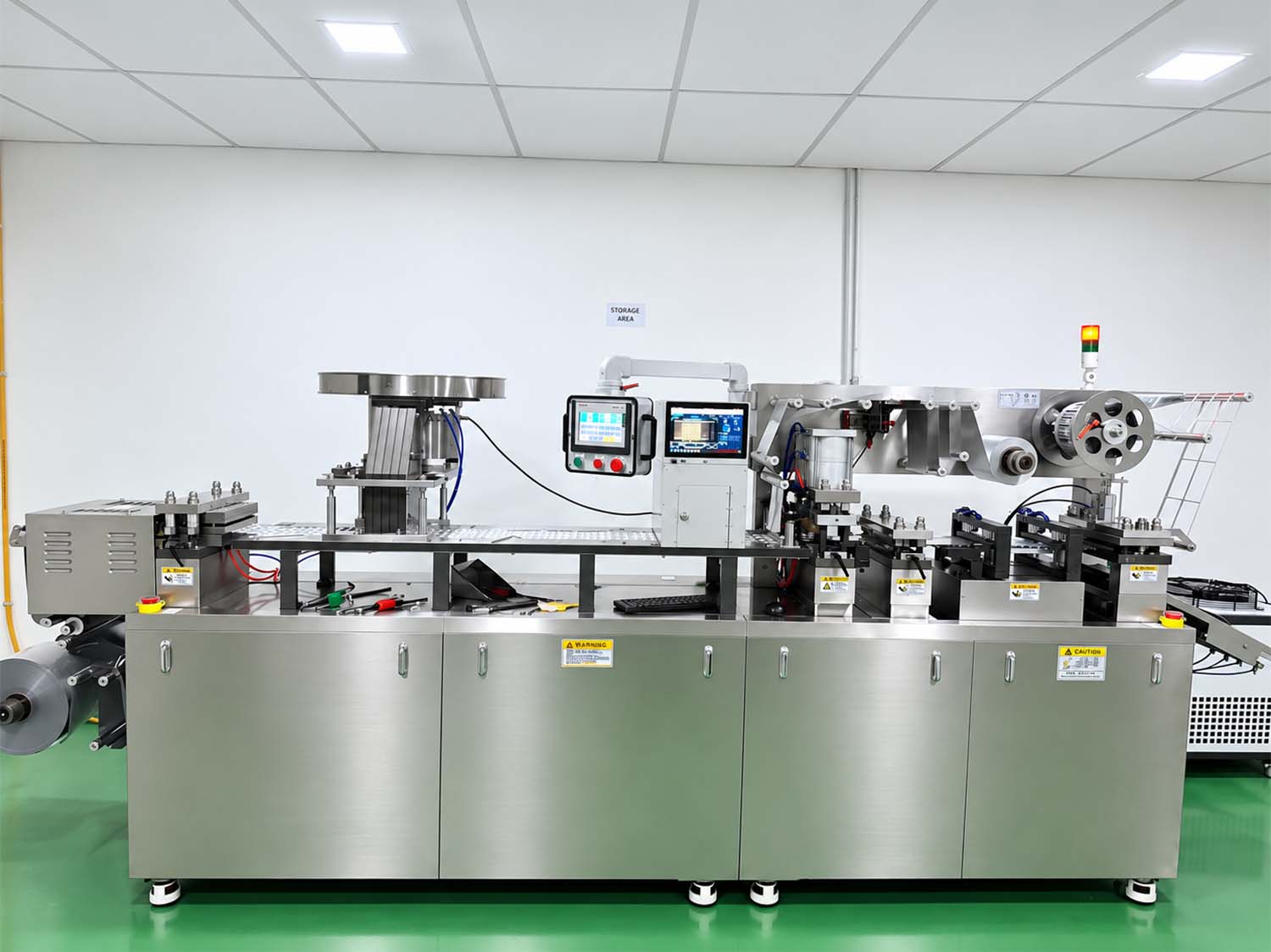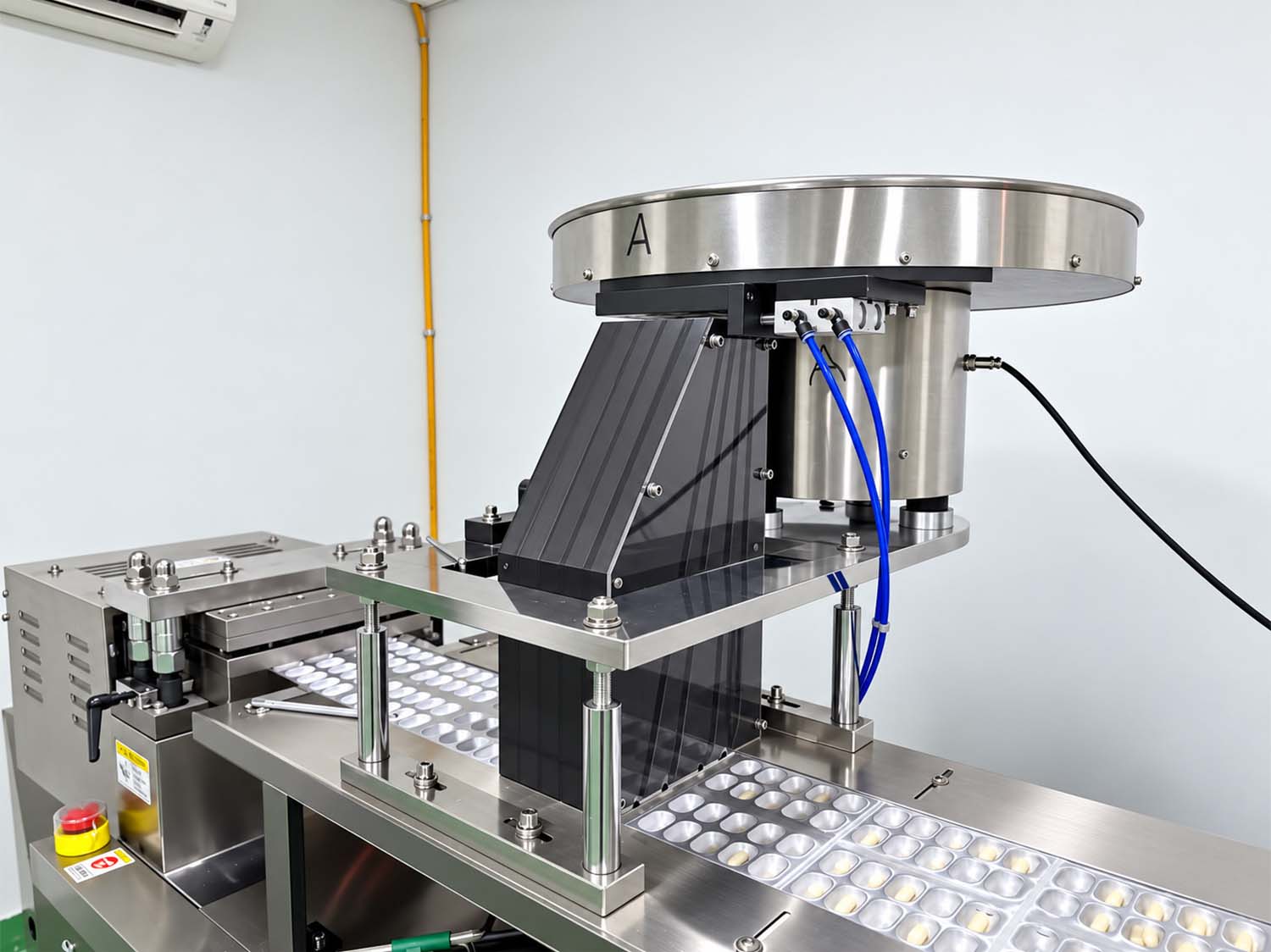
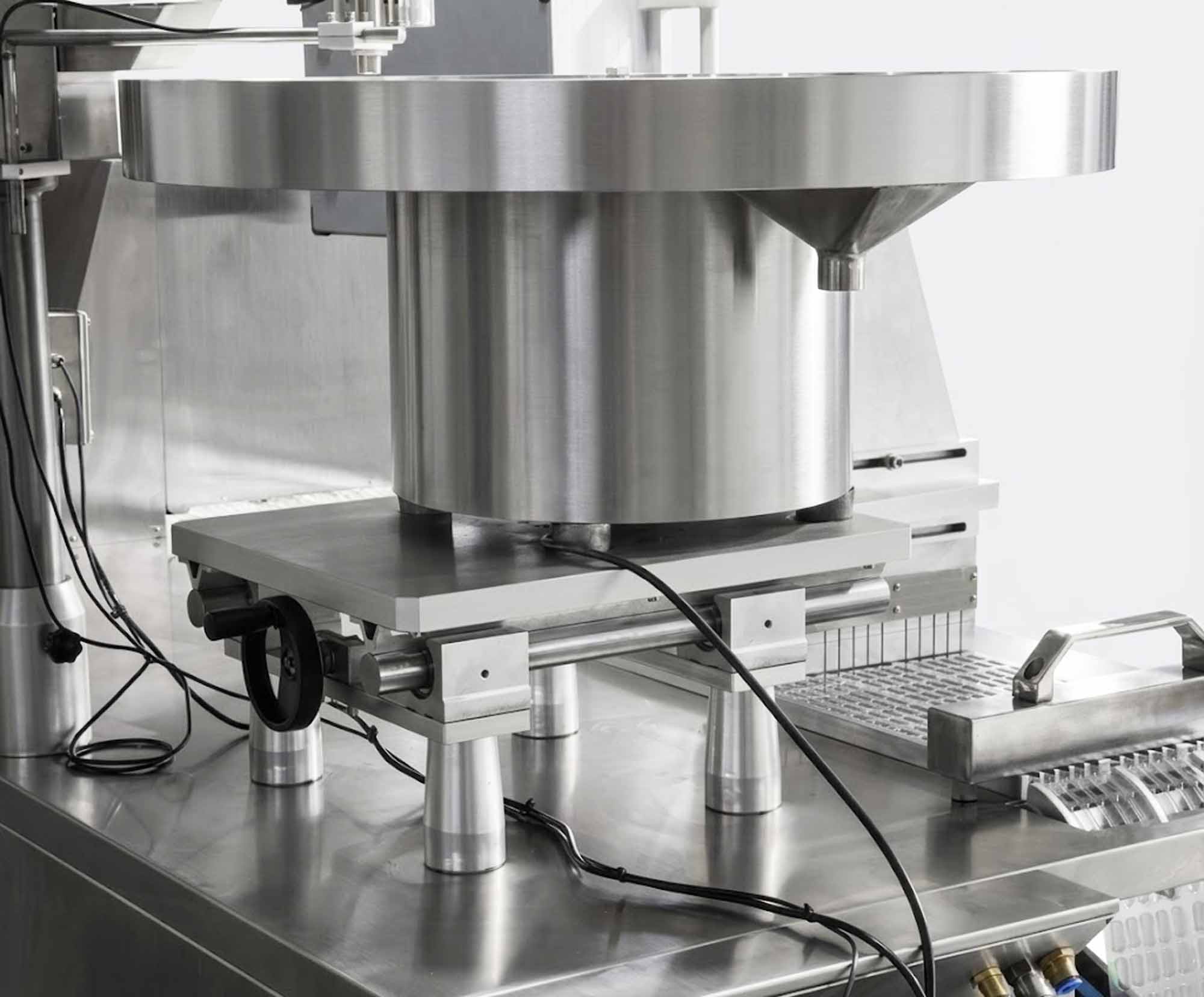
DPH-380H Full-Servo Rotary Blister Packaging Machine
Eight servo axes, 320 × 380 mm forming area, 40 to 180 punches a minute
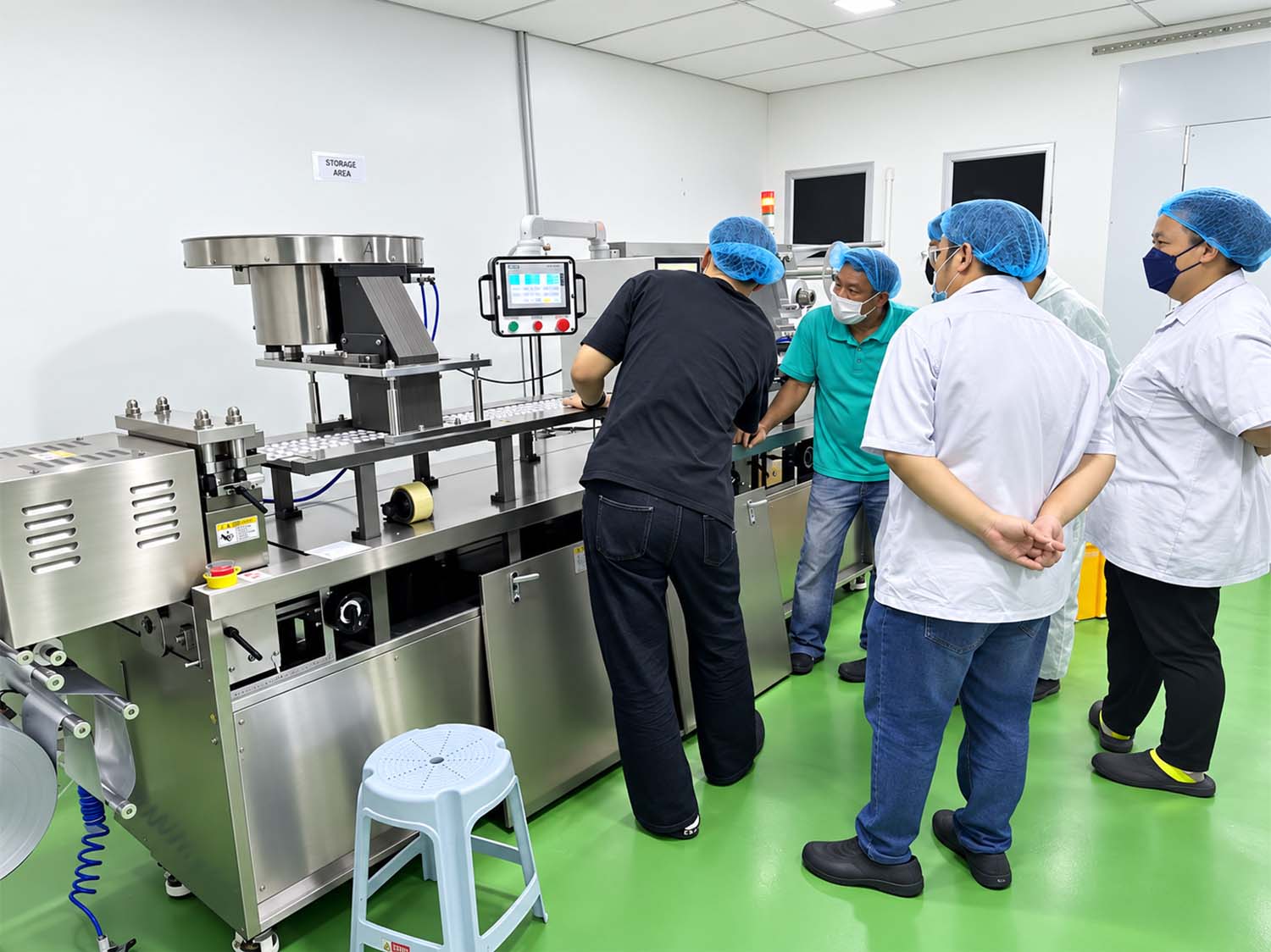
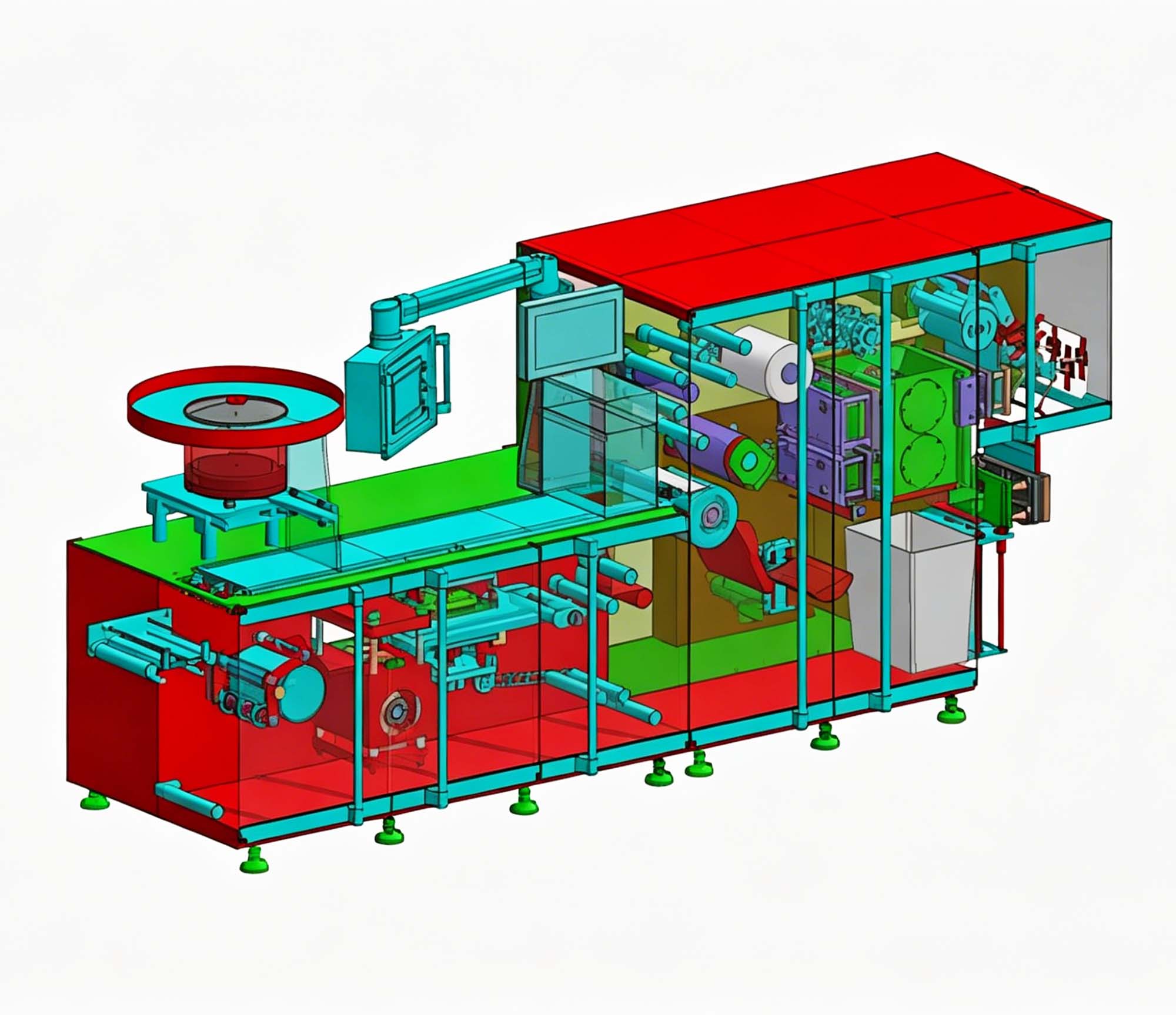
Your 260 mm machine is running two shifts and the cleanroom has no room for a second one. This one gives you a 320 × 380 mm forming area and eight independent servo axes under a single motion controller — no mechanical linkage chain to drift across a shift. It ships as a main unit, an auxiliary unit and a separate film rack, so it goes through a standard door.
1.Punch frequency: 40 to 180 a minute, 200 maximum
2.Forming area: 320 × 380 mm, the largest we supply
3.Forming depth: 16 mm. Deeper items need a flat-plate machine
4.Eight servo axes: driven from one motion controller, not a linkage chain
5.Power: 28 kW, three-phase five-wire
Is this the right machine for you?
✓ Yes, if…
- You're already running a 260 mm rotary machine and need more output in the same floor
- Your plate layout fills a 380 mm web — multiple rows across
- Your pocket depth is 16 mm or less
- You run one or two formats continuously
- You have 5.3 m of line length and 28 kW of three-phase supply
- You can supply 600 L/h of cooling water
✕ Buy something else if…
- Your plate layout only fills 260 mm → you'd be paying for width you can't use. The DPH-260H is the machine
- Your item needs more than 16 mm of depth → rotary forming is shallow on any width. Syringes, vials and large pills need a flat-plate machine — the DPP-260H1 forms to 26 mm on Alu-PVC
- You change format regularly → a 380 mm drum is heavier and slower to swap than a 260 mm one. Width works against you if you switch often
- Your supply can't reach 28 kW → this is the highest-draw machine in our blister range, nearly double the 260
- You have no cooling water at this station → 600 L/h, tap water or a chiller. It's not optional
Technical specification
Feature | DPH-380H | What does it mean to you? |
Punch frequency | 40–180/min, 200 max | — |
Output | Up to 45,000 plates/hour | Tell us your plate size and we’ll work it back |
Forming area | 320 × 380 mm | The largest we supply |
Forming depth | ≤16 mm | Rotary forming is shallow. Check your item height first |
Stroke range | 40 – 200 mm(Fully adjustable) | — |
Air supply | 0.4–0.7 MPa, 320 L/h max | — |
Cooling water | 0.1–0.25 MPa, 600 L/h max | Tap water or a chiller. You supply the connection |
Installed power | 28 kW max | Three-phase five-wire: three live, one neutral, one earth |
Wiring | Live ≥6 mm², earth ≥2.5 mm² | Give this to your electrician before delivery |
Overall dimensions | 5,280 × 1,600 × 1,800 mm | — |
Main unit | 2,200 × 1,600 × 1,400 mm, 2,400 kg | — |
Auxiliary unit | 2,080 × 1,600 × 1,800 mm, 2,600 kg | — |
External film rack | 1,000 × 600 × 800 mm | — |
Total weight | 5,000 kg | Check your floor loading |
Model comparison
Model | Type | Punch freq. | Output | Forming area | Power |
DPP-80 | Flat plate | 10-33 times/min | 1980 plates/hour | 80 mm | 2.4Kw |
DPP-120H | Flat plate | 10-35 times/min | 2,400 – 4,200 plates/hour | 120 mm | 4.5Kw |
DPP-150E | Flat plate | 10-40 times/min | 3,600 – 7,200 plates/hour | 150 mm | 6.5 Kw |
DPP-180H | Flat plate | 10 – 50 times/min | 4,800 – 9,600 plates/hour | 180 mm | 8.5 Kw |
DPP-260H1 | Flat plate | 10–50/min | 6,000–12,000/h | 260×180 mm | 9.5 kW |
DPP-260H2 | Flat plate, servo | 10-50 times/min | 6,000 – 12,000 plates/hour | 260 mm | 9.5Kw |
DPH-260H | Rotary | 40 – 140 cuts/min (Alu/Plastic) |40 – 80 cuts/min(Alu/Alu) | 6,000 – 18,000 plates/hour | 260 mm | 9.5Kw |
DPH-380H | Rotary | Up to 600 cuts/min | Up to 45,000 plates/hour | 380 mm | 15 Kw |
Flat plate and rotary are two different machines, not two speeds of one. Flat plate stretches the film against a mould with positive air pressure and a mechanical punch. Rotary forms and seals on a drum with line contact. The difference shows up in material waste, changeover time and what the machine costs you per plate — see the comparison below.
Eight Servo Axes, One Motion Controller
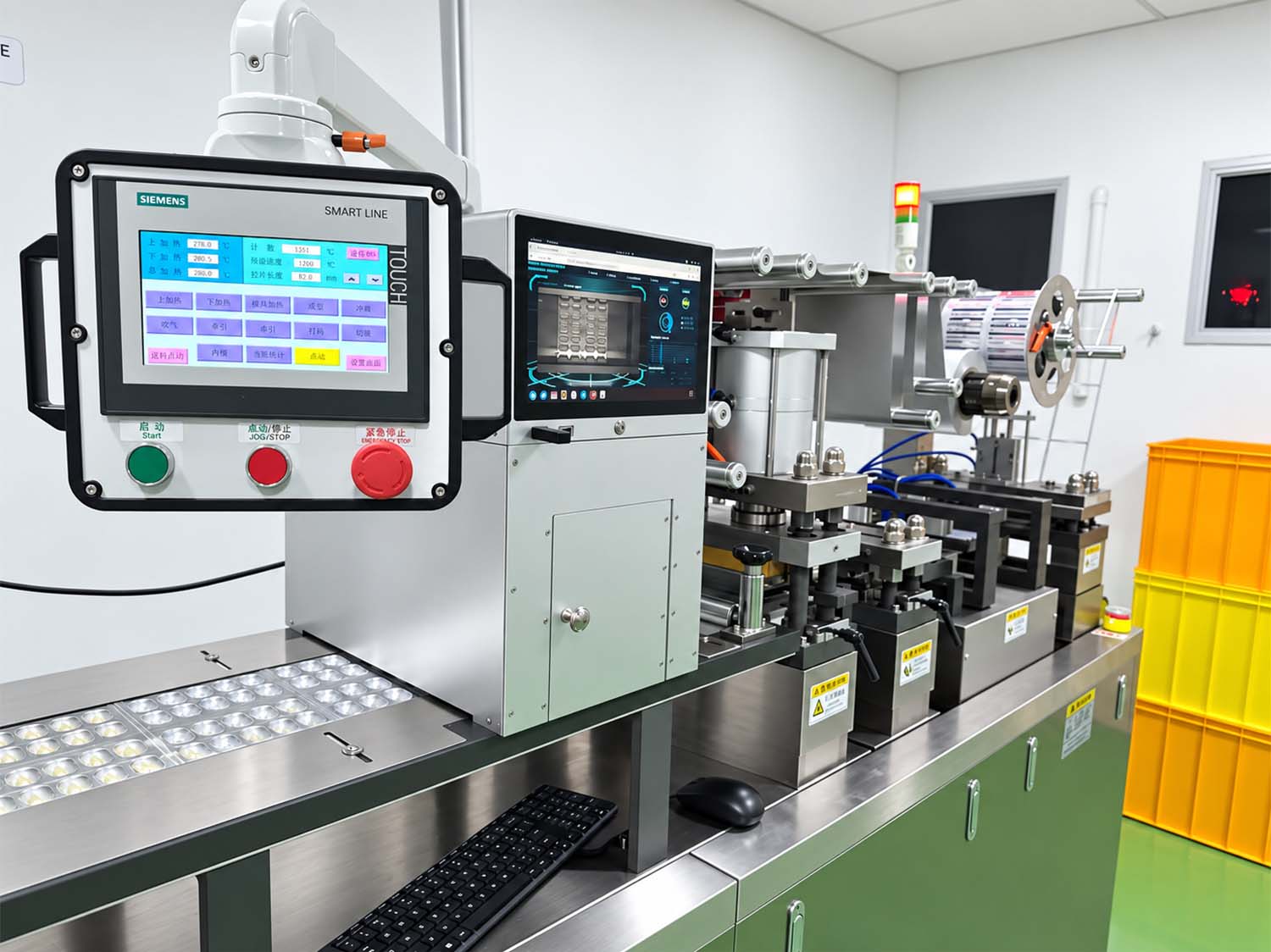
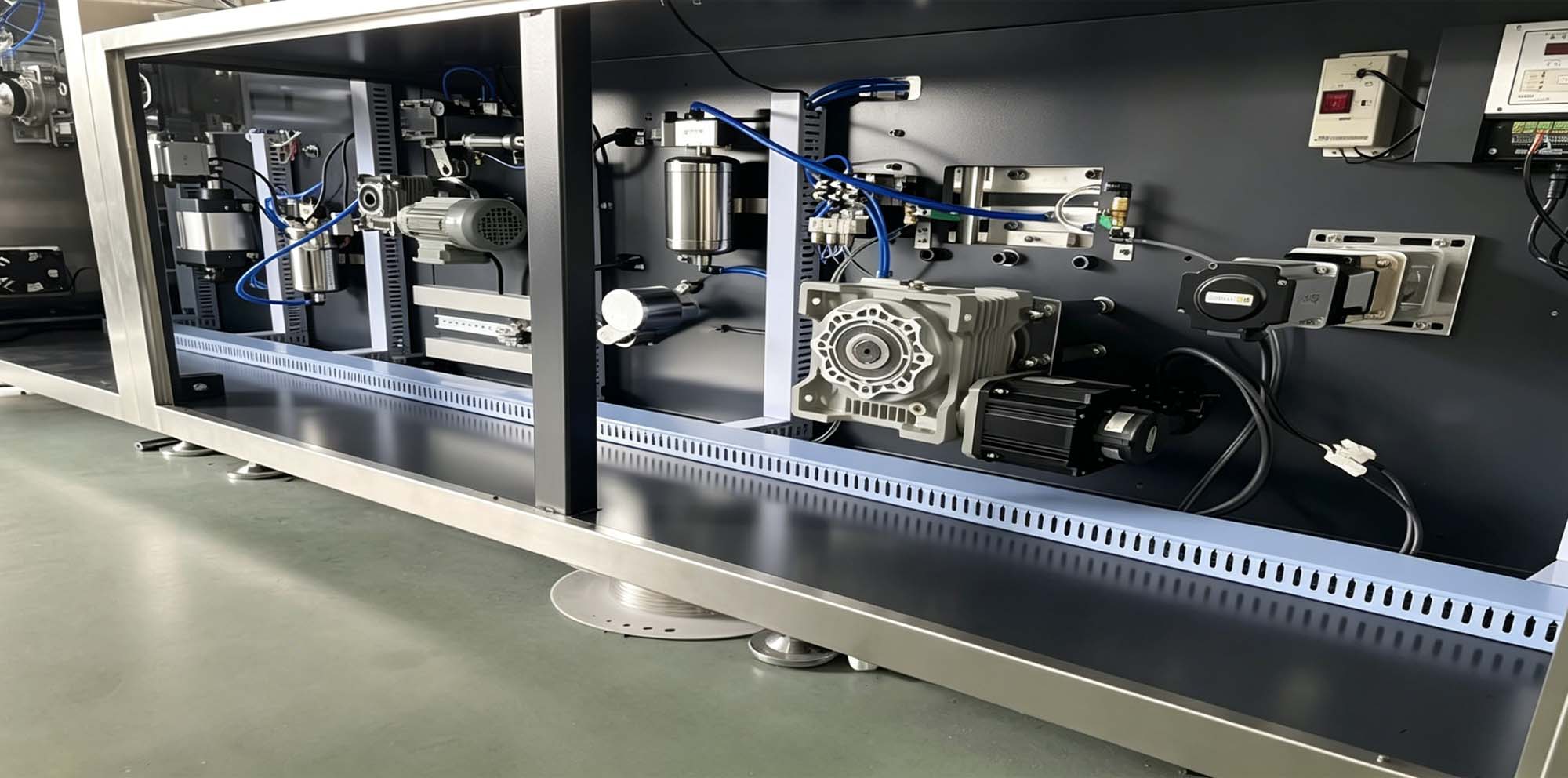
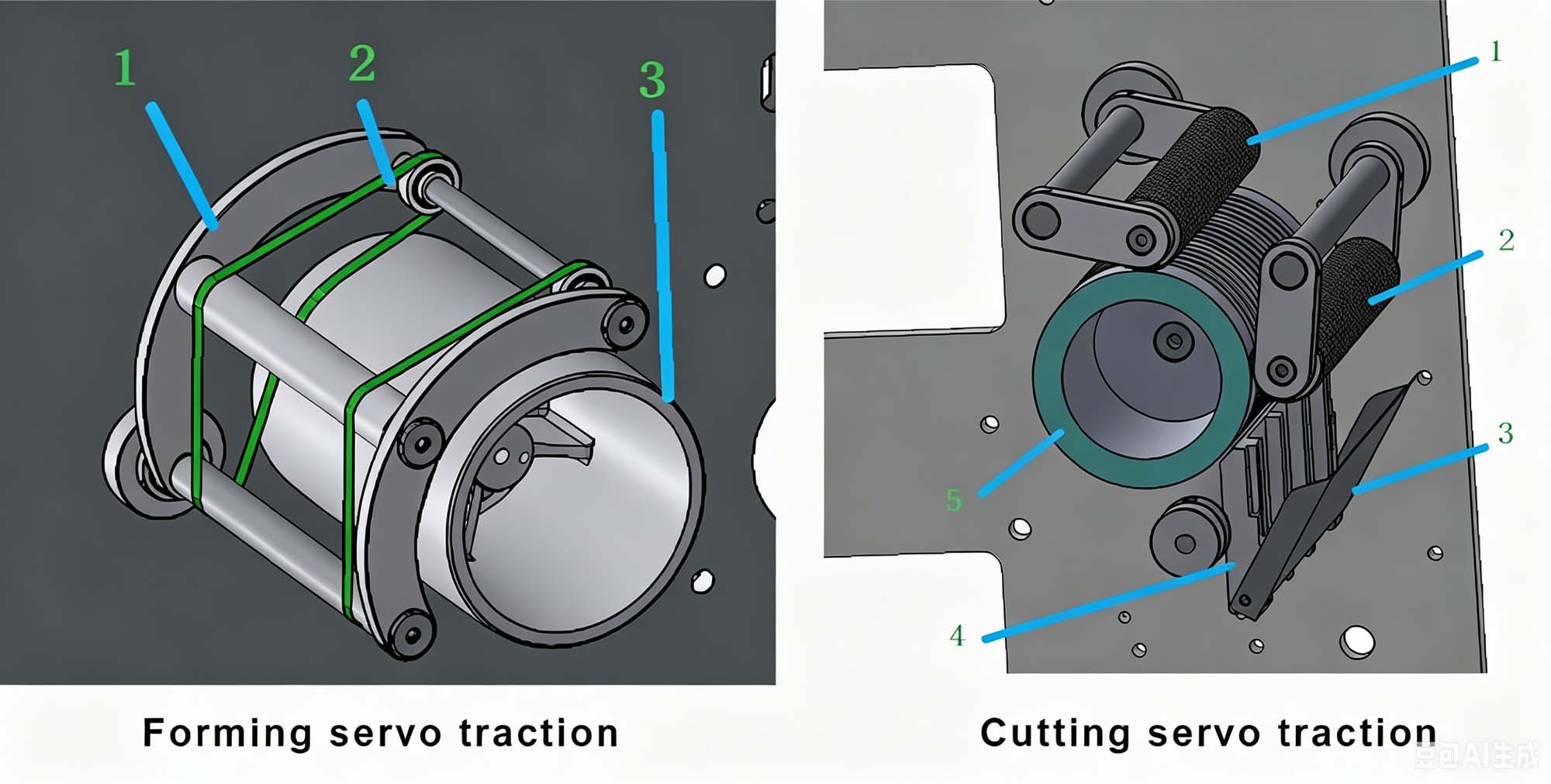
Eight servo drives run from a single motion controller rather than a chain of mechanical linkages. At 180 punches a minute, a linkage chain accumulates timing error across a shift — that error shows up as drift in the cutting position hours after anyone last checked it. Independent axes don’t drift; they hold the position the controller gives them.
320 × 380 mm Forming Area
More rows across each cut than a 260 mm machine. That ratio is the whole reason to buy this one — and it’s also the reason not to. If your plate layout doesn’t fill the extra width, you’re paying for capacity the machine can’t reach. Send us your plate dimensions and we’ll lay it out on both widths.
16 mm Forming Depth
This is a limit, not a feature, and it’s worth stating plainly. Rolling film against a rotating drum gives it less dwell time than pressing it against a static plate, so it stretches less far. If your item is taller than 16 mm, a flat-plate machine is what you need — ours forms to 26 mm on Alu-PVC. We’d rather say so here than at the factory acceptance test.
Ships as Three Units
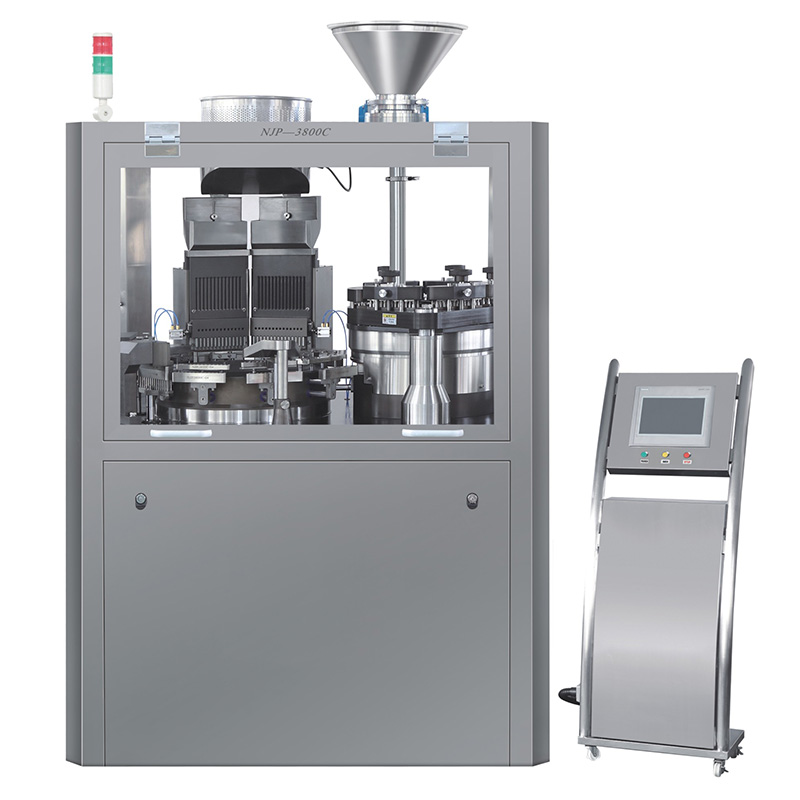
Main unit, auxiliary unit and a separate film rack. Total footprint is 5,280 mm long, but nothing that arrives is wider than 1,600 mm or taller than 1,800 — which is what makes a machine this size possible to get into an existing room.
Separated Drive Compartment
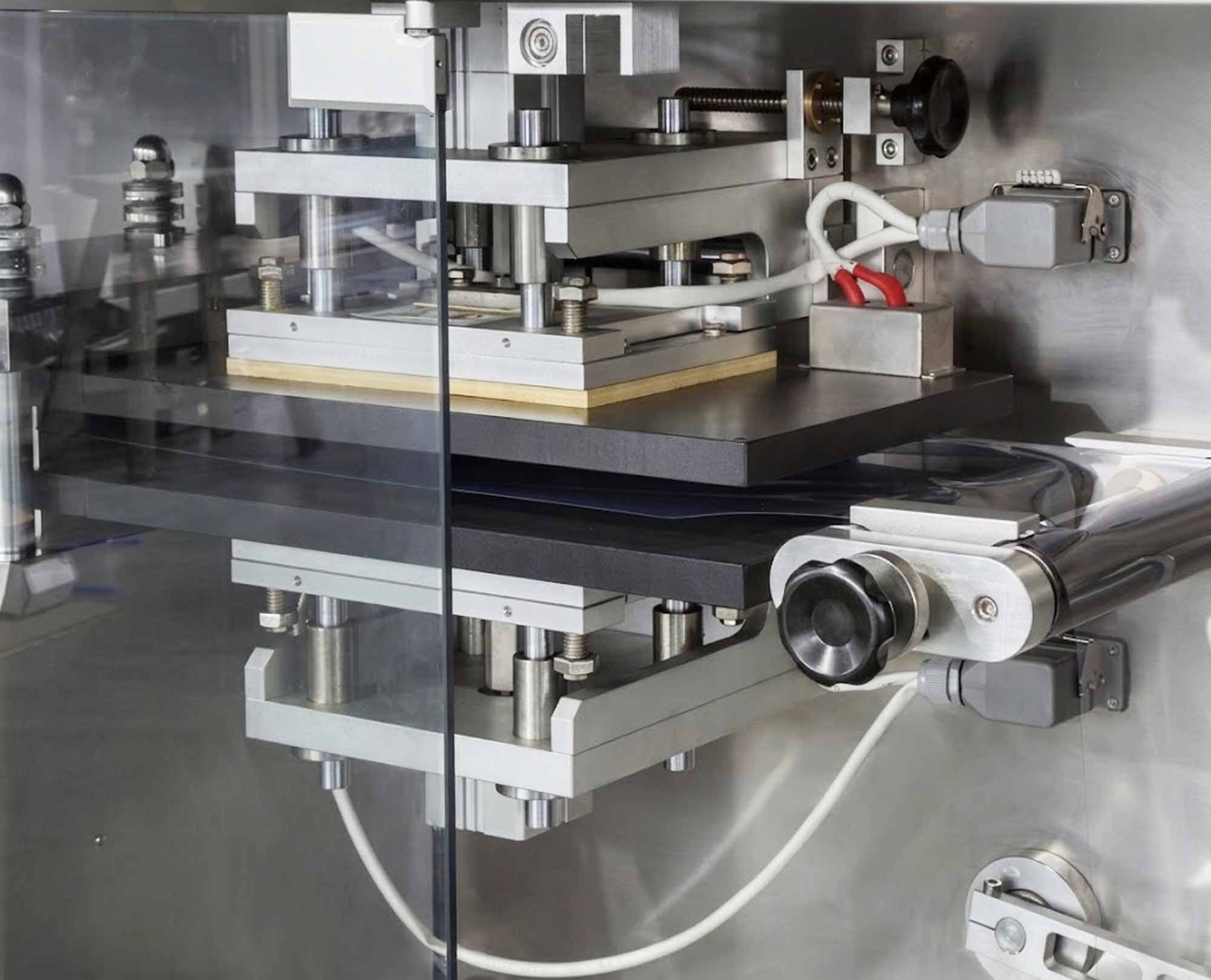
Drives, belts and motors sit behind the working area rather than under it. On a machine this wide, that’s the difference between a twenty-minute line clearance and an hour — there’s simply less surface in the production zone to wipe down.
Industry Applications
AIPAK’s DPP-260H1 is the ultimate high-capacity platform, engineered to handle the most demanding production schedules in global pharmaceutical manufacturing. Its massive 260 mm width allows it to dominate in:
Multi-row plates on a wide web
A 320 × 380 mm forming area takes more rows across than a 260 mm machine. If your plate layout fills it, the per-unit packaging cost drops. If it doesn’t, the width returns nothing.
Single-SKU continuous production
One format running across shifts. Wide drums are heavier to swap, so this machine pays back on long runs rather than frequent changes.
Cold-formed Alu-Alu at volume
Alu-Alu costs several times what Alu-PVC does. At this width, the plate margin is a real line item rather than a rounding error.
Flat tablets and standard capsules
Items under 16 mm tall. That ceiling applies to every rotary machine, not just this one.
What changing over involves
A format set is four stations, not one part.
What changed | What you adjust | Roughly |
Same format, new batch | Nothing | — |
Plate layout changes | Rotary drums and cutters | 15-45mins |
Alu-PVC → Alu-Alu | New molds (forming, sealing, and punching) and a new feeder plate | 15-45mins |
Servo synchronisation re-aligns the stations from the recipe, so the timing part is done on the screen. The drums still come off and go back on by hand — and a 380 mm drum is heavier than a 260 mm one.
A rotary machine trades changeover speed for running speed, and a wide one trades more of it. If you change format more than once a week, the width is working against you.
What to check before you buy
The tooling, not the machine
A format set covers four synchronised stations. Ask any supplier who designs the pocket layout, how long a new format takes to make, and what it costs. That's where a blister project succeeds or fails.
The feeder, before you order
An Alu-PVC universal feeder cannot run cold-formed Alu-Alu, and it cannot be converted afterwards. Ask which feeder you're being quoted and what it locks you out of.
Installation and training
Ask what's included and what costs extra. The answer varies more between suppliers than the machine price does.
Why Choose AIPAK?
Tooling Is the Machine
On a blister line, the tooling is where the machine is won or lost. A single format set covers four synchronised stations — forming, sealing, embossing and cutting — and they have to work as one. Send us your tablet or capsule samples and we design the pocket layout around your product, not the other way round.
Material and Feeder Matching
Alu-PVC, cold-formed Alu-Alu, tropical blister and medical dialysis paper each behave differently, and so does every feeder type. A universal Alu-PVC feeder cannot run cold-formed Alu-Alu — if you may move into Alu-Alu later, that decision has to be made before the machine ships, not after. We ask about your material and dosage form first, then specify the feeder.
Support & Factory-Direct
You buy from the factory, not through a trading company — which means custom modifications are a conversation with our engineers rather than a request passed down a chain. Remote diagnostics, spare parts and operator training come from the same team that built your machine.
DPH-380H Rotary Blister Packaging Machine FAQ
This is achieved through our Balanced-Pressure Rotary Sealing technology. Unlike smaller machines, the 380H uses a reinforced dual-support drum system with hydraulic-assist pressure. This ensures that the sealing force is exactly the same at the edges as it is in the center, preventing any “soft seals” or leaks in a wide, multi-row configuration.
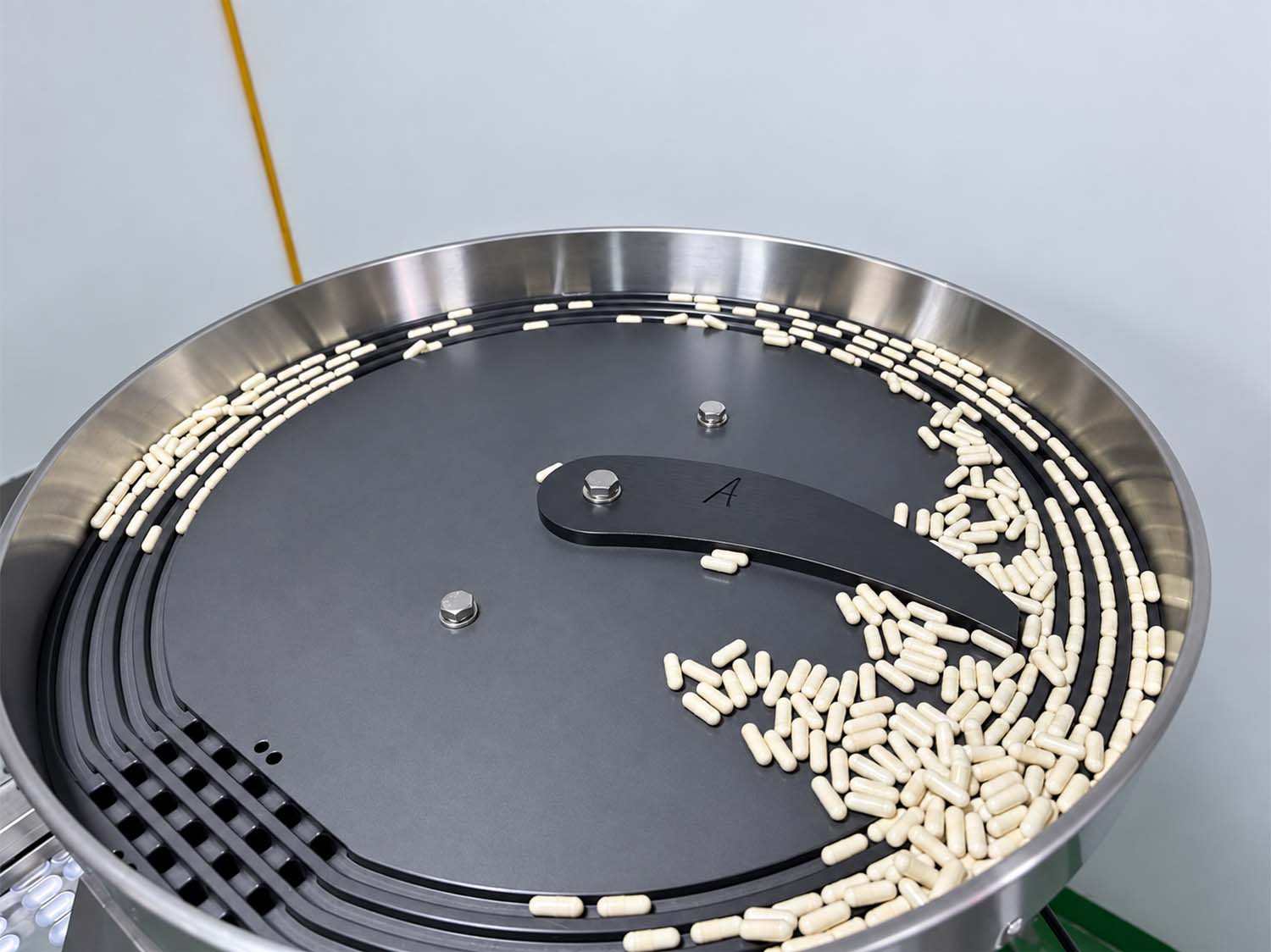
Yes, manual feeding is impossible at these speeds. The 380H is always paired with our Advanced Dedicated Automatic Feeders (Vibration, Brush, or Planetary), which are electronically synced to the machine’s main servo. We also highly recommend integrating our high-speed AI vision system for inspection.
The H-series uses a Heavy-Duty Monoblock Chassis and the “Balcony” design. By isolating the drive mechanics in a sound-dampened rear compartment and using a low-vibration continuous motion logic, the 380H runs surprisingly quietly and maintains its mechanical longevity even in 24/7 environments.
Work it out from your plate layout, not your output target. If your plate fits three rows across 260 mm and four across 380, the wider machine pays back. If it fits three across either, you’d be buying width you can’t fill. Send us your plate dimensions and we’ll lay it out both ways and tell you honestly.
28 kW three-phase five-wire, with live conductors at 6 mm² or above and earth at 2.5 mm² or above. Compressed air at 0.4 to 0.7 MPa, 320 litres an hour. Cooling water at 0.1 to 0.25 MPa, 600 litres an hour — tap water or a chiller. And 5,280 mm of length, though it arrives as three separate units.
Customers Also Interested In...
DPH-260H
DPP-260H1
Cartoning Machine
Get a Custom Technical Proposal & Quote in "12 Hours"
Reply within one business day.
Send us your plate layout, not your output target.
A 380 mm web only earns its cost if your plate fits more rows across it than across 260 mm. That’s an arithmetic question, and it’s one most buyers haven’t done.
Send us your plate dimensions and your item height. We’ll lay it out on both widths and tell you which one actually pays — including when the answer is the narrower machine.