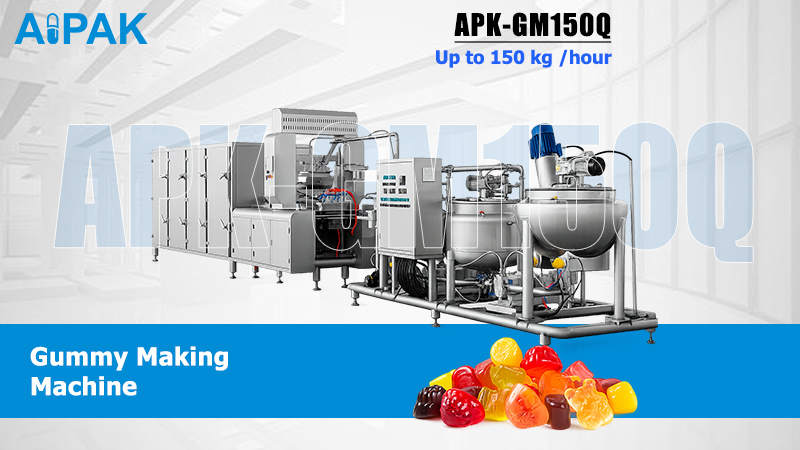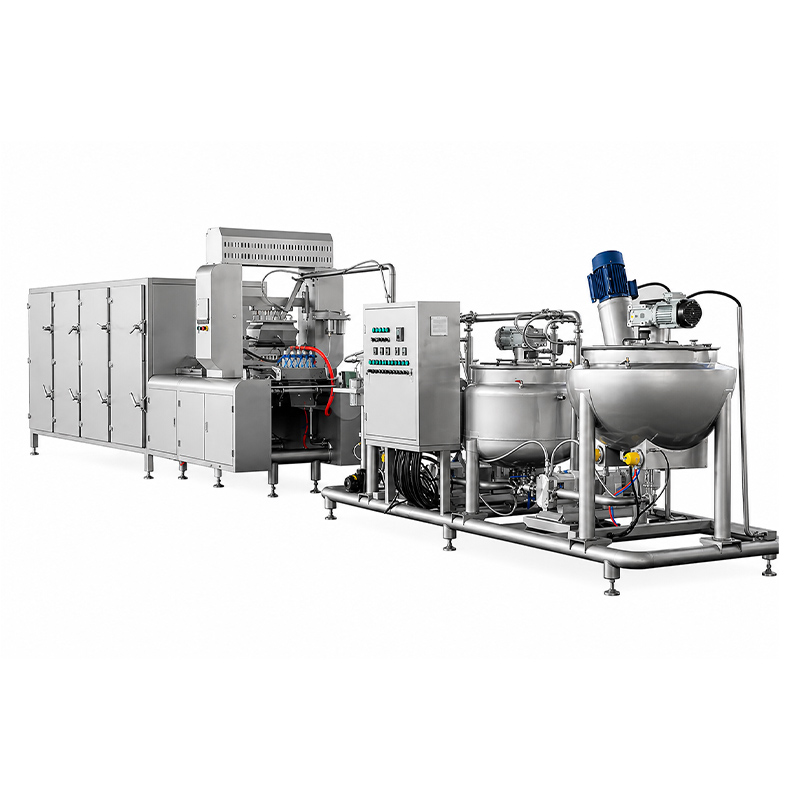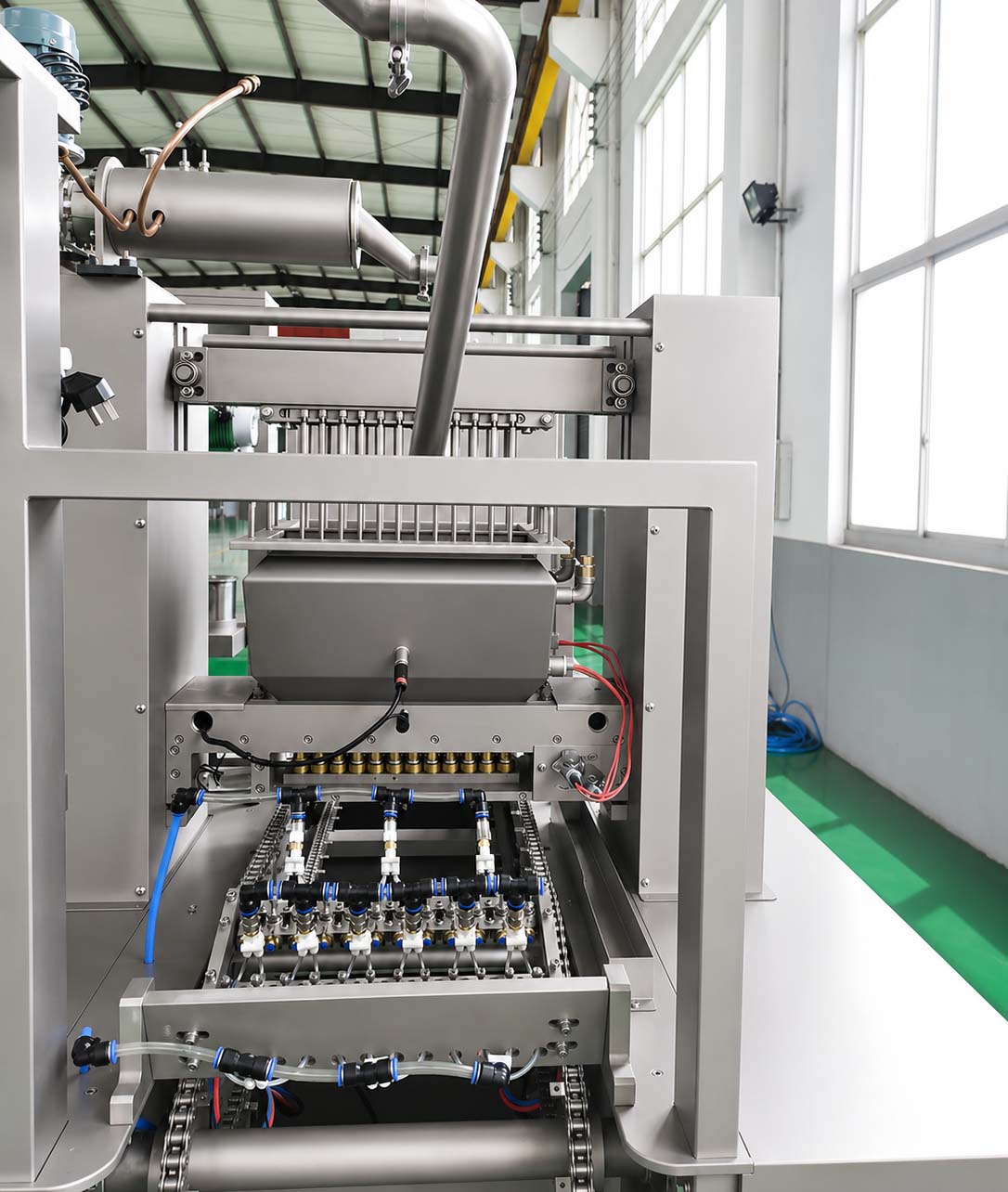
APC-GM150Q Gummy Production Line — 150 kg/h
Kitchen, depositing, cooling and demolding in 16 metres, with 2 to 3 operators
You’re buying gummies from a co-packer, or running a hand-poured kitchen that can’t hold weight. The GM150Q automates the whole process — cooking, depositing, cooling, demolding — at 150 kilograms an hour. We build it in our own plant, and we’ll send you the formula if you don’t have one.
1. Output: 150 kg/h, 25 to 45 depositing strokes a minute
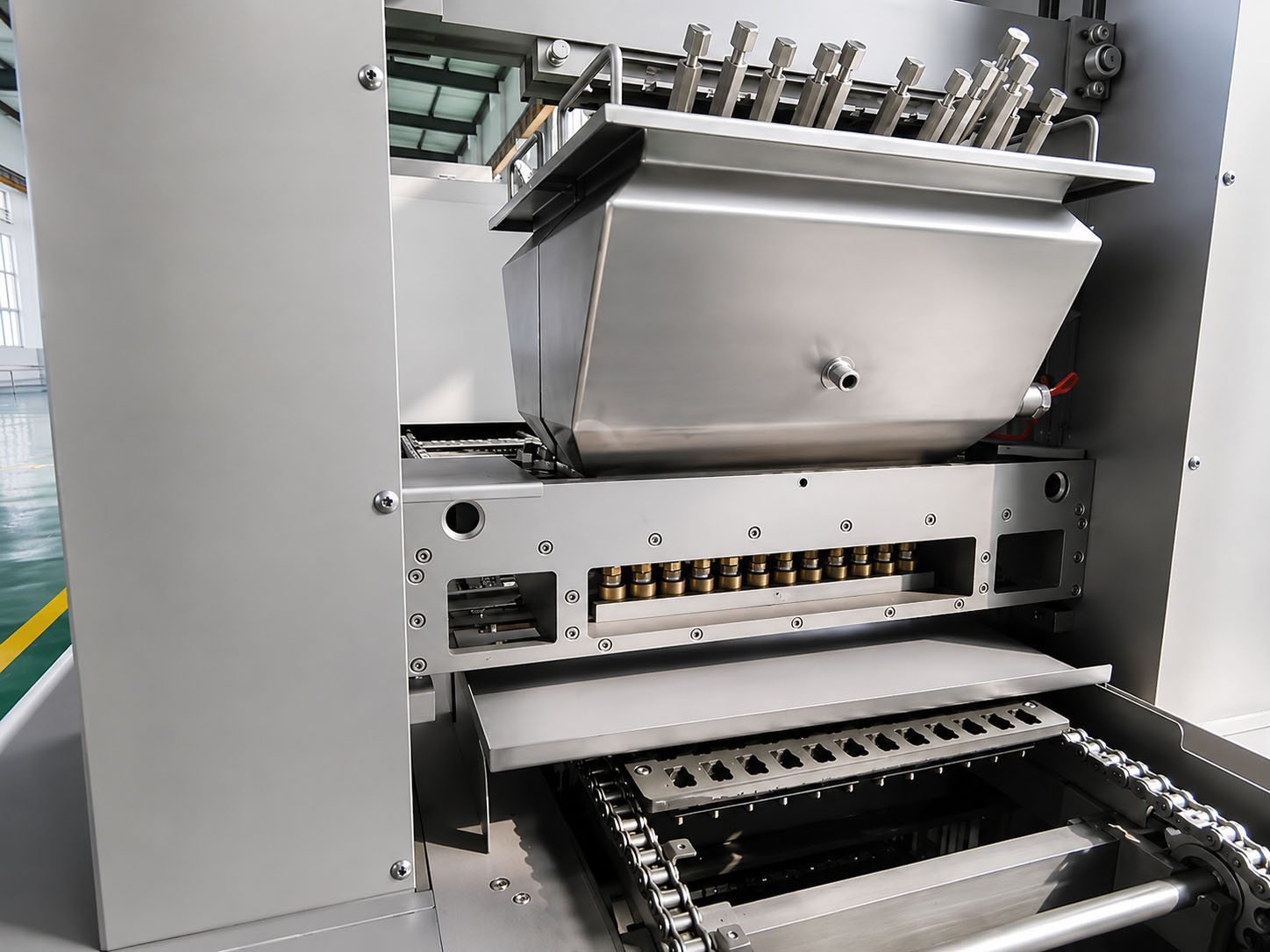
2. 20 depositing nozzles: one colour, two colour or centre-filled, by changing the manifold
3. Materials: SUS304 throughout, SUS316L on contact parts
4. Controls: Siemens PLC with UL or CE certified components
Is this the right line for you?
✓ Yes, if…
- You need around 150 kg an hour
- You run gelatin, pectin or carrageenan
- You have 16 metres of line length plus working clearance
- You have steam at 250 kg/h and 0.5–0.8 MPa, or you're willing to add a boiler
- You can hold 25–30 °C and 45% humidity in the forming area
✕ Buy something else if…
- You need less than 100 kg an hour → the GM80Q runs 80 kg/h in 8 metres and 55 kW. Half the floor, and a third less power
- You need more than 200 → see the GM300Q at 300 kg/h
- You have no steam and no boiler → tell us early. We can quote the electric heating option instead, but it changes the build
- You can't hold the room conditions → forming needs 25–30 °C at 45% humidity or below, and pectin needs a 20–24 hour cure. No machine fixes a room that swings
- You want gummies coated or oil-sprayed afterwards → those are separate machines. We build them, but they're quoted separately
Full-Servo Screw-Driven Depositing
The depositing pistons run on servo motors with solid screw rods and linear guides. Chain-driven depositors are the common alternative — the chain stretches, and fill weight drifts after a few months. That’s a difference you see in your weight checks a year in, not on day one.
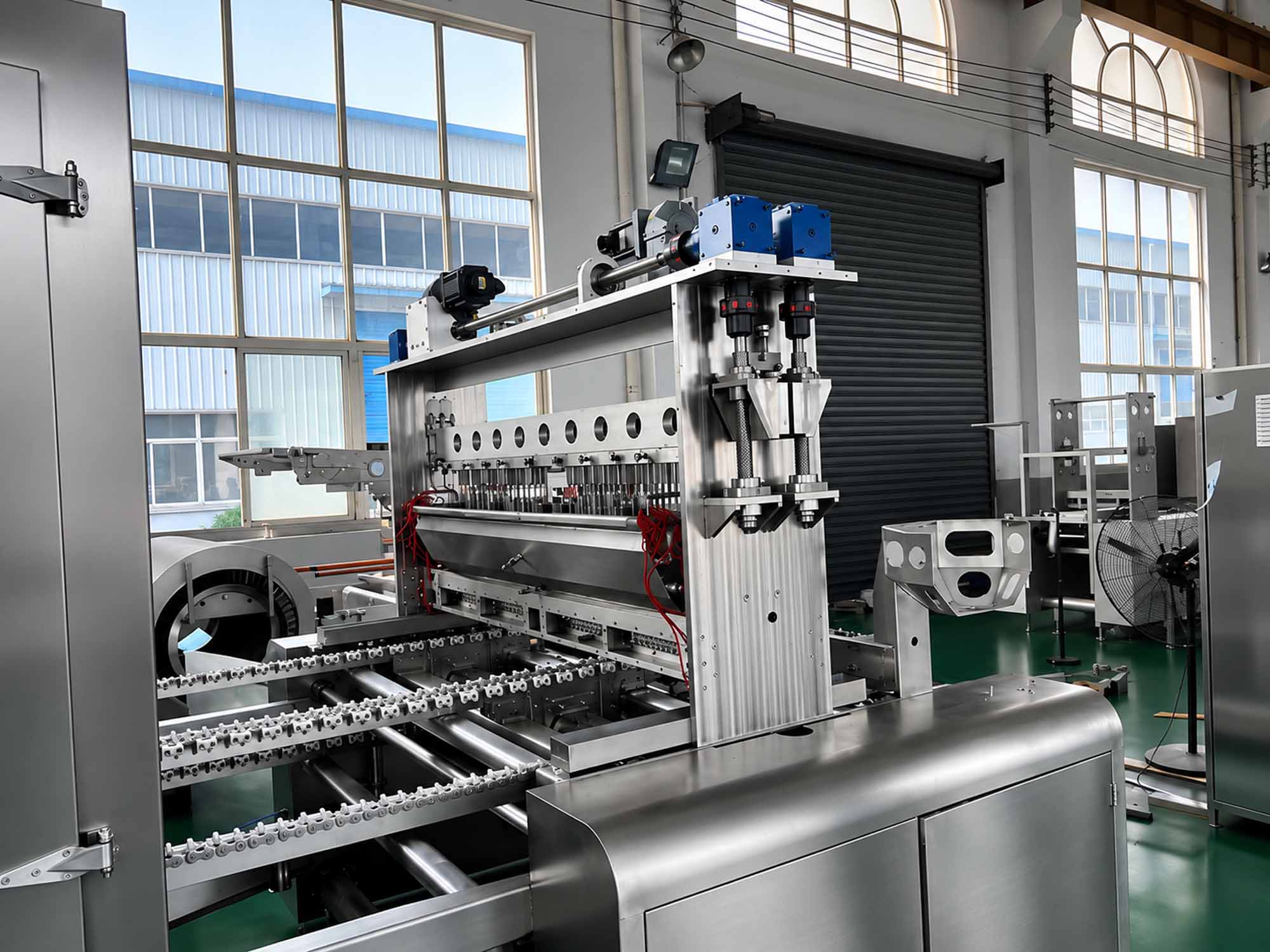
Full-Plate Demolding
Dual pneumatic cylinders drop the whole tray face at once, evenly. The alternative is plate-chain demolding, which grips the frame edges and twists the tray over time — it chips the coating and eventually damages the mold. Two soft rotating brushes finish the release without touching the mold surface.
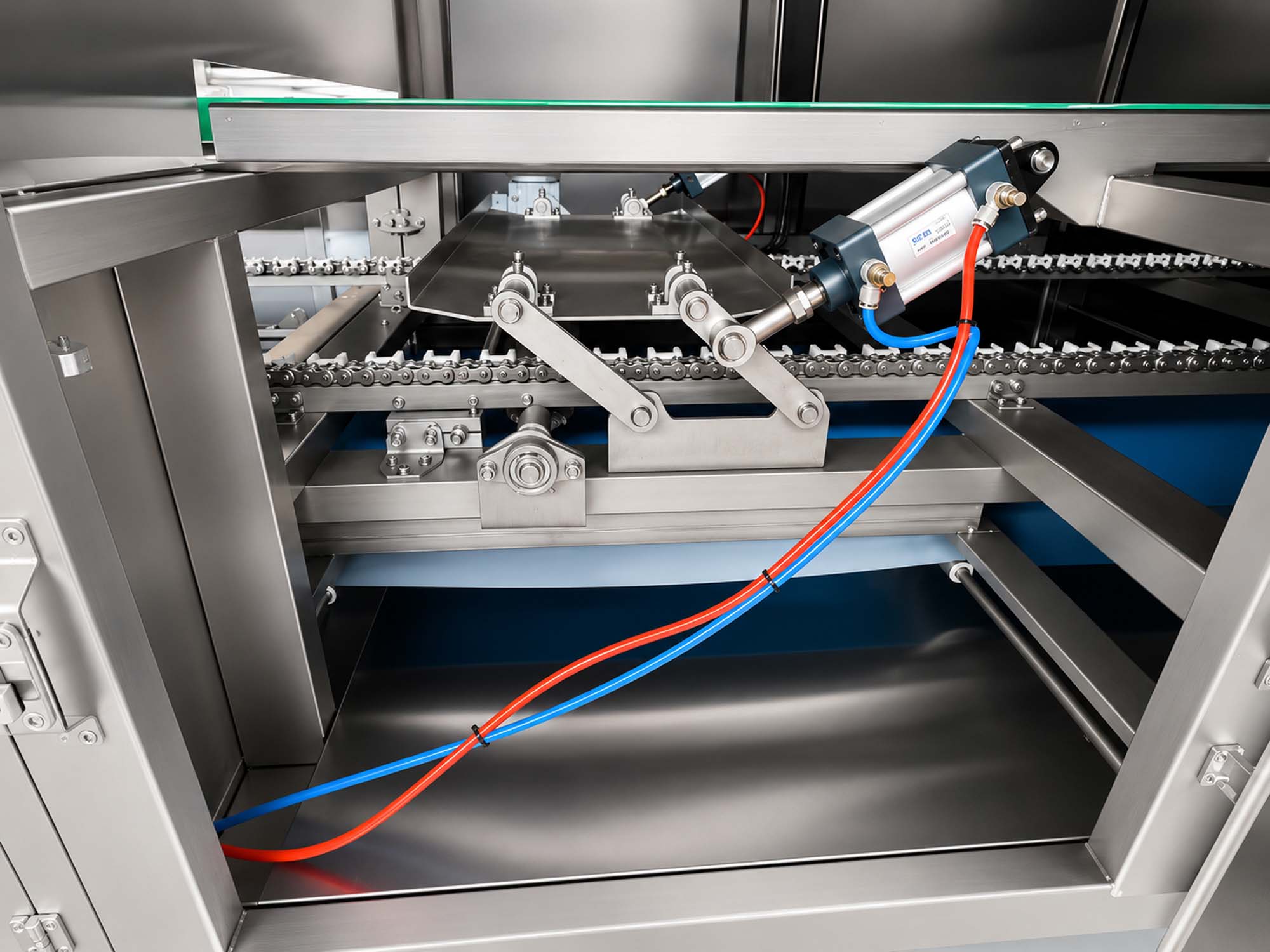
Quick-Release Molds on a Guide Rail
Molds are fully Teflon-coated and held by fast-release buckles on a guide rail. The alternative is screw-fixed molds with a half coating — an operator, a spanner, and an uncoated area where sticking starts.
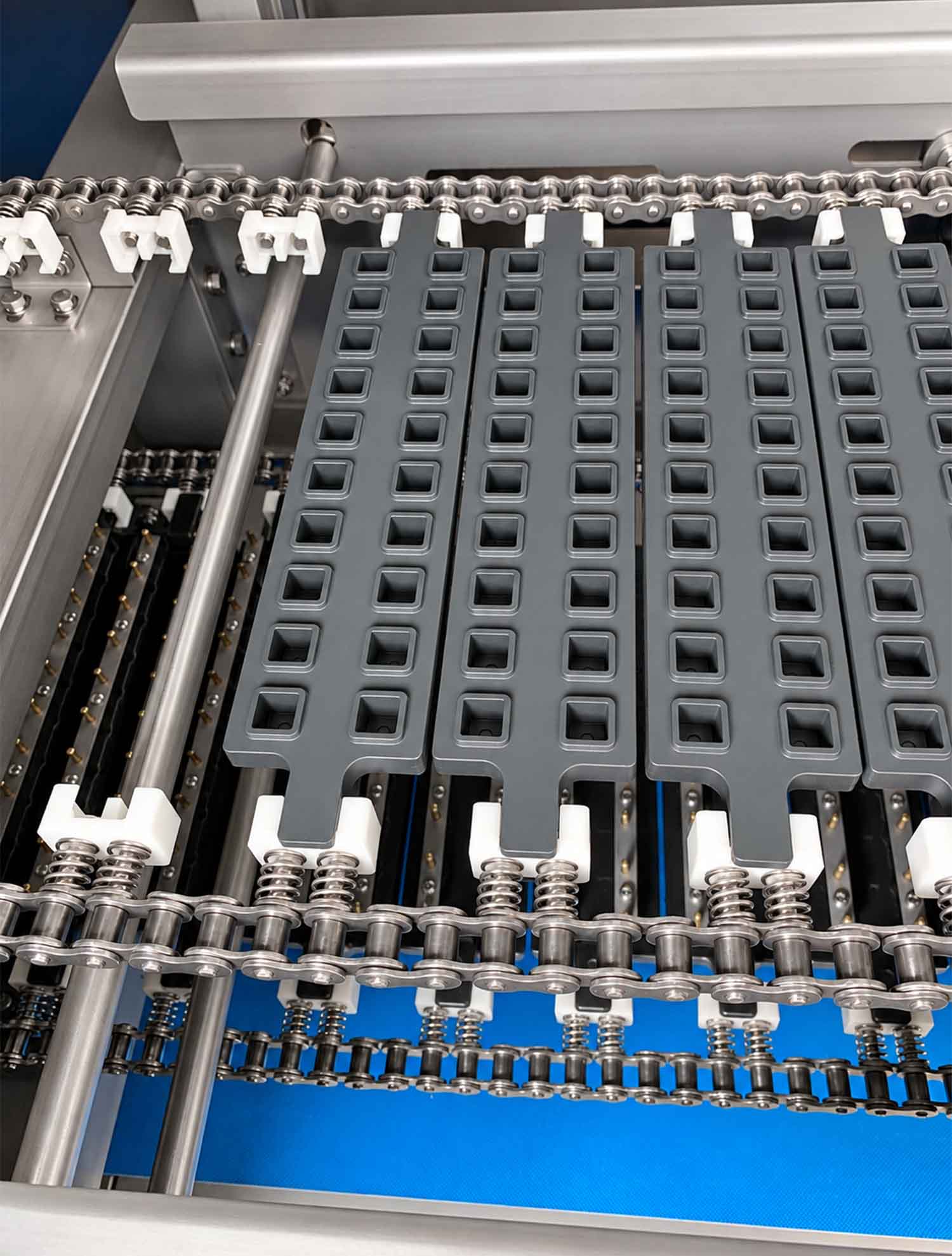
Suspended Belt with Cylinder Tensioning
The blue PU belt runs suspended off the tunnel floor with a pneumatic cylinder holding tension automatically. Belts that sit flush against the tunnel trap spilled syrup underneath — they glue down and they’re hard to clean. Mechanical tensioners wear the belt out faster.
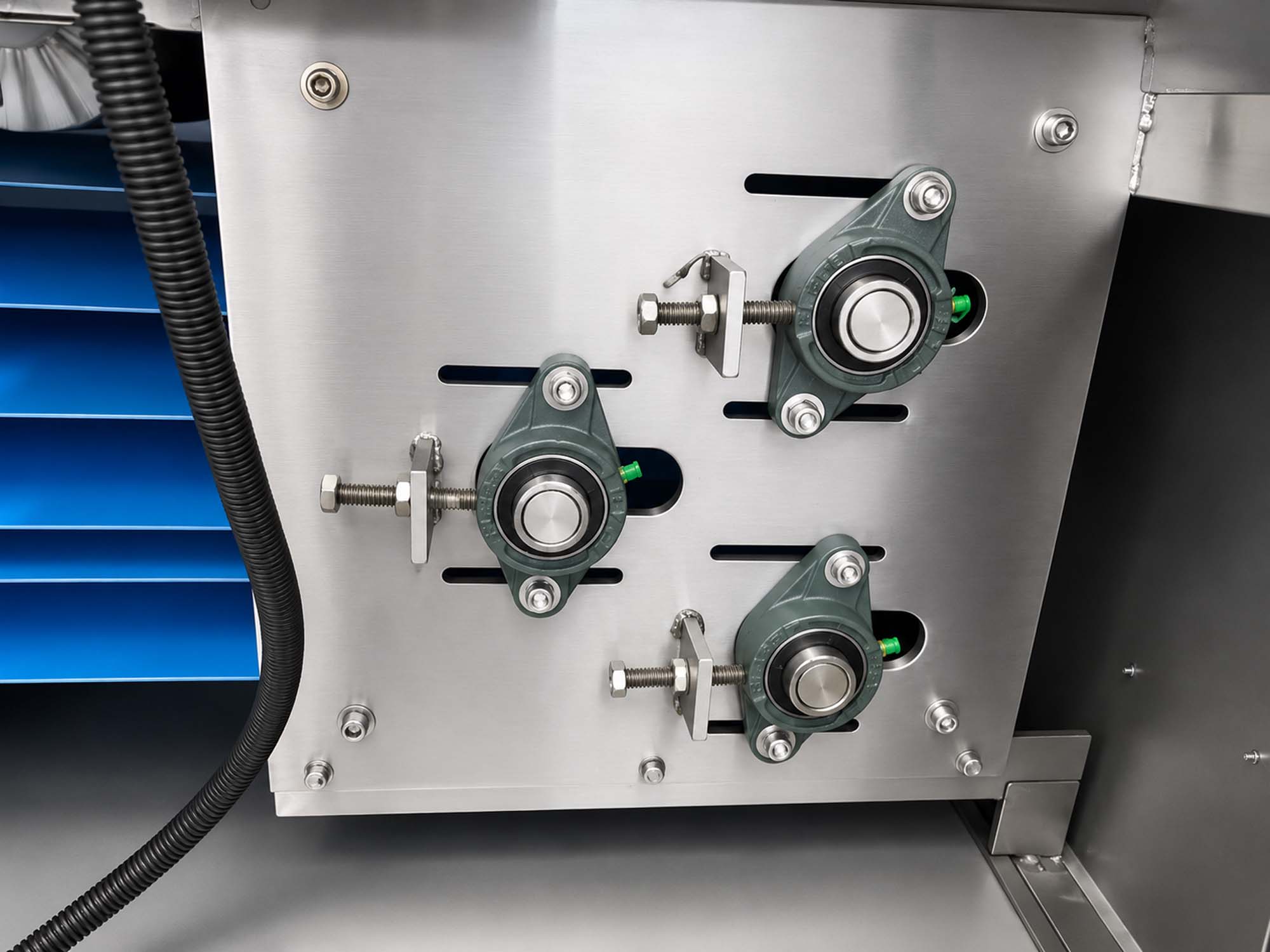
Motor at the Tunnel Exit, Not at the Depositor
The drive motor sits at the cooling tunnel exit and pushes the mold chain rather than pulling it from the front. Front-mounted motors pull the chain unevenly, so over time the chain no longer runs level — and the depositing station loses accuracy because of it.
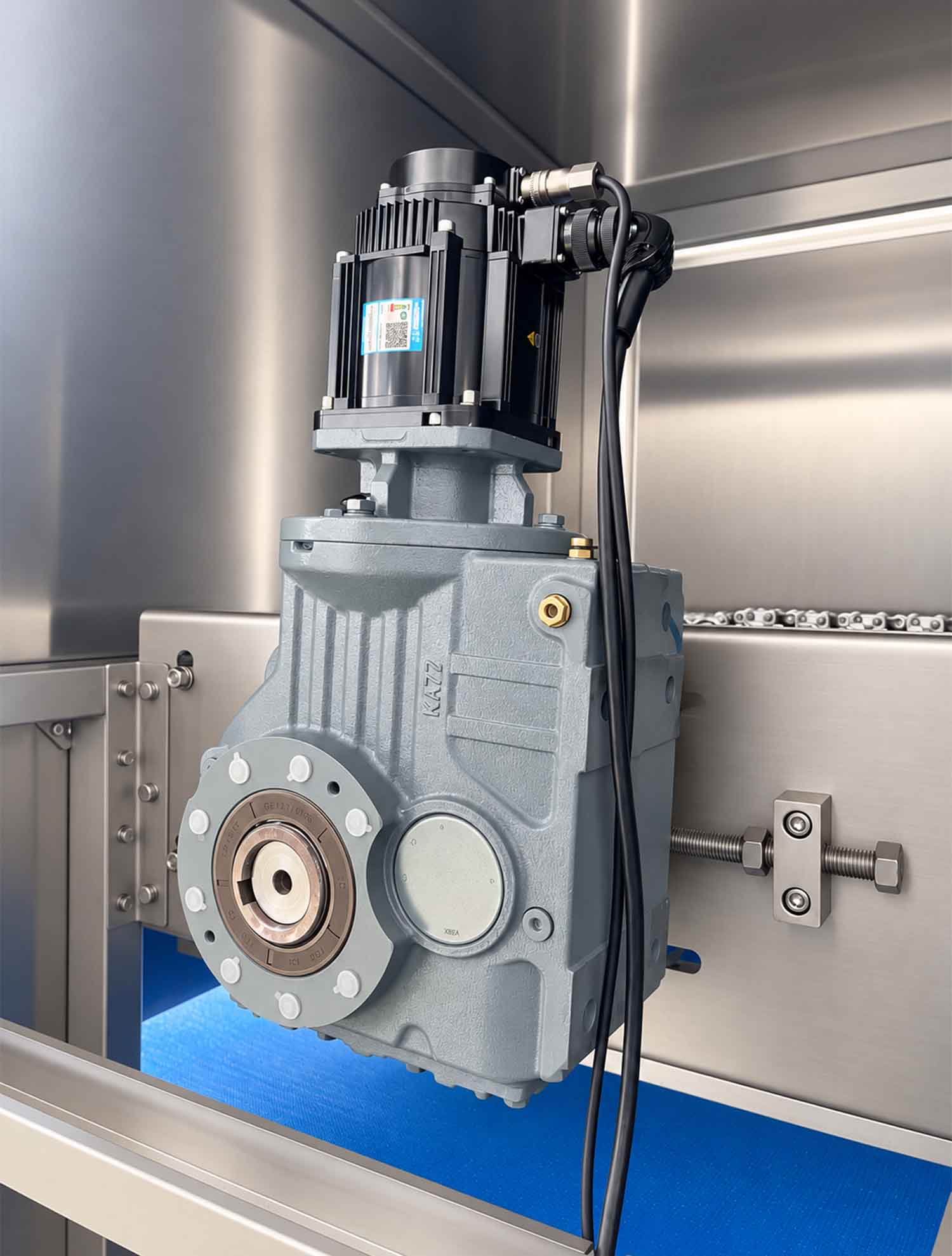
Vertical Dynamic Mixing
Flavour, colour and actives are blended in a vertical mixer rather than a horizontal one. Horizontal mixing lets dense material — mineral powders, botanical extracts, organic acids — settle at the bottom of the pipeline. The vertical design forces the mass upward, and there’s a window so the operator can see it.
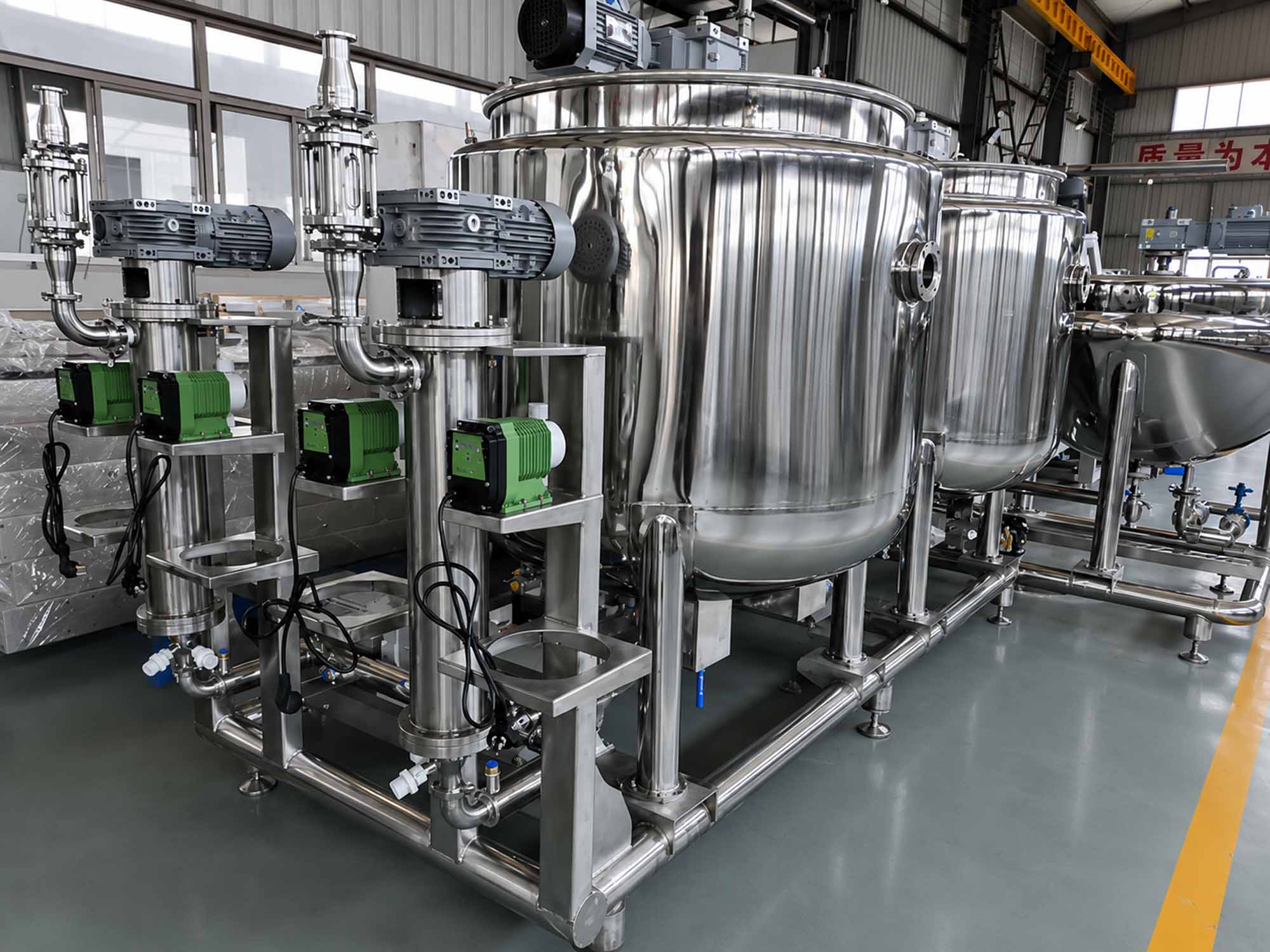
Technical specification
Specification | APC-GM150Q | What it means for you |
Output | 150 kg/h | Piece count depends on your gummy weight — tell us and we’ll work it back |
Depositing speed | 25–45 strokes/min | — |
Depositing nozzles | 20 | One, two or multi-colour centre-filled, by changing manifold and nozzles |
Dosing accuracy | ≤ ±2% | Servo screw-driven pistons |
Steam | 250 kg/h at 0.5–0.8 MPa | You need a boiler. No steam? Ask about electric heating |
Compressed air | 0.2 m³/min at 0.4–0.6 MPa | You supply the compressor |
Installed power | 65 kW, 380 V | 60 Hz / 480 V |
Room conditions | 25–30 °C, humidity ≤45% | Cooling tunnel 5–10 °C. Pectin drying room 25–30 °C at 25–45% |
Line length | 16 m | Plus working clearance either side. We draw the layout for you |
Machine weight | 3,500 kg | Check your floor loading |
Operators | 2–3 | — |
Cooker working volume | 200 L | Electric or steam heating |
Contact parts | SUS316L | Frame and pipework SUS304 |
Control system | Siemens PLC, UL or CE certified components | Most electrical spares available in North America |
Electrical protection | IP65, aviation quick plugs | Washdown-safe without teardown |
Model comparison
Model | Output | Depositing speed | Steam | Power | Line length | Best for |
APC-GM80Q | 80 kg/h | 25–35/min | 80 kg/h, 0.4–0.6 MPa | 55 kW | 8 m | Bringing your first gummy in-house |
APC-GM150Q | 150 kg/h | 25–45/min | 250 kg/h, 0.5–0.8 MPa | 65 kW | 16 m | Growing brands scaling past a co-packer |
APC-GM300Q | 300 kg/h | 25–45/min | 300 kg/h, 0.8–1.2 MPa | 75 kW | 18 m | Multi-shift plants and contract manufacturers |
APC-GM600Q | 600 kg/h | 25–45/min | 500 kg/h, 1.6–1.8 MPa | 85 kW | 20 m | Mass-market confectionery volumes |
Output is in kilograms per hour, not pieces — piece count depends on your gummy weight. Tell us both and we’ll work it back for you.
All four run the same servo depositing, the same full-plate demolding and the same mold system. What changes is throughput, and what that costs you in steam, power and floor.
Industry Applications
Vitamin and mineral gummies
Pectin and vegan formulations
Functional and botanical gummies
Ashwagandha, elderberry, apple cider vinegar. Dense botanical extracts settle in horizontal mixing lines — that’s what the vertical mixer exists for.
CBD and THC gummies
Dose uniformity is the whole product in this category. The vertical mixer is what keeps a dense active from pooling in the pipeline.
What changing over involves
Changing shape is a mold swap. Changing base is a different conversation.
What changed | What you adjust | Roughly |
Same shape, new flavour or colour | Recipe on the screen, flush the mixer | 30-60mins |
Different gummy shape | Swap the mold trays — quick-release buckles on a guide rail, no screws | 30-60mins |
Gelatin → pectin | Cooling tunnel settings and your drying room. Pectin cures 20–24 hours against 8–12 for gelatin | Not a changeover — a process change |
Different piece weight | Depositing stroke on the servo, and possibly the manifold | 30-60mins |
Molds are fully Teflon-coated and held on a guide rail with fast-release buckles. The common alternative is screw-fixed molds with a half coating — those take an operator and a spanner, and the uncoated area is where sticking starts.
What your plant needs to supply
Utilities
Steam — the volume and pressure depend on the line size, listed in the specification table on each model page. Compressed air. Electricity, water inlet and drainage.
Air handling
Two dehumidifiers — one for the cooling area, one for the packing room. Two air conditioners, same two rooms.
Room conditions
Forming area: 25–30 °C, humidity 45% or below. Cooling tunnel: 5–10 °C. Drying room for pectin: 25–30 °C, humidity 25–45%.
What we supply
The line, the layout drawing, installation, operator training — and the formula if you don't have one.
Two things worth raising early. Steam is the one most buyers overlook — if you don’t have a boiler, tell us and we’ll quote the electric heating option instead. And no machine fixes a room that swings: if you can’t hold the forming conditions yet, say so before you order, not at commissioning.
What to check before you buy
Weight consistency, checked over time
A servo depositor and a chain-driven one both hit spec on day one. Ask any supplier what their fill weight looks like after six months of running, and how they verify it at the factory acceptance test. That's the number that decides your giveaway.
The manual
A clear English manual gets your operator running in a week instead of a month. Ask to see a sample page before you order.
Installation and training
Installed, commissioned, and your people taught to run the line. Ask what's included and what costs extra — the answer varies more between suppliers than the machine price does.
Why Choose AIPAK?
We build it — Our own plant in Wuhan. Not a trading company, and not a rebadged line. Custom mold shapes, nozzle counts and layout changes go through the engineers who make the machine.
Formulas included — Gelatin and pectin production formulas with ingredient ratios and process steps. Free, and yours whether you buy from us or not.
Installation and training — We install it, commission it, and teach your operators.
Lead time — 1-3months. Confirmed in writing with your order.
APK-GM150Q Medium Scale Automatic Gummy Making Machine Comprehensive PDP FAQ
Traditional mixing augers rely on horizontal flow patterns, which naturally allow heavily dense medicinal extracts, active botanicals, and citric acids to settle at the base of the pipeline, creating massive dosage variation across a batch. The APK-GM150Q features a Vertical Dynamic Flavor and Colors Mixer that forces the liquid mass into an upward vortex blend. This active mixing pattern keeps dense actives in suspension through the run, zero-settling concentration uniformity, and operators can monitor fluid consistency in real time through the built-in visible window.
Flexible plastic tube designs are highly prone to kinking, blistering, or micro-fracturing when subjected to constant cleanroom expansion cycles and washdown chemistry. To establish permanent technical stability, the APK-GM150Q loop is fabricated exclusively from rigid stainless steel pipelines. This structural setup delivers non-degrading water flow efficiency, prevents pressure-drop leakage, and withstands intense pharmaceutical-grade cleanroom spray-downs.
Plate chain demolding applies localized pinching forces to the outer frame edges, which twists the mold plate over time, chips the non-stick coating line, and ruins tool OEE. AIPAK’s Full-Plate Mechanical Demolding technology employs dual pneumatic cylinders that push the entire tray surface evenly according to fixed alignment parameters. Working alongside dual rotating soft brushes, it achieves complete candy release while keeping the mold plates safe from structural stress.
Product changeovers for multi-ingredient functional gummies require deep cleanroom washdowns. The APK-GM150Q features an IP65-rated electrical standard and uses water-resistant aviation quick-charge plugs for all critical sensor and heating links. Cleaning crews can safely spray down the frame, the inside of the cooling tunnel, and the hopper assemblies with washing water without risking electrical damage or Siemens PLC faults.
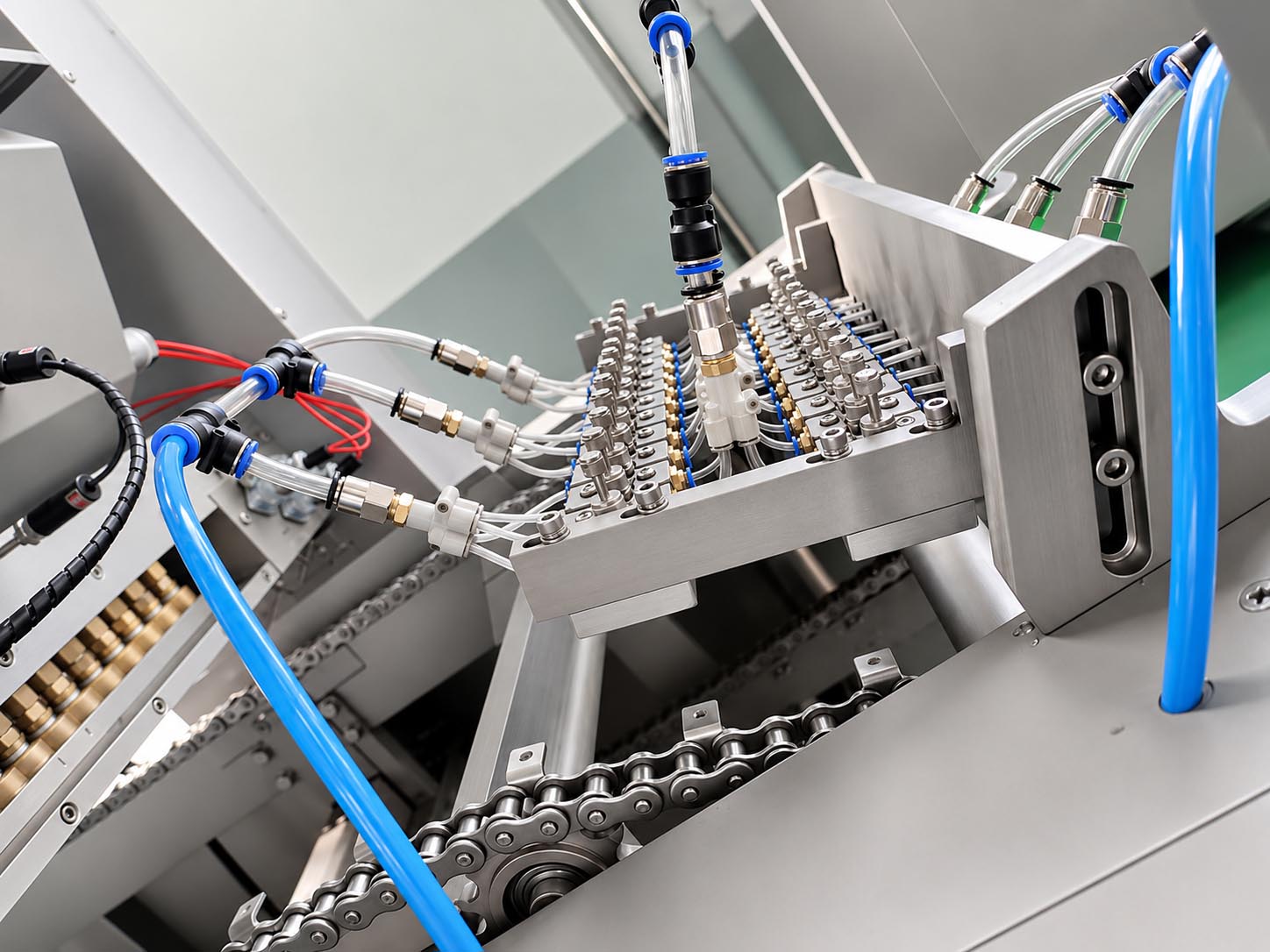
Standard open-valve spray bars lack regulatory pressure controls, forcing operators to constantly adjust the valves manually because of pressure shifts, and often leading to severe oil leaks if the line is forgotten after the shift. Our advanced self-priming oil sprayer uses a solenoid-controlled quantitative nozzle grid. Once set via the micrometer screw adjuster, the atomized volume remains locked and uniform during the entire work cycle, saving release oil while keeping the molds perfectly lubricated.
Yes, free. We’ll send you production formulas for both gelatin and pectin, with ingredient ratios and the process steps. You don’t have to buy from us to have them.
Forming at 25–30 °C with humidity 45% or below. Cooling tunnel at 5–10 °C. For pectin, a drying room at 25–30 °C and 25–45% humidity for 20 to 24 hours. Gelatin cures faster, 8 to 12 hours. If you can’t hold these yet, tell us early — it changes what we’d recommend.
The cooker can be built with electric heating instead. Tell us at enquiry rather than after the quote — it changes the build and the price, and it’s much easier to specify than to retrofit.
Customers Also Interested In...
Expand your oral solid dosage (OSD), nutraceutical, or gummy manufacturing facility by integrating your primary production lines with AIPAK’s industry-proven pharmaceutical process and packaging machinery:
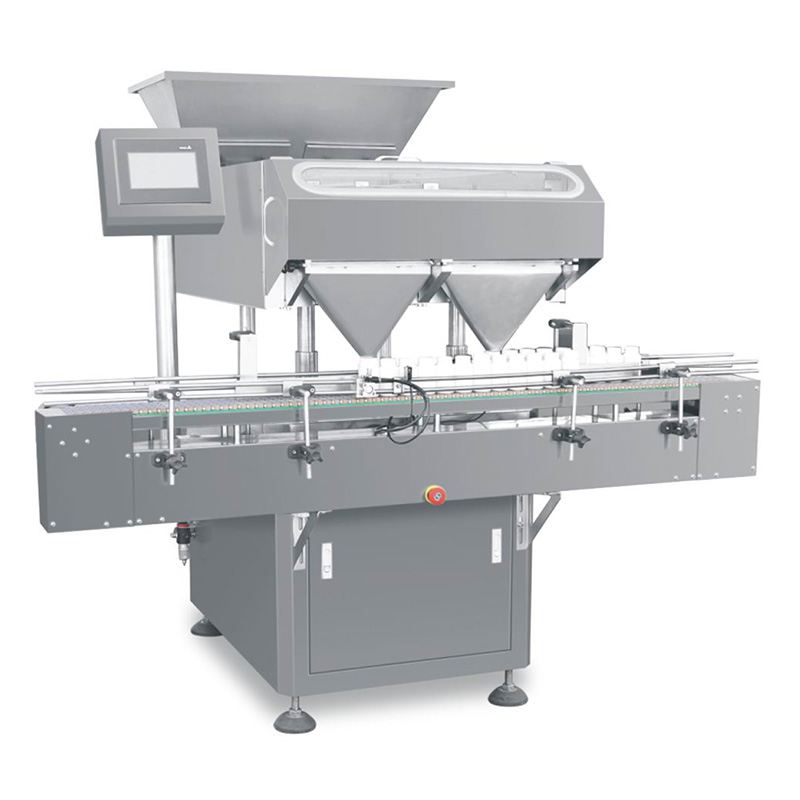
Electronic Gummy Counting Machine
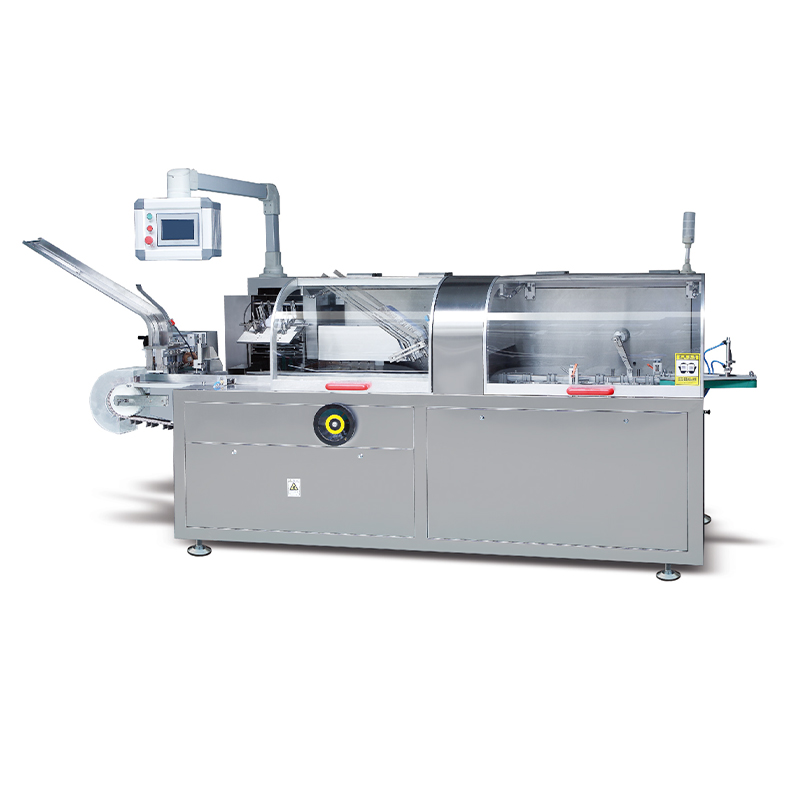
Cartoning Machine
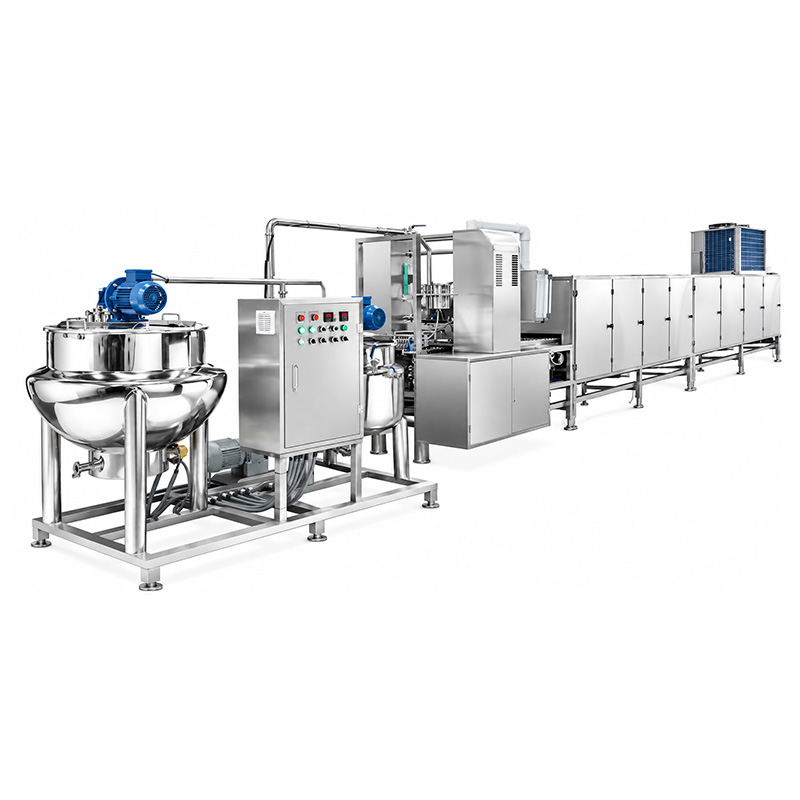
Gummy Line
Not sure which line size?
Tell us your target output in kg per hour and your piece weight. We'll tell you which one, and why.
Send us your formula — or ask us for one
If you have a formula we'll tell you what the line needs to run it. If you don't, we'll send you ours. Free, either way.
Send your floor dimensions
Length, width, height, and where the doors and columns are. We'll draw your line against your actual room.
Reply within one business day. Formulas sent free, whether you buy or not.