
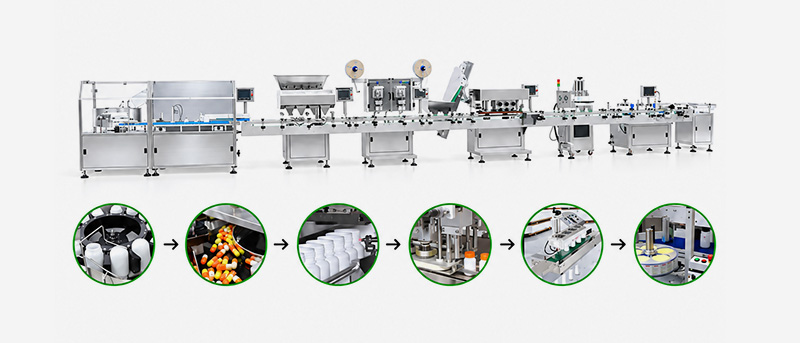
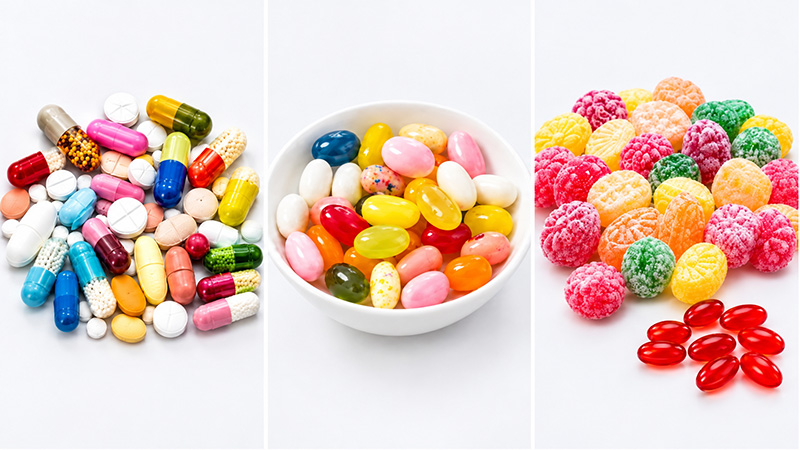
One bottling line can handle tablets, capsules, softgels and gummies when the configuration has been confirmed for those products. Start with size and shape, then check stickiness and dust, followed by bottles, neck openings and caps. A dosage-form name is only the starting point for that assessment.
When products differ substantially, accommodating them all on one line may mean compromises in speed or changeover time. We look at your full product list and production schedule before deciding which products can share a line and which need a separate arrangement.

One line can cover several dosage forms, provided your actual products and packaging materials work with the same configuration. Tablets and capsules can differ significantly, as can softgels and gummies. A general statement that a line handles all four formats is not enough to complete the selection.
Here, sharing a line means running different products in separate batches. Clean, adjust and check the line as required before starting the next product. If you need mixed products in one bottle, or different SKUs running simultaneously, specify that as a separate requirement.
We start by checking these differences:
Even within one dosage form, one sample cannot represent every product. Small round tablets and elongated tablets, or large and small gummies, may need different checks.
List the product differences first. Then we can assess how much of the line they can share.


Product size and shape are the first compatibility checks. Feeding channels, transfer points and the discharge path need to suit the products you intend to run. Once the largest product passes through, you still need to confirm that the smallest product separates, aligns and counts consistently.
Why channels cannot be selected around one product alone
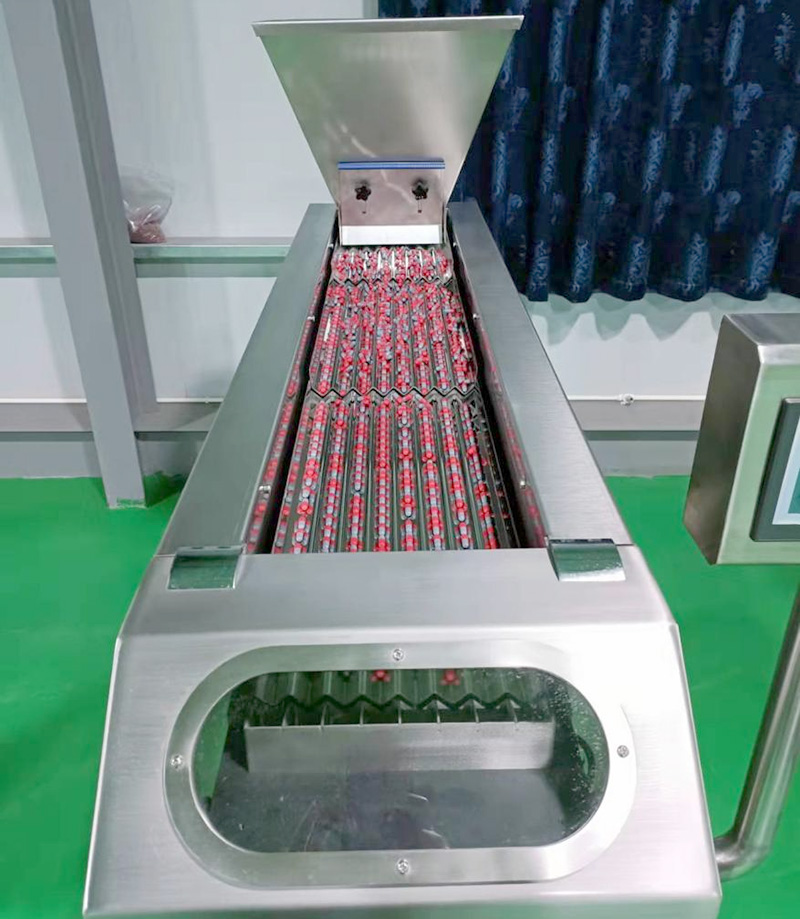
Take the conventional three-stage vibratory feeding arrangement we use. Through staged feeding and buffering, the products gradually spread out, separate and align before entering the counting and discharge areas.
That process needs suitable channels and spacing. Larger products can jam at narrow points. Smaller products need to form a consistent flow that the counting system can identify. Different shapes can also change the orientation in which products move through a channel.
Think of different-sized objects moving along the same track. The track and transfer points must let the large objects pass while keeping the small ones moving in an orderly way. Check both ends of the range.
A successful trial with one tablet does not establish compatibility with a larger gummy. Channel width, separation and the discharge nozzle all need to be checked with samples.
Which size details should you provide?
Once the dimensions fit, check how the products move on the equipment. Sticking softgels or gummies, and dust from tablets, can affect feeding, separation or detection. A shared line needs a suitable arrangement for each of those conditions.
Sticky products: separate them before counting
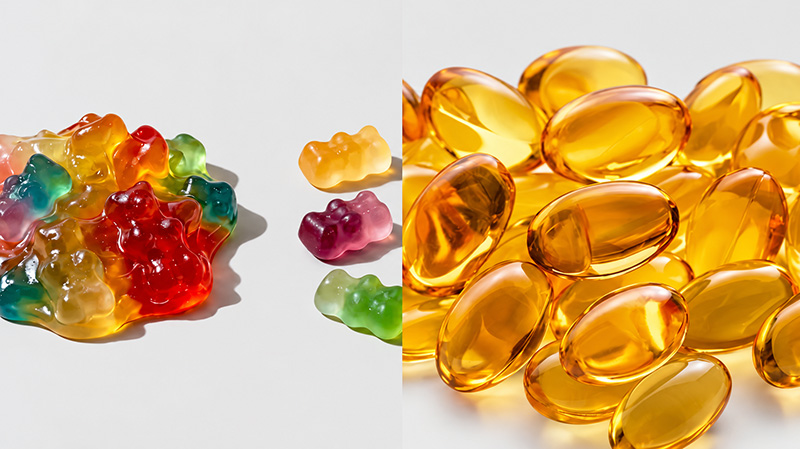
Some softgels or gummies stick together or adhere to product-contact surfaces. A sample falling into the hopper does not establish that it will keep separating, pass through the counting area and enter bottles smoothly.
Honeycomb plates and PTFE surface treatments are options we assess for the product. Use actual samples to confirm whether they are suitable, where they are needed, and whether feeding and separation also need adjustment.
Samples should reflect the condition of the product when it is ready for bottling. Explain the gummy surface treatment and sticking behavior, or the softgel surface condition. An unusually free-flowing sample may hide difficulties that occur in everyday production.
Dusty products: check feeding and detection areas

Some tablets carry dust. It can accumulate on vibratory trays, in channels or around the detection area. It may also interfere with the infrared counting beam and affect consistent operation.
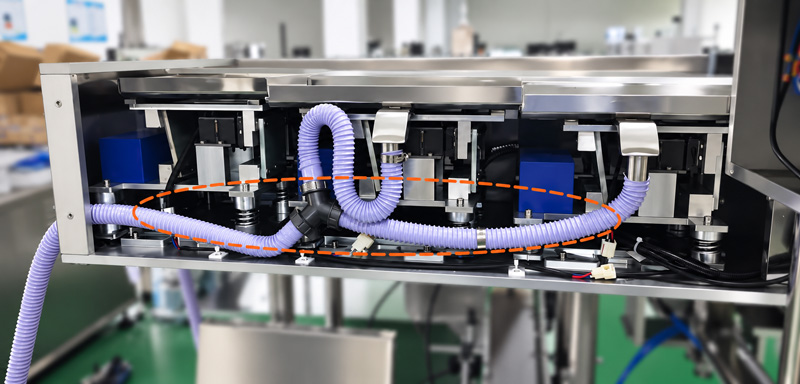
AIPAK’s dust extraction design
Arrange dust extraction to suit the product and configuration, and clean the trays and detection area as the equipment requires. Follow the operating instructions for the selected machine when choosing cleaning methods and steps.
Clear, translucent or unusually shaped products also need sample-based confirmation of the counting method. Our another article ”How to Choose a Tablet Counter: Infrared, Vision Counting, and Vision Inspection” explains the separate capabilities of infrared counting, vision counting and vision inspection.
Nonstick handling, dust control and the counting method each have a role. Confirm them together for a shared line.
Different product conditions need different handling
After confirming that the product can be counted, check whether the packaging materials work through the whole line. Changes in bottle body, opening, material or closure can affect feeding, conveying, filling, capping or labeling. Assess the products and bottle-and-cap details together.
Round and square bottles: check unscrambling and positioning

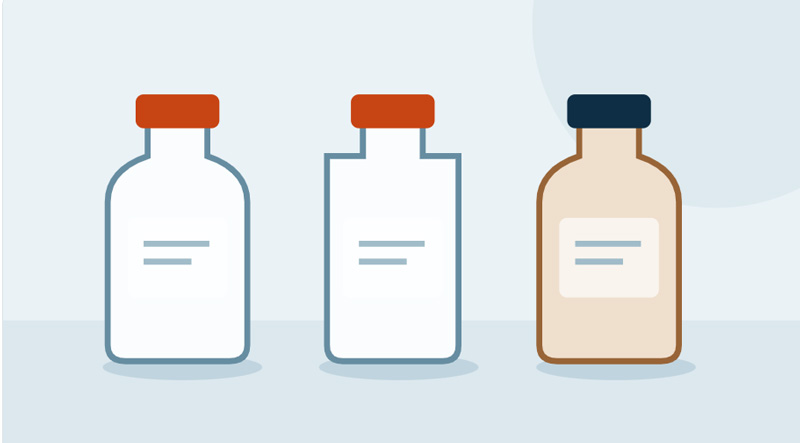
Round and square bottles can need different sorting, guiding and positioning arrangements. Do not assume an unscrambler configured for round bottles will consistently handle square bottles after one setting change.
Even if the bottle remains round, changes in height, diameter or center of gravity need checks at feeding, conveying and labeling. Bottle samples determine whether the line needs adjustments, format parts or a different configuration.
The bottle opening is another filling limit

Separating products at the counter does not establish that they will fill smoothly. Check product shape, fill count, discharge nozzle and bottle opening together, especially for larger or sticky products.
We therefore ask for bottle-opening dimensions as well as bottle-body details. Bottle volume alone is usually not enough to confirm the filling conditions.
Glass bottles need their own feeding arrangement

Glass bottles cannot directly use the same feeding arrangement as the standard plastic-bottle unscrambling configuration discussed here. With this type of configuration, we usually place glass bottles manually on a feed turntable, then check conveying and the downstream stations.
If you need automatic glass-bottle feeding, raise that requirement at the start of the project for separate assessment. The proposal should state the feeding method; glass should not be included in an unconfirmed plastic-bottle compatibility range.
Press-on and screw caps use different actions
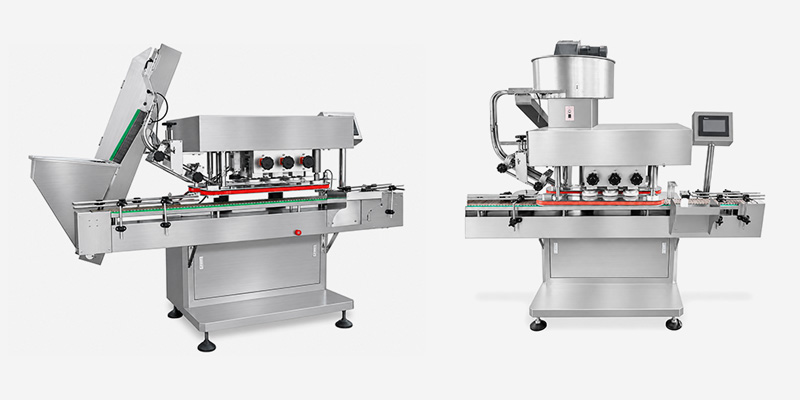
AIPAK’s different capping machines
Press-on and threaded screw caps need different mechanisms and actions. A machine configured for screw capping does not gain another closure method simply through a parameter change.
When the closure changes, check cap feeding and application quality. If induction sealing is required, check the closure and liner combination too.
When products differ substantially, covering more sizes, surface conditions and packaging formats on one line can require compromises in feeding, separation or filling pace. Check the sustainable speed for each product and whether those speeds cover your actual orders.
Do not apply the easiest product’s speed to the entire product list. A result from a conventional tablet is not a bottle-speed basis for a large, sticky gummy.
Alongside continuous running speed, include the cleaning, adjustment and checks needed between products. With many products and small batches, those activities can take a meaningful share of the production window.
We suggest looking at two time requirements: the running time each SKU needs to complete its target quantity, and the time needed for each changeover. Together, they define the schedule required by the shared-line plan.
Our another article “What Line Speed Do You Actually Need for Your Output?” explains how to convert output into required bottle speed. The changeover article examines the specific activities and efficiency of switching products.
Judge a shared-line plan by the actual output and schedule for the full product list.
List all products and packaging materials, and define the intended shared range at the outset. Reduce unnecessary bottle-and-cap differences where possible, plan nonstick handling and dust control, then use representative samples to check the key limits. Record the confirmed range in the proposal for future switching.
Step 1: List the full product range

Include your main products and those you plan to introduce. Alongside the dosage form, provide dimensions, surface condition, pieces per bottle, target output and batch plans.
Step 2: Reduce unnecessary packaging differences
Where product and brand requirements allow, standardizing some bottle formats, openings or caps can make switching less complex. Specify the differences you need to retain when equipment selection begins.
Step 3: Choose samples that cover the key limits

Samples should cover the smallest and largest sizes, products that are harder to separate, and representative sticky, dusty or clear products. Supply the actual bottles and caps you intend to use as well.
Testing only the easiest product tells you little about compatibility with the full list. Agree on the trial scope and assessment criteria before testing.
Step 4: Put the results into the configuration and schedule
Confirm feeding, counting, filling and whole-line conditions for each product, and record the required settings, format parts and cleaning arrangements. Speed results need the product, fill count and trial conditions alongside them, rather than one maximum line-speed figure.
Assess a new, unconfirmed SKU in the same way later. The previous compatibility conclusion only covers the range specified and confirmed at that time.
Send us your product, size, bottle and cap list. Our factory can provide a free initial compatibility assessment and layout proposal to help define what can share the line.
