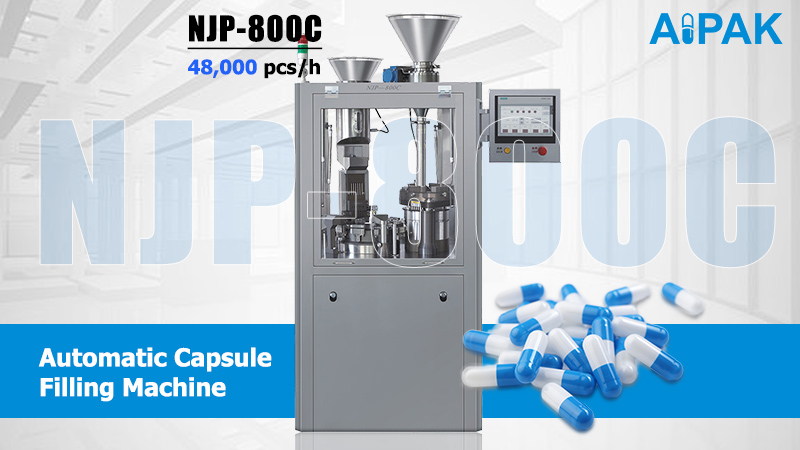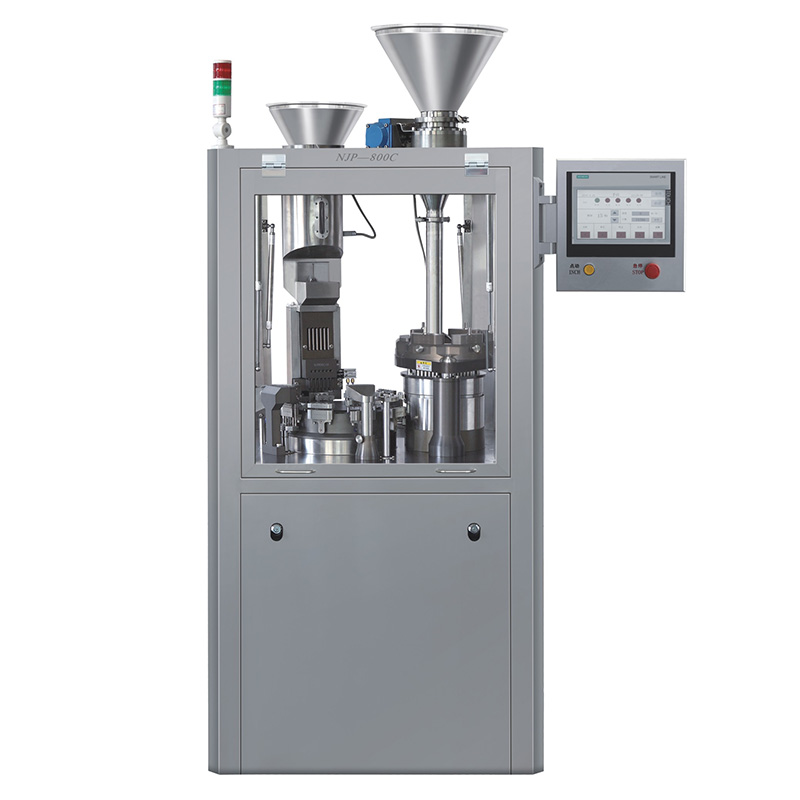
NJP-800C Automatic Capsule Filling Machine — 48,000 Capsules/Hour
Ten stations, 800 capsules a minute, 00# to 5#
The NJP-800C fills 48,000 capsules an hour. It’s where the range moves to the full ten-station layout, which is what holds fill accuracy at that speed.
1.Output: Up to 48,000 pcs/h (Optimized for industrial mass production).
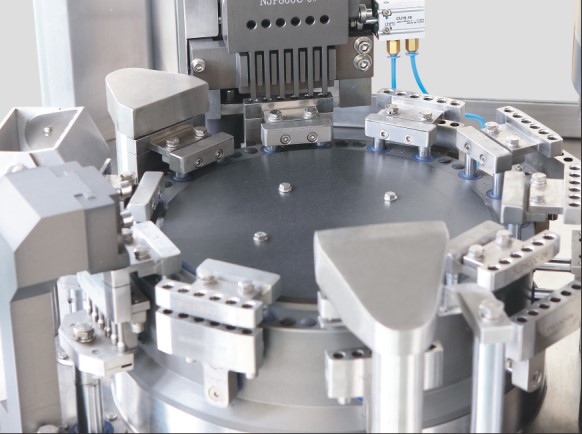
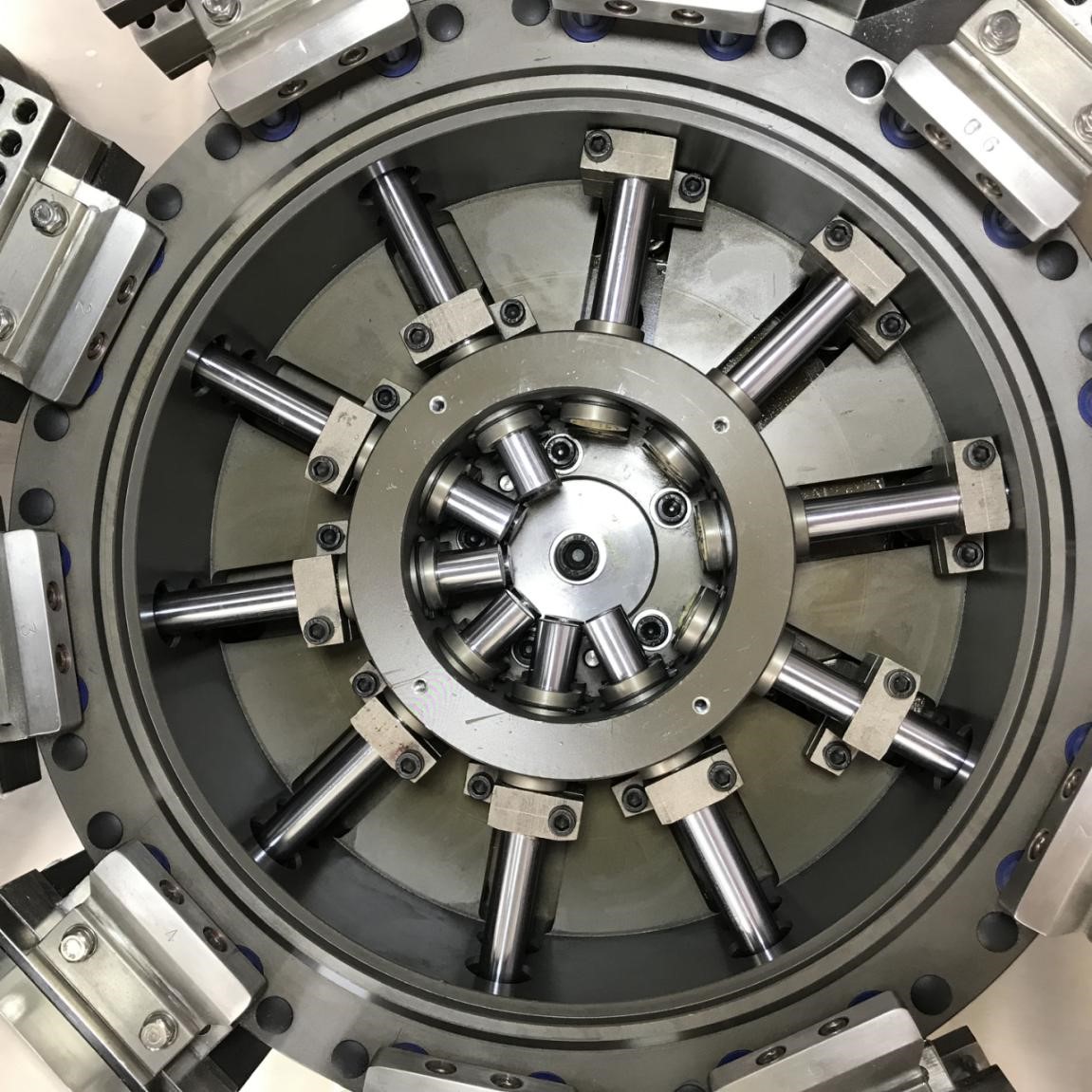
2.10-Station Workbench: Enhanced indexing system for smoother mechanical movement and higher precision.
3.Fill weight accuracy: ±3% on pharmaceutical powder, ±4% on herbal powder
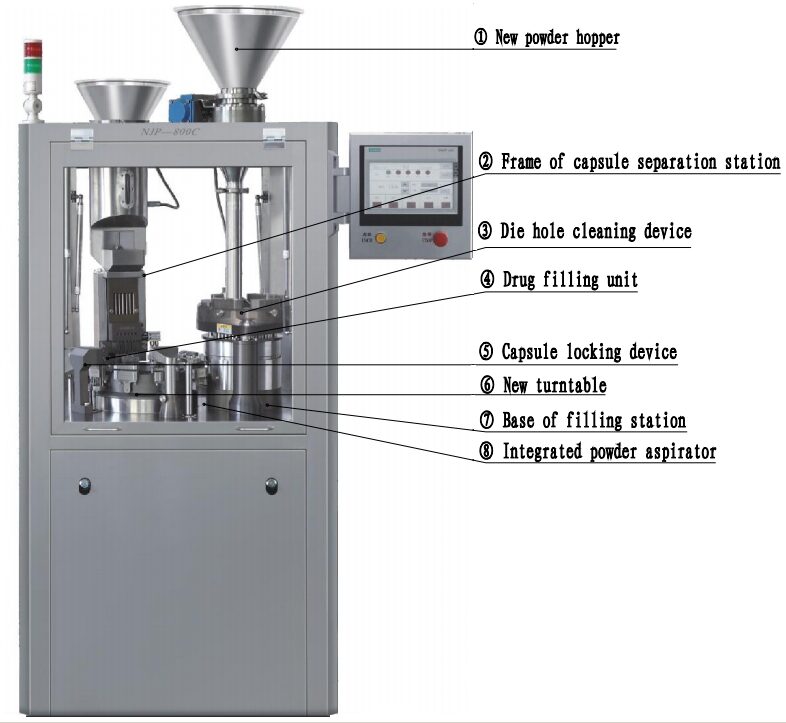
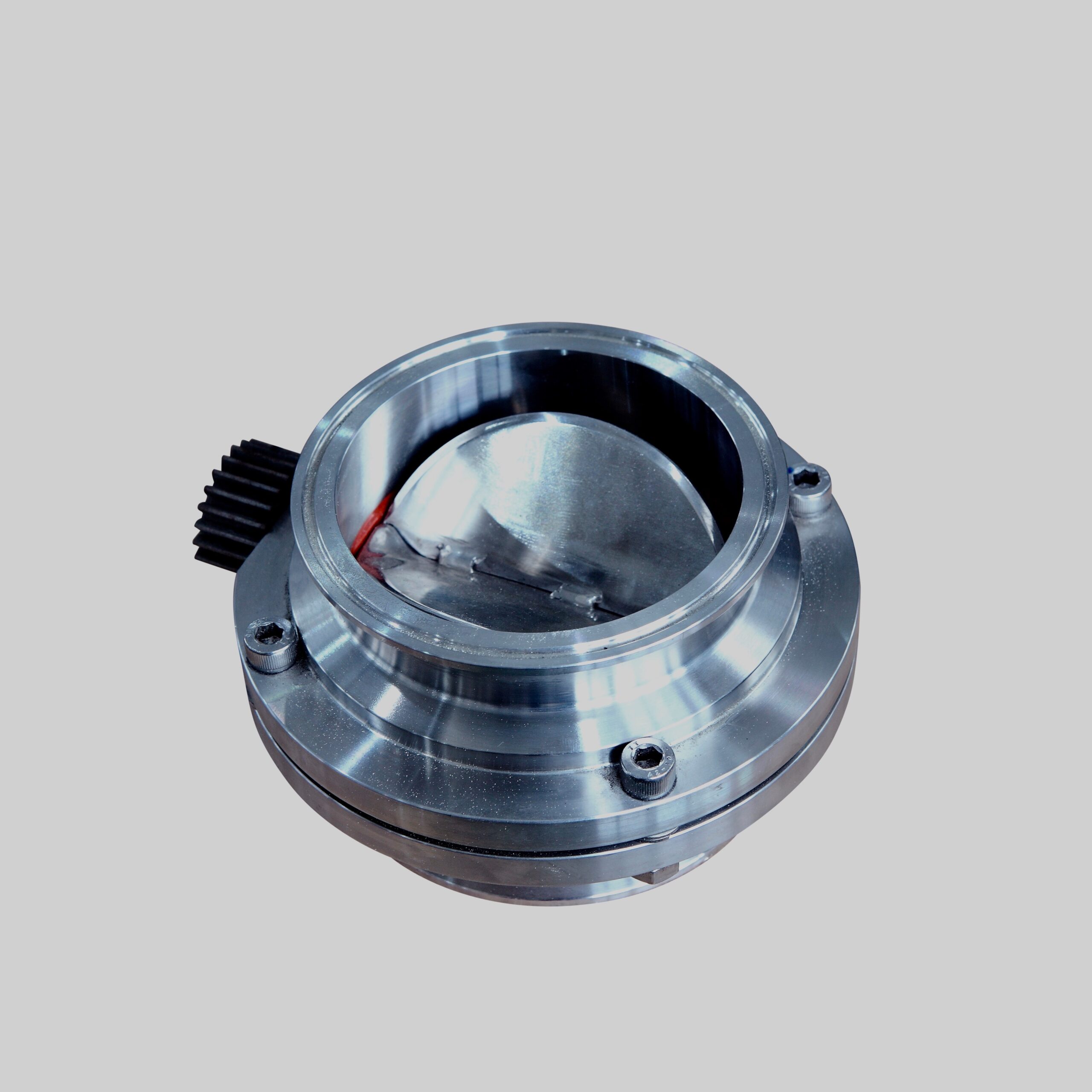
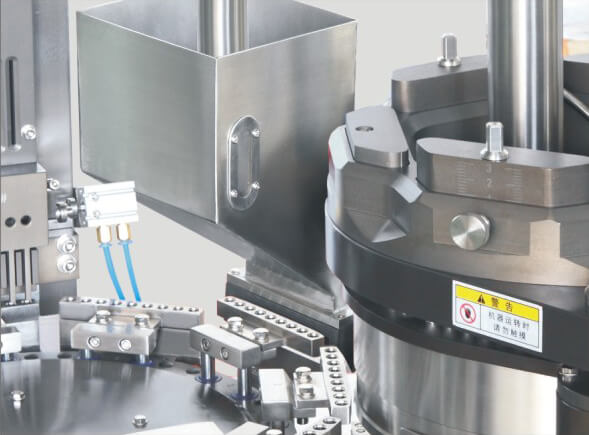
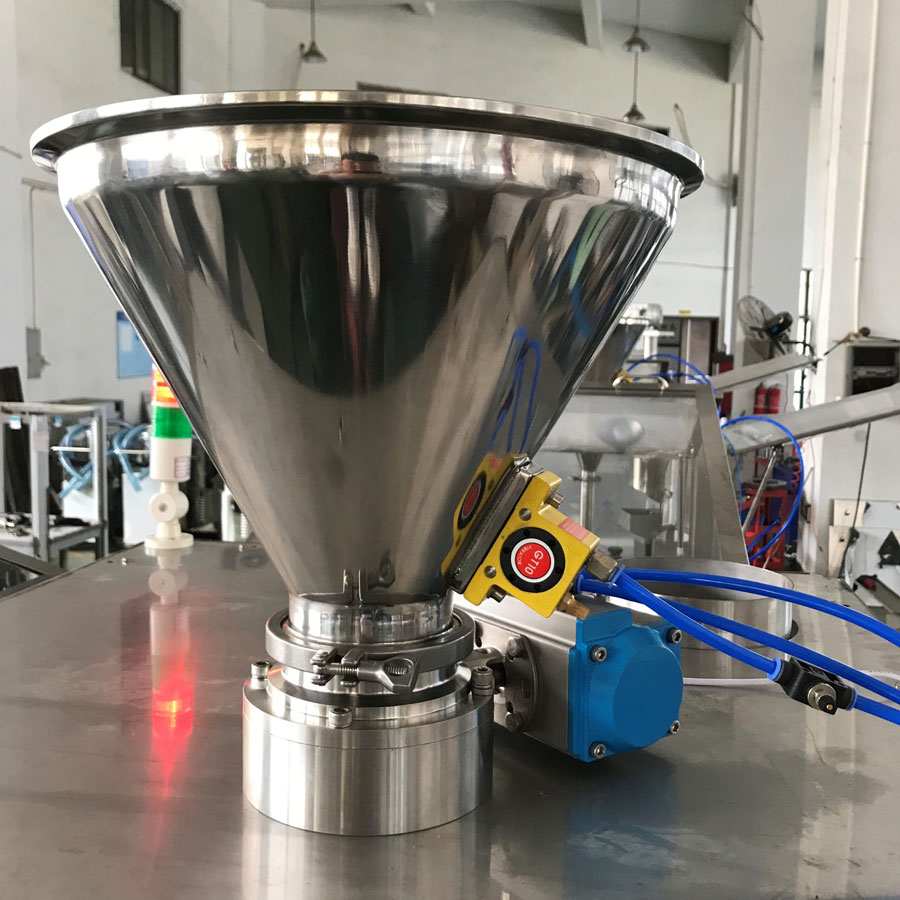
4.Powder handling: Vibration-assisted butterfly valve hopper — force-feeds sticky herbal powders that jam a screw feeder
Is the NJP-800C the right filler for you?
✓ This is a fit if…
- You need around 48,000 capsules an hour as a sustained rate
- You're running product development, stability batches or small commercial runs
- You're filling powder, granule or pellets
- You run 00# to 5# capsules
- Your room holds 21 °C ± 3 °C and 40–60% humidity
✕ Look elsewhere if…
- You need more than 48,000 an hour → the NJP-1200D runs 72,000 for a modest step up
- This is your only machine and you plan to scale within a year → buying the 1200D now costs less than buying the 800C twice
- You're doing bench-scale R&D only → a semi-automatic filler costs a fraction of this
- Your powder is very fine and highly potent → an enclosed rotary machine with dust extraction is not the same as a contained or isolator system. Tell us your OEB band first
- You need under 24,000 an hour → the NJP-400C costs less and does the same job at that rate
- You need more than 48,000 → the NJP-1200D runs 72,000, and adds the dry vacuum pump and automatic lubrication
High-Volume Stability: Reinforced frame for low-vibration running.
Dry Vacuum Technology: Ultra-quiet, oil-free pump for cleanroom integrity.
Compact Power: Integrated Siemens control box saves floor space.
Modular Tooling: Complete size changeover in under 20 minutes.
Smart Safety: Auto-stop for emergency, low material, or door open.
Model | NJP-800C |
Max Output | 48,000 capsules/hour (800 pcs/min) |
Capsule Sizes | 00# to 5# |
Number of Dosing Bores | 6 |
Filling Accuracy | ±3% pharmaceutical powder / ±4% herbal powder |
Suitable Materials | Powder, granule, pellet |
Power Supply | 5.0 kW |
Vacuum Requirement | 40 m³/h, −0.04 to −0.08 MPa |
Dust Extraction | 210 m³/h, 24.5 kPa |
Compressed Air | 5 m³/h, 5–7 bar |
Noise Level | < 75 dB(A) |
Overall Dimensions | 1100×900×2050mm |
Net Weight | 950 kg |
Vacuum pump type | Water Ring Vacuum Pump |
Lubrication | Enclosed Oil Bath Lubrication |
Facility requirement | 21 °C ± 3 °C, RH 40–60% |
Model comparison
Model | Output pcs/h | Type | Best for… |
|
NJP-200C | 12,000 | C | Small batches and product development | View → |
NJP-400C | 24,000 | C | Growing production | View → |
NJP-800C | 48,000 | C | Standard commercial output | You are here |
NJP-1200D | 72,000 | D | Sticky and herbal powders at scale — dry vacuum pump, auto lubrication | View → |
NJP-2500C | 150,000 | C | High-volume continuous production | View → |
NJP-3800C | 228,000 | C | Large-scale manufacturing | View → |
NJP-5500C | 330,000 | C | Very high volume | View → |
NJP-7500C | 450,000 | C | Highest output in the range | View → |
The D suffix is a configuration, not just a speed step. C-type machines use a water-ring vacuum pump and external-groove cam lubrication. The D adds a dry vacuum pump — no water to refill, no scale build-up — plus enclosed internal-groove cams with automatic timed oiling, and a nano anti-corrosion coating over the same pharmaceutical-grade stainless steel. If your formulation is corrosive or your maintenance team is thin, that’s what you’re paying for.
Running at 48,000/h Without Losing Fill Accuracy
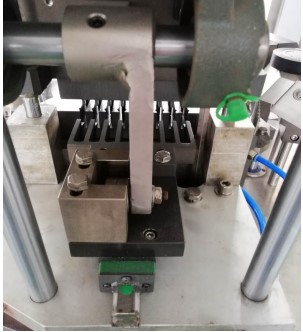
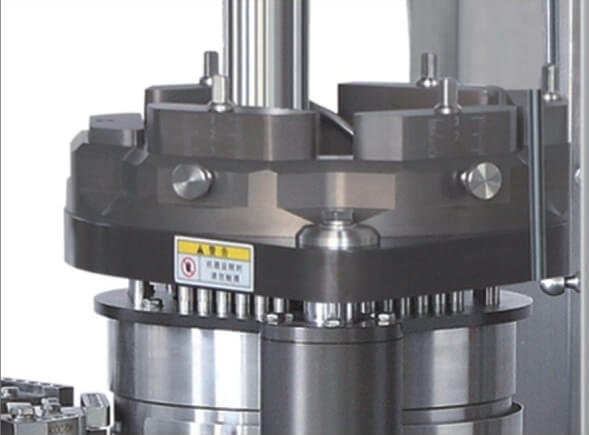
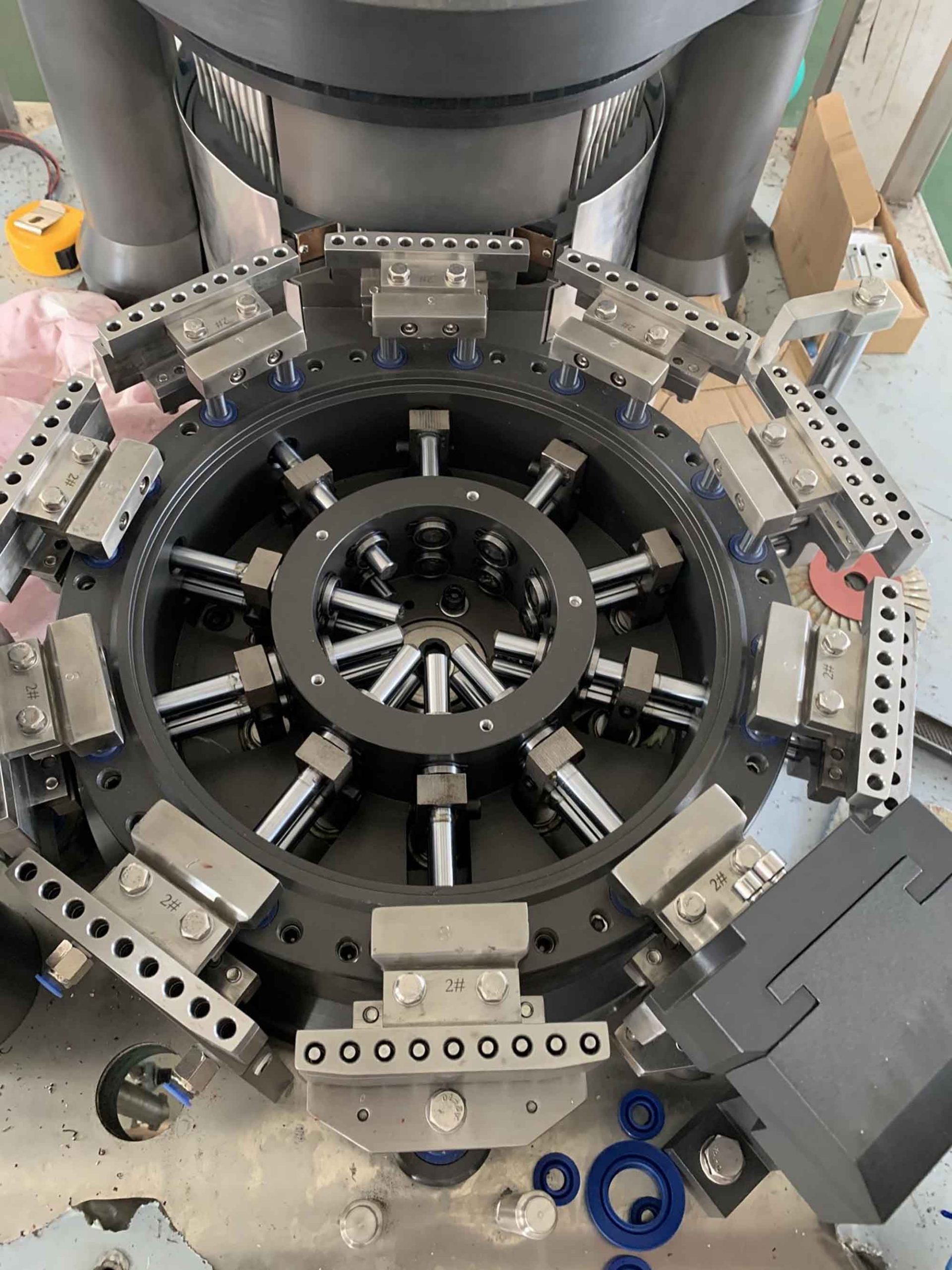
Unlike smaller models, the NJP-800C utilizes a 10-station workflow to ensure more precise capsule separation and locking at higher speeds.
Keeping Powder Out of the Drive System
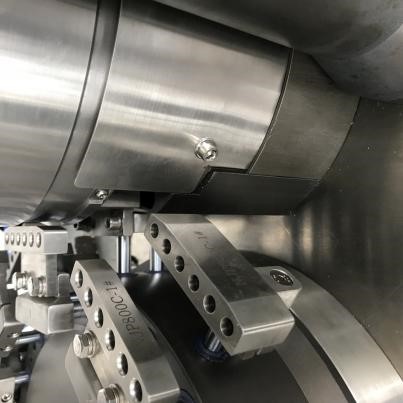
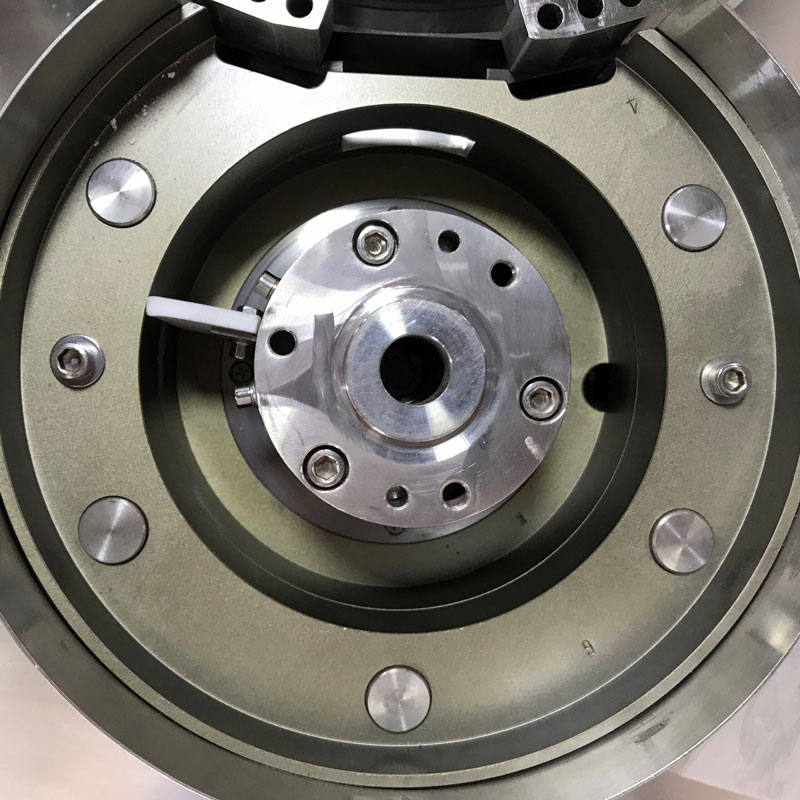
The enclosed turntable runs three years without internal maintenance or manual oiling with a dual-lip skeleton dust ring to prevent powder ingress.
How Much API Are You Losing per Batch?
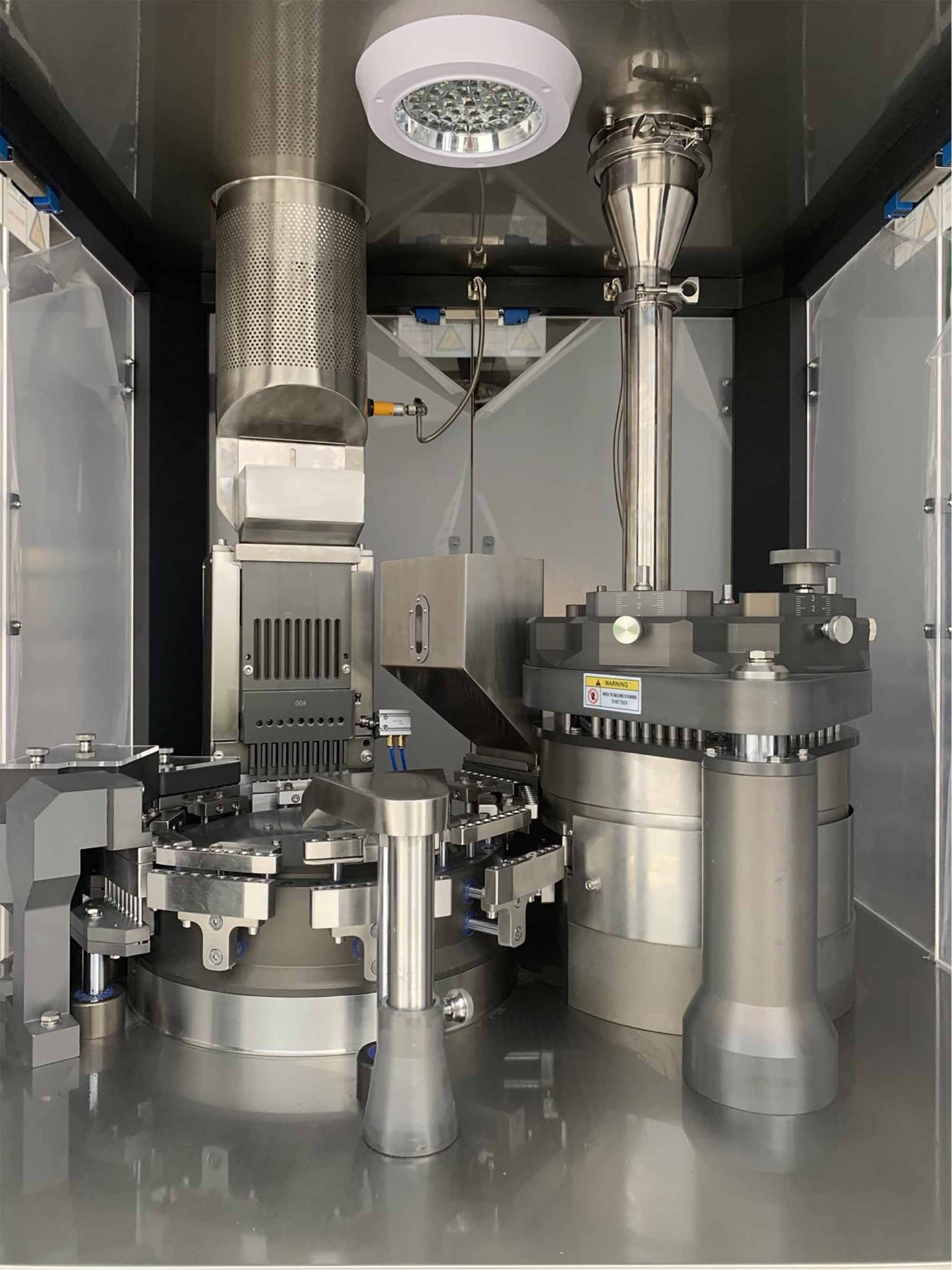
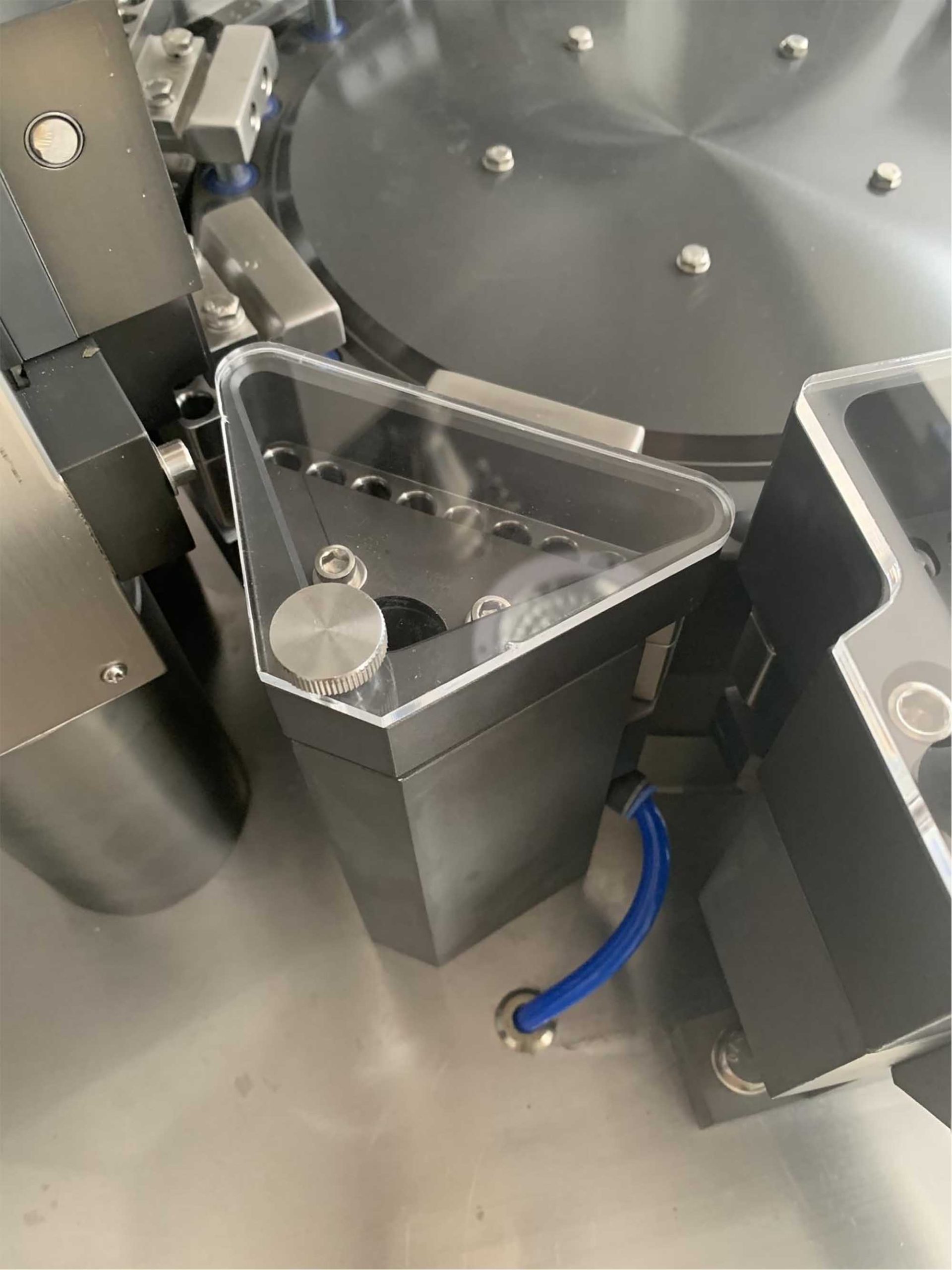
A sophisticated negative-pressure system recycles stray powder, delivering cost savings for high-volume runs.
Siemens PLC and HMI control
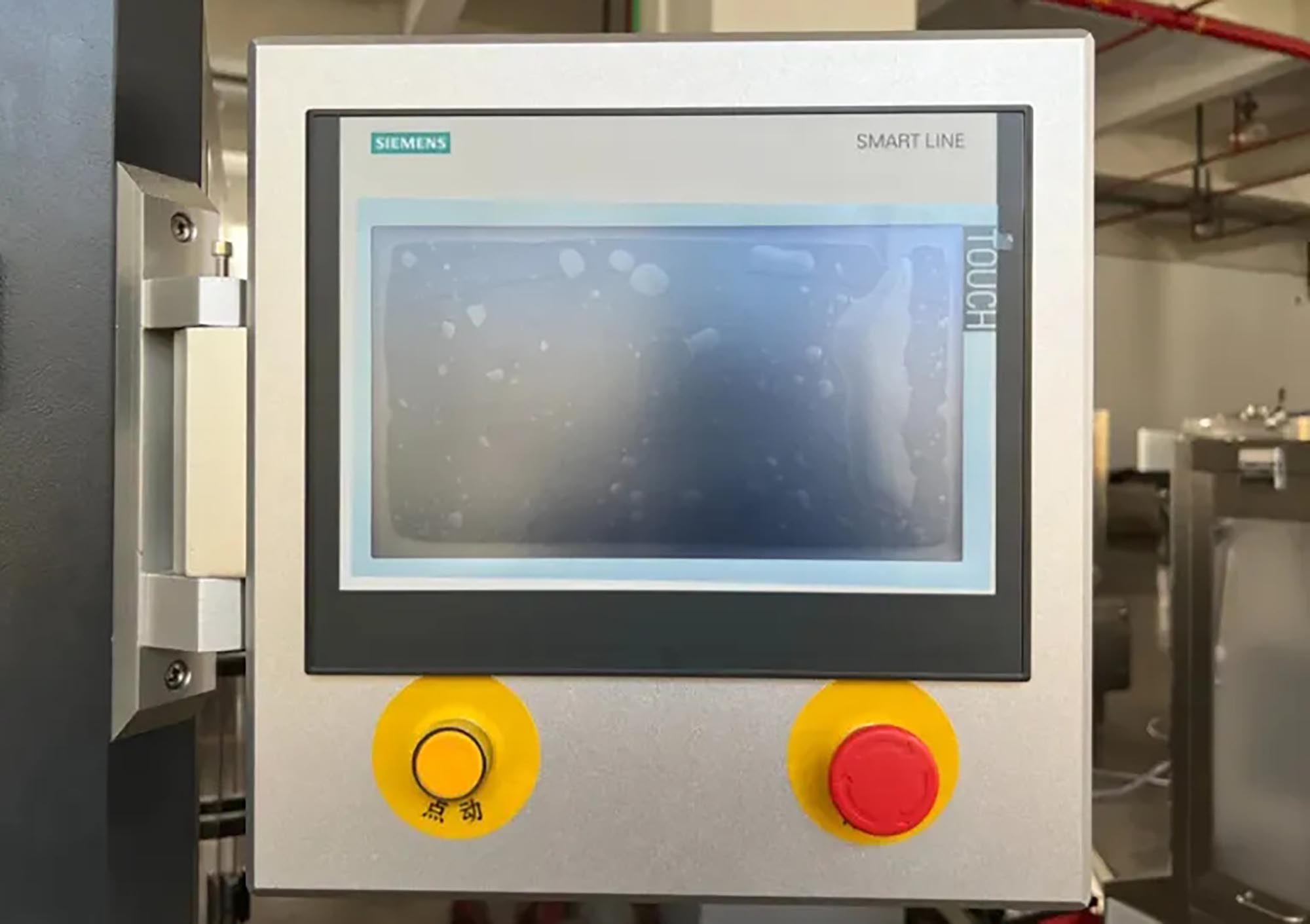
Fully integrated Siemens PLC and HMI touchscreen provide real-time data tracking.
Industrial Applications
Herbal and botanical extracts
Poor flowability is the classic reason a capsule line stalls. Herbal powders arch above a screw feeder outlet instead of falling through it. The butterfly valve hopper vibrates the material past that point — this is the case the NJP series was built around.
Hygroscopic powders
Moisture-absorbing powders stick to the mold holes and stop capsules separating. An air jet clears both mold holes on every rotation, which is what keeps the capsule-feeding success rate from dropping through a shift.
Complex Multi-Material Filling
With advanced 10-station timing, the NJP-800C excels at filling challenging combinations, such as oily powders, hygroscopic extracts, or heavy granules, without speed degradation.
Sustained-Release Pellets
Easily adapts to handle micro-pellets and granules. The high-speed indexing ensures that delicate pellet coatings remain intact during the high-velocity filling process.
Pellets and powder-plus-pellet
One station is left open for an optional pellet dosing unit. A machine bought for powder today can run powder-plus-pellet later without going back to the factory — tell us if that’s on your roadmap and we’ll leave the interface in place.
High-value extracts and concentrates
When the powder costs more than the capsule, recovery matters more than speed. Two separate lines — one for waste capsules, one for clean powder — mean what you reclaim goes straight back into the batch.
Changeover: what you change and how long it takes
What you changed | What gets adjusted | Roughly how long |
Same capsule, different fill weight | Tamping pin depth on the dosing station | 15-30mins |
Fill weight beyond the adjustment range | Swap the dosing disc for a different thickness | 15-30mins |
Different capsule size | Full tooling set: upper and lower modules, tamping pins, capsule tubes, alignment combs, feeding combs, dosing disc, alignment bars | 15-30mins |
Dosing disc thickness is the second lever. When tamping depth reaches its mechanical limit and you still can’t hit your target fill weight, you change the disc rather than fighting the machine. It’s a physical volume change, not a calibration.
The gaps matter more than they sound. Dosing disc to copper ring: 0.08–0.12 mm. Isolation block to disc: 0.05–0.1 mm. Every disc change means resetting the second one. Too tight and the disc binds; too loose and powder leaks and your fill weight scatters.
Cleaning is the long part. Between products, the powder hopper, dosing ring, upper and lower modules, tamping pins and dosing disc all come out. Parts above the machine table are cleaned with alcohol on lint-free cloth — never gasoline, kerosene, hydrogen peroxide or acetone.
What to check before you order — from any supplier
Ask to see the machine running your powder, not a demo powder
Lactose and starch run beautifully on everything. Ask for a video of your own material, or send a 2 kg sample for a trial run. Any factory that won't do this is telling you something.
Ask what the sustained rate is, not the maximum rate
Catalogue output figures are peak numbers. Ask what the machine holds over an eight-hour shift with your fill weight and your capsule size, and what the reject rate looks like at that speed.
Ask for the operating manual before you pay
If the adjustment procedures aren't in it — tamping pin height, dosing disc clearances, vacuum settings — your operators will be calling the factory every time something drifts.
Ask which parts are wear parts and what they cost
On a capsule filler that means seals, tamping pins and the dosing disc. Get the list and the prices in writing with the quotation.
Ask what the electrical supply actually is
Most machines from Asia ship at 380V / 50Hz as standard. Confirm in writing that yours will arrive configured for your plant, and whether the output figure still holds after the change.
Ask who installs it and who trains your operators
"We provide installation support" can mean an engineer on your floor or a PDF. Ask which, ask for how many days, and ask what happens if commissioning takes longer.
Why Choose AIPAK
Why buy this machine from us
Accuracy you can check Fill weight accuracy is ±3% on pharmaceutical powder, ±4% on herbal powder. We run your material at factory acceptance testing and give you the actual figures for your formulation — not a number off a brochure.
The manual your operator can actually use An English operating and maintenance manual with the adjustment procedures in it — tamping pin height, dosing disc gaps, vacuum pressure. Ask to see it before you order.
Installation and training on site Our engineers install it, dial it in on your powder, and train your operators before they leave.
Factory-direct engineering You buy from the plant that builds the machine. Custom tooling, feeder configurations and change parts are a conversation with our engineers, not a request passed down a chain.
NJP-800C Industrial Performance FAQ
At a high output of 48,000 capsules/hour, the 10-station workbench allows for more gradual mechanical indexing. By adding more transition phases for capsule separation and locking, it significantly reduces centrifugal force and vibration, ensuring higher filling precision and less mechanical fatigue during continuous runs.
Yes. The NJP-800C is built with a reinforced internal drive and an upgraded Siemens thermal management system. The fully enclosed rotary table with our proprietary dust-proof sealing prevents powder ingress, allowing the machine to maintain peak velocity in heavy-duty environments without overheating or precision drift.
On the contrary, it is designed for maximum uptime. The imported dry vacuum pump is oil-free and requires only a simple 1-minute filter cleaning per shift. This eliminates the messy oil changes and potential contamination risks associated with traditional water-ring or oil-sealed pumps.
21 CFR Part 11 compliance is achieved by the user’s quality system, not by equipment alone. What we provide is the technical foundation: the Siemens PLC and HMI can be configured with user-level access control, electronic signature prompts, and a tamper-evident audit trail that records every parameter change with user ID and timestamp. Records can be exported for review. We supply the configuration documentation your validation team needs to complete Part 11 assessment.
We provide a comprehensive “Validation Support Package” tailored for international exports. This includes 3.1 material certificates for all 316L contact parts, and full mechanical/electrical schematics to ensure a smooth and compliant integration into your quality management system.PQ is to be executed by the customer; we can provide support.
By integrating the Siemens control box directly into the machine body rather than using a bulky external cabinet, the NJP-800C saves approximately of valuable cleanroom floor space. This “all-in-one” design simplifies installation and optimizes the airflow within your facility.
For standard NJP-800C models, our lead time is 4-6 weeks. Shipping to major U.S. ports (e.g., LA or New York) typically takes an additional 3-4 weeks.
Customers Also Interested In...
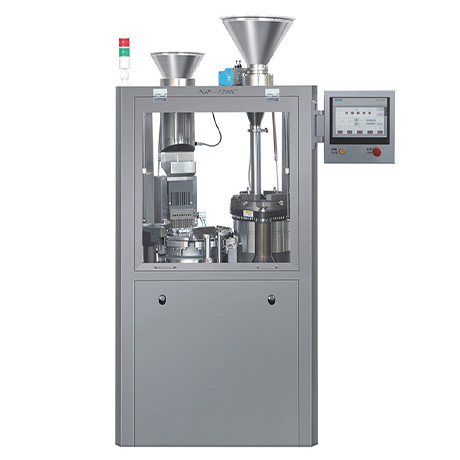
NJP-1200D Automatic Capsule Filling Machine
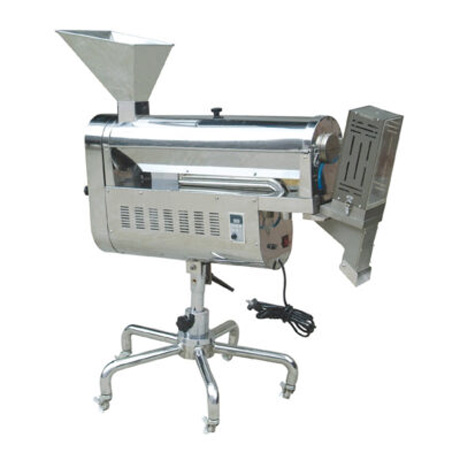
Capsule Polishing & Sorting Machine
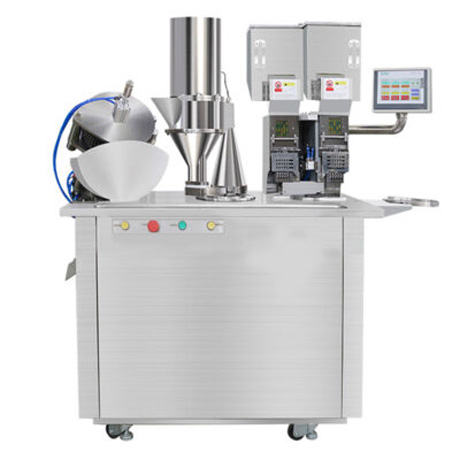
NJP-400C Automatic Capsule Filling Machine
Send us your powder details and your target output
We’ll come back with a machine recommendation, tooling list and a price. If this model isn’t the right size for you, we’ll tell you which one is.
- 24-Hour Response Guarantee
- Free Technical Consultation
- Direct Factory Pricing