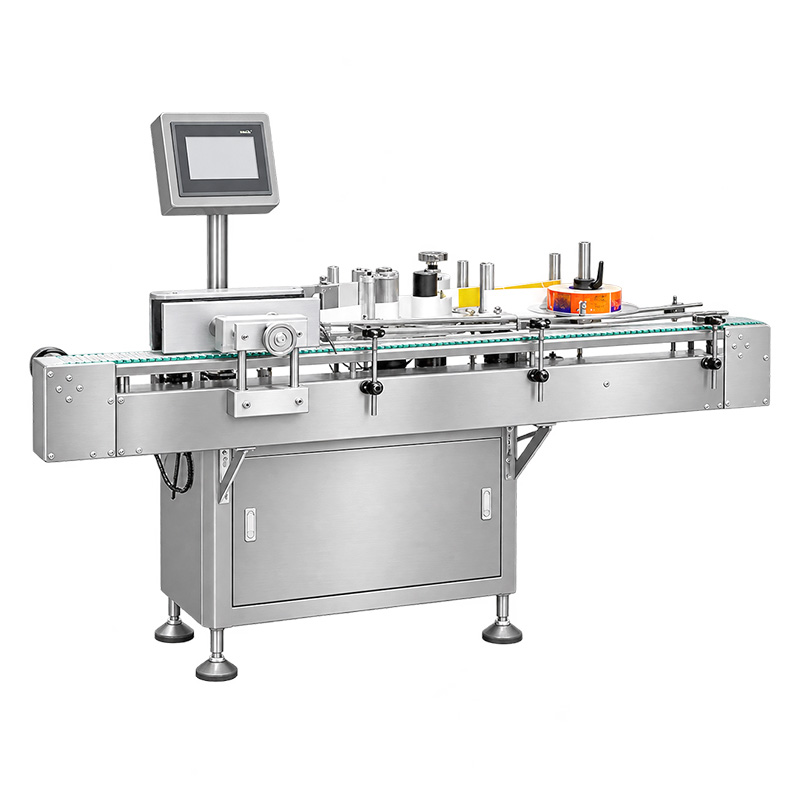
Home » APC-T4 Ampoule and Vial Labeling Machine
APC-T4 Ampoule and Vial Labeling Machine
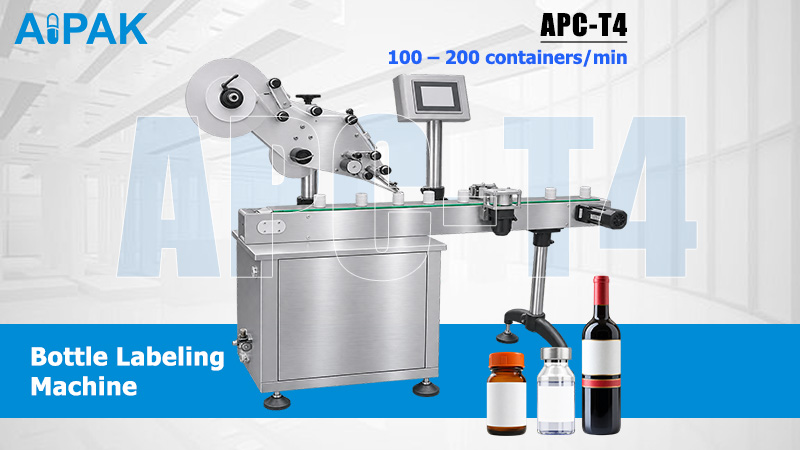
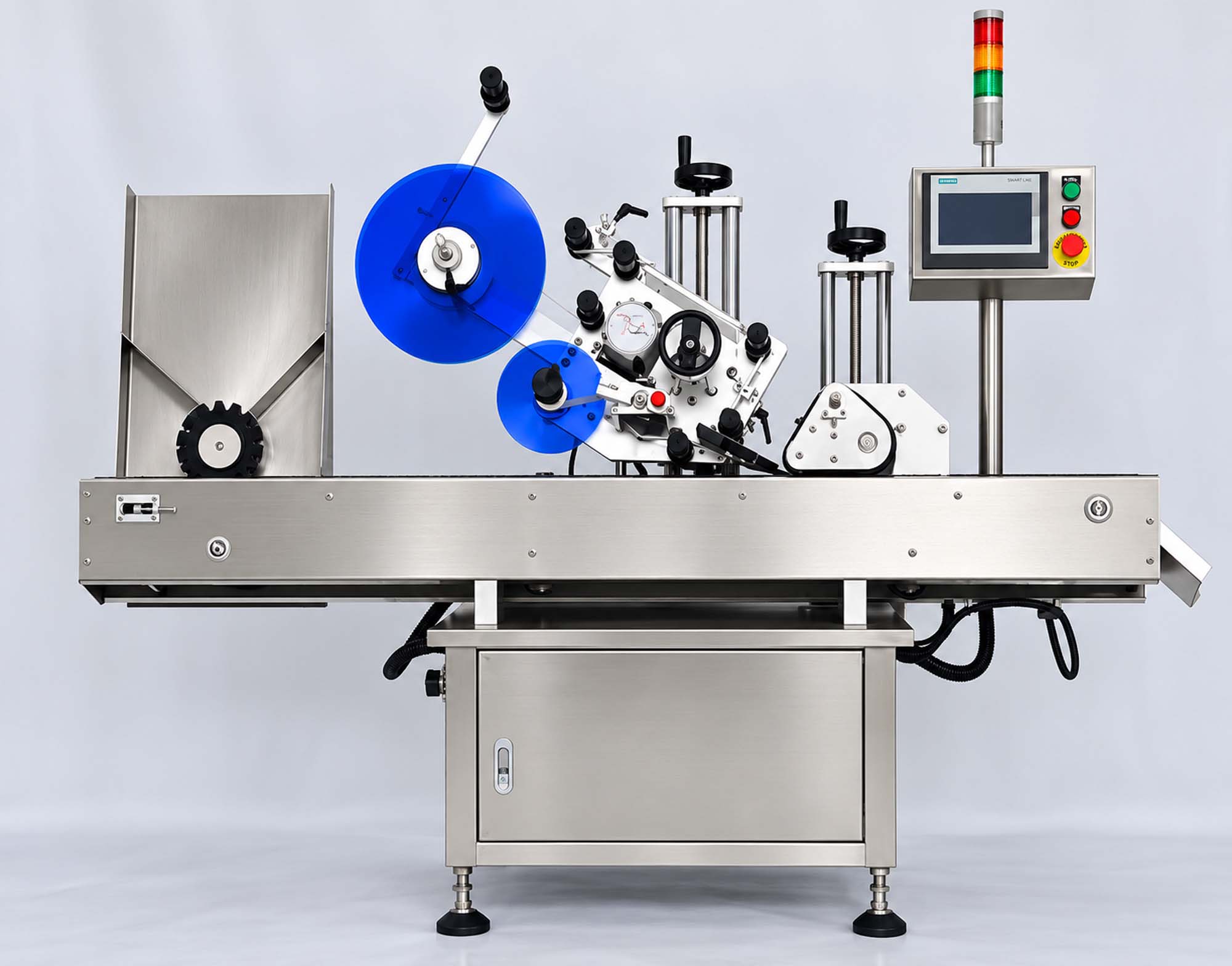
The APC-T4 labels ampoules and small liquid vials horizontally, at 100 to 200 per minute. Small glass containers chip and scuff when they tumble. This machine feeds them from a vertical hopper onto inclined rollers, so each one self-aligns and stays supported through the whole pass.
- 100 to 200 containers per minute— the fastest of our four labelers
- Horizontal handling— glass stays supported, breakage stays low
50 stored recipes — load a saved job instead of re-dialing settings
Direct from our factory | Lead time confirmed in your quote | Installation and training available | Spare parts listed in your quote
Is the APC-T4 the right labeler for you?
✓ This is a fit if…
- You're labeling ampoules, oral liquid vials or liquid shot bottles
- Your containers are glass and breakage is a real cost
- You need 100 to 200 per minute — faster than a standard bottle labeler
- You run many small SKUs and changeover time eats your output
- You want the machine to skip empty positions rather than fire a label at nothing
✕ Look elsewhere if…
- You're labeling standard supplement bottles → the APC-T1 wraps round bottles at 20 to 120 per minute for less
- Your containers are square → the APC-T2 indexes between panels
- You're labeling boxes or lids → the APC-T3 applies to a flat top face
- Your containers are too large for horizontal handling → send us dimensions and we'll tell you where the limit sits
- You need two labels on the same vial → tell us the arrangement and we'll confirm whether this runs it
Technical specification
Parameter | Value | What this means for you |
Labeling speed | 100 – 200 containers / min | The fastest of our four labelers |
Container types | Ampoules, oral liquid vials, shot bottles | Small glass containers handled horizontally |
Container size range | Φ15 – Φ150 mm | Your vial has to fall inside this. Other sizes on request |
Label width range | 15 – 130 mm | Check against your artwork |
Label roll core / outer diameter | 76 mm (3 inch) | Confirm with your label printer before you order |
Labeling accuracy | ±1.0 mm (Depending on bottle and label squareness) | How square the label lands |
Stored recipes | 50 | Load a saved job rather than re-finding settings |
Label feed drive | PLC with micro-stepping motor | Consistent feed length across a roll |
Sensors | Label and container sensors | Skips any position without a container, so no label is wasted on an empty slot |
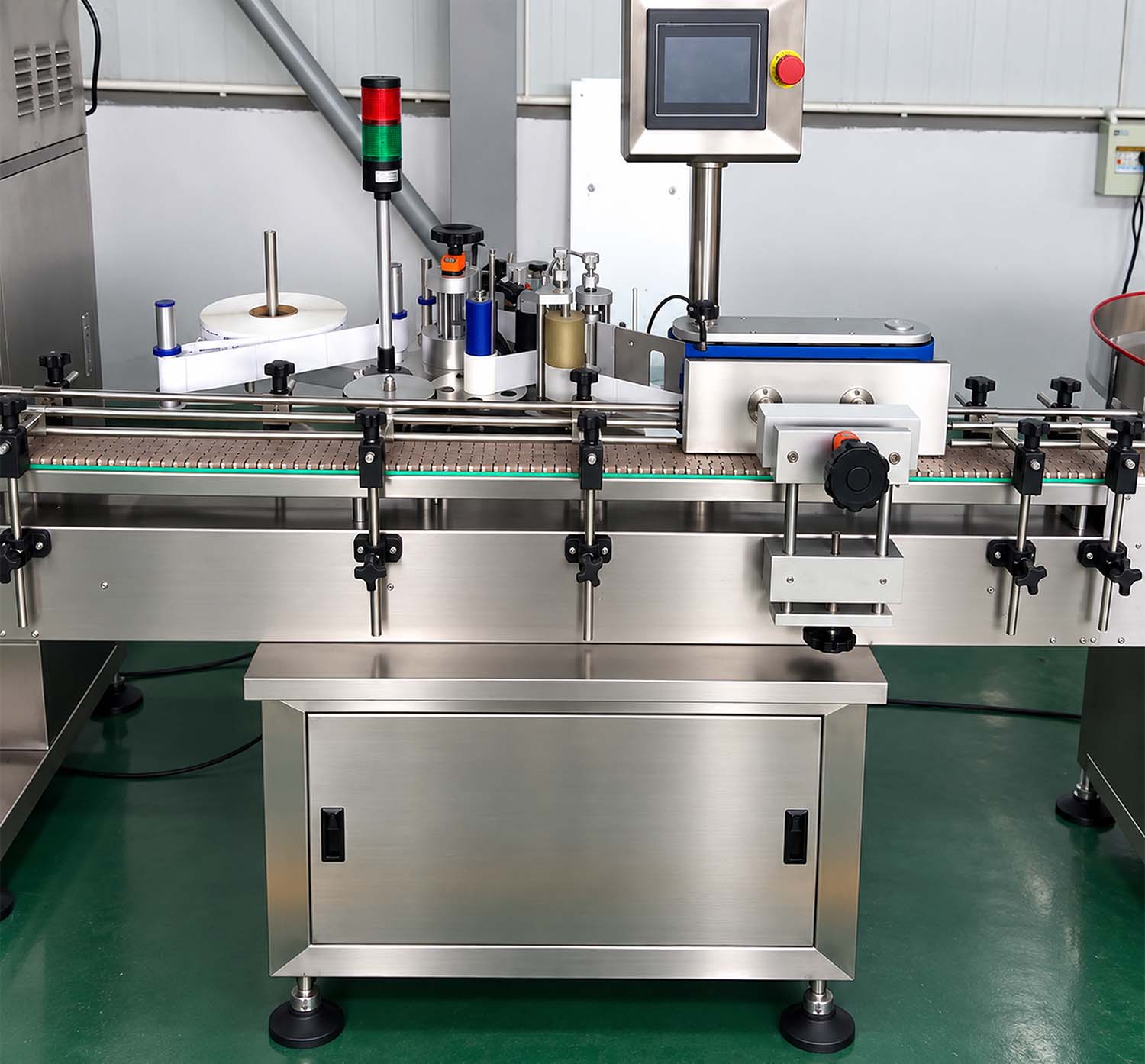
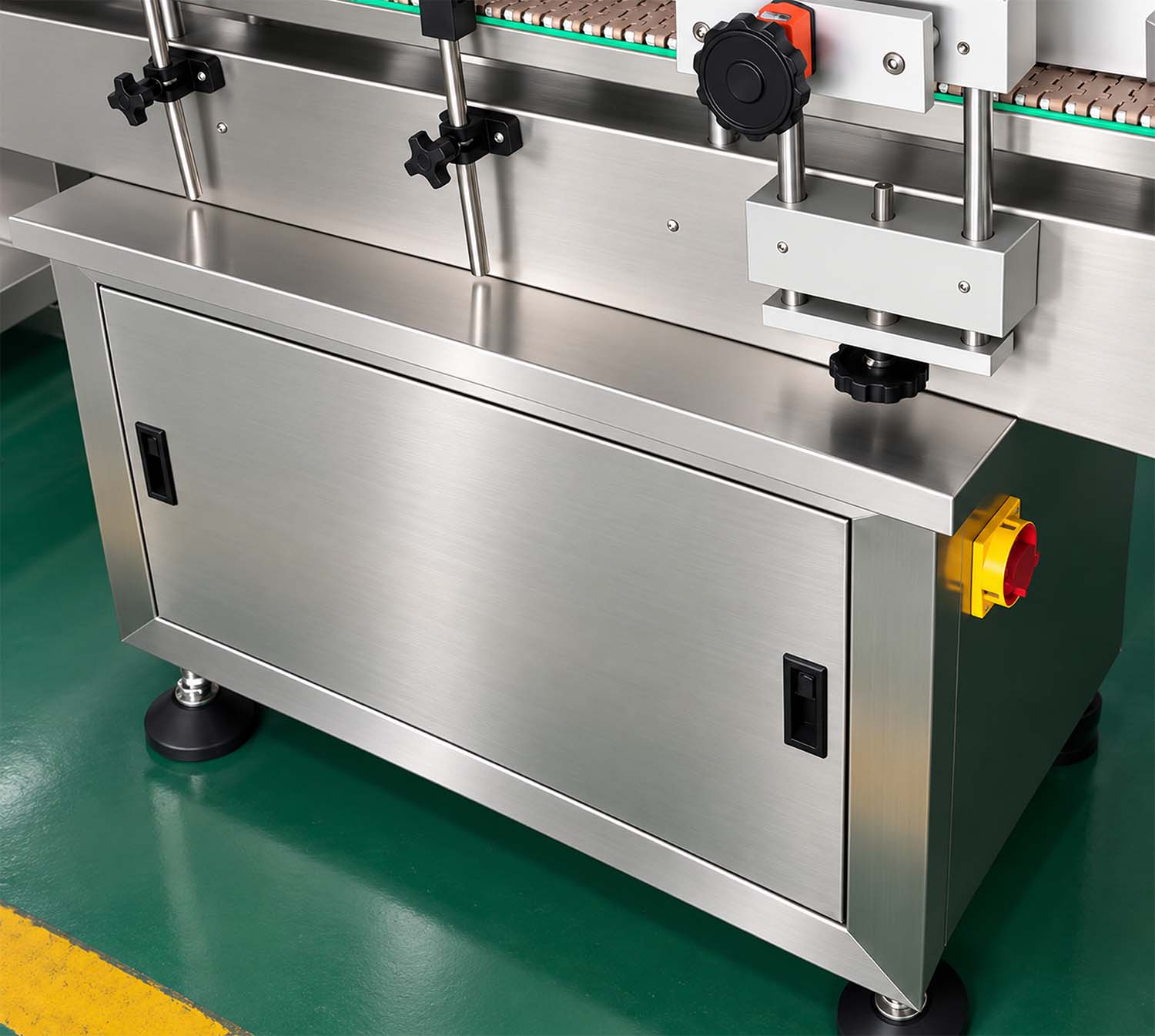
Body material | 304 stainless steel and T6 aluminum alloy | Washdown-ready, non-rusting |
Coder | Optional: ribbon date coder, inkjet or thermal transfer printer (TTO) | Prints the batch number and dates on the label as it’s fed |
Power | 0.15 kW, 60 Hz | Built to your U.S. supply. We confirm the voltage with your quote |
Compressed air | 0.4 MPa, 0.2 m³/h | Small demand |
Machine dimensions | 1950 × 1100 × 1300 mm |
|
Machine weight | 200 kg |
Model comparison
Model | Speed | Containers | Best for… |
|
APC-T1 | 20–120 btl/min | Round bottles | One wrap-around label on a round bottle | |
APC-T2 | 20–120 btl/min | Square, flat, round | Two, three or four panels | |
APC-T3 | 20–120 pcs/min | Flat surfaces | Flat top of cartons, lids, trays and pouches | |
APC-T4 | 100–200 btl/min | Ampoules, vials | Small glass containers handled horizontally | You are here |
Horizontal handling, lower breakage
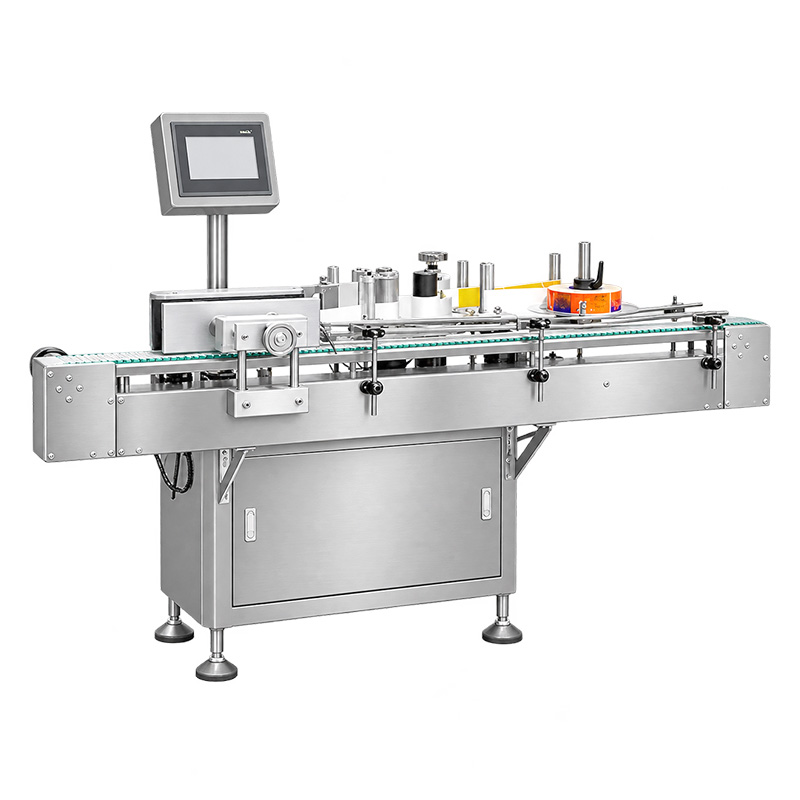
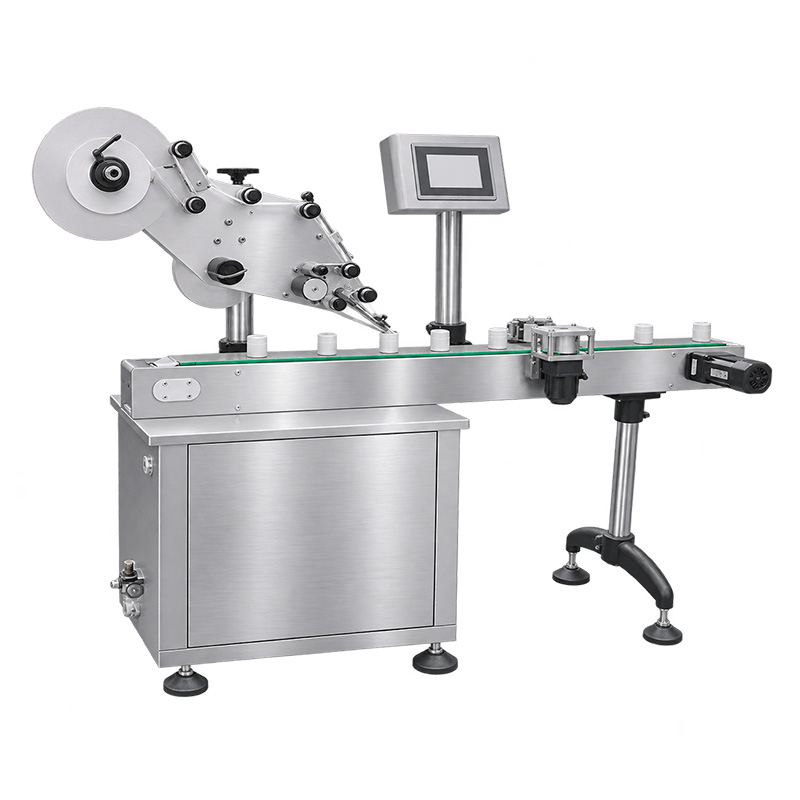
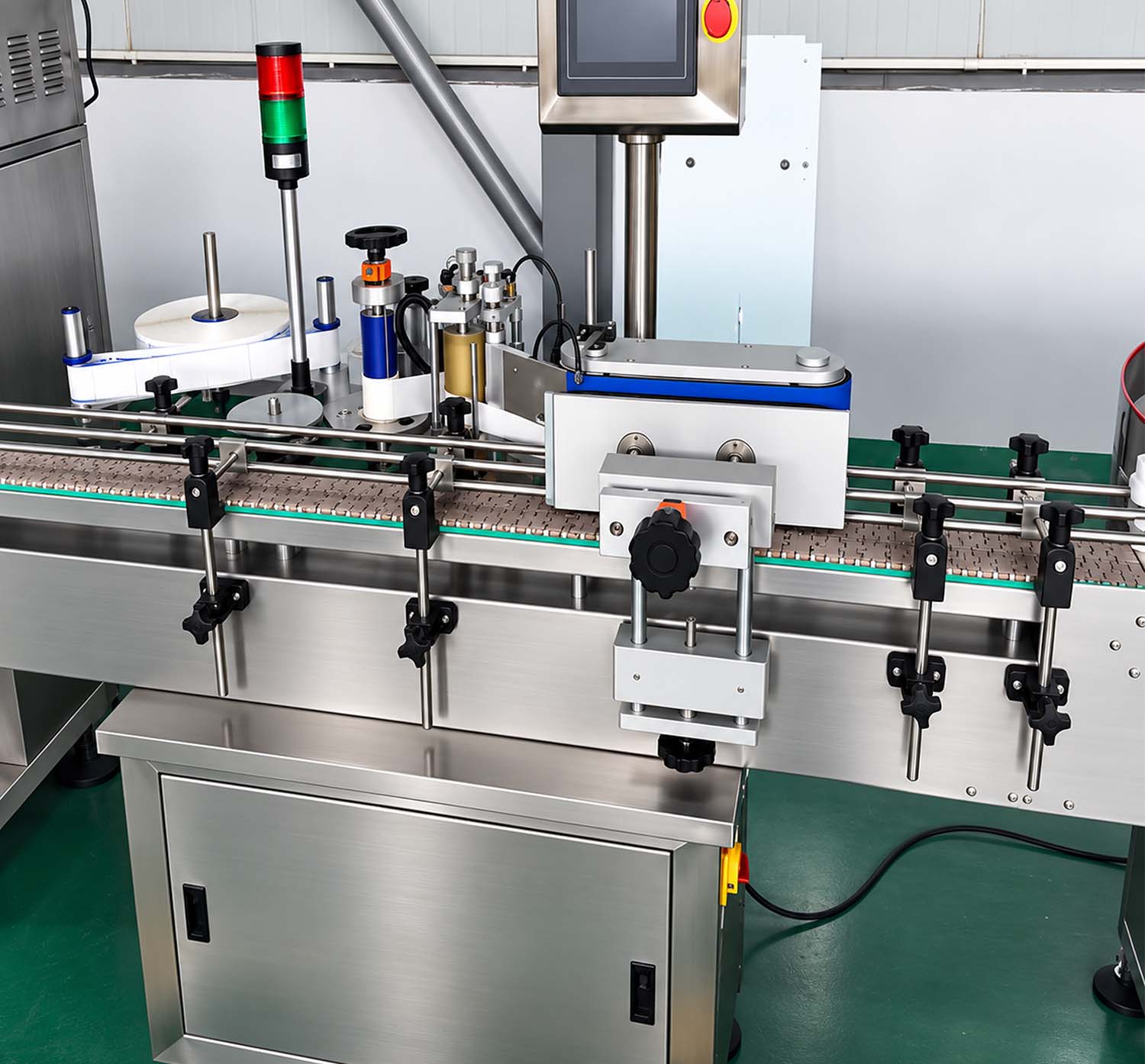
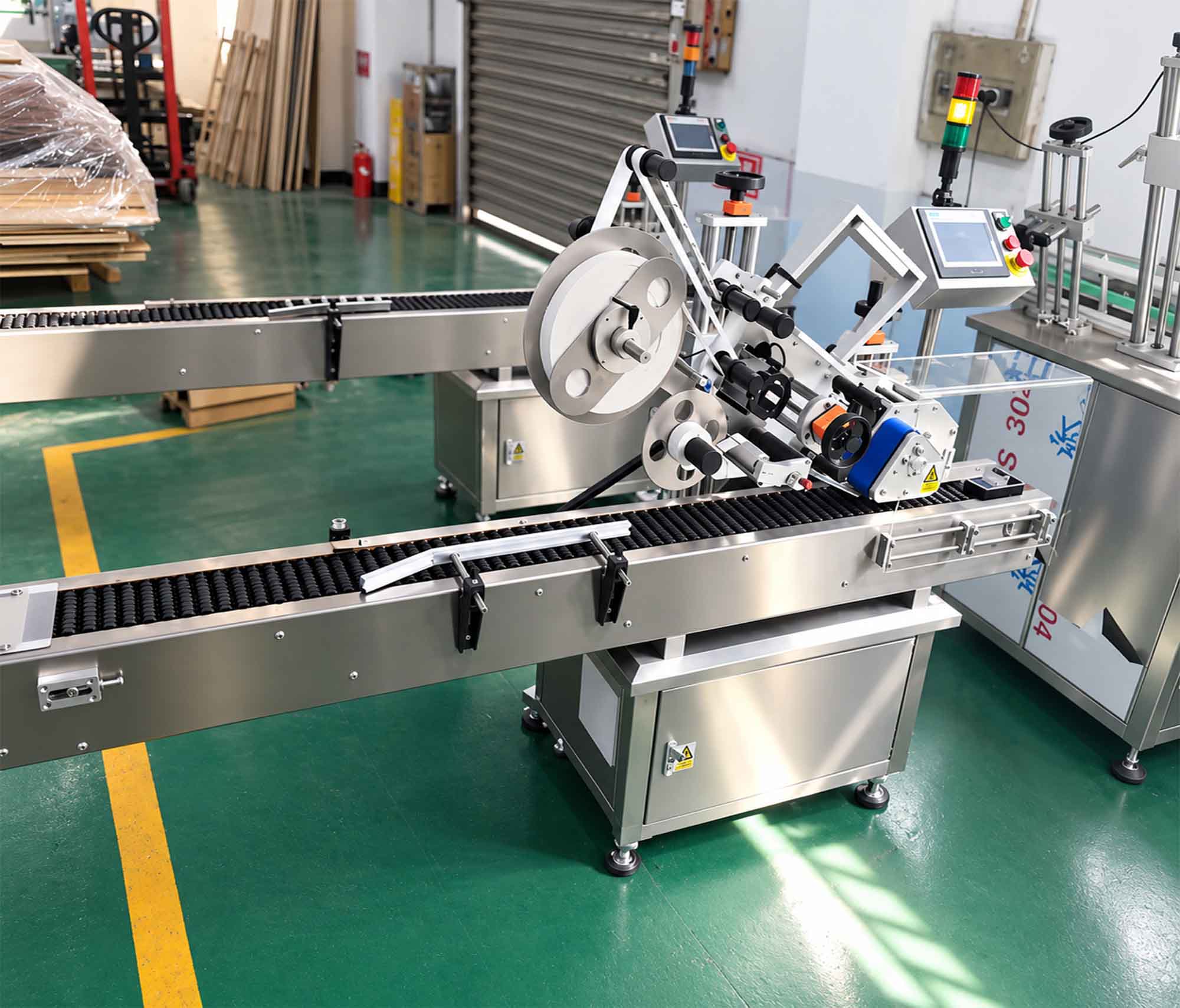
Containers feed from a vertical hopper onto horizontal rollers, with the conveyor chain inclined so each one self-aligns before it reaches the applicator.
For small glass, how the container is handled matters more than how the label is applied. A machine that tumbles vials to orient them will chip some of them, and you pay for that every batch.
Flexible three-axis applicator
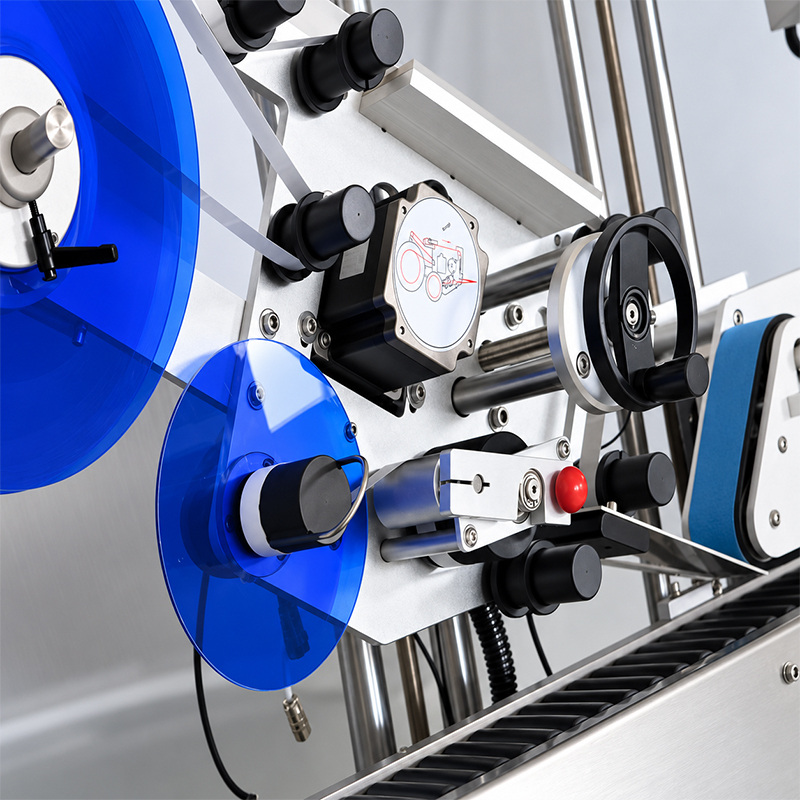
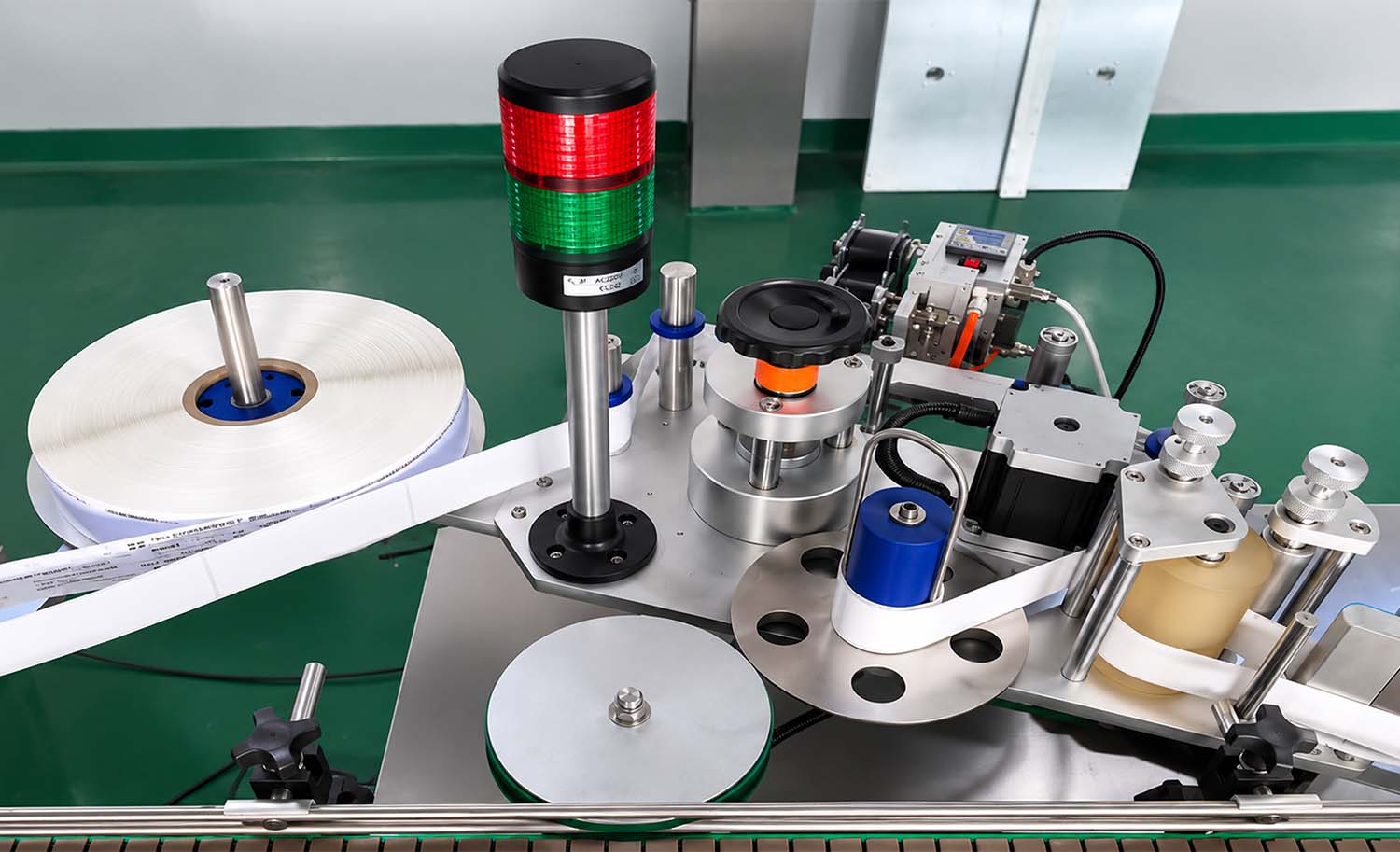
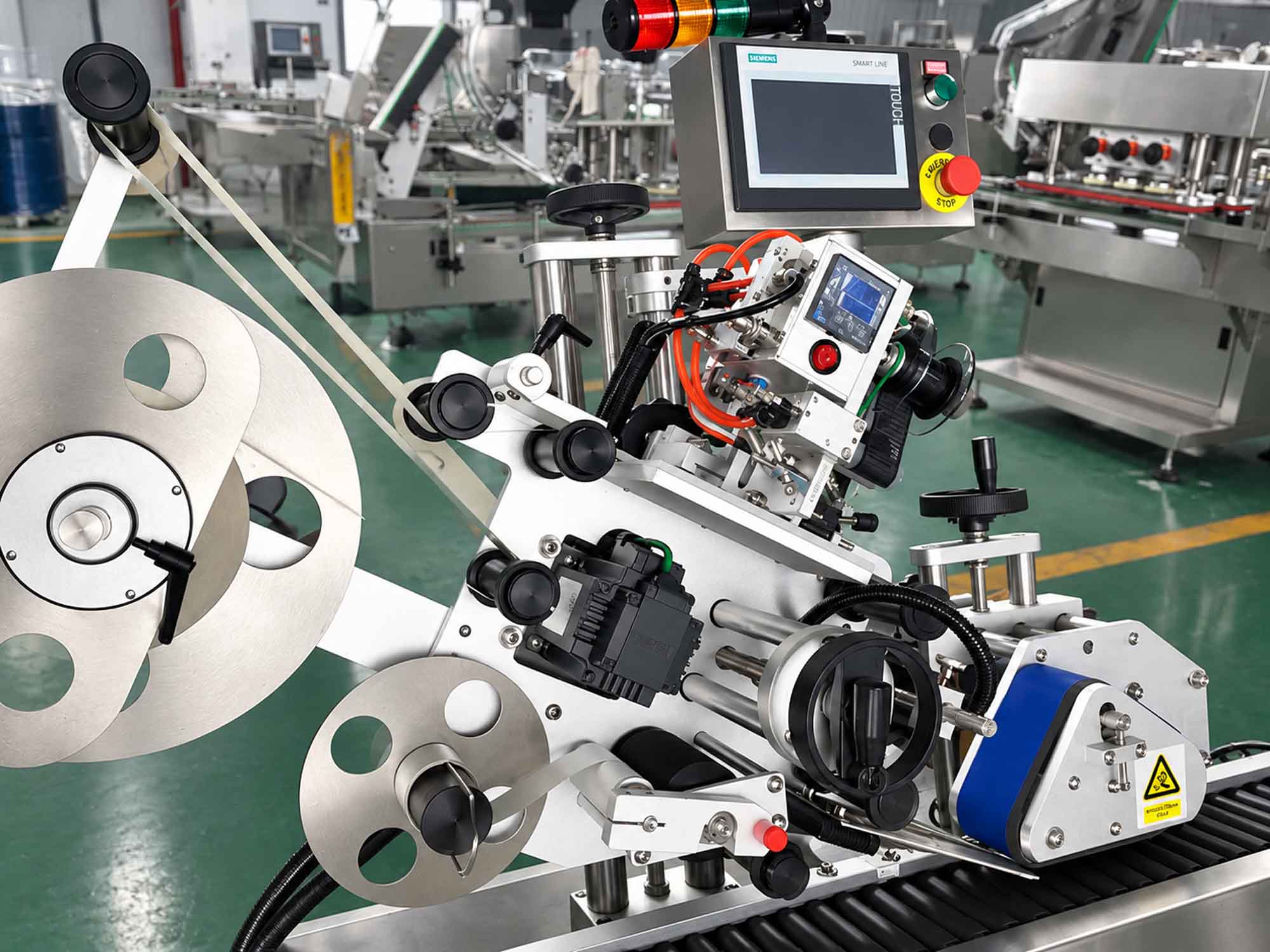
A flexible three-axis applicator presses the label down without the rigid contact that scuffs glass. It holds label placement while keeping contact pressure low.
Photoelectric tracking positions each application, and the machine skips any position without a container in it.
Fifty stored recipes
The color touchscreen stores up to 50 labeling parameter sets, in English or Chinese.
If you run a lot of small SKUs — which is usually the case with vials — this is where your output actually comes from. Loading a saved recipe is a different job from re-finding settings by trial.
Ideal Applications & Industries
Liquid supplement shots
Energy shots, liquid vitamin shots and herbal tonics in small glass bottles. High SKU count, small batches, frequent changeovers — which is why the stored recipes matter more here than raw speed.
Oral liquid vials
Small vials break when they tumble. Horizontal handling with support underneath is what keeps breakage down across a full shift, not just a demo run.
Ampoules
Ampoule glass is thin and the label often carries the only product identification on the pack. Placement consistency isn’t cosmetic here — an offset label can cover the break ring.
What changing over involves
What you changed | What gets adjusted | Roughly how long |
Repeat SKU you’ve run before | Load the stored recipe | A few minutes |
New label roll, same container | Load the roll, thread the web | 15–60 minutes |
Different vial diameter | Hopper and roller spacing, applicator position | 15–60 minutes |
New SKU, first run | Set parameters, save as a recipe | 15–60 minutes |
Save every job as a recipe. With 50 slots, there’s no reason not to. The first run of an SKU takes setup time; every run after that is loading a saved set.
Glass handling is set by the hopper, not the applicator. If you’re getting breakage, the hopper and roller spacing is where to look first.
Label supply changes matter more than they look. A different backing thickness or core diameter changes how the web feeds. If you switch label printers, run a test before you run a batch.
Three things to check before you buy any labeling machine
Label placement, bottle after bottle
One label applied straight in a demo proves nothing. Ask how consistent placement is across a full roll, as the roll diameter shrinks. We run your bottles with your labels at factory acceptance testing before the machine ships, and you see the results.
The manual
Your operator threads the web, sets label length and adjusts the applicator. They need an English manual with the settings procedure in it — not a translated parts list. Ask to see it before you order.
Installation and training
The machine runs out of the crate. Getting it labeling cleanly across all your SKUs takes someone who's set one up before. Our engineers install it, dial in each of your bottles, and show your operators how to diagnose a crooked label.
Why Choose AIPAK?
One Point of Contact
One project engineer handles your machine from proposal to commissioning, so you’re not chasing five suppliers for one answer.
We Run Your Container and Label Before You Order
Send us your container and a roll of your label. We run them on the machine and send you photos. You decide whether to talk quotes after that.
A U.S. Number, Answered by Us
+1 (213) 526-8644, answered by our engineers 9 AM–7 PM China time, Monday to Friday. That’s evening and overnight in the U.S., so leave a message or send a WhatsApp anytime and we’ll pick it up first thing.
Spare Parts and Lead Time, in Writing
A kit of wear parts ships with your machine. Every part in the kit, and the lead time for anything outside it, is listed in your quote in writing.
Deep Dive FAQ
It depends on your container size range, your line speed and whether you want a coder. Send us a vial and your label artwork and we’ll reply within one business day.
That’s what the horizontal handling is for. Containers stay supported on rollers rather than tumbling to orient. Send us a sample and we’ll run a batch — breakage rate is something you should see, not be told.
100 to 200 per minute, against 20 to 120 on our round bottle labeler. Small containers move faster because there’s less mass to accelerate and stop.
Each recipe stores the labeling parameters for one SKU. Vial products usually mean a lot of SKUs and frequent changeovers — loading a saved recipe is what keeps that from eating your shift.
Yes. The horizontal handling was designed for glass, but it runs plastic containers in the same size range. Tell us your dimensions.
Yes, the machine can be equipped with an optional date coder (such as a ribbon printer or inkjet coder). It can automatically print batch numbers, manufacturing dates, and expiry dates directly onto the labels during the labeling process.
Yes. We build to your U.S. supply at 60 Hz and confirm the voltage with your quote.
Yes. Our machines are certified and use certified electrical components. Because the exact scope depends on the model and electrical configuration you select, our factory confirms it in writing before production.
A kit of wear parts ships with your machine. Every part in the kit, and the lead time for anything outside it, is listed in your quote in writing.
Customers Also Interested In...
Send us a vial and your label
We’ll run it on our own machine and send you a photo before you commit. If your container is too large or too small for horizontal handling, we’ll tell you that instead of selling you a machine that can’t run it.
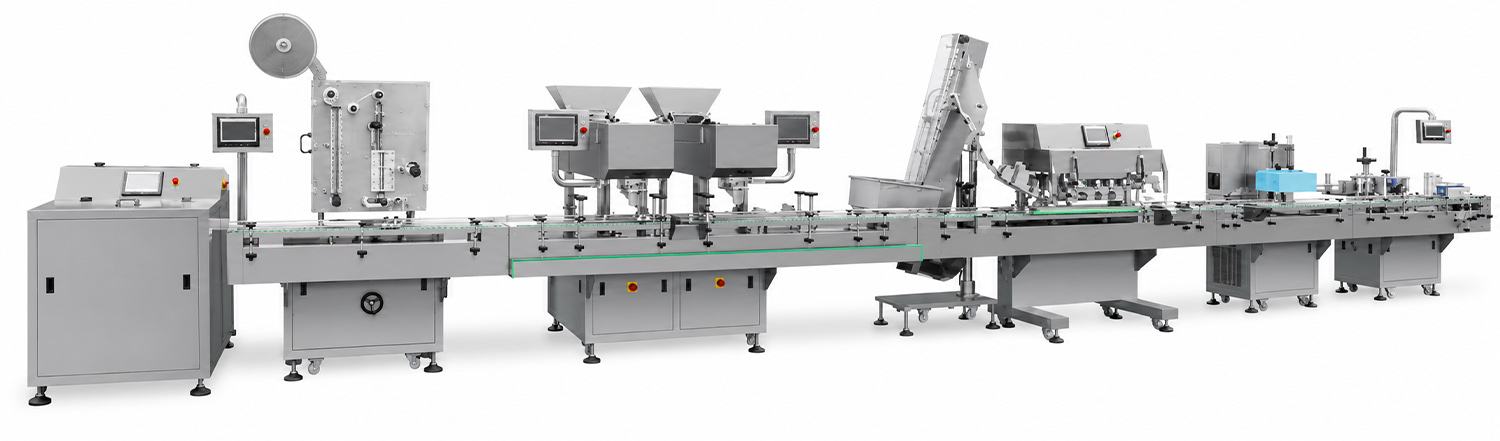
Send your line layout and we’ll show you where the labeler fits and how much conveyor length you need either side.