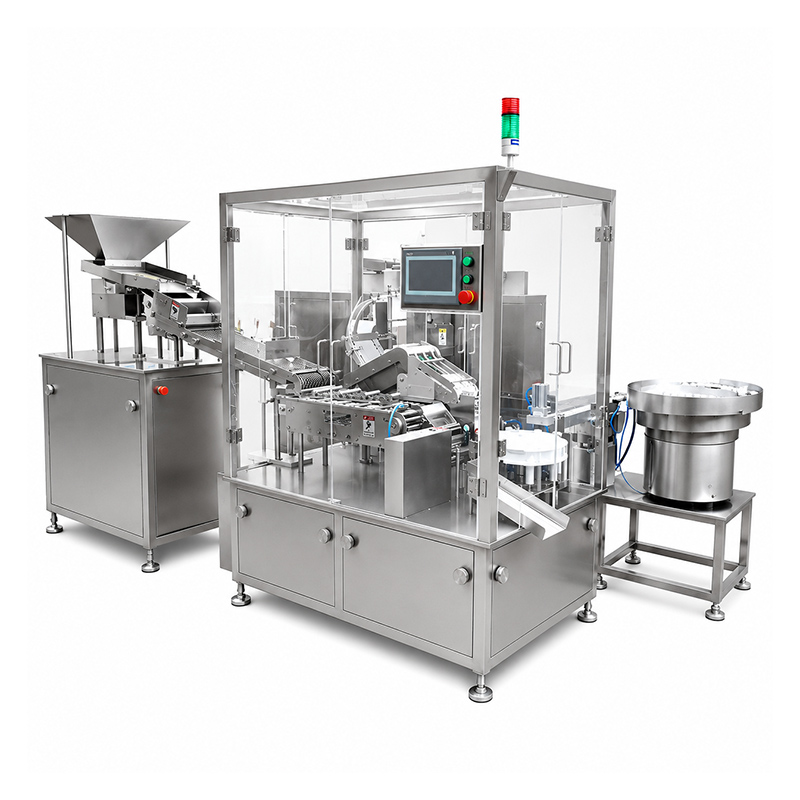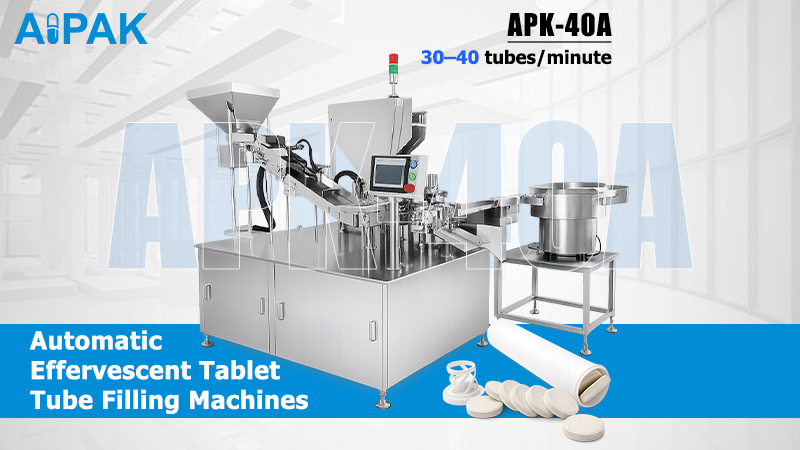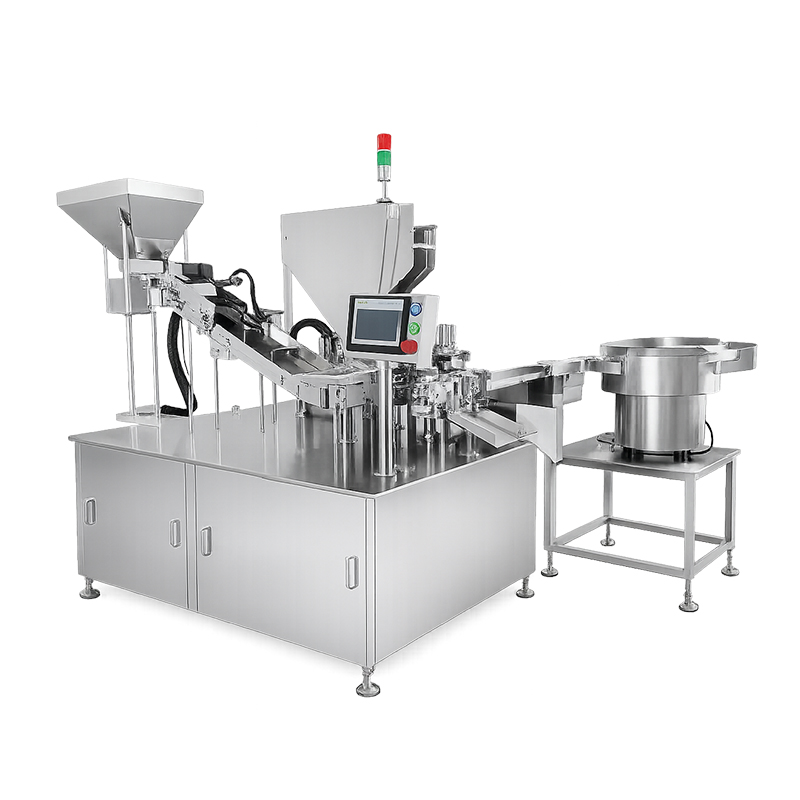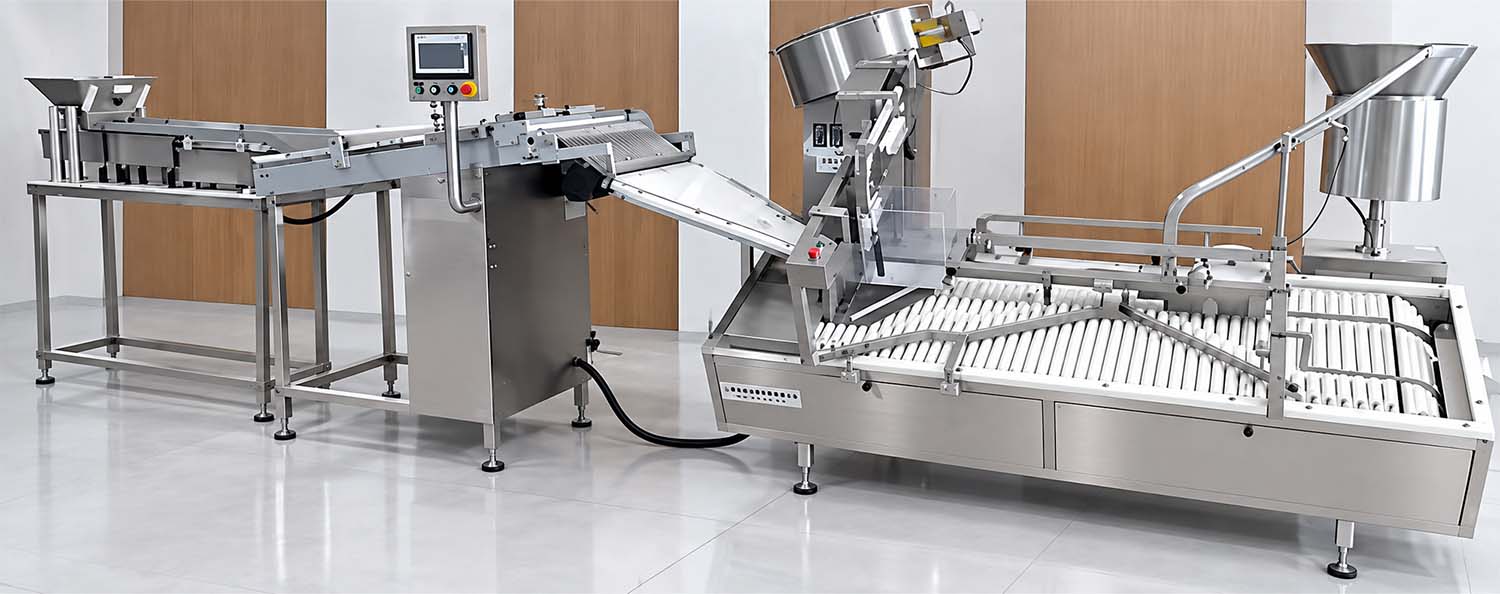
APK-40A Automatic Effervescent Tablets Tube Filling Machine

Pneumatic indexing, 35 to 40 tubes a minute, 10 to 20 tablets per tube

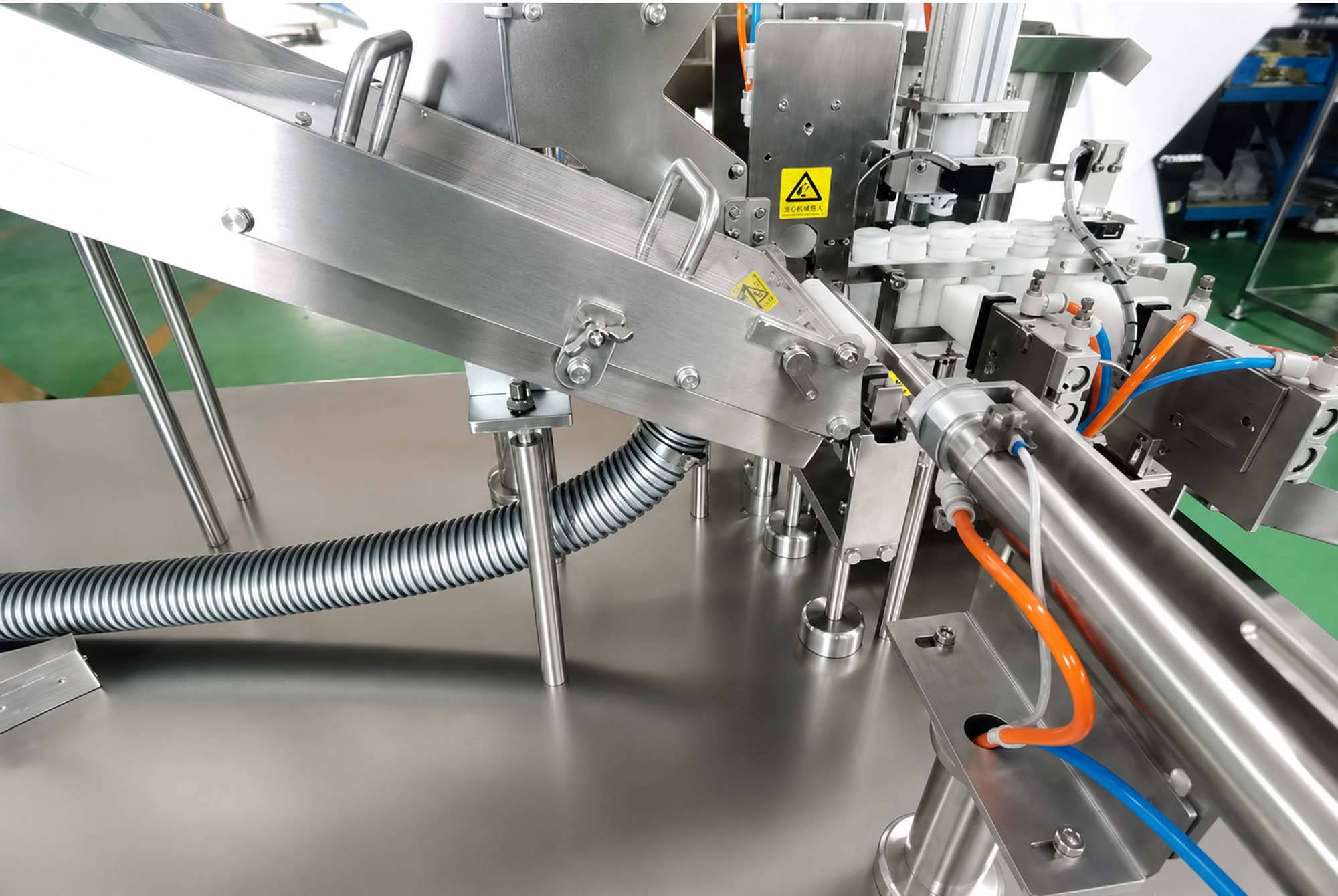
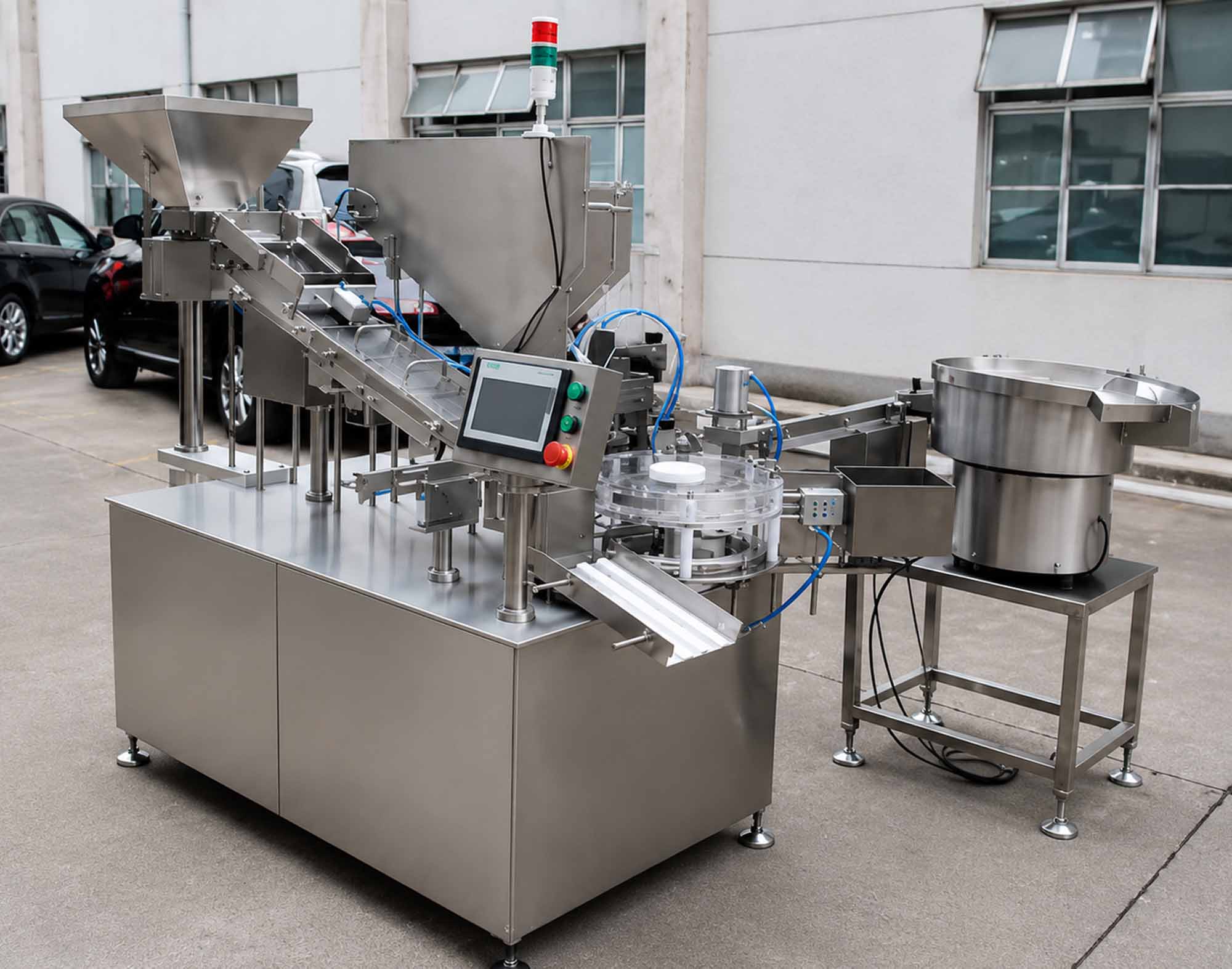
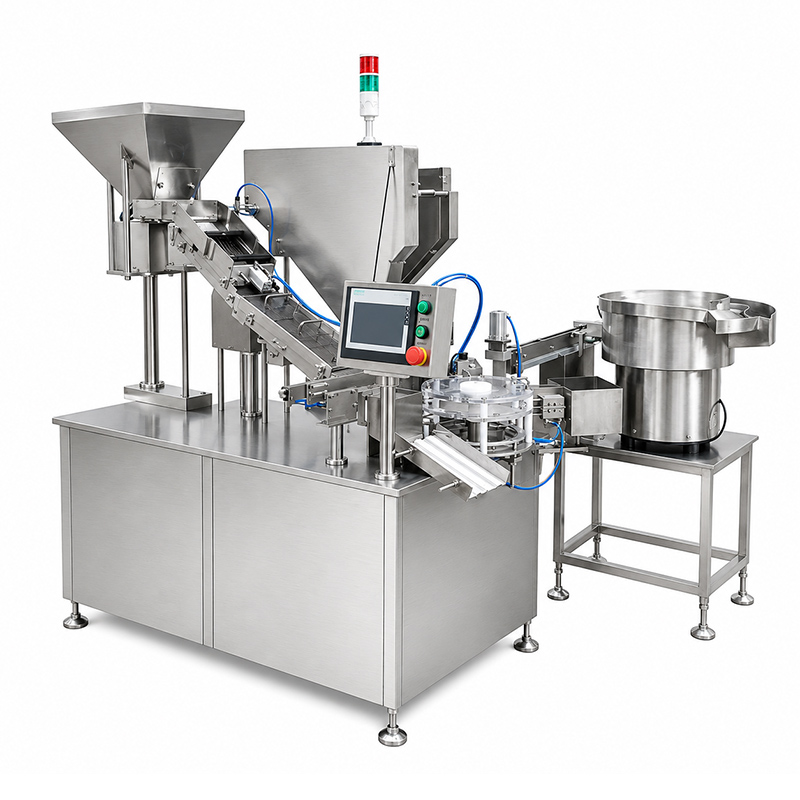
An effervescent tablet is 25 mm across and brittle, and it can’t be dropped down a counting channel like a vitamin. This machine vibrates tablets along a flat track, lines them up in a single row, and pushes them into the tube on their side. Pneumatic cylinders throughout — fewer electronics than the 40B, and less to go wrong.

1. Speed: 35 to 40 tubes a minute

2. Tablets per tube: 10 to 20

3. Indexing: pneumatic cylinders, not a stepper. The simpler of the two 40-series machines

4. Power: 1.2 kW, built to your U.S. supply at 60 Hz

Is this the right machine for you?

✓ Yes, if…

✕ Buy something else if…

Pneumatic Indexing

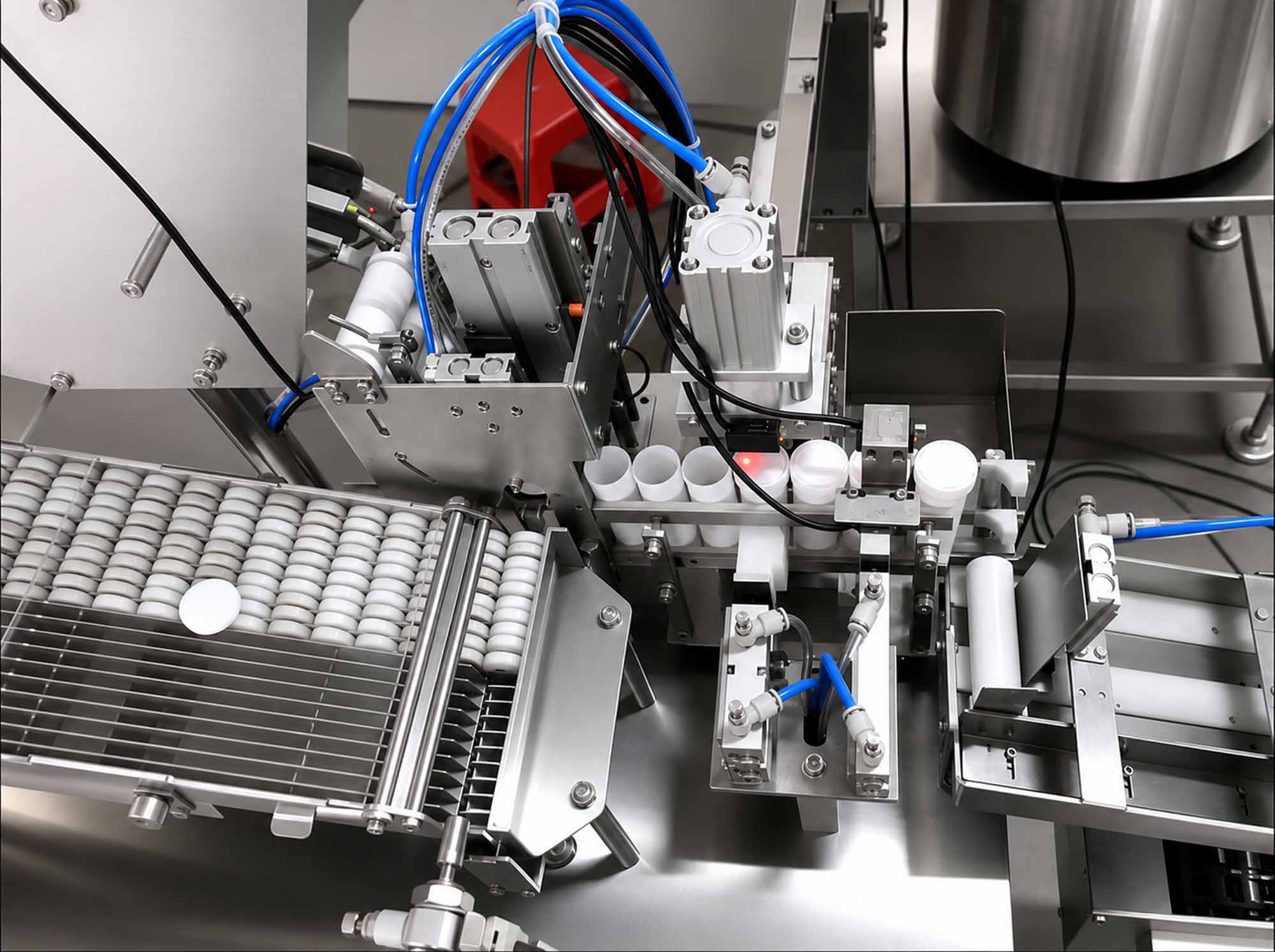
Stations are stopped by AirTAC cylinders with magnetic proximity switches, not by a servo or stepper. Fewer electronics, lower cost, and nothing to re-home after a power cut. The trade-off is on the 40B’s page.

Laid Flat, Not Dropped

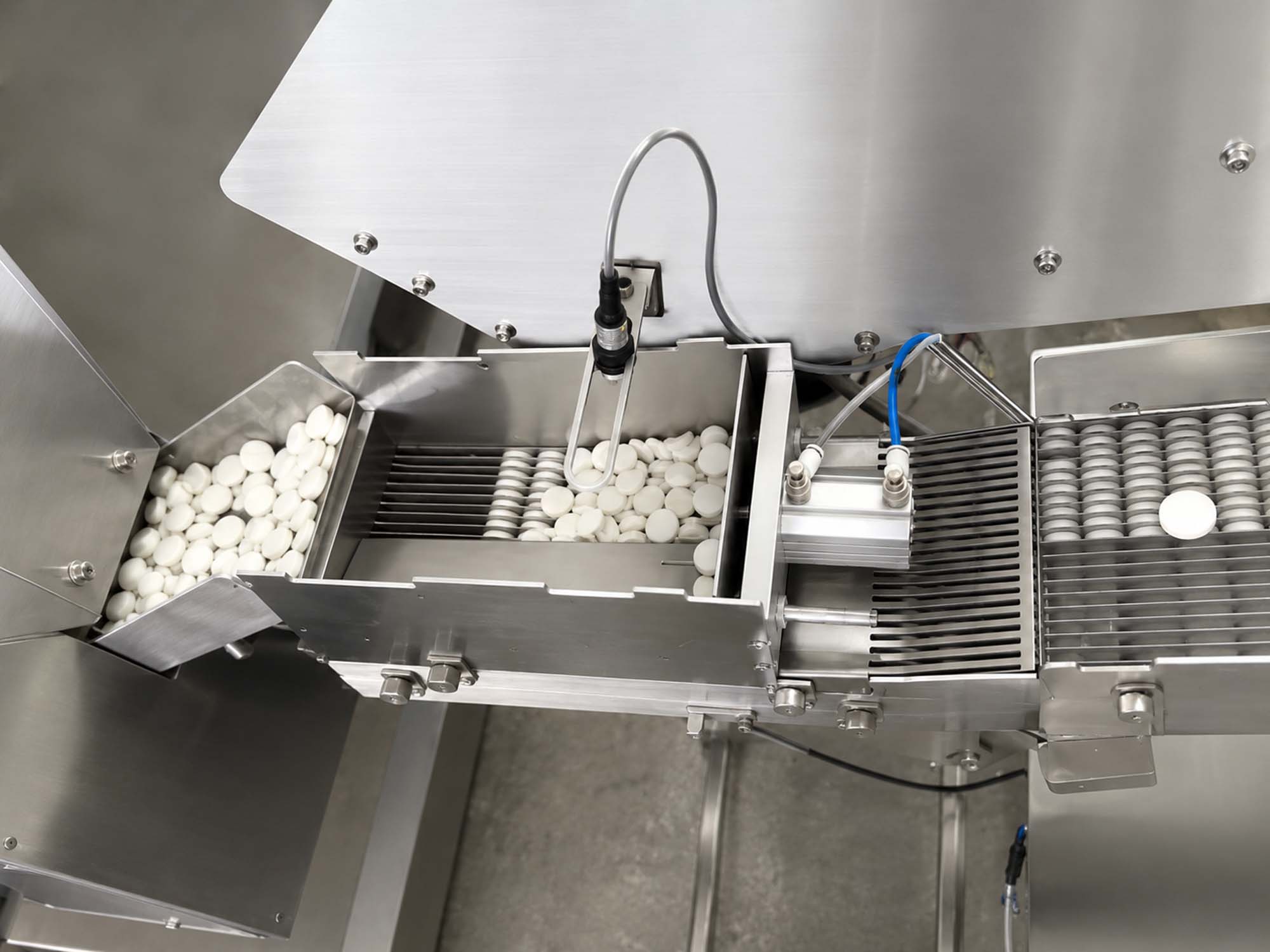
A vibrating table screens and aligns tablets into a single overlapping row before they reach the tube. Nothing falls, which is what keeps a 25 mm effervescent tablet’s edges intact.

38 mm Dust Extraction Port

Effervescent tablets shed powder, and that powder settles on the optical sensors that do the counting. The port is ready for your extraction unit — the extractor itself is on your side.

No Tablet, No Cap

If the count is short or a cap is missing, the capping cylinder is locked out for that tube. The tube leaves uncapped, so your operator can pull it at the exit. Automatic rejection is on the APK-60. You don’t pay for a cap on a tube you’d have to open again.

SUS316L on Contact Parts

Frame cover in SUS304, everything the tablets touch in SUS316L.

Technical specification

Specification

APK-40A

What it means for you

Speed

35–40 tubes/min

Depends on tablet size and stack count

Tablets per tube

10–20

Set at build; tell us your count

Tablet diameter

 25 mm

—

Tablet thickness

 6 mm

Thickness variance must stay within ±0.2 mm

Tablet hardness

Above 5 kg

Softer tablets chip in the track

Tube inner diameter

At least 2 mm larger than the tablet

Below that it jams

Indexing

Pneumatic cylinders

The 40B uses a stepper and indexing disk

Control

Siemens PLC and touchscreen

—

Power

1.2 kW, 60 Hz

Built to your U.S. supply. We confirm the voltage with your quote

Compressed air

0.5–0.6 MPa, 0.28 m³/min

—

Dust port

38 mm

Extractor supplied by you

Dimensions

1,600 × 1,500 × 1,600 mm

—

Weight

420 kg

—

Contact parts

SUS316L

Frame cover SUS304

Model comparison

Model

Indexing

Speed

Power

Weight

APK-40A

Pneumatic

35–40 tubes/min

1.2 kW

420 kg

APK-40B

Stepper + indexing disk

35–40 tubes/min

1.5 kW

420 kg

APK-60

Stepper, with short-count rejection

50–60 tubes/min

2 kW

1,000 kg

APKZL-60

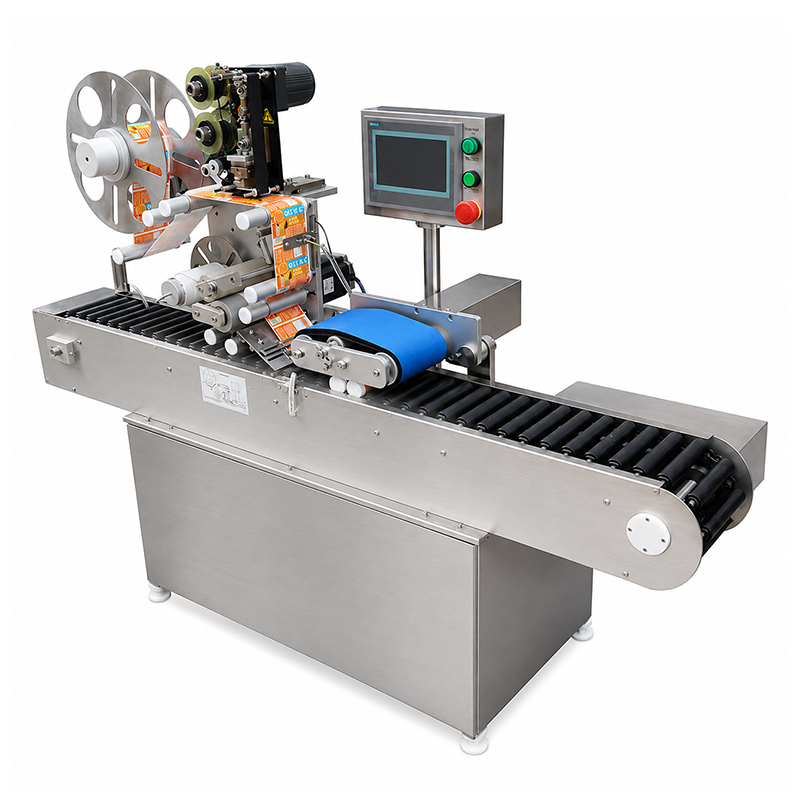
Tube labeller

60 tubes/min

0.8 kW

320 kg

The 40A and 40B run at the same speed and weigh the same. What differs is how each station is stopped — and that shows up when your tablet thickness varies.

Production Applications

Vitamin C and immunity effervescents

The largest effervescent category. Ø25 mm tablets, 10 or 20 to a tube.

Electrolyte and hydration tablets

Thinner tablets in the same tube. Thickness consistency matters more than diameter here.

Magnesium and mineral effervescents

Larger, denser tablets. Check hardness — under 5 kg they chip in the track.

Single-SKU production runs

This is the machine for a product you run for weeks at a time. If you change tablet specs often, the 40B holds position better.

What changing over involves

What changed

What you adjust

Roughly

Same tablet, different count per tube

Track setting

15–30 minutes

Different tube diameter

Tube guides and cap vibrating disk

15–30 minutes

Different tablet diameter

Row alignment rails and track guides

15–30 minutes

Tablet thickness drifts within ±0.2 mm

Nothing — but that’s the limit

—

Beyond ±0.2 mm of thickness variance, no adjustment fixes it. That’s where the 40B’s stepper indexing earns its cost.

What to check before you buy

01

Your tablet, before the machine

Hardness above 5 kg, thickness variance within ±0.2 mm, and a tube at least 2 mm wider inside than your tablet. Those three decide whether any tube filler runs cleanly on your product — ask any supplier to confirm them against your actual samples.

02

Which indexing you're paying for

Pneumatic stops cost less and are simpler. A stepper with an indexing disk holds position more consistently. Ask which one you're quoted and what it means when your thickness drifts.

03

Installation and training

Ask what's included and what costs extra.

Why Choose AIPAK?

One Point of Contact

One project engineer handles your machine from proposal to commissioning, so you’re not chasing five suppliers for one answer.

We Run Your Tablets and Tubes Before You Order

Send us some tablets and empty tubes. We run them on the machine and send them back, so you can check the count and the tablet edges yourself. You decide whether to talk quotes after that.

A U.S. Number, Answered by Us

+1 (213) 526-8644, answered by our engineers 9 AM–7 PM China time, Monday to Friday. That’s evening and overnight in the U.S., so leave a message or send a WhatsApp anytime and we’ll pick it up first thing.

Spare Parts and Lead Time, in Writing

A kit of wear parts ships with your machine. Every part in the kit, and the lead time for anything outside it, is listed in your quote in writing.

Questions About the APK-40A

How does the APK-40A prevent brittle effervescent tablets from cracking or edge-chipping during high-speed feeding?

Nothing drops. Tablets are loaded into a vibrating hopper, screened along a flat track and lined up in a single overlapping row, then pushed into the tube on their side. The edges never take a fall.

What happens if a tube has a tablet shortage, a missing insert, or a cap feeding failure?

The capping cylinder is locked out for that tube and the machine alarms. The tube leaves uncapped, so your operator can pull it at the exit. If you want short-count tubes pushed out of the line automatically, that’s the APK-60.

Can the machine automatically remove all tablet debris and broken fragments from the tracks?

No. The screening track drops out small chips and powder as it runs. Larger broken pieces and deformed tablets have to be cleared from the track by your operator.

Why is there a 38 mm dust port?

Effervescent tablets shed fine powder, and that powder settles on the sensors and the cylinder seals. The 38 mm port connects to your own dust extractor, so the powder is taken away at the sorting station. The extractor itself isn’t included.

What tablet hardness and thickness does the APK-40A need?

Hardness above 5 kg, and thickness variance within ±0.2 mm. Outside those, the stack height drifts and tablets chip in the track.

Can the APK-40A feed straight into a labeler?

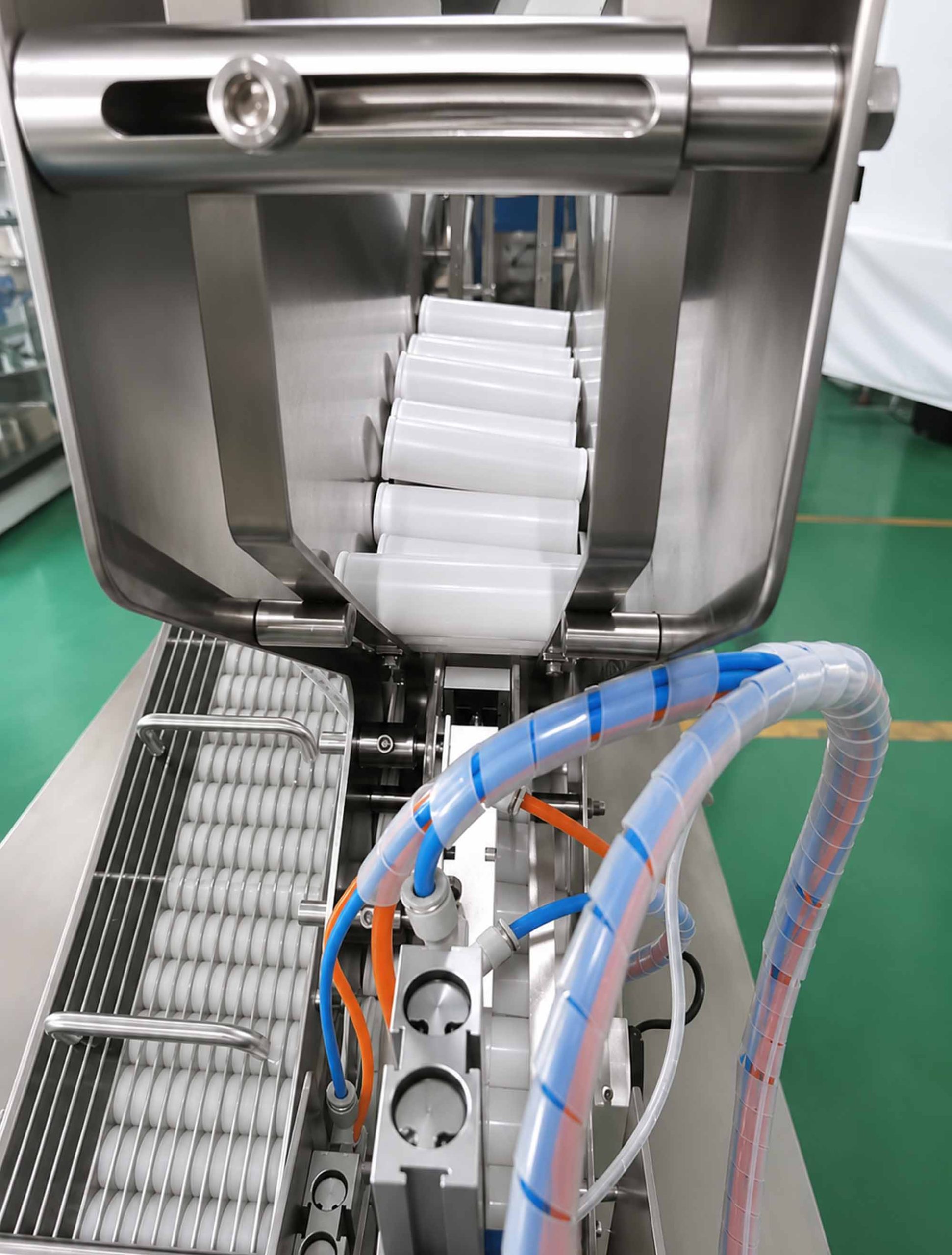
Yes. Capped tubes leave the machine in sequence and can go straight onto the APKZL-60 tube labeler.

What's the difference between the 40A and the 40B?

Same speed, same footprint, same weight. The 40A stops each station with pneumatic cylinders; the 40B uses a stepper motor and a mechanical indexing disk. If your tablet thickness is consistent, the 40A does the job for less. If it drifts, the 40B holds position better.

Does it run on US power?

Yes. We build to your U.S. supply at 60 Hz and confirm the voltage with your quote.

How do spare parts work?

A kit of wear parts ships with your machine. Every part in the kit, and the lead time for anything outside it, is listed in your quote in writing.

Customers Also Interested In...

Send us tablets and tubes

Three numbers decide whether this machine runs on your product: tablet hardness, thickness variation, and how much bigger your tube’s inner diameter is than your tablet. Send us samples of both and we’ll check all three before quoting.

  • Reply within one business day
  • Your tablets and tubes run on the machine before you order
  • Your formula and specs stay with us
Scroll to Top