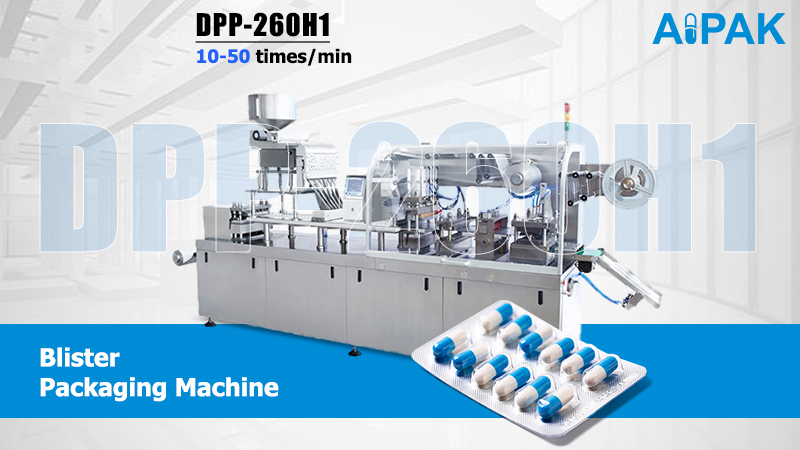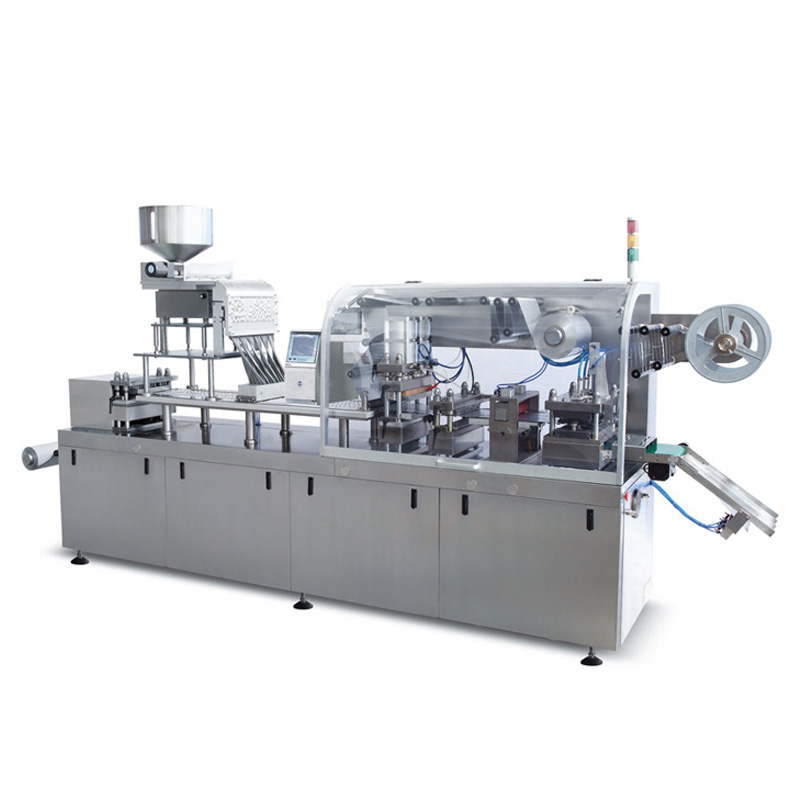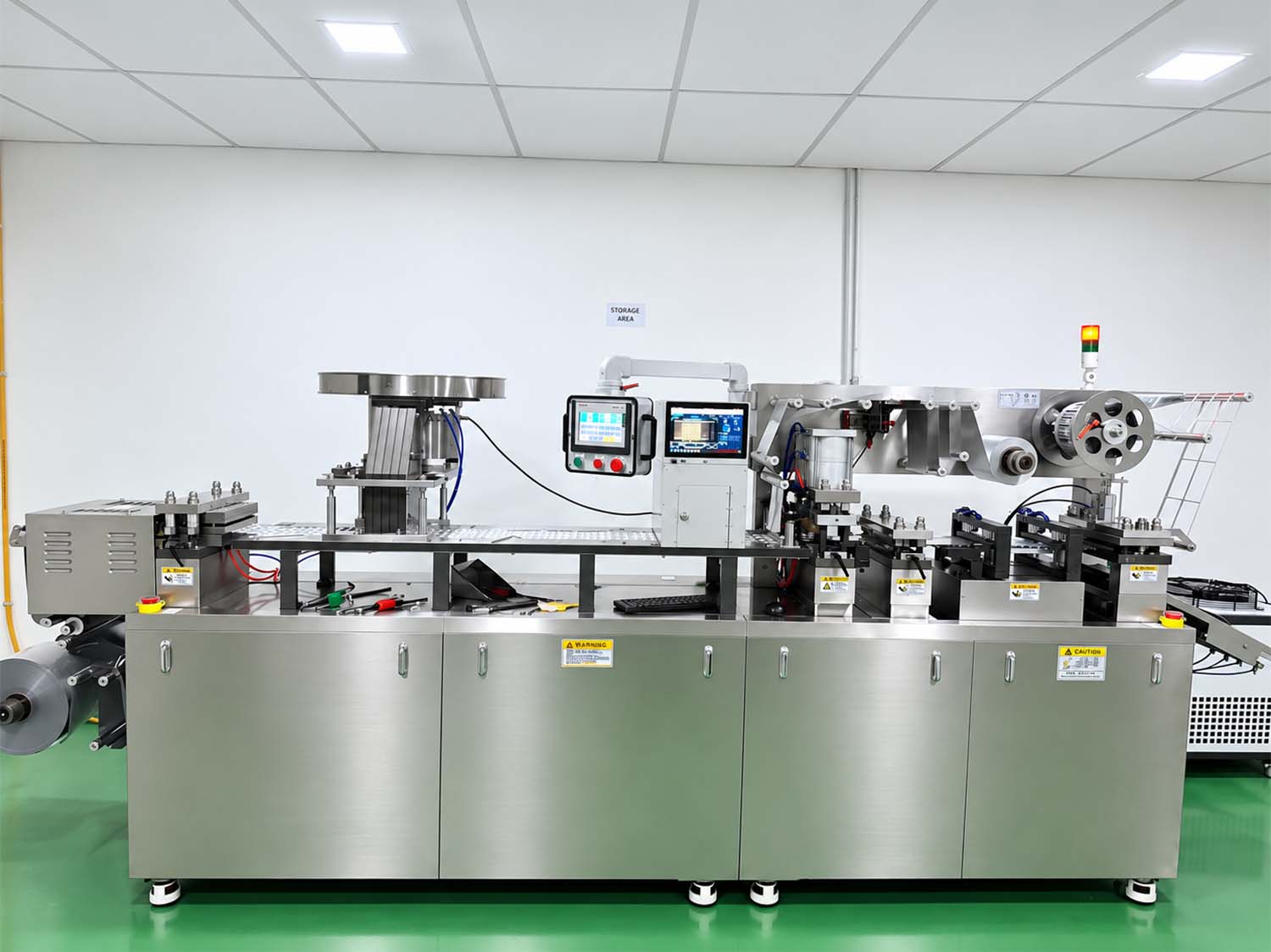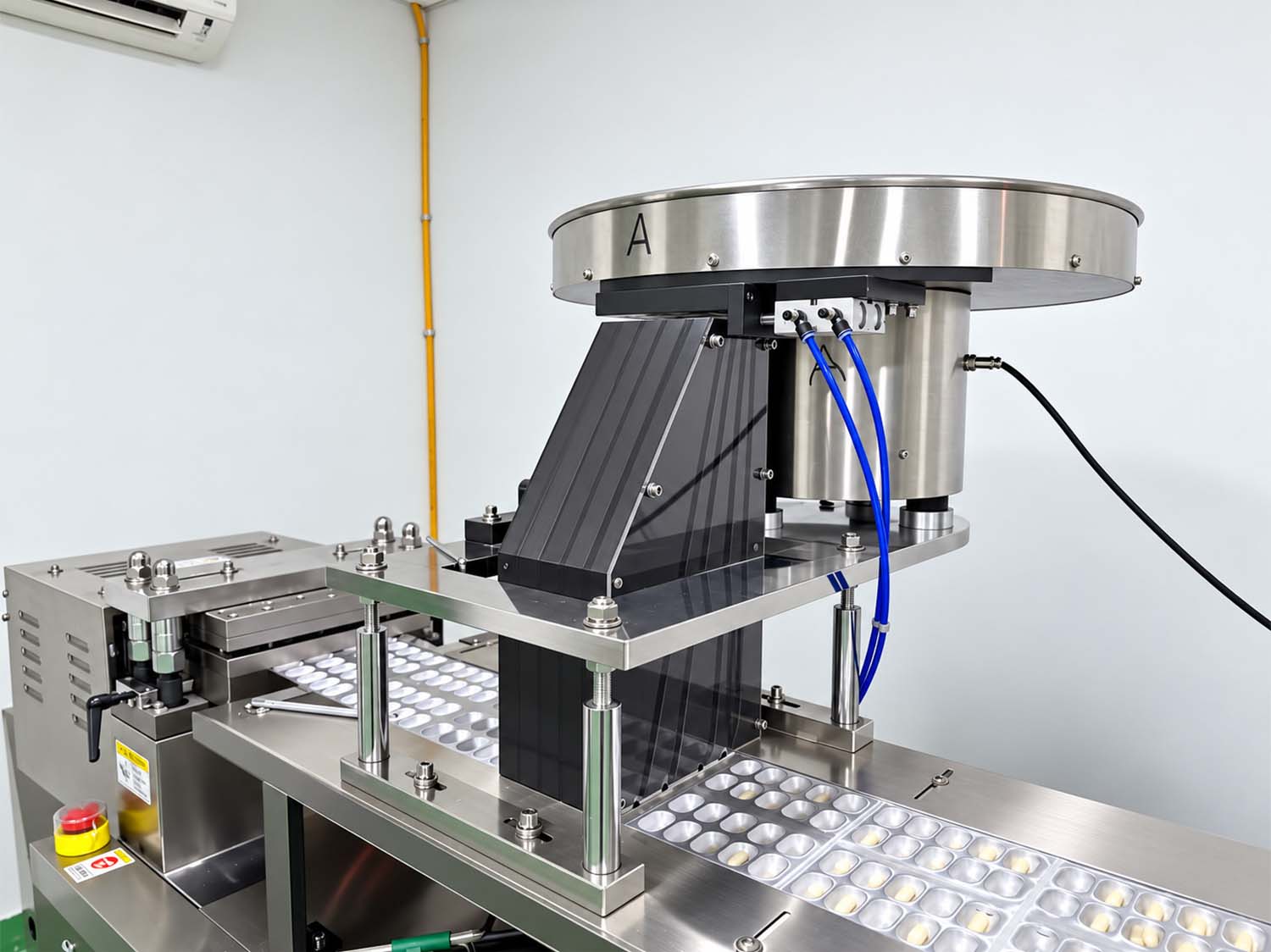
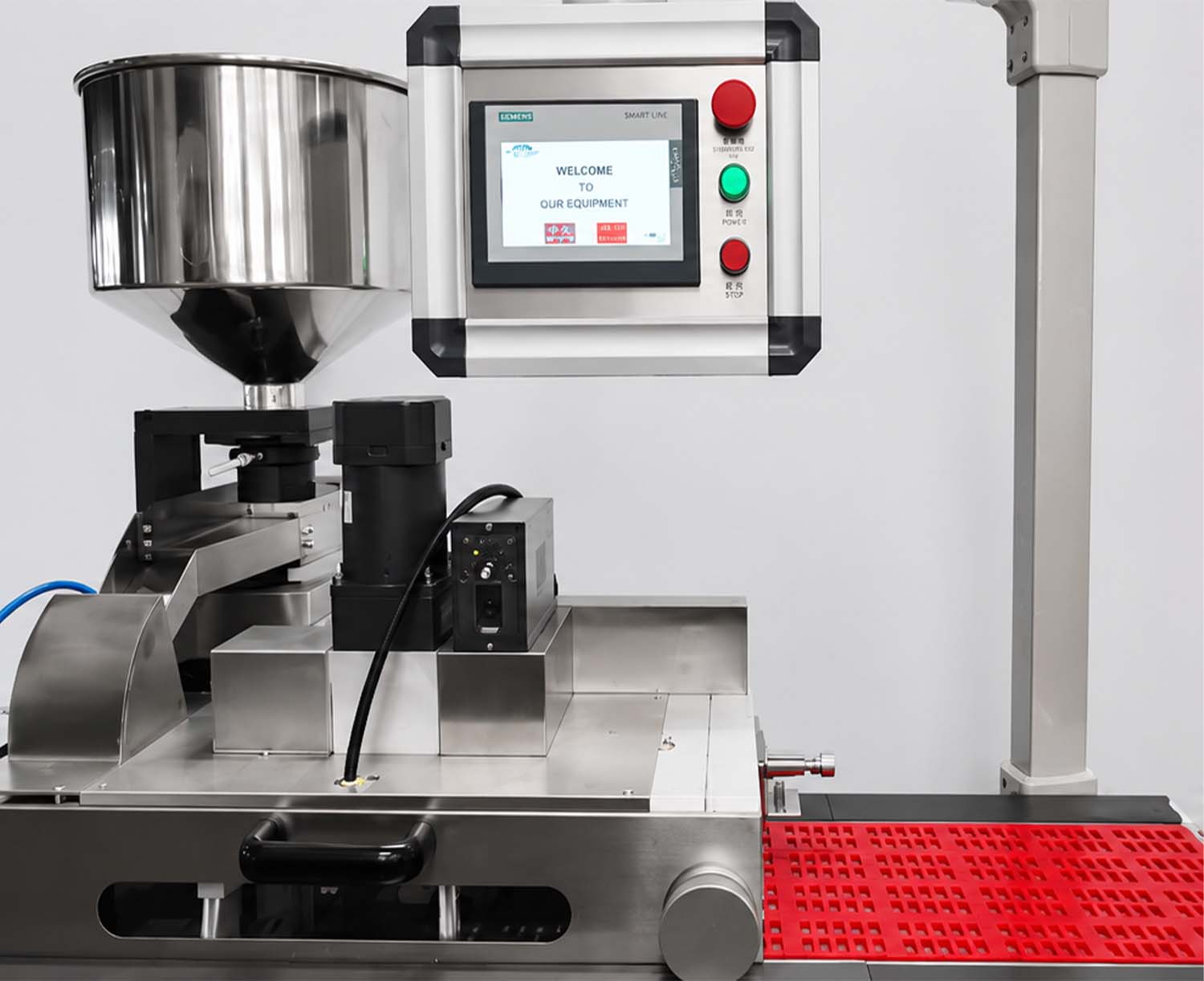
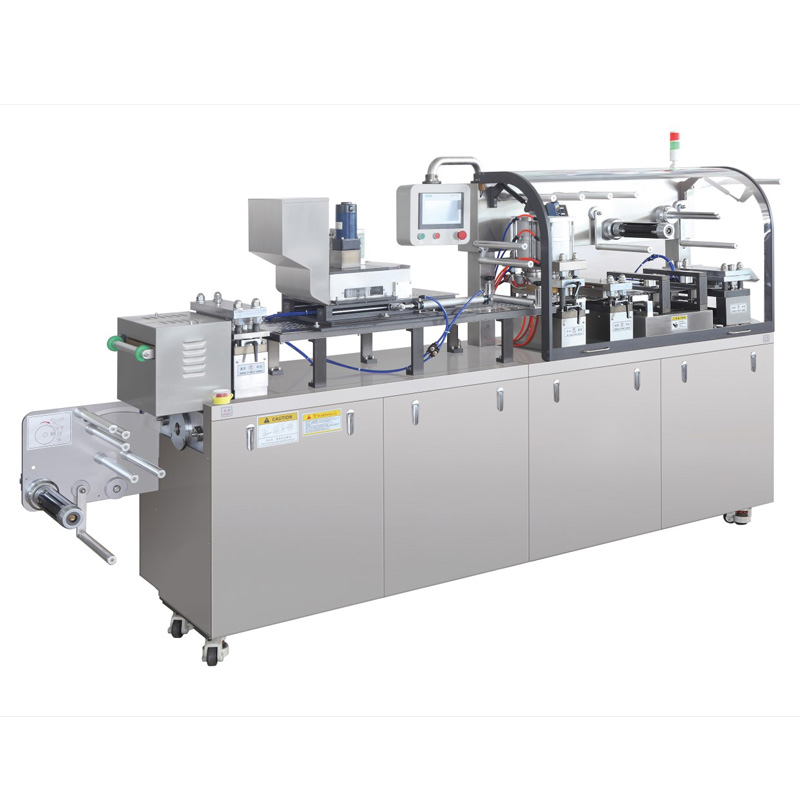
DPP-260H1 Ultra-High-Output Flat-Plate Blister Packaging Machine
260 mm forming width, 6,000 to 12,000 plates an hour, Alu-PVC and Alu-Alu
Your line is running two 120 mm machines to hit the plate count you need. This one does it with a single 260 mm forming area — five or six plates a stroke instead of two or three, on one set of tooling and one operator.
1.Punch Frequency: 10–50 times/min (Steady high-speed industrial performance)
2.Production Capacity: 6,000–12,000 plates/hour(Maximum flagship throughput)
3.Max Forming Area: 260×180 mm(The largest plate density in the series)
4.Standard Stroke Range: 40–180 mm(Fully adjustable for large-format packaging)
5.Material Compatibility: PVC, PTP, ALU/ALU, and High-Grade Dialysis Paper
Is this the right machine for you?
✓ Yes, if…
- You need 6,000 to 12,000 plates an hour
- Your plate layout uses the full 260 mm width — five or six plates per stroke
- You run Alu-PVC, Alu-Alu or tropical blister
- You have 3.8 m of line length plus working clearance
✕ Buy something else if…
- our batches are small and change often → a 120 or 150 mm machine costs less and changes over faster. Wide tooling is heavier to swap
- You only run one plate layout at 2 plates a stroke → you'd be paying for width you can't fill
- You need forming depth beyond 15 mm → tell us the pill dimensions first. Deep-draw is a different tooling configuration
- You're not sure whether you'll move to Alu-Alu → decide before we build. The feeder choice can't be changed later
Maximum Industrial Throughput
Features an expanded forming width that supports multi-lane plate layouts, delivering a significant leap in hourly output for large-scale batches.
Precision Servo-Driven Logic
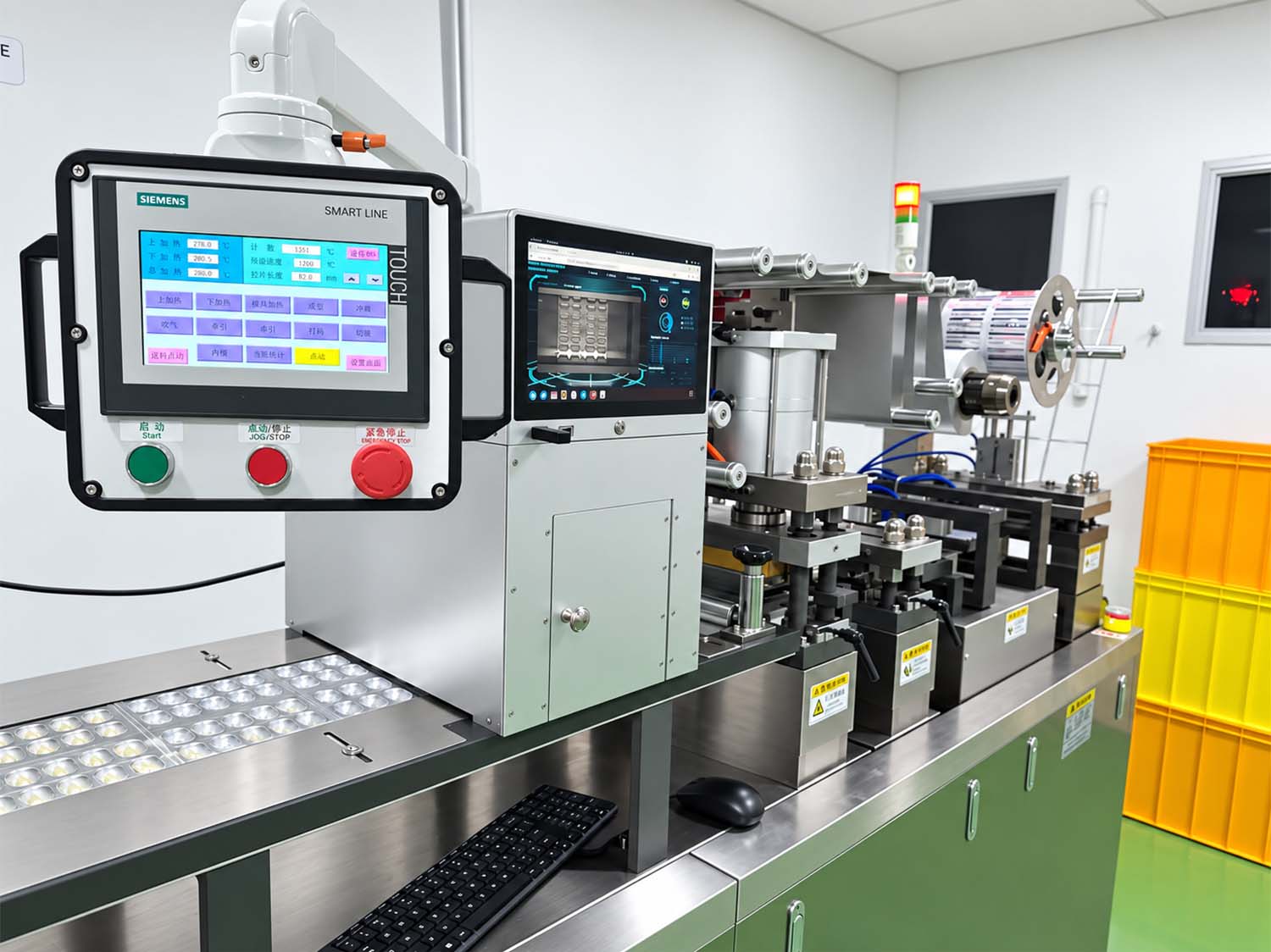
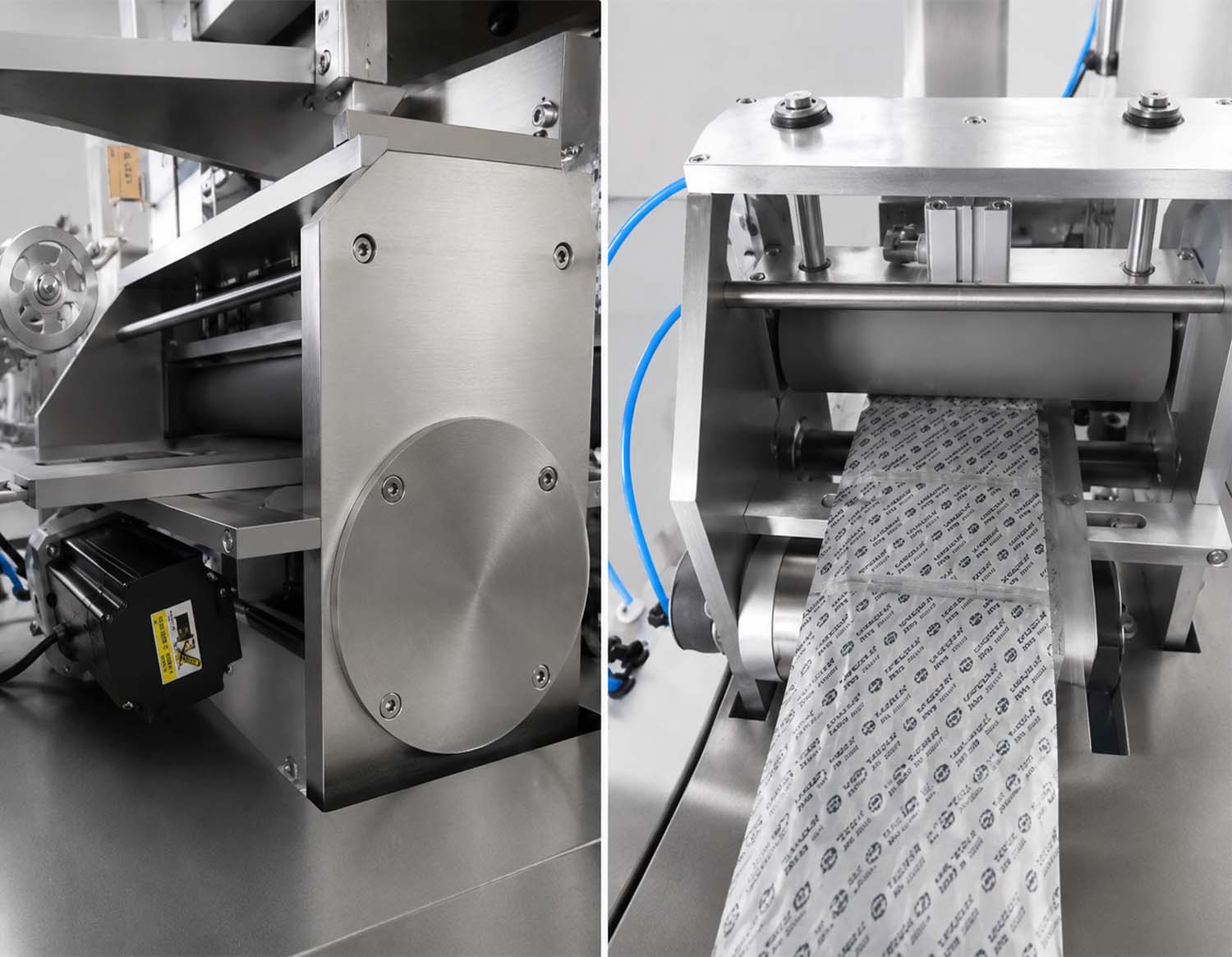
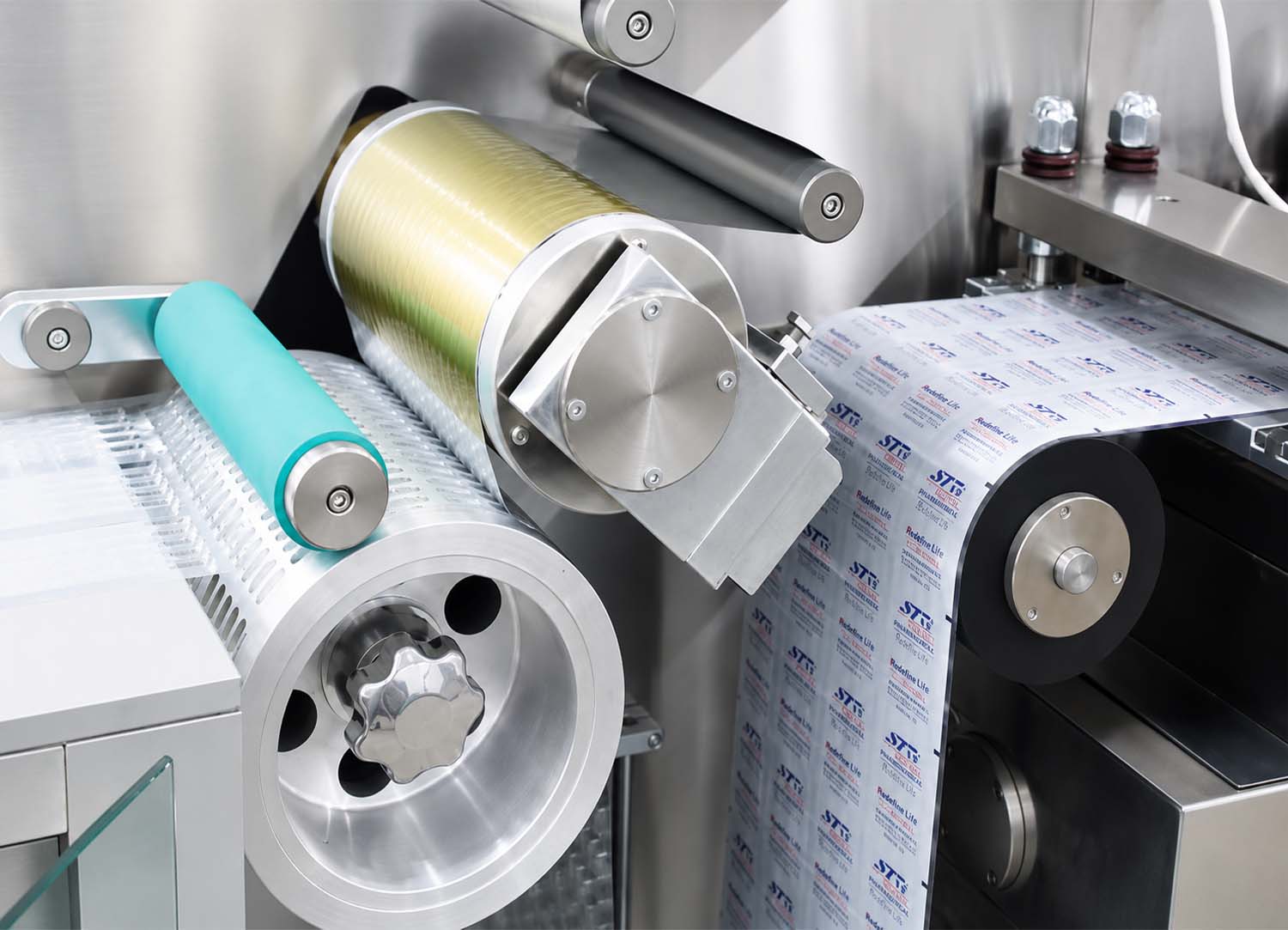
Equipped with a high-torque servo motor for material traction, ensuring millimetric accuracy in stroke control and minimizing material waste.
High-Stability Heavy-Duty Drive
The reinforced main drive system is built to handle the mechanical load of high-speed punching (50+ times/min) without vibration or noise.
Superior Thermal Sealing Integrity
Utilizes advanced constant-temperature control and high-pressure sealing stations to hold a consistent seal across the full 260 mm width for sensitive medications.
Advanced "Balcony" GMP Design
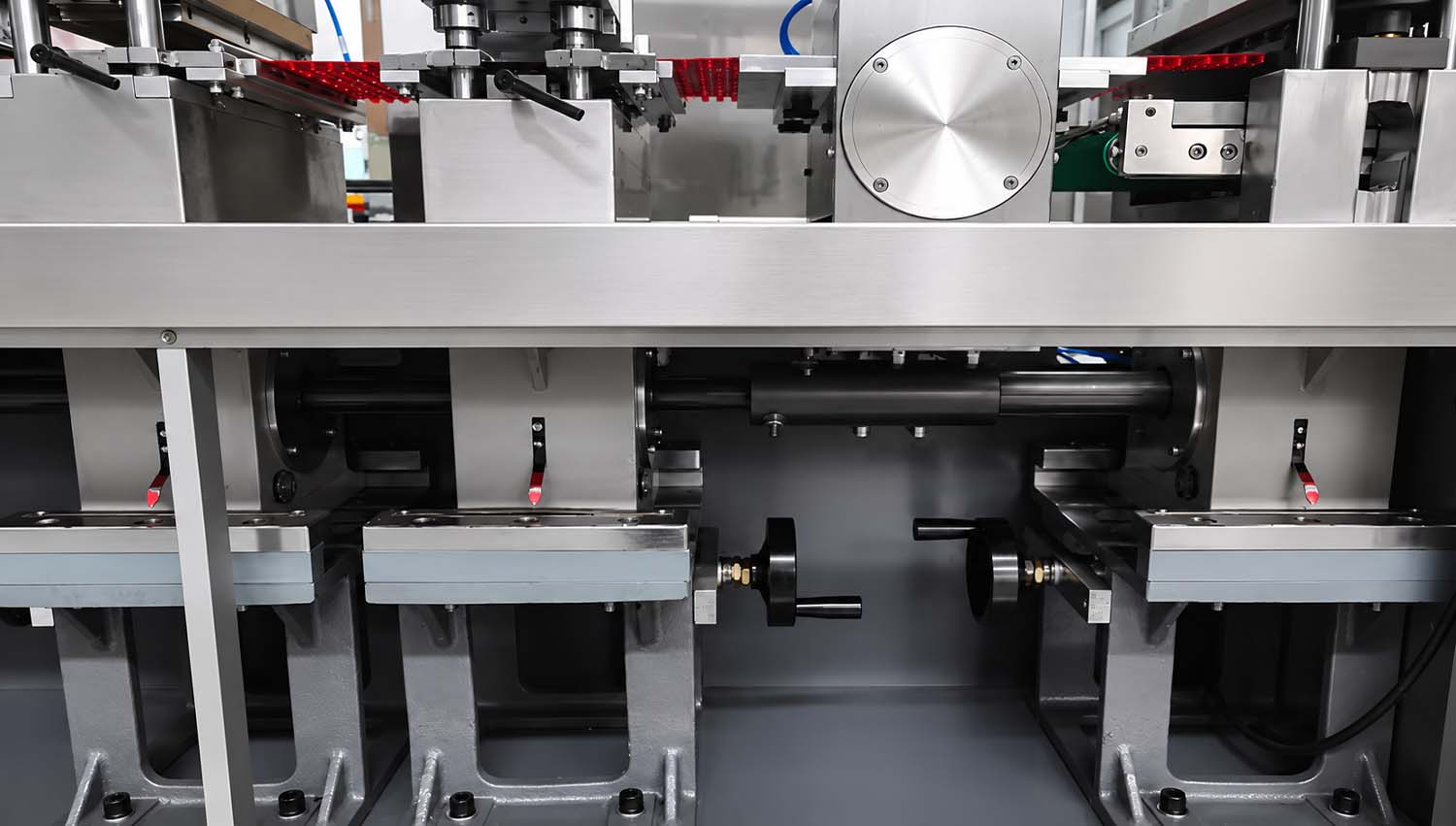
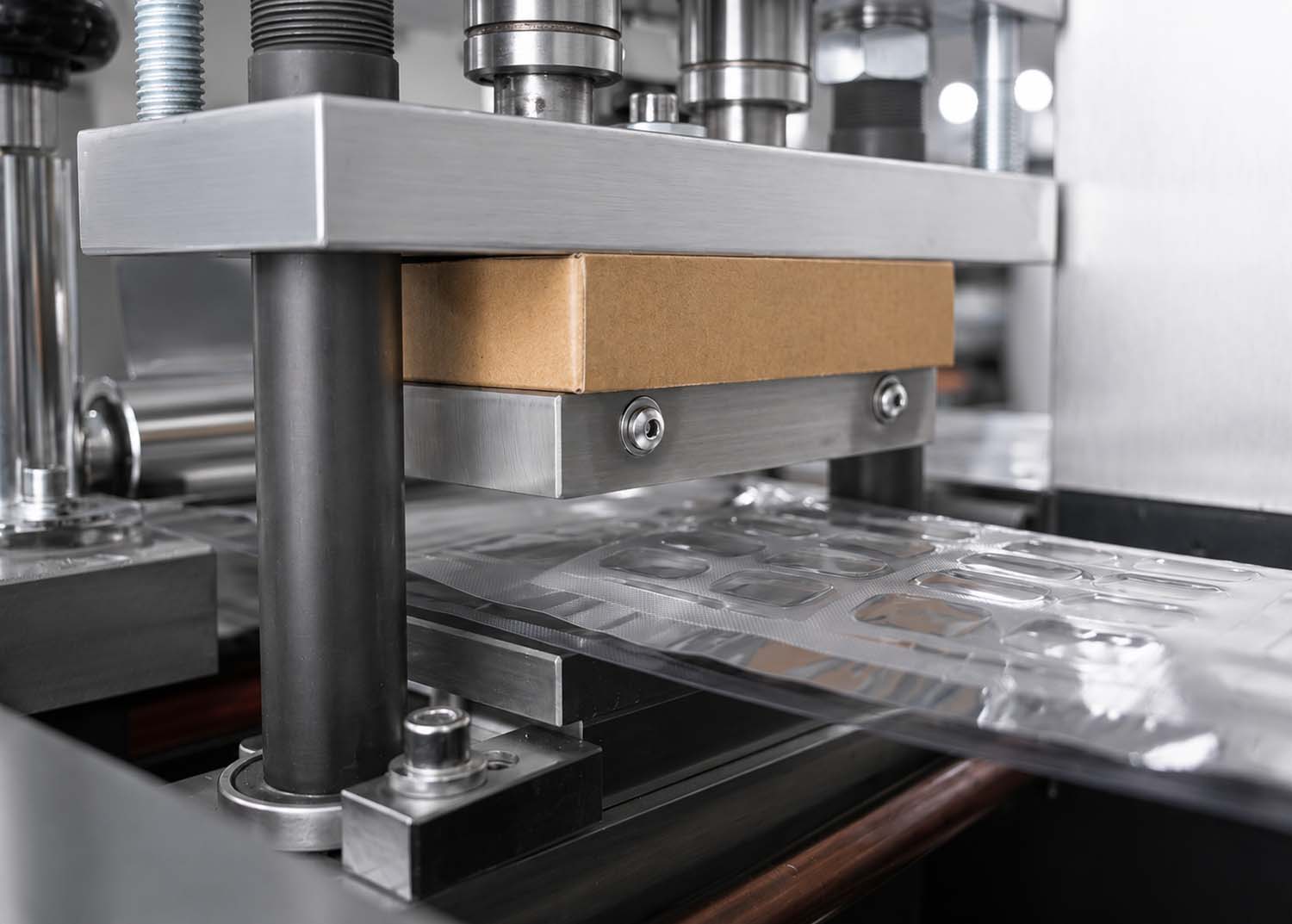
The specialized open-frame architecture separates the drive mechanisms from the production zone, keeping the drive area out of the production zone and rapid cleaning.
Technical specification
| Feature | Specification |
| Model | DPP-260H1 Ultra-High-Output Flat-Plate Blister Packaging Machine |
| Punch Frequency | 10 – 50 times/min |
| Production Capacity | 6,000 – 12,000 plates/hour |
| Max. Forming Area & Depth | 260x 180mm; Depth ≤ 15 mm(Customized up to 25 mm) |
| Standard Stroke Range | 40 – 180 mm |
| Material Width (PVC/PTP) | Up to 270 mm |
| Main Motor Power | 3.5 Kw |
| Total Power Supply | 380/220 V, 50/60 Hz, 9.5 kW — built to your local supply |
| Overall Dimension | 3800x850x1800 mm (Lx W x H) |
| Weight | 1,600 kg |
Model comparison
Model | Type | Punch freq. | Output | Forming area | Power |
DPP-80 | Flat plate | 10-33 times/min | 1980 plates/hour | 80 mm | 2.4Kw |
DPP-120H | Flat plate | 10-35 times/min | 2,400 – 4,200 plates/hour | 120 mm | 4.5Kw |
DPP-150E | Flat plate | 10-40 times/min | 3,600 – 7,200 plates/hour | 150 mm | 6.5 Kw |
DPP-180H | Flat plate | 10 – 50 times/min | 4,800 – 9,600 plates/hour | 180 mm | 8.5 Kw |
DPP-260H1 | Flat plate | 10–50/min | 6,000–12,000/h | 260×180 mm | 9.5 kW |
DPP-260H2 | Flat plate, servo | 10-50 times/min | 6,000 – 12,000 plates/hour | 260 mm | 9.5Kw |
DPH-260H | Rotary | 40 – 140 cuts/min (Alu/Plastic) |40 – 80 cuts/min(Alu/Alu) | 6,000 – 18,000 plates/hour | 260 mm | 9.5Kw |
DPH-380H | Rotary | Up to 600 cuts/min | Up to 45,000 plates/hour | 380 mm | 15 Kw |
Flat plate and rotary are two different machines, not two speeds of one. Flat plate stretches the film against a mould with positive air pressure and a mechanical punch. Rotary forms and seals on a drum with line contact. The difference shows up in material waste, changeover time and what the machine costs you per plate — see the comparison below.
What changing over involves
A format set is four stations, not one part.
What changed | What you adjust | Roughly |
Same format, new batch | Nothing | — |
Plate layout or pocket size changes | All four moulds — forming, sealing, embossing, cutting | 15-30mins |
Alu-PVC → Alu-Alu | Moulds, and the feeder — if you specified the Alu-PVC universal feeder, it cannot be converted | Not a changeover |
Tablets → paste or liquid | Moulds and a different feeder entirely | Not a changeover |
All four stations sit on a rack mandrel with a ruler. You turn the handle and read the scale rather than aligning by eye — which is what keeps a format change to minutes rather than a morning.
What to check before you buy
The tooling, not the machine
A format set covers four synchronised stations. Ask any supplier who designs the pocket layout, how long a new format takes to make, and what it costs. That's where a blister project succeeds or fails.
The feeder, before you order
An Alu-PVC universal feeder cannot run cold-formed Alu-Alu, and it cannot be converted afterwards. Ask which feeder you're being quoted and what it locks you out of.
Installation and training
Ask what's included and what costs extra. The answer varies more between suppliers than the machine price does.
Why Choose AIPAK?
Tooling Is the Machine
On a blister line, the tooling is where the machine is won or lost. A single format set covers four synchronised stations — forming, sealing, embossing and cutting — and they have to work as one. Send us your tablet or capsule samples and we design the pocket layout around your product, not the other way round.
Material and Feeder Matching
Alu-PVC, cold-formed Alu-Alu, tropical blister and medical dialysis paper each behave differently, and so does every feeder type. A universal Alu-PVC feeder cannot run cold-formed Alu-Alu — if you may move into Alu-Alu later, that decision has to be made before the machine ships, not after. We ask about your material and dosage form first, then specify the feeder.
Support & Factory-Direct
You buy from the factory, not through a trading company — which means custom modifications are a conversation with our engineers rather than a request passed down a chain. Remote diagnostics, spare parts and operator training come from the same team that built your machine.
Industry Applications
AIPAK’s DPP-260H1 is the ultimate high-capacity platform, engineered to handle the most demanding production schedules in global pharmaceutical manufacturing. Its massive 260 mm width allows it to dominate in:
Multivitamin and supplement daily packs
High plate density is what lowers the per-unit cost here. A 260 mm width fits five or six plates a stroke where a 120 mm machine fits two.
Softgel and capsule blisters
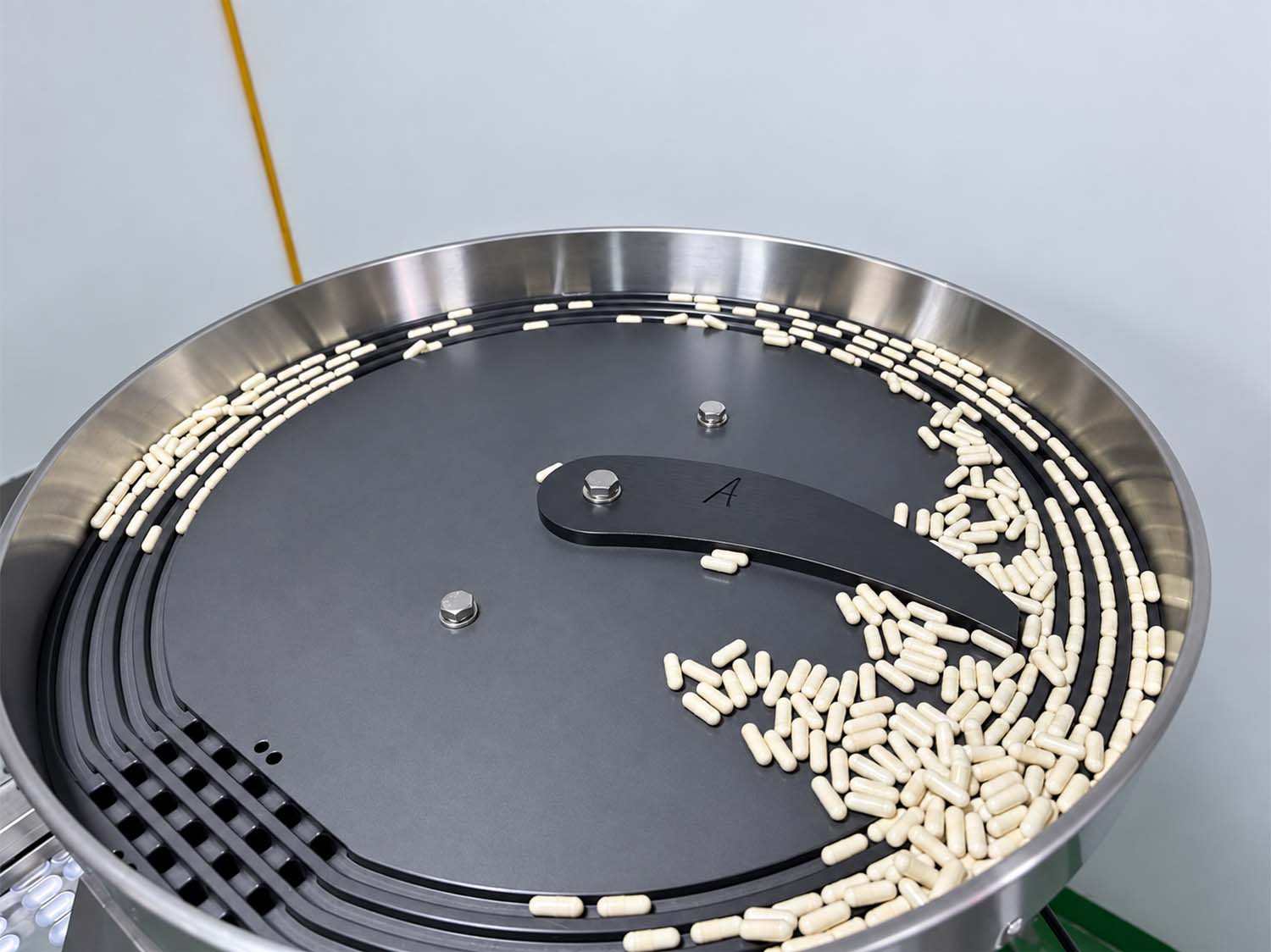
Alu-PVC for standard shelf life, cold-formed Alu-Alu for moisture-sensitive fills.
Tropical blister for humid export markets
A second aluminium forming and sealing station added to the same platform.
Effervescent and hygroscopic tablets
Where the barrier is the product’s shelf life, not a cosmetic choice.
DPP-260H1 Blister Packaging Machine FAQ
Maintaining uniform pressure across a wide format is a significant engineering challenge. The 260H1 utilizes a Reinforced Dual-Cylinder Sealing Station combined with independent PID temperature zones. This ensures that the pressure and heat are distributed perfectly evenly from the center to the edges of the 260 mm foil, preventing any “weak spots” and guaranteeing an airtight seal for every single cavity in a multi-row layout.
The 260 mm width allows for High-Density Multi-Row layouts (e.g., 5 or 6 plates per stroke). This drastically reduces the “per-plate” cost by maximizing the utilization of the PVC and Aluminum rolls. Compared to a standard 120 mm machine, the 260H1 can double your output while using significantly less energy and labor per million units produced, providing a much faster return on investment.
For the 260H1, we use an upgraded High-Torque Industrial Servo System. This system is specifically tuned to handle the increased inertia of wide, heavy material rolls. It provides millimetric precision in material advancement, ensuring that even at speeds of 50 punches per minute, there is zero “drift” or misalignment in the blister pockets.
Yes. The modular design of the 260H1 allows for the addition of a second tropical aluminum forming and sealing station. This makes it an ideal platform for products requiring the extreme moisture protection of Tropical Blister packaging, often required for high-humidity export markets.
The 260H1 is designed for Low-Maintenance 24/7 operation. It features an automated centralized lubrication system that protects all critical moving parts. Most routine maintenance tasks, such as mold cleaning or seal inspection, are simplified by the “Balcony” design, which offers 180-degree access to the production zone without interfering with the mechanical drive area.
Customers Also Interested In...
DPP-260H2
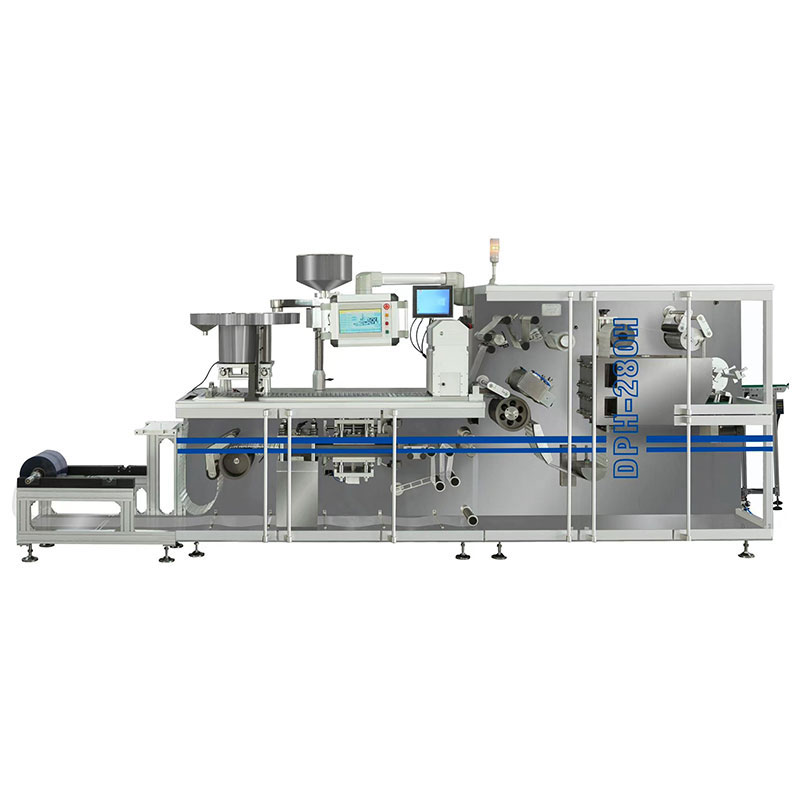
DPH-260H
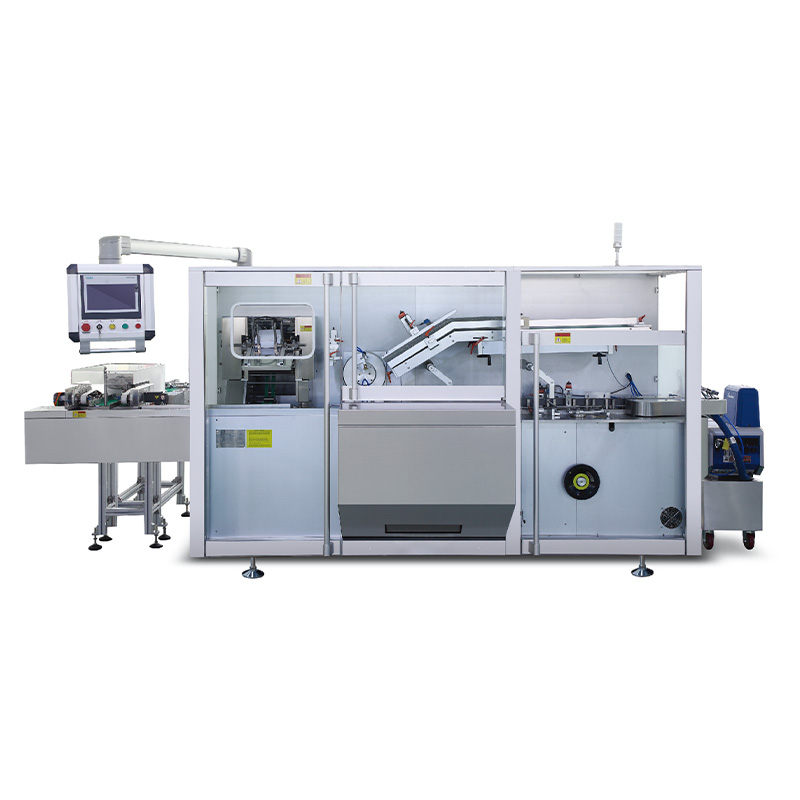
Cartoning Machine
Ready to Elevate Your Packaging Efficiency?
Reply within one business day.
“Whether you are upgrading an existing line or building a new GMP-certified facility, our senior project directors are ready to assist. Beyond the DPP-260H1, we provide complete engineering support to ensure your success.”
Customized Mold Design: Send us your tablet/capsule samples for a tailored blister layout.
Factory Acceptance Test (FAT): Verify your machine’s performance with your specific materials before shipment.
Global On-Site Support: Comprehensive installation and operator training at your facility.