Desiccant and Cotton Inserters
“Cotton stops tablets moving. Desiccant stops moisture. Most bottles need one, many need both, and the two are entirely different machines.”


After the counting machine fills a bottle and before the capper closes it, there is one station left — the point where anything else that belongs in the bottle goes in. For most tablet and capsule products that means a desiccant, fill material, or both.
Cotton or rayon fills the headspace so tablets cannot move and chip against each other in a part-filled bottle.
Desiccant absorbs moisture so the product reaches its stated shelf life.
A 300-count bottle filled to the shoulder may need neither; a 30-count bottle of a hygroscopic tablet usually needs both.
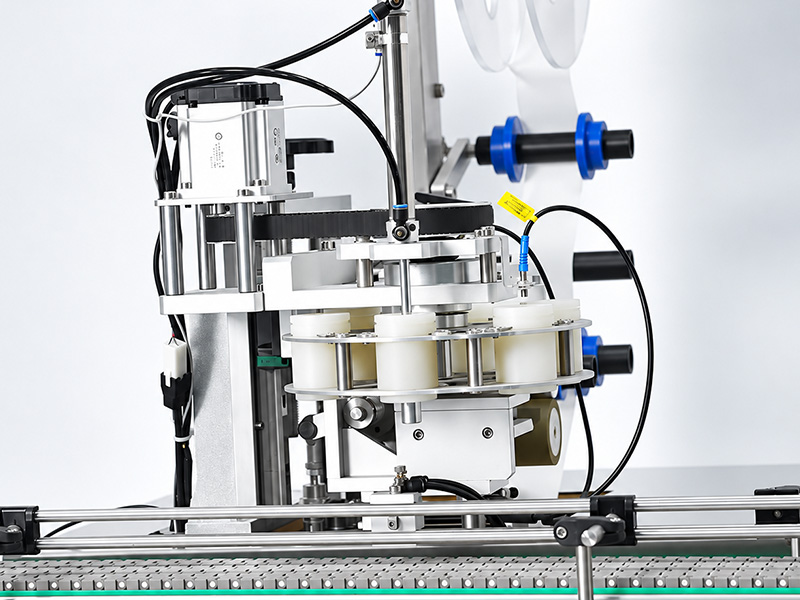
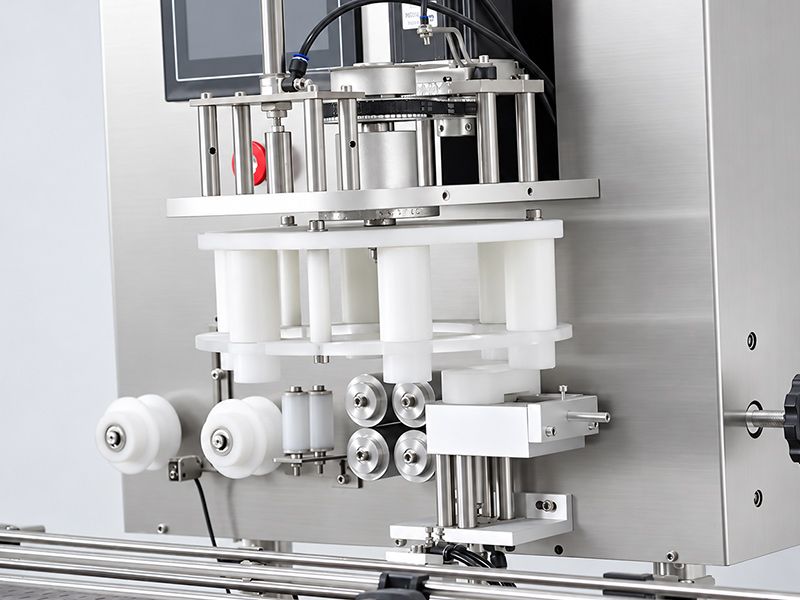
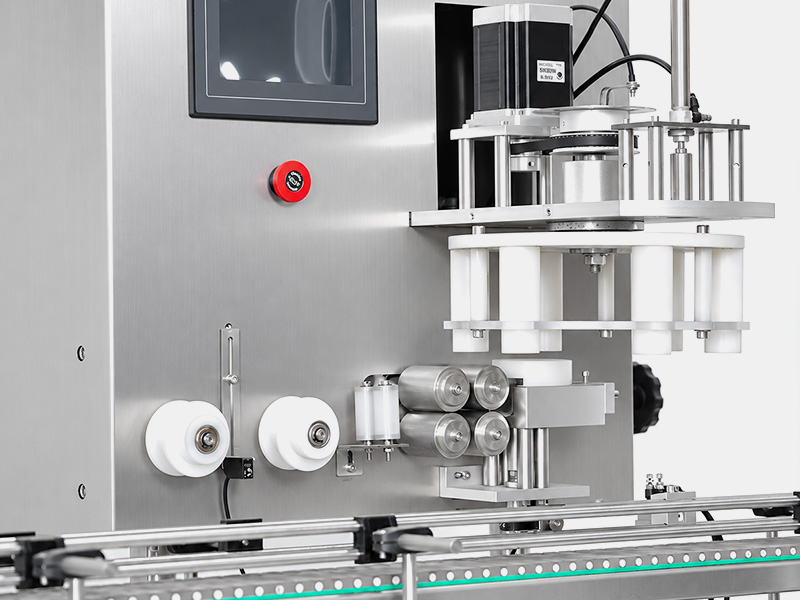
two desiccant inserters differing by desiccant form, a cotton inserter, and a rayon inserter.
They run from 20 to 200 bottles per minute — a wide spread, and one worth understanding before you configure the line.
Why AIPAK Insertion Machines?
Matched to Your Material, Not the Other Way Round
We build for packeted desiccant, canister desiccant, cotton and rayon separately. You keep the material your stability data was generated with, rather than requalifying a new format because of an equipment constraint.
Output Specified to Your Line
Desiccant stations run 50 to 120 bottles per minute single-outlet and 80 to 200 double-outlet. Configuration is set at order and matched to your counting machine.
Bottle-Triggered Insertion
Position sensing triggers each cycle, so nothing dispenses into an empty position — no wasted material, and no loose desiccant or cotton on the conveyor.
cGMP Construction
304 stainless steel frame and body, no dead corners, designed for washdown between products.
Industry Applications
What Goes in the Bottle?
They are not alternatives — they do unrelated jobs.
Cotton and rayon are fill material. They occupy the headspace above the product so tablets cannot move during transit. Without them, a part-filled bottle arrives with chipped edges and dust at the bottom. Rayon is synthetic and does not absorb moisture; cotton does, which is why some moisture-sensitive products specify rayon instead.
Desiccant controls humidity inside the closed bottle. It is specified against your product’s stability data, not against how full the bottle is.
A high-count bottle filled close to the shoulder often needs neither. A small-count bottle of a hygroscopic or effervescent product usually needs both. If you are unsure, the question belongs to your stability programme rather than to your packaging line.
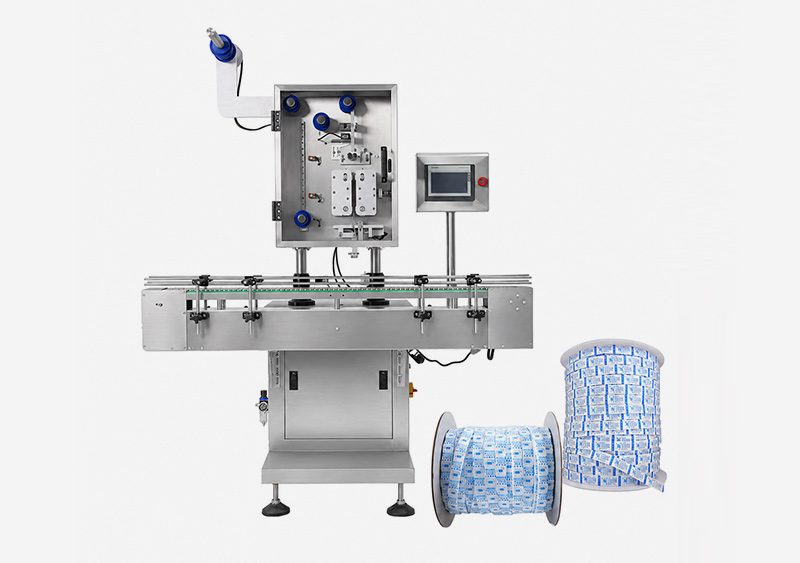
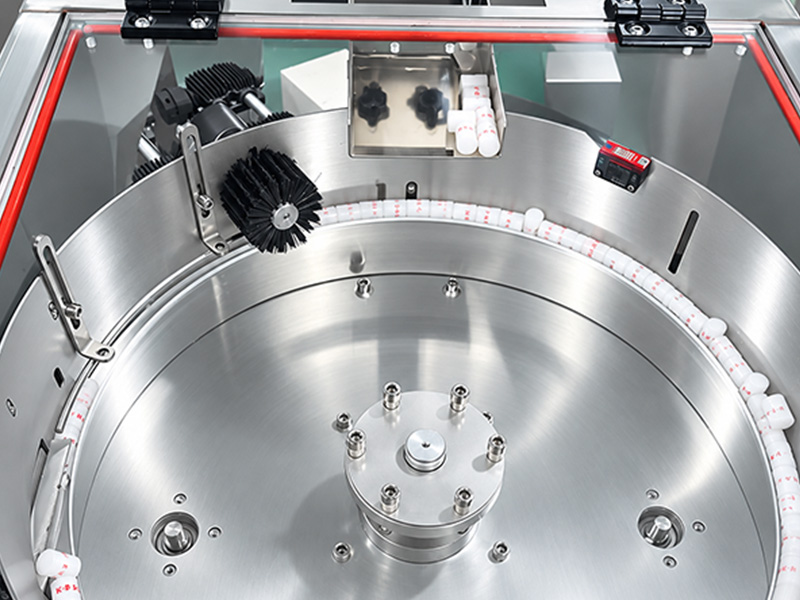
This decides the machine on its own. Sachets and packets supplied on a continuous roll need the roll-fed cutting machine. Canisters and cylinders supplied loose need the vibratory bowl machine. There is no model that does both, because cutting a strip and orienting a cylinder are unrelated mechanical problems.
If you have not yet chosen a desiccant format, choose it before choosing the machine — the desiccant is qualified against your product; the machine is not.
The desiccant machine comes with one or two discharge outlets. Single discharge covers 50 to 120 bottles per minute; double covers 80 to 200. Match this to your counting machine — a 16 or 24-channel counter is comfortably served by single discharge, while 32 and 48-channel machines need double to avoid capping line speed.
Outlet count is specified at order and cannot be added afterwards. If you expect throughput to grow, that is worth weighing now.
| Machine | Material | Output |
|---|---|---|
| APC-C120 Desiccant Inserter | Desiccant | 50–120 |
| APC-C120D High Speed Desiccant Inserter | Desiccant | 80–200 |
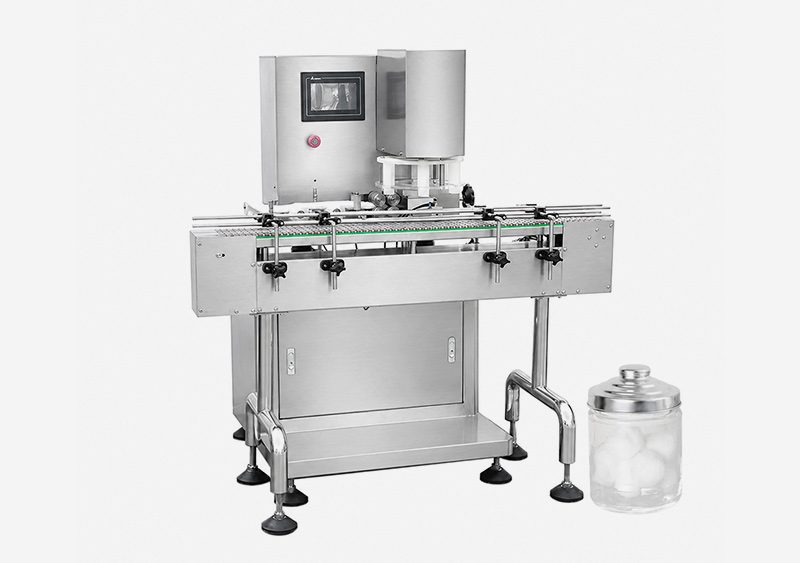
| APC-Z120 Rayon Inserter | Rayon or paper coil | 20–160 |
| APC-S120 Cotton Inserter | Cotton coil | 30–50 |
At 30 to 50 bottles per minute it is slower than every other station on the line, including the counting machine. On a line targeting 100 bottles per minute this matters, and it is far cheaper to know before you configure than after.
Three ways round it: switch to rayon, which runs at up to 160; run two cotton stations in parallel; or design the line around 50 bottles per minute and accept that as the ceiling. We will tell you which applies to your case before you order.
Bottle Inserter Solutions for Your Production Line
Talk to our experts to discover the right solution for your needs.
Documentation & Selection Support
Verify our specifications and simplify your procurement process with our official documentation.
Product Portfolio
Quality Assurance
Line Speed Matching Guide
Desiccant and Cotton Inserter Technical FAQ
They solve different problems. Cotton or rayon fills the headspace so tablets cannot move and chip in a part-filled bottle. Desiccant absorbs moisture so the product holds its shelf life. A bottle filled close to the shoulder may need neither; a small-count hygroscopic product usually needs both. The decision belongs to your stability programme rather than to your packaging line.
Cotton is a natural fibre and absorbs moisture; rayon is synthetic and does not. For a moisture-sensitive product, cotton in the bottle works against the desiccant you just paid to insert. Rayon also runs considerably faster on our machines — up to 160 bottles per minute against 30 to 50 for cotton.
No. They are separate stations on the line, running back to back. Cutting and plugging a cotton coil and dispensing a desiccant are unrelated mechanical operations.
Whichever matches the desiccant you already use. Packets on a roll need the roll-fed cutting machine; loose canisters need the vibratory bowl machine. If you have not yet selected a desiccant, do that first.
Because forming a plug takes longer than dispensing a finished item. The cotton is drawn from a coil, cut, compressed into a plug and pushed through the bottle neck — several sequential operations against a single drop. If your line target is above 50 bottles per minute, consider rayon, a second cotton station in parallel, or a line speed set to the cotton station.
17 mm. Below that the plug cannot pass without folding or tearing. Desiccant machines have their own neck limits depending on packet or canister dimensions — send us your bottle specification and we will confirm.
What goes in the bottle (cotton, rayon, desiccant, or a combination), the material format and dimensions, bottle neck diameter, and target bottles per minute. A sample of your desiccant or fill material is the single most useful thing you can send.