
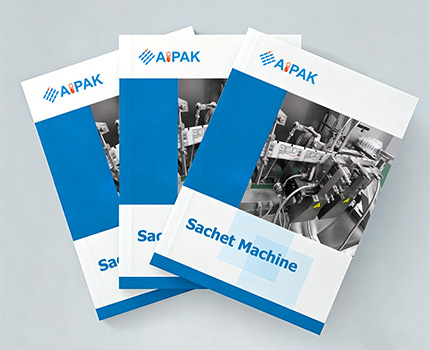
Sachet Machine

Three-Side and Four-Side Seal Sachets for Supplement Powders and Granules

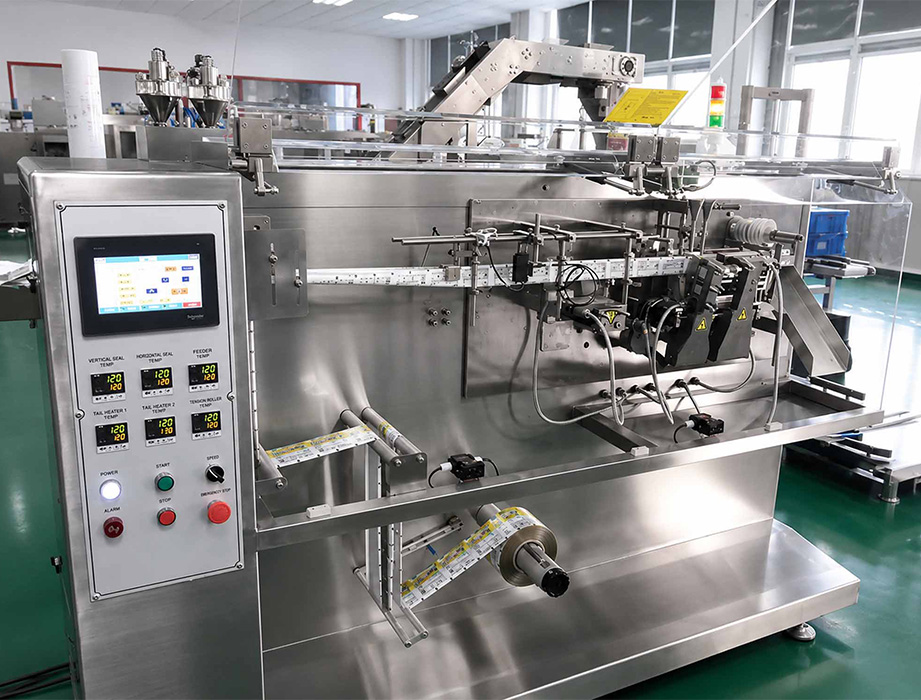
Six models, 60 to 400 ml, 60 to 160 sachets a minute. The machine makes the sachet and fills it in one pass — and because the sealing station works independently of the filling station, powder doesn’t end up trapped in the seal. That’s what a leaking sachet usually is.

60 to 160 sachets/min
60 to 400 ml
Powders and granules

Why Choose Our Sachet Machines?

The Sealing Station Works on Its Own

Precision Sealing Architecture

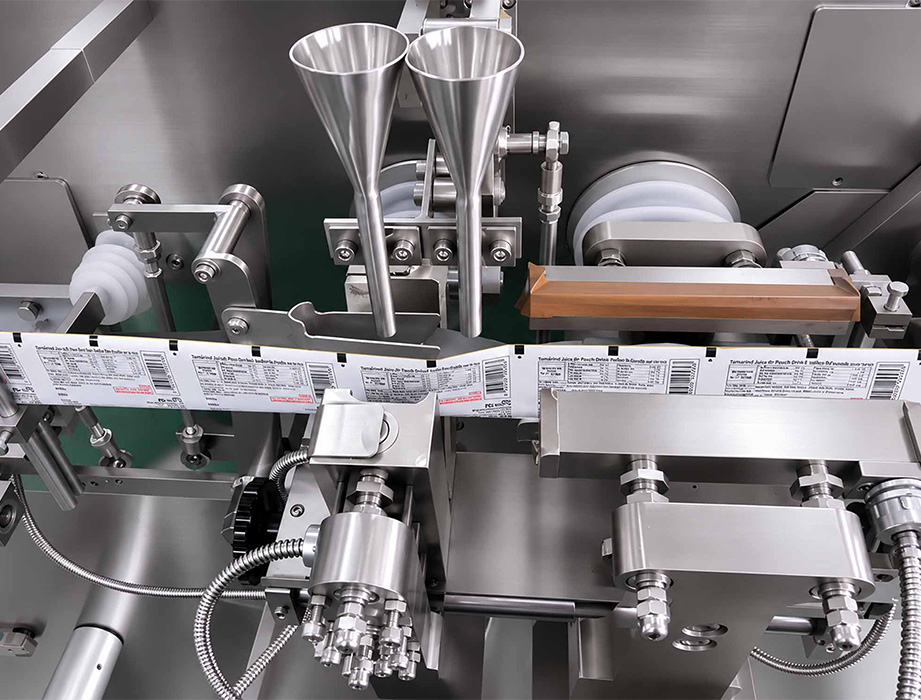
Bag forming and sealing happen independently of filling. Powder that’s still settling can’t get caught in the seal, because the seal isn’t made at the moment the powder drops. A sachet that leaks in the carton usually leaks because something was trapped in the edge.

Auger for Powder, Cup for Granules

Versatile Dosing Modularity

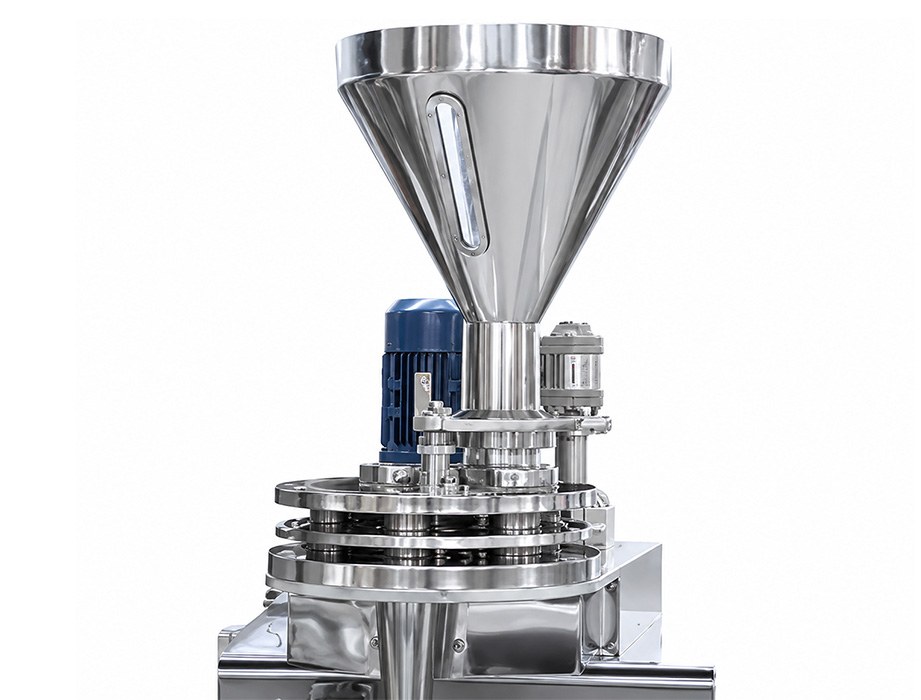
Two dosing units cover what we build these machines for. A servo auger meters powders by turns; a volumetric cup meters free-flowing granules by volume. Which one suits your product is what a sample run tells us.

Lightweight Walking Beam

cGMP Structural Integrity

The carriage that moves the film through the stations is built light on purpose. Less mass means less inertia at 160 sachets a minute, which shows up as steadier sealing and less wear on the drive.

Format Change Without New Tooling

Tool-Less Format Flexibility
Sachet width and length are fully adjustable within each model’s standard range without requiring a new set of change parts. This modular design eliminates secondary tooling investments and drastically reduces line downtime during multi-recipe changeovers.

Speed or Capacity — You Don't Get Both

Our six models split into two groups, and the trade-off between them is the whole decision.

The single-output machines fill more per sachet. The APK-180 takes 400 ml and runs 60 to 80 sachets a minute.

The twin-output machines run twice as fast and hold a quarter as much. The APK-210D runs 120 to 160 a minute — but tops out at 150 ml.

That isn’t a limitation we’re apologising for; it’s arithmetic. Two sachets forming side by side means each one gets half the width of the film.

So start with your fill volume, not your target speed.

Your fill

Model

Speed

Up to 60 ml

APK-110

60–80/min

Up to 100 ml, twin-link sachets

APK-180T

120–160/min

Up to 150 ml

APK-210D

120–160/min

Up to 160 ml

APK-130

60–80/min

Up to 180 ml

APK-240

100–160/min

Up to 400 ml

APK-180

60–80/min

One more question: do you want two sachets joined together? 

The APK-180T makes twin-link sachets — two pouches connected by a perforation, so a customer tears one off and keeps the other. Common for twice-daily dosing. It’s the only model in the range that does it.

What These Machines Are Filling

Protein and meal replacement powders
Electrolyte and drink mix powders
Probiotic and enzyme granules
Twice-daily supplement doses

Model comparison

Model

Sachet width

Sachet length

Fill volume

Speed

Format

APK-110

50–110 mm

50–130 mm

60 ml

60–80/min

3 or 4-side seal

APK-130

60–140 mm

80–180 mm

160 ml

60–80/min

3 or 4-side seal

APK-180

60–180 mm

80–225 mm

400 ml

60–80/min

3 or 4-side seal

APK-180T

60–90 mm

80–225 mm

100 ml

120–160/min

3 or 4-side seal, twin-link

APK-210D

60–105 mm

90–225 mm

150 ml

120–160/min

3 or 4-side seal

APK-240

70–120 mm

100–225 mm

180 ml

100–160/min

3 or 4-side seal

Common Parameters:

Models

Power

Air compression

Weight

Dimensions

APK-110 / 130

3.5 kW

100 NL/min air

800 kg

2,850 × 940 × 1,400 mm

APK-180 / 180T / 210D / 240

4.5 kW

200 NL/min air

1,600 kg

3,900 × 970 × 1,450 mm

Sachet width is the number to read first. The model numbers refer to the machine platform, not the sachet — the APK-240 makes sachets up to 120 mm wide, not 240.

Send us your powder and your fill weight.

Fill volume decides the model before speed does. Send us a sample and tell us how many sachets a minute you need, and we’ll tell you which one — including when it’s the slower machine.

Documentation & Selection Support

Verify our quality standards and simplify your procurement process with our official documentation

Product Portfolio

Sachet Packaging Catalog

Explore technical specs for the complete range of our Sachet Packaging Machine models. Access detailed technical data, footprint layouts, and configuration options for our entire series, from high-precision standard units to industrial-scale heavy-duty lines.
Quality Assurance

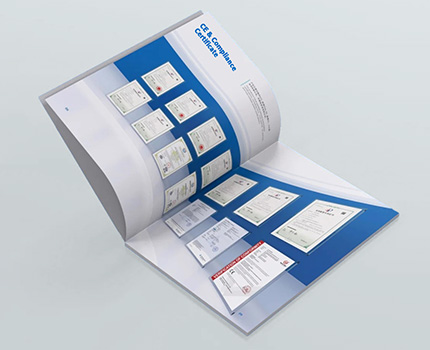
Compliance & Certification

Official certification ensuring our equipment meets the highest global safety standards. Verified compliance documentation including CE Declaration of Conformity, ISO 9001:2015 quality certificates, and GMP-compliant manufacturing records.
Technical Standards

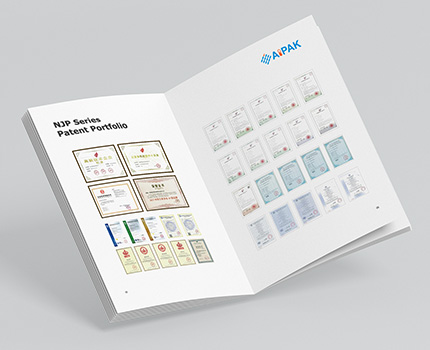
Technology & Validation

Detailed insights into the core patented technology of our Sachet Packaging Machines. Deep dive into our high-speed walking beam transport systems, precision heat-sealing patents, and FDA 21 CFR Part 11 data integrity validation protocols (IQ/OQ/PQ).

We run it on the machine you’re considering and send you filled sachets back, so you see the fill weight spread and the seal on your own product before you order.

Sachet Machine FAQ

How do I choose between the six models?

Start with your fill volume, not your speed. Anything over 180 ml means a single-output machine — the APK-130 at 160 ml or the APK-180 at 400. Under that, the twin-output models run twice as fast. Then tell us whether your product is a powder or a free-flowing granule, because that decides whether we fit an auger or a volumetric cup.

Yes. Sachets come off the outfeed in sequence and can go straight to a cartoner. Tell us your cartoner model and we’ll check the rate against the sachet machine’s.

How do you ensure seal integrity for high-volume or large-format sachets?

We utilize an independent sealing module architecture that decouples the sealing movement from the material filling process. This design prevents material residue from becoming trapped in the sealing zone, ensuring a robust, hermetic, and leakage-free seal regardless of pouch size.

How does the "Walking Beam" transport system improve machine performance?

The lightweight walking beam carriage reduces mechanical inertia and vibration during high-speed, continuous duty cycles. This results in operational stability, significantly lower mechanical wear on drive components, and a more consistent performance profile that extends the machine’s overall service life.

Powder or granule — does it change the machine?

Not the machine, but the dosing unit on it. Powders are metered by a servo auger; free-flowing granules by a volumetric cup. Both mount on the same machine. If your product is somewhere in between — a fine granule that behaves like a powder — send us a sample and we’ll try both.

Does it run on US power?

Yes, it can be customizable.

Send us your powder and your fill weight.

Fill volume narrows the range to two or three models before anything else does. How your powder flows decides whether we fit an auger or a cup. Send us a sample and both numbers, and we’ll run it and send you filled sachets back.

  • Reply within one business day
  • Your powder run on the machine before you order
  • Your formula stays with us
Scroll to Top